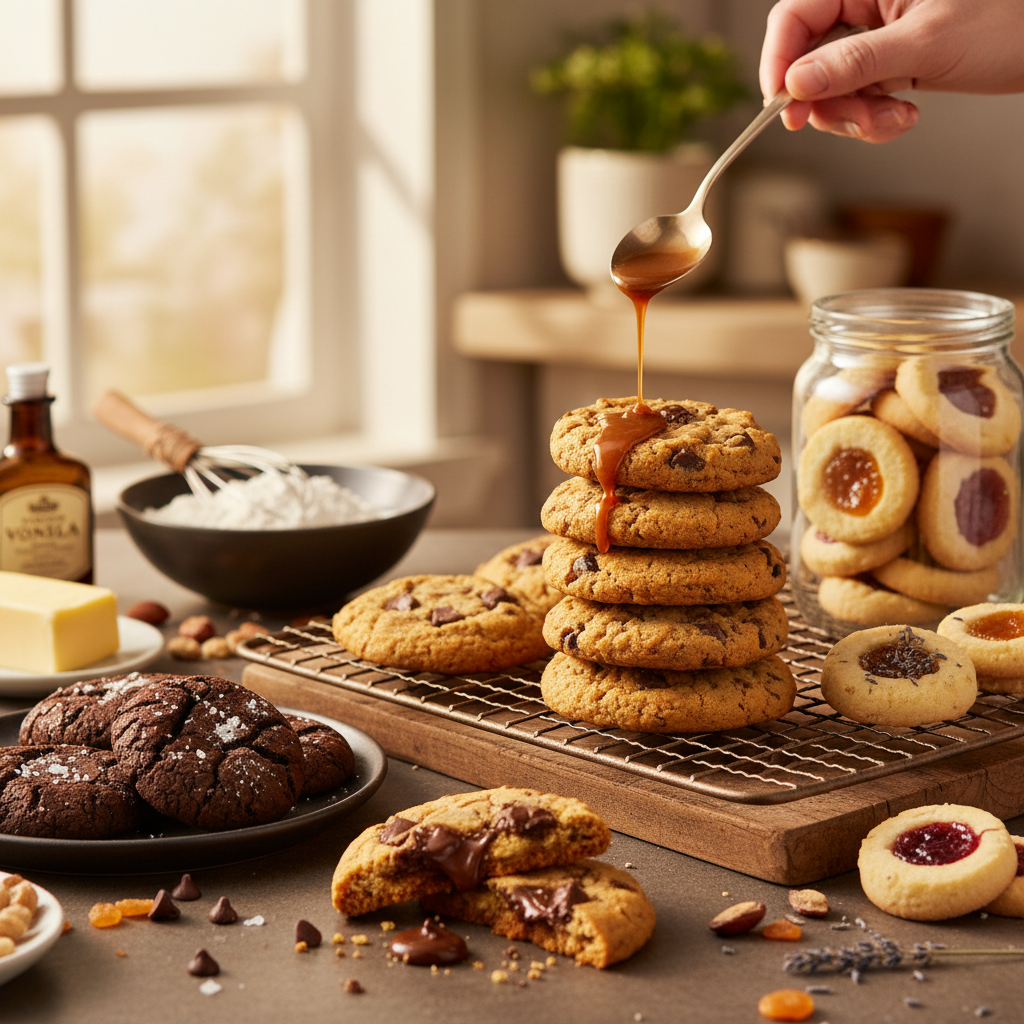
Baking Perfect Cookies: Mastering Texture, Flavor, and Variations at Home
Baking cookies is one of the most rewarding experiences in the kitchen, offering a perfect blend of science and art. The sweet aroma wafting through the house as cookies bake can evoke nostalgia and warmth, reminding us of home and family. Understanding the nuances of texture and flavor not only elevates your baking skills but also allows you to create cookies that reflect your unique tastes and preferences. Whether you’re a novice looking to bake your first batch or a seasoned home baker seeking to refine your technique, mastering cookie baking is essential.
The magic of cookies lies in their ability to take on various forms and flavors, ranging from chewy and soft to crisp and crunchy, with an endless variety of mix-ins and toppings. Each cookie recipe is a canvas on which you can experiment and express your creativity. By understanding the fundamental principles behind the ingredients and techniques, you can customize your cookies to perfection, ensuring that every batch is a delightful success. The versatility of cookies means that you can create something new and exciting with just a few tweaks to your standard recipe.
In this comprehensive guide, we will embark on a journey through the world of cookies, sharing essential baking techniques, detailed ingredient information, and professional tips to help you achieve perfect results every time. You’ll learn about the science behind different textures, how to balance flavors, and discover enticing variations that will have your family and friends begging for more. Let’s dive into the delightful world of cookie baking, where the true magic happens!
Understanding Cookie Texture
The texture of cookies is a critical element that can make or break a batch. Achieving the perfect balance of chewy, soft, and crunchy requires an understanding of how ingredients work together during the baking process. The texture primarily depends on the ratios of fats, sugars, and flour used in the recipe.
The Role of Fats
Fats are essential in baking as they contribute to the texture, flavor, and moisture of cookies. The most common fats used in cookie recipes are butter, margarine, and shortening.
When selecting fats, consider the texture you desire. For chewy cookies, butter or a mix of butter and shortening is often best. For crisp cookies, you might want to use more shortening or margarine.
Sugar: The Sweetness Factor
Sugar does much more than sweeten; it also influences texture. Different types of sugar create varying results:
Mixing different sugars can yield a balanced cookie. For instance, a combination of granulated and brown sugar often results in the best overall texture and flavor.
Flour: The Foundation of Cookies
Flour serves as the foundation for cookies, providing structure and stability. The type of flour you use can greatly affect the final outcome.
The key is to measure flour correctly. Avoid packing flour into your cup; instead, spoon it into your measuring cup and level off with a knife for accurate measurement.
“The right flour can make all the difference in achieving your desired cookie texture.” - Anonymous Baker
Mastering Cookie Flavor
While texture may be what captures the attention, flavor is what ultimately seals the deal. Mastering the layering of flavors is vital in producing cookies that stand out.
Essential Ingredients for Flavor
Vanilla Extract is a crucial element in cookie recipes. It enhances the overall flavor profile, making cookies taste richer. Use pure vanilla extract instead of imitation for the best results, as it contains more complex flavors. A general rule is to add about 1 teaspoon of vanilla extract for every 2 cups of flour in your dough.
Salt is another essential component that enhances flavors. It helps to suppress bitterness, balance sweetness, and brings out the richness of other ingredients. Be mindful of the salt content in your butter; if using salted butter, you can cut back on additional salt in the recipe.
Cocoa Powder: For chocolate cookies, using cocoa powder is a great way to add depth. Choosing between natural cocoa and Dutch-process cocoa will influence the flavor. Natural cocoa is sharper and more acidic, while Dutch-process provides a mellow, rich chocolate flavor.
Incorporating Flavor Variations
Exploring flavor combinations can be incredibly satisfying. Here are some ideas to inspire your next cookie creation:
Experimenting with Extracts and Flavors
Don’t hesitate to experiment with different extracts beyond vanilla. Almond extract or coconut extract can yield unique cookies. The general rule is to replace vanilla extract with another extract at a 1:1 ratio.
Additionally, consider incorporating liqueurs such as amaretto or coffee liqueur for an adult twist on your cookie recipes. Just a tablespoon can add significant flavor without overpowering the cookie.
“Baking is not just about following a recipe; it’s about creating a symphony of flavors that dance on your palate.” - Culinary Enthusiast
Baking Techniques for Success
Simply gathering the right ingredients won't guarantee perfect cookies; mastering certain baking techniques is essential. Here are some valuable techniques that will elevate your cookie game.
Creaming Butter and Sugar
Creaming is a key technique that incorporates air into cookie dough, resulting in a lighter, fluffier texture. Here’s how to do it effectively:
This process is essential for cookies that need to rise well and maintain a chewy consistency.
Chilling the Dough
Chilling cookie dough before baking is a game-changer. It allows the flavors to meld and the fats in the dough to solidify, which can result in thicker, chewier cookies.
Baking Temperature and Time
The temperature at which you bake cookies has significant implications for their texture and flavor:
The Importance of Parchment Paper
Using parchment paper is a chef’s secret for perfect cookies. It prevents sticking and helps with even cooking. Simply line your baking sheet with parchment and use it for all cookie recipes.
Rotating the Baking Sheet
To ensure even baking, rotate your baking sheet halfway through the baking time. This is particularly important if your oven has hot spots (areas that get hotter than others).
Popular Cookie Variations
Now that you understand the fundamentals of cookie baking, let’s explore some beloved cookie variations that you can easily create at home.
Classic Chocolate Chip Cookies
Chocolate chip cookies are a timeless favorite. The key to perfecting this classic is balancing the sugars and achieving the right texture.
#### Ingredients
#### Method
Oatmeal Raisin Cookies
These cookies are hearty and can be made with add-ins such as walnuts or chocolate chips.
#### Ingredients
#### Method
Snickerdoodles
These cinnamon-sugar cookies are slightly tangy due to the cream of tartar.
#### Ingredients
#### Method
Troubleshooting Common Cookie Issues
Even the most seasoned bakers can encounter issues. Here are some common problems and their solutions.
Cookies Spread Too Much
If your cookies spread excessively during baking, consider these points:
Cookies Are Too Dry
If your cookies come out dry, examine the following factors:
Cookies Are Too Cake-like
Cake-like cookies often stem from too much flour or eggs in the recipe. To solve this issue:
Final Thoughts
Baking cookies at home is not just a delightful pastime; it's a fulfilling process that allows you to express your creativity while feeding your loved ones. Armed with the knowledge of how ingredients interact, the techniques for producing various textures, and the ability to customize flavors, you’re now equipped to create myriad delicious cookies.
Remember, the joy of baking comes as much from the process as it does from the product. Embrace the occasional misstep as a learning opportunity, and don’t hesitate to innovate and experiment. Every batch you bake will help you refine your skills, bringing you that much closer to mastering the art of cookie baking.
Whether you prefer the classic appeal of chocolate chip cookies, the heartiness of oatmeal raisin, or the subtle sweetness of snickerdoodles, the perfect cookie is just a bake away. Get in your kitchen, create something wonderful, and if it doesn’t turn out just right, you can always blame the chef—yourself! Happy baking!

Get the Next Recipe
Weekly recipes, techniques, and gear picks — straight to your inbox.
