Best Dutch Ovens & Bakers for Sourdough (2026)
Disclosure: As Amazon Associates, we earn from qualifying purchases made through links on this page.
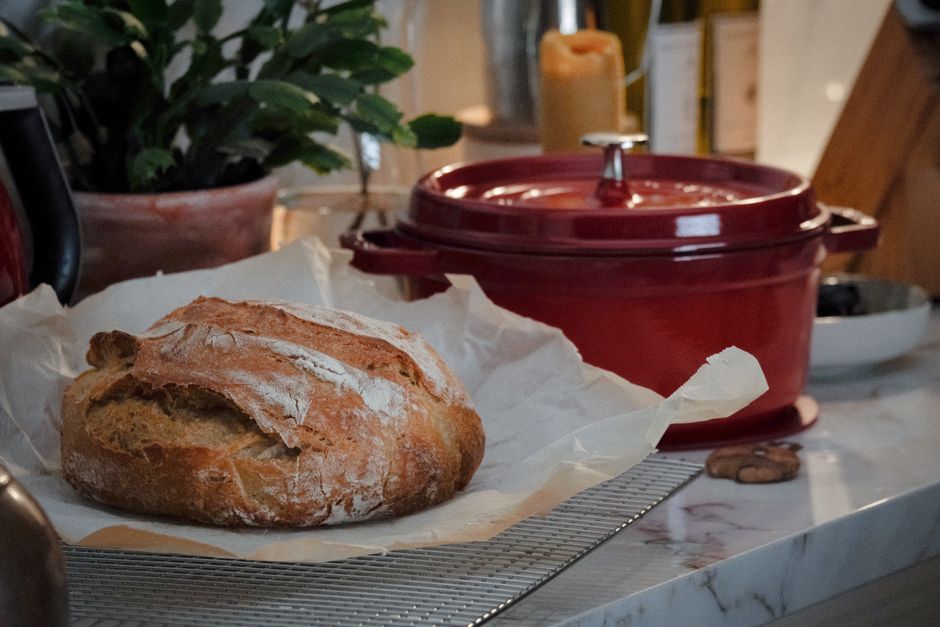
Baking sourdough bread with a blistered crust and an airy crumb is the ultimate goal for home bakers. Achieving bakery-quality results in a standard household oven can be challenging because dry heat dries out dough surfaces before maximum expansion occurs. High-quality sourdough baking gear—specifically Dutch ovens and ceramic bakers—solves this problem.
By trapping natural moisture released by dough during the first 20 minutes of baking, a Dutch oven creates a high-humidity environment. This steam keeps the dough skin supple, allowing dramatic oven spring and a crackling crust. In this guide, we highlight the best Dutch ovens and specialty bakers for sourdough in 2026 based on thermal mass, steam sealing, durability, and user feedback.
Before diving into individual reviews, check our summary table below. For further tips, see our guide on The Home Cook’s Guide to Dutch Oven Bread.
Quick Comparison: Top Sourdough Bakers & Gear
| Product | Best For | Capacity / Size | Price Range | Key Highlight |
|---|---|---|---|---|
| Lodge 5-Qt Cast Iron Double Dutch Oven | Best Overall Sourdough Dutch Oven | 5 Quarts | $ (Budget) | Skillet lid makes loading hot dough safe & easy |
| Emile Henry French Ceramic Loaf Baker | Best Ceramic Loaf Baker | Standard Loaf (9x5 in) | $$ (Mid-Range) | Burgundy clay produces crisp crusts for sandwich loaves |
| Le Creuset Signature Round Dutch Oven | Best Premium Enameled Pick | 5.5 Quarts | $$$ (Premium) | Exceptional radiant heat & durable enamel coating |
| Fibrament 16-Inch Baking Stone | Best Stone for Hearth Baking | 16" x 16" x 0.75" | $$ (Mid-Range) | Heavy thermal mass for baking multiple loaves with steam pans |
| Round 9-Inch Banneton Proofing Basket | Best Proofing Companion | 9-Inch Round (750g) | $ (Budget) | Natural rattan absorbs moisture for classic spiral crust ridges |
| King Arthur Baker's Digital Scale | Best Precision Measuring Tool | Up to 11 lbs (1g accuracy) | $ (Budget) | Essential for accurate baker's percentages & consistent dough |
Top Dutch Ovens & Bakers for Artisanal Sourdough
1. Lodge 5-Quart Cast Iron Double Dutch Oven — Best Overall Sourdough Dutch Oven
What it's best for: Bakers seeking maximum thermal retention, long durability, and easy loaf loading without risking finger burns.
Why we picked it: The Lodge Double Dutch Oven is widely celebrated in the sourdough community for one key feature: its deep lid doubles as a shallow skillet. When baking bread, you invert the pot—placing your proofed loaf onto the low-sided skillet base and covering it with the deep pot. This eliminates dropping dough into a scorching deep pot wall. Heavy-duty raw cast iron retains immense thermal energy, delivering intense bottom heat for rapid oven spring.
Pros:
- Inverted skillet design enables effortless dough placement and scoring.
- Raw cast iron withstands heat up to 500°F+ without enamel shock.
- Unbeatable price-to-performance ratio and long durability.
- Fits standard 500g to 800g flour boules perfectly.
Cons:
- Requires periodic seasoning to prevent rust.
- Heavy construction requires sturdy oven mitts.
2. Emile Henry French Ceramic Bread Loaf Baker — Best Ceramic Loaf Baker for Sandwich Sourdough
What it's best for: Bakers who want sourdough crust and crumb structure in a uniform rectangular sandwich loaf shape.
Why we picked it: Crafted in France from high-fire Burgundy clay, the Emile Henry Bread Loaf Baker brings deck-oven performance into a compact rectangular footprint. Priced around $70 to $100 with a 4.6-star rating, it regulates moisture during baking exceptionally well. The refractory ceramic distributes heat gently, while the domed lid traps moisture to form a crackling crust. If you prefer rectangular sandwich slices over round boules, this specialized baker outperforms standard loaf tins.
Pros:
- Produces uniform rectangular loaves ideal for daily sandwiches.
- Glazed Burgundy ceramic is easy to clean and dishwasher safe.
- Lighter weight than cast iron while maintaining humidity control.
- Thermal shock resistant up to 500°F.
Cons:
- Limited to rectangular loaf shapes (cannot bake round boules).
- Ceramic material can crack if dropped onto hard surfaces.
3. Le Creuset Signature Round Dutch Oven (5.5 Quart) — Best Premium Enameled Pick
What it's best for: Home bakers who want a luxury kitchen workhorse that excels at sourdough baking and everyday cooking.
Why we picked it: Le Creuset remains the premier choice in enameled cast iron cookware. The 5.5-quart round model offers generous volume for sourdough boules. Its interior enamel coating resists acid, sticking, and dulling. The stainless steel knob is heat-rated to 500°F, ensuring safety during preheating cycles. While it represents a larger investment, its even heat distribution and seamless cleanup make it a favorite for serious cooks.
Pros:
- Smooth enameled interior requires no seasoning and wipes clean easily.
- Large ergonomic loop handles accommodate bulky oven mitts.
- Outstanding radiant heat distribution eliminates cold spots.
- Lifetime warranty and classic aesthetic appeal.
Cons:
- Higher price tag compared to raw cast iron options.
- Enamel can craze if thermal shock occurs from cold liquids on a hot surface.
4. Baking Stone Fibrament 16-Inch — Best Baking Stone for Multi-Loaf & Hearth Baking
What it's best for: Advanced bakers who want to bake batards, baguettes, or multiple loaves simultaneously on a stone surface.
Why we picked it: Fibrament baking stones are constructed from high-density ceramic designed for hearth deck baking. Unlike thin pizza stones that crack under thermal stress, the 0.75-inch thick stone absorbs heat steadily and radiates it directly into dough bottoms. Combined with a steam tray, it lets bakers produce rustic free-form boules and long batards that would not fit inside standard round Dutch ovens.
Pros:
- Large 16x16-inch surface accommodates multiple loaves or long batards.
- Heavy 3/4-inch mass prevents bottom scorch while maximizing crust expansion.
- Thermal shock resistant up to 1500°F.
- Ideal for sourdough pizza, artisan rolls, and hearth breads.
Cons:
- Requires external steam generation (such as a steam tray).
- Heavy to move in and out of the oven regularly.
5. Round 9-Inch Banneton Proofing Basket — Essential Companion for Proofing & Shaping
What it's best for: Supporting sourdough dough during final fermentation to maintain shape and create traditional flour spirals.
Why we picked it: A successful bake starts before the Dutch oven heats up. Natural cane banneton baskets absorb surface moisture from high-hydration doughs, creating a thin dry skin on the exterior. This skin enables clean scoring and prevents dough from slumping when transferred into a hot vessel. Learn more about proofing setups in our comparison guide Sourdough Banneton vs Bowl with Towel.
Pros:
- Natural rattan cane draws excess moisture away for superior crust texture.
- Leaves attractive artisan flour rings on the finished loaf.
- Includes washable linen liner for sticky lower-hydration doughs.
- Durable, lightweight, and easy to dust with rice flour.
Cons:
- Must be kept dry between uses to prevent mold growth.
- Cannot be washed with harsh soaps or submerged in water.
6. King Arthur Baker's Digital Scale — Essential Companion for Hydration Accuracy
What it's best for: Measuring sourdough ingredients by exact weight to guarantee repeatable baker's percentages.
Why we picked it: Volumetric cup measurements vary wildly depending on flour packing density. In sourdough baking, a 5% shift in hydration alters dough handling and crumb structure dramatically. King Arthur's digital scale offers quick 1-gram increments and a clear display. Precise scale measurements are fundamental to consistent baking. If your yeast or starter needs checking, read our guide on How to Tell If Dry Yeast Is Active.
Pros:
- High-precision sensor measures in 1g / 0.05oz increments.
- One-touch Tare function resets scale weight instantly.
- Compact glass platform cleans easily after flour spills.
- Auto-shutoff feature preserves battery life.
Cons:
- Requires AAA batteries (included).
- Not waterproof; platform must be wiped gently.
Bread Loaf Pan vs. Dutch Oven for Sourdough: Key Differences
Many novice sourdough bakers wonder if they can simply use a standard metal bread loaf pan instead of purchasing a Dutch oven. For a detailed breakdown, check our guide our Dutch oven bread guide. Here is how the two methods compare:
1. Steam Retention & Crust Blistering
An open metal loaf pan exposes dough to dry oven heat immediately. Without steam injection, the crust sets quickly, preventing maximum oven spring. A sealed Dutch oven traps rising steam within its cavity, keeping dough supple for the first 15-20 minutes. This results in delicate blistering, deep caramelization, and a crispy shatter upon slicing.
2. Heat Distribution & Thermal Mass
Standard metal loaf pans cool down rapidly when cold dough is inserted. Dutch ovens made of cast iron or heavy ceramic hold immense heat reserves. When dough hits the preheated vessel, intense thermal energy conducts directly into the base, driving rapid gas expansion and open crumb formation.
3. Loaf Shape & Practical Utility
If your priority is baking uniform slices for sandwiches, a covered ceramic loaf baker (such as the Emile Henry) provides steam confinement combined with a rectangular shape. For classic round boules or oval batards, a 5-to-6-quart Dutch oven remains unmatched.
How We Evaluated & Selected the Best Sourdough Bakers
Our gear recommendations are grounded in specification analysis, thermal physics principles, material standards, and long-term user reviews. We frame our top picks based on specs, thermal retention, structural design, and proven reputation in home kitchens.
Here are the primary criteria we evaluated when selecting the top Dutch ovens and sourdough bakers:
- Thermal Mass & Material Quality: Heavy cast iron and refractory clay ceramics offer the density required to maintain 450°F to 500°F baking temperatures without drastic temperature drops.
- Steam Seal Efficiency: Heavy lids with tight rim tolerances prevent steam escape during the initial bake phase.
- Ergonomics & Safety: Large loop handles and low-profile bases (or inverted skillet lids) reduce burn risks when transferring hot vessels in a 500°F oven.
- Heat Resistance: Knobs and vessel bodies must be rated for continuous exposure to 450°F–500°F heat without damage.
- Long-Term Value: We balanced premium cookware against high-performing budget options to fit different baker budgets.
Frequently Asked Questions
Why do you need a Dutch oven to bake sourdough bread?
A Dutch oven mimics commercial steam-injection deck ovens. Trapping moisture released by the dough prevents the crust from hardening prematurely, allowing full oven spring before caramelization begins.
Enameled cast iron vs raw cast iron: which is better for sourdough?
Both materials produce outstanding sourdough. Raw cast iron handles high preheating temperatures (500°F+) without risk of enamel damage and is budget-friendly. Enameled cast iron requires no seasoning and cleans easily, but can chip if subjected to thermal shock.
What size Dutch oven is best for sourdough?
A 5 to 6-quart round Dutch oven is ideal for standard sourdough recipes (500g to 750g flour weight). It provides enough space for vertical expansion without letting dough spread flat.
Do I need to preheat my Dutch oven before baking?
Yes. Preheating your Dutch oven for 45 to 60 minutes at 450°F–500°F ensures maximum radiant heat is stored in the vessel walls, activating immediate gas expansion when dough is loaded.
How do I prevent the bottom of my sourdough loaf from burning in a Dutch oven?
To prevent scorched bottoms, place parchment paper under your dough, sprinkle cornmeal or rice flour underneath, or place a baking sheet on the rack directly below your Dutch oven during baking.
Final Verdict & Next Steps
Investing in the right Dutch oven or baker transforms sourdough from dense to bakery-quality. For safety, performance, and value, the Lodge 5-Quart Double Dutch Oven is our top pick. For rectangular sandwich loaves, the Emile Henry French Ceramic Loaf Baker offers superb humidity control.
Troubleshooting a tricky batch? Read our guide on How to Fix Overproofed Sourdough Dough to save your dough and continue baking delicious sourdough at home.

Get the Next Recipe
Weekly recipes, techniques, and gear picks — straight to your inbox.
