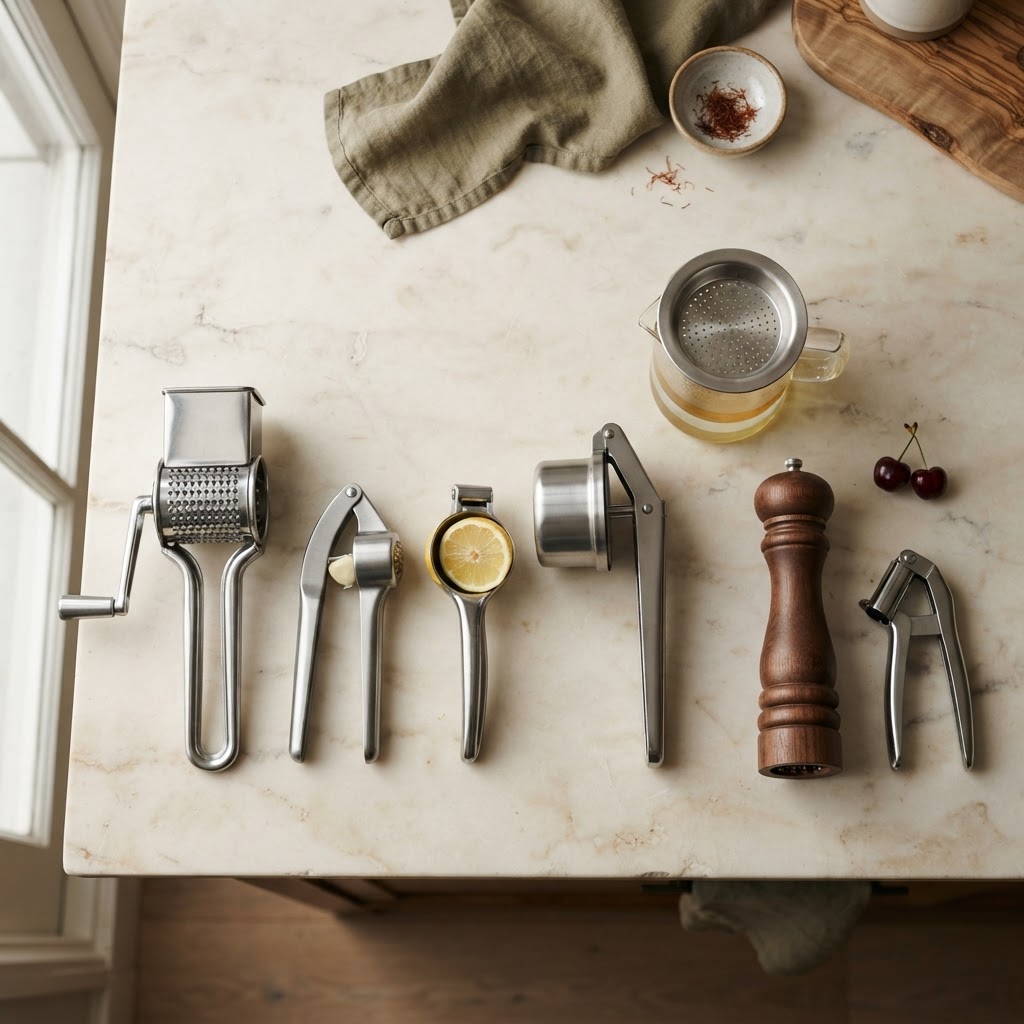
Best Kitchen Prep Tools for Faster Cooking (2026)
Efficiency in the kitchen is not merely about rushing through a recipe; it is about the art of mise en place, the foundational principle that transforms a chaotic cooking session into a rhythmic, almost meditative practice. As we move into 2026, the home kitchen has become a high-tech laboratory where the right tools act as an extension of your own hands, drastically reducing prep time while simultaneously increasing the precision of your final dish. Many home cooks struggle because they rely on blunt knives or improper gadgets that turn simple tasks like dicing an onion or peeling garlic into tedious, hour-long ordeals. By refining your arsenal of prep tools, you reclaim those lost minutes and shift your focus from manual labor to the actual nuance of flavor development and heat management.
Investing in high-quality prep gear is the single most effective way to elevate your culinary game from "dinner is served" to "this is a restaurant-quality experience." When your tools are sharp, ergonomic, and perfectly suited to the task at hand, the physical resistance of cooking vanishes, leaving you with more energy to dedicate to complex techniques like emulsifying sauces or properly searing proteins. I have spent years in professional kitchens watching chefs shave seconds off their prep time with tools that are often overlooked by the average home cook, and my mission here at Blame The Chef is to bring those secrets directly to your countertop. We are going to explore the modern essentials that define 2026, ensuring your kitchen is as efficient as it is creative.
The journey to faster cooking begins with the realization that your equipment should never fight against you. From specialized graters that maintain the integrity of delicate herbs to high-performance mandolines that ensure uniform cooking times, every piece of gear discussed in this guide has been vetted for its ability to save time without sacrificing quality. As you read through these recommendations, consider your own workflow; identify the bottlenecks where you find yourself most frustrated or tired, and realize that a simple tool upgrade is often the only thing standing between you and a more enjoyable culinary life. Let’s dive into the essential prep tools that will redefine how you cook in the coming year.
The Foundation of Speed: Precision Cutting Tools
The heart of any fast, efficient kitchen is a collection of knives that stay razor-sharp and comfortable in the hand. In 2026, the shift is toward high-carbon stainless steel alloys that balance edge retention with ease of sharpening. A chef's knife isn't just a tool; it is a precision instrument, and when you are working with a knife that has been honed to a 15-degree angle, the physical effort required to slice through a firm carrot or a delicate tomato is cut in half. Beyond the standard chef’s knife, every home cook should invest in a petty knife for smaller, intricate work, which allows for faster maneuverability when trimming fat or cleaning mushrooms.
Maintaining Your Edge
To keep your prep speed high, you must incorporate a regular honing routine into your workflow. Never trust a dull knife, as it not only slows you down but poses a safety risk by requiring more pressure to cut, which increases the likelihood of slipping. Use a ceramic honing rod every time you start your prep, holding the blade at a consistent 20-degree angle. This realigns the edge, ensuring that your knife glides through proteins and vegetables with minimal resistance.
"A sharp knife is not just a tool for efficiency; it is an act of respect for your ingredients and a safeguard for your physical longevity in the kitchen."
The Mandoline Revolution
For tasks like making paper-thin radish slices or consistent potatoes for a gratin, the mandoline is unmatched. In 2026, modern mandolines feature micro-adjustable dials that allow you to set the thickness to the exact millimeter, eliminating the guesswork that often leads to uneven cooking. When using a mandoline, always utilize the safety guard or a cut-resistant glove; speed is only useful if you remain injury-free. Aim for consistent movement rather than raw speed to ensure uniform texture across your entire batch of ingredients.
Masterful Ingredient Preparation with Micro-Tools
Oftentimes, the smallest prep steps take the longest, such as grating ginger, zesting citrus, or mincing small aromatics. A micro-plane or rasp-style grater is a game-changer for speed. Unlike traditional box graters, these tools have hundreds of tiny, razor-sharp teeth that create an almost silken texture, which helps ingredients like garlic and ginger melt into sauces almost instantly. By grating your aromatics rather than hand-mincing them, you increase the surface area exposed to heat, allowing flavors to infuse in a fraction of the time.
The Power of Zesting
Professional chefs know that the oil-rich skin of citrus is where the true flavor resides. A high-quality rasp grater allows you to harvest only the colorful zest without digging into the bitter white pith. For a bright, punchy vinaigrette, zest directly into your mixing bowl. The fine particles will emulsify into your oil and vinegar base much more effectively than larger, uneven strips, creating a balanced, professional-grade dressing in under thirty seconds.
Efficiency in Aromatics
Consider the time spent peeling individual cloves of garlic. By using a silicone garlic press or a heavy-duty garlic rocker, you skip the tedious task of mincing entirely. While some traditionalists argue that pressing garlic destroys its structure, for high-speed weeknight cooking, the benefit of having immediate access to crushed, flavorful aromatics outweighs the minute loss in texture. If you must chop, master the rocking motion—keeping the tip of your chef’s knife on the cutting board while driving the heel down in rhythmic pulses.
High-Performance Mixing and Emulsification
Mixing bowls and immersion blenders have evolved significantly by 2026, with an emphasis on ergonomic design and heat-tempered materials. Using a deep-walled, non-slip mixing bowl ensures that you can whisk vigorously without spilling, allowing you to whip egg whites or emulsify heavy vinaigrettes in record time. When choosing bowls, look for stainless steel sets that are lightweight but durable, which allows for rapid temperature control if you place them in a larger bowl of ice or warm water for tempering delicate sauces.
The Immersion Blender Advantage
An immersion blender (or stick blender) is perhaps the most underrated tool for fast cooking. Instead of transferring hot soups or sauces into a traditional blender—which is dangerous, messy, and time-consuming—you can blend directly in the pot. For a creamy vegetable soup, ensure you blend for at least sixty seconds to fully break down fibers, creating a silky consistency that mimics the results of a commercial high-speed blender. This tool is also perfect for making quick batches of mayonnaise or hollandaise, where constant emulsion is key to preventing a broken sauce.
"True kitchen speed comes from minimizing the transition between steps; if you can prepare it in the pot, you save the time you would have spent cleaning an extra blender jar."
Precision Measurement
Speed is nothing without consistency, and consistency is built on ratios. In 2026, stop relying on volumetric measuring cups and switch entirely to a digital kitchen scale. Measuring ingredients by weight—grams, specifically—is significantly faster than fiddling with dry cups that never level off properly. A ratio of 3:1 oil to vinegar for dressings, or precisely 1.5% salt by weight for brining meats, ensures your recipes work every single time without the need for troubleshooting.
Advanced Gadgets for Batch Processing
Batch prep is the secret weapon of the professional chef, and having the right gadgets to handle large volumes of work is essential. A food processor with an attachment suite—slicing discs, shredding blades, and dough blades—can turn an hour of labor into five minutes of work. Use the shredding disc for carrots, cabbage, or cheese, which allows you to prep components for several meals in one go. The key to successful batch processing is organization; have your storage containers ready to receive the ingredients immediately so that your workstation remains clean and ready for the next task.
Streamlining Vegetable Prep
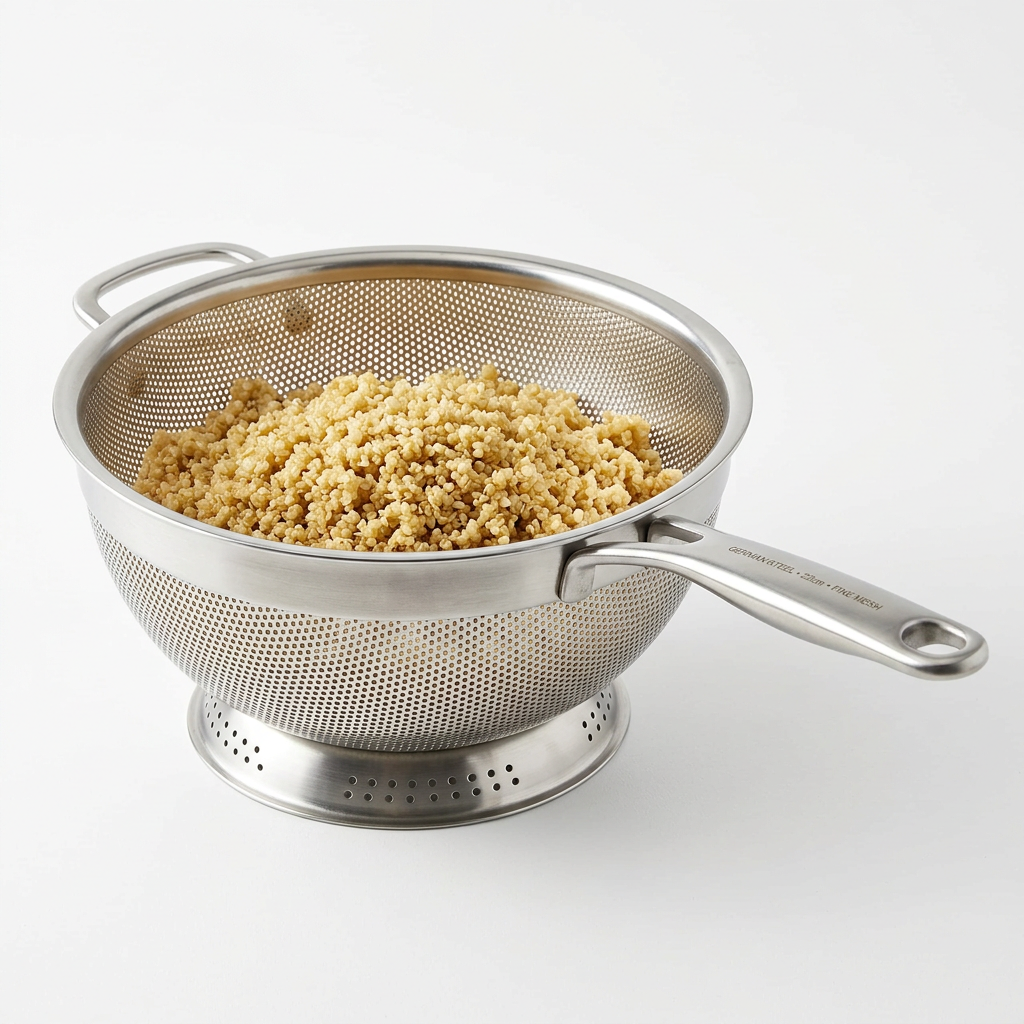
For large dinners, utilize a large-format colander to wash all your greens at once, then transfer them to a high-speed salad spinner. Excess water is the enemy of a good sear or a crisp salad; spinning your greens dry in under ten seconds ensures that dressings stick and surfaces caramelize properly in the pan. Never skip the drying step, as moisture-heavy produce will boil in its own steam rather than browning, leading to soggy textures that no amount of seasoning can fix.
Tool Organization
Your prep area should be a "landing zone" where everything is within arm’s reach. Keep your most-used tools on a magnetic knife strip or in an open utensil caddy. In 2026, the trend is toward visual clarity; if you have to dig through a cluttered drawer for a peeler or a thermometer, you have already lost valuable momentum. Arrange your space so that your cutting board is the center of gravity, with your knife, bench scraper, and prep bowls radiating outward.
Essential Thermal Monitoring and Control
Cooking faster often leads to the mistake of cooking at temperatures that are too high, which leads to burnt exteriors and raw interiors. To maintain speed while ensuring excellence, you must utilize a digital instant-read thermometer. This is not a suggestion; it is a requirement for any cook serious about speed and safety. By knowing exactly when your protein hits 125°F for medium-rare, you remove the need for "guessing" and the anxiety of overcooking, which is the ultimate time-waster.
Mastering Internal Temperatures
Understanding the "carry-over" cooking effect is vital. For large cuts of meat, take the protein out of the heat source when it is 5-10 degrees below your target internal temperature. This allows the heat to redistribute naturally while the meat rests, saving you time and ensuring perfection. Use a probe thermometer that stays in the meat during long roasts, allowing you to set an alarm for the precise moment the temperature threshold is reached.
Induction Cooking Efficiency
If your kitchen configuration allows, switching to induction burners is the single largest upgrade you can make for speed. Unlike gas or radiant electric, induction heats the cookware directly via magnetic fields, bringing a pot of water to a boil in under ninety seconds. This technology allows for incredibly fine-tuned temperature control, preventing scorched sauces and allowing you to simmer delicate reductions with perfect precision. If you are serious about cooking faster in 2026, induction is the future of the home kitchen.
Professional Techniques to Maximize Efficiency
Even with the best tools, you must employ the right physical techniques to maximize your speed. The bench scraper is perhaps the most important tool that home cooks ignore. Use it to clear your board, scoop up piles of chopped vegetables, and transfer them into the pan. By using the scraper, you keep your knife edge safe from being dragged across hard surfaces, and you move ingredients in one motion rather than picking them up by the handful.
The Art of the "Clean as You Go"
Efficiency is a cycle. While your proteins are searing, use that window of time to rinse your prep bowls or wipe down your station. A cluttered board leads to a cluttered mind, and a cluttered mind leads to slow, hesitant cooking. Set up a "trash bowl" on your station where you can toss scraps immediately, rather than walking back and forth to the trash can. This simple habit keeps your workspace clear and allows you to move seamlessly between tasks.
Mastering Your Heat
To cook faster, you must understand the Leidenfrost effect—when a pan is hot enough, water droplets will dance and evaporate instantly. Only when your pan is preheated to the correct temperature should you add your oil and then your ingredients. By ensuring your pan is ready, you prevent sticking and ensure a rapid, high-quality sear that adds complex flavor, reducing the overall time needed to develop depth in your sauces or crust on your meats.
"Speed in the kitchen is never about moving faster; it is about moving smarter, with intent, and with tools that never fail to do their job."
The Final Polish: Refining Your Workflow
As we look toward the culinary landscape of late 2026, the philosophy remains clear: success is found in the preparation. By investing in a high-carbon steel knife, a versatile mandoline, a digital scale, and an instant-read thermometer, you provide yourself with the technological backbone to tackle any recipe with confidence. Remember that your tools are there to serve you, not to be looked at or stored in a box. Keep them sharp, keep them clean, and most importantly, use them every single day to build the muscle memory required for true efficiency.
Continual Improvement
Every time you cook, take thirty seconds at the end of the meal to reflect on where you were slowed down. Was your knife not sharp enough to cut through that squash? Did you spend too much time whisking by hand when an immersion blender would have been faster? Identifying these small friction points is how you grow as a cook. Over time, your kitchen will evolve into a space where you don't feel like you are working, but rather, dancing with the ingredients.
Building Your Culinary Library
Keep a small notebook near your prep station. Jot down notes on timing—how long it actually took to prep your vegetables versus what the recipe said. This is how you develop a "chef’s intuition." By tracking your own speed and performance, you gain a deep understanding of your own capabilities, allowing you to plan your dinners with an accuracy that would make a professional caterer jealous. Do not blame the recipe for a slow dinner; blame the prep, and then fix it with the right tools.
Conclusion
Elevating your cooking speed is a journey of refinement, requiring both the right equipment and the right mindset. By adopting the professional standards of mise en place, precision measurement, and high-performance tools, you shift the focus from the labor of preparation to the pleasure of cooking. Whether you are searing a steak to perfection using a reliable thermometer or whipping up a vibrant, emulsion-based dressing in seconds, these prep tools are the foundation upon which your culinary confidence is built.
In 2026, the modern kitchen is defined by those who are willing to bridge the gap between amateur effort and professional-grade efficiency. Let these recommendations serve as your starting point, but remember that the true secret to faster, better cooking lies in your consistency and your desire to improve. Treat your tools with care, organize your workspace with purpose, and approach every ingredient as an opportunity to practice your craft. You now have the knowledge and the equipment checklist necessary to reclaim your time and elevate your flavors. Go forth and cook with intention, and always remember—if the prep is solid, the result will be extraordinary.
Get the Next Recipe
Weekly recipes, techniques, and gear picks — straight to your inbox.
