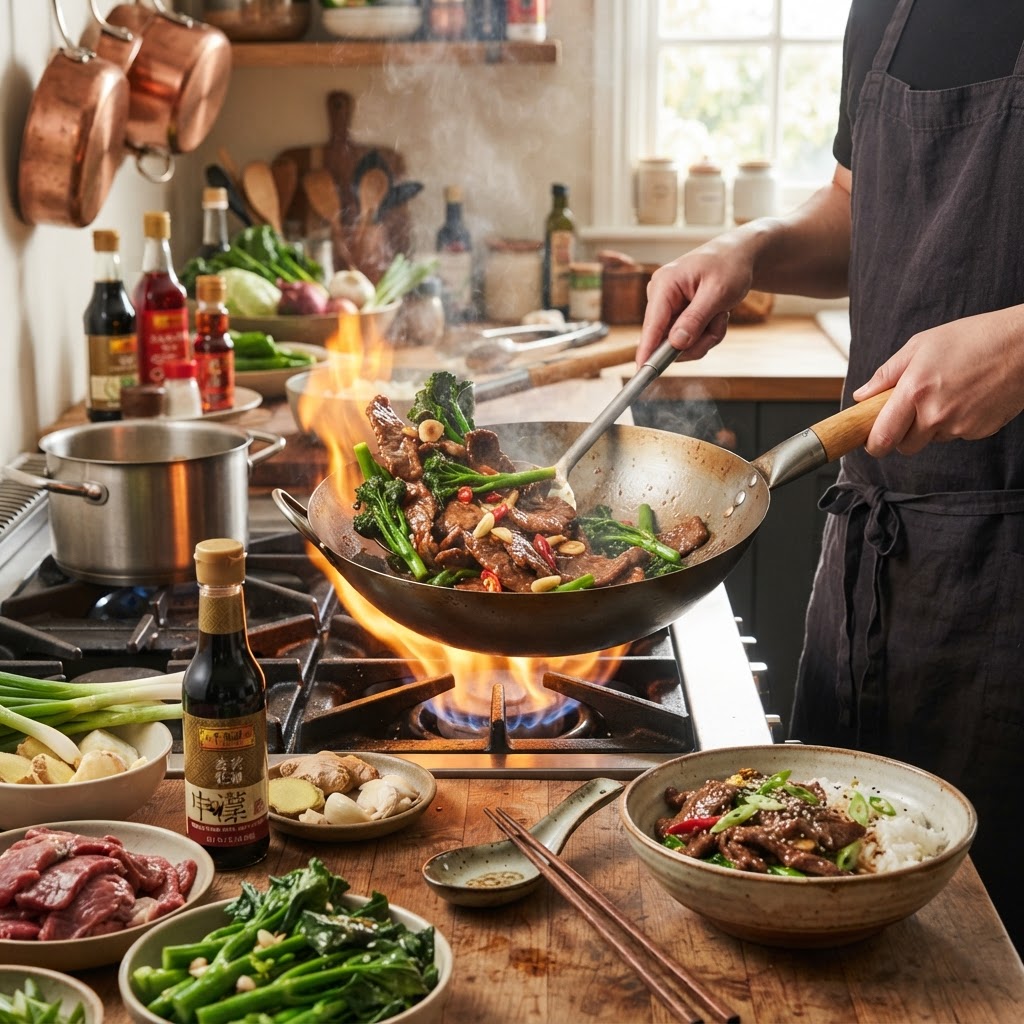
Beyond the Wok: Mastering the Fundamentals of Cantonese Stir-Frying at Home
Cooking is an art that connects us to centuries of culinary tradition, and few cuisines exemplify this artistry quite like Cantonese. Renowned worldwide for its delicate balance of flavors, vibrant color, and rapid techniques, Cantonese stir-frying stands as a testament to precision, timing, and understanding of ingredients. While it may seem intimidating at first glance—especially with its lightning-fast cooking times and seemingly simple ingredient list—mastering Cantonese stir-fry at home is entirely achievable with the right approach, tools, and mindset. The goal is not just to replicate restaurant dishes but to unlock the techniques that make these dishes so uniquely vibrant and flavorful.
For many home cooks, the dilemma often centers around equipment, ingredient handling, and timing. Wok cooking requires a different set of skills compared to traditional skillet or sauté pan techniques, emphasizing high heat, quick motion, and immediate seasoning. The good news is, with a little practice and an understanding of key principles, you can recreate authentic Cantonese stir-fried dishes in your own kitchen, impressing friends and family with brightly flavored, perfectly cooked fare. It's about understanding the fundamental mechanics—the temperature control, ingredient prep, and timing—that turn ordinary ingredients into extraordinary dishes.
Cantonese stir-frying is more than just a cooking style; it’s an art of sequence and precision. The beauty lies in the way ingredients are timed and combined, ensuring each component reaches its optimal texture and flavor without overcooking or under-seasoning. This post is designed to serve as your comprehensive guide, walking you through every essential aspect—from choosing your ingredients and preparing your wok to understanding professional techniques and troubleshooting common pitfalls. Once you grasp the core concepts, you'll find that creating stunning, restaurant-quality Cantonese stir-fries at home becomes not just possible but also profoundly satisfying.
---
The Essential Wok: Your Most Valuable Kitchen Tool
Nothing quite captures the spirit of Cantonese cooking like a well-seasoned wok. This traditional carbon steel vessel is the cornerstone of authentic stir-frying because of its ability to reach incredibly high temperatures quickly and distribute heat evenly. A good wok is an investment—not just financially but also in the time you spend learning to care for it. Unlike heavy cast iron, a seasoned carbon steel wok heats up rapidly and cools down swiftly, giving you unparalleled control over your cooking process.
Why a Wok Is Superior for Stir-Frying
In traditional Cantonese cooking, high heat and rapid movement are essential. The wok's curved shape allows you to toss ingredients effortlessly, minimizing oil use while maximizing even heat exposure. Its shape provides more surface area for caramelization and browning, giving stir-fries their characteristic umami-rich flavor.
The conical shape condenses heat at the bottom, which is crucial when cooking proteins like chicken, beef, or seafood. The sides stay relatively cooler, preventing ingredients from overcooking or burning at the edges while you work through the stir-fry. This structure also facilitates "push and lift" movements vital for even cooking and ingredient distribution.
Choosing the Right Wok
If you're just beginning, consider the following options:
Look for a wok with a flat bottom if you plan to use it on an electric stove. For gas stoves, a rounded bottom can be more traditional, but you’ll often need a wok ring to stabilize it.
Proper Wok Care and Seasoning
A seasoned wok not only prevents rust but also develops a natural non-stick surface. After cleaning, heat the wok and rub it with a thin layer of oil to maintain seasoning. Avoid soap, which can strip away the seasoning—use hot water and a soft brush instead.
As you cook, your wok will develop a rich patina that enhances flavor and non-stick properties, crucial for avoiding sticking or burning during high-temperature stir-fries. Proper storage (dry and lightly oiled) will keep your wok in prime condition for countless meals to come.
**Pro Tip:** Never use soap on a seasoned wok! Instead, scrub with hot water and a stiff brush, then heat and oil to maintain seasoning.
---
Ingredient Selection and Preparation
Authentic Cantonese stir-fry is rooted in freshness and balance. The ingredients should be seasoned, chopped, and prepped meticulously before you start cooking—timing is key here. The ingredients are typically sliced against the grain, cut uniformly, and sometimes marinated in lightweight seasonings to enhance flavor without overpowering the natural taste.
Vegetables and Aromatics
Common vegetables used include Chinese broccoli (gai lan), bok choy, snap peas, bell peppers, and mushrooms. All should be washed and sliced into uniform bite-sized pieces—this ensures even cooking and consistency in texture.
Aromatics like garlic, ginger, green onions, and shallots are the backbone of flavor. Mince garlic and ginger finely—rough cuts can lead to uneven flavor and burning during high heat. Green onions are often sliced diagonally into 2-inch lengths for both flavor and visual appeal.
Proteins and Marination
Choose high-quality proteins like chicken breast, pork loin, beef sirloin, or seafood (shrimp, scallops). Each has different prep needs. For example:
The Art of Seasoning and Sauces
Cantonese stir-fries rely heavily on balanced sauces. Typical ingredients include:
Ratio and timing are everything. Usually, a standard sauce mixture for one pound of protein might be:
Mix the sauce beforehand so it’s ready to go as soon as your ingredients hit the wok. This mise en place approach is crucial for high-heat stir-frying since the process is so swift.
---
Mastering the Stir-Fry Technique
The heart of authentic Cantonese cooking is the stir-fry method. This technique involves cooking small, uniform portions quickly over high heat while constantly stirring or tossing ingredients to ensure even cooking and flavor development.
Preparing Your Workspace
Before you begin, organize everything within arm's reach. This includes:
This "station setup" minimizes wasteful movement during cooking and allows for rapid execution.
High Heat and Timing
The key to success is high heat, ideally between 400-500°F (200-260°C). Most home stoves peak at a lower temperature, but with a good wok and proper pre-heating, you can get close enough.
Steps to mastering the stir-fry:
Professional Tips for Perfect Results
**"The secret to Cantonese stir-frying is in the speed and heat; it’s about getting everything cooked quickly at the right temperature, not long simmering or low heat."**
---
The Role of Sauces and Flavors
Cantonese dishes famously feature balanced, layered flavors that are often achieved through a combination of umami-rich sauces and delicate seasoning. The key is to add sauces in the final stages of cooking to preserve their vibrant flavors and ensure proper thickening.
Building Aromatic and Flavor Layers
Start with aromatics and then introduce sauces. Allow the sauces to reduce slightly, resulting in a glossy, flavorful coating that clings to each ingredient.
Adjusting Consistency and Flavor
Sampling and Tweaking
Always sample your stir-fry before serving. If it’s too salty, add a splash of water or chicken broth; if bland, a little more soy or oyster sauce can boost flavor.
**Pro Tip:** Keep your sauce mixture cold before adding to your hot wok; this prevents sudden temperature drops that can cause ingredients to seize or sauce to break.
---
Professional Chef Tips for Elevating Your Home Cooking
While the fundamental techniques are simple, each professional chef has a few tricks that elevate their stir-fries from good to outstanding:
Common Pitfalls and How to Avoid Them
Additional Techniques
---
Advanced Techniques and Variations
Once you’re comfortable with the basics, you can explore techniques that add complexity:
Marination for Depth
Using Aromatic Oils
Incorporating Rice or Noodles
Vegetarian and Vegan Options
---
Troubleshooting Common Issues
Even seasoned home cooks encounter hurdles. Here's a quick troubleshooting guide:
| Issue | Cause | Solution |
|---------|--------------|------------|
| Food sticks to wok | Wok not hot enough; insufficient oil | Preheat wok thoroughly; add oil just before ingredients |
| Ingredients overcook quickly | Wok too hot; timing mistake | Keep moving ingredients; remove cooked items promptly |
| Sauce is gloopy or burnt | Added too much sauce or lowered heat | Use correct sauce ratios; keep heat high during sauce reduction |
| Vegetables are soggy | Overcooking or too much moisture | Add vegetables last; stir-fry briefly until tender-crisp |
Remember, technique improves with practice. Don't be discouraged by initial failures—each stir-fry teaches something new.
---
Final Thoughts
Mastering Cantonese stir-frying at home is an attainable goal that rewards with incredibly flavorful, healthy, and visually appealing dishes. The key ingredients are high heat, rapid movement, and precise timing, combined with well-prepared ingredients and proper tools. The wok becomes an extension of your hand, fostering a rhythm that, once learned, can produce dishes that rival those from professional kitchens.
Invest in a good wok, refine your prep techniques, and don't be afraid to experiment with flavors and ingredients. Over time, you'll discover your own signature stir-fry style—one that celebrates the vibrant spirit of Cantonese cuisine. Remember, every great chef starts with a simple stir-fry, and with patience and passion, you too can turn your kitchen into a bustling Hong Kong street food stall.
Enjoy the journey of mastering this technique, and may every stir-fry bring joy and delicious discovery. Happy cooking!

Get the Next Recipe
Weekly recipes, techniques, and gear picks — straight to your inbox.
