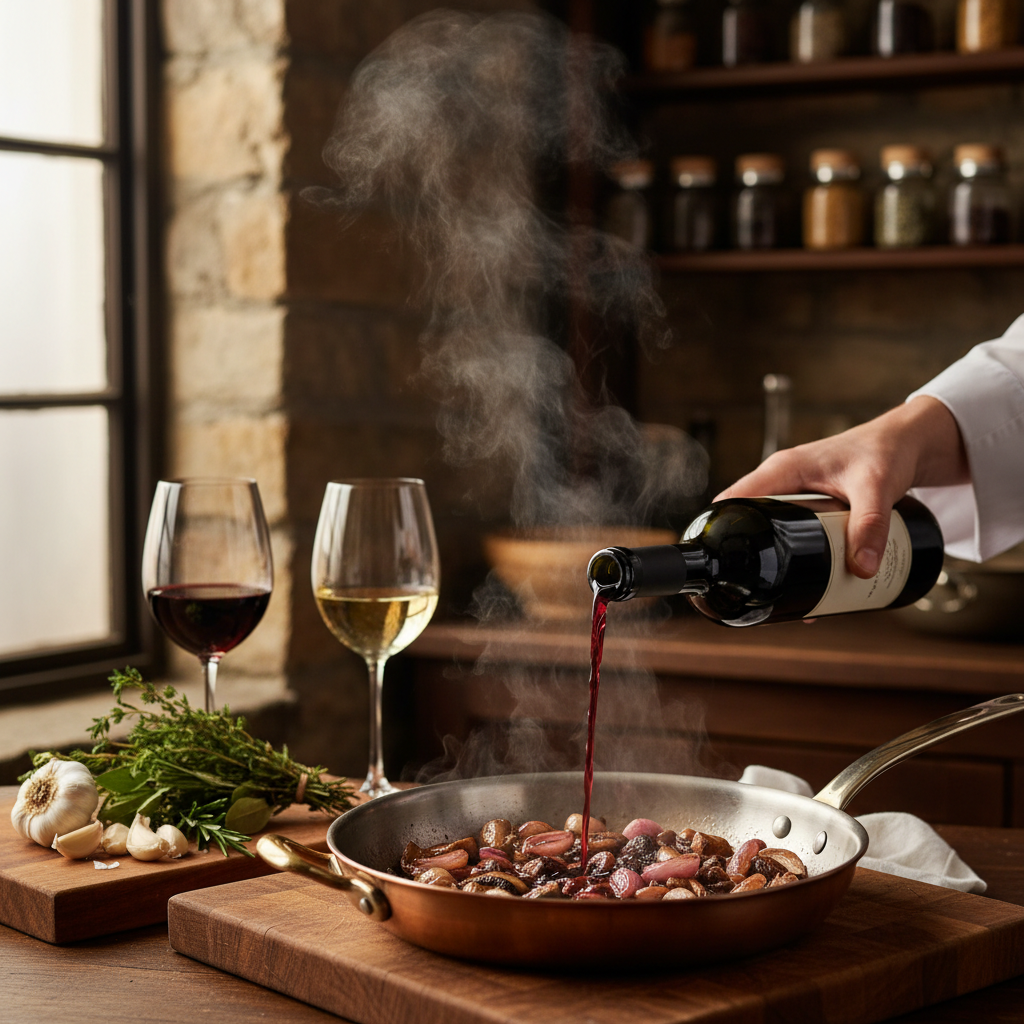
Cooking With Wine: Flavor Building Technique
Techniques

Cooking With Wine: Flavor Building Technique

C
By The Chef
|January 30, 2026|11 Min Read
📋
Recipe Card
0 ingredients · 4 steps
Servings
4
Ingredients
Instructions
Progress
0%

Cooking with wine is a time-honored technique that has been utilized by chefs and home cooks alike for centuries. This method of incorporating wine into various dishes not only enhances flavor complexity but also deepens the overall sensory experience of the meal. While many people might think that using wine in cooking is simply about adding a splash for flavor, it is an intricate skill that involves understanding how wine interacts with other ingredients and the cooking process. From simmering stews to delicate sauces, the right choice of wine can elevate the humble to the extraordinary, making every bite a celebration of taste.

As you step into the world of culinary artistry, it's essential to recognize the diverse ways in which wine can influence a dish. Red, white, rosé, or sparkling wines each carry unique properties that can contribute to a dish's aroma, taste, and even texture. Whether you're deglazing a skillet after searing meats, enriching a vibrant pasta sauce, or preparing a celebratory batch of coq au vin, the right application of wine is crucial for achieving an authentic flavor profile in your cooking. Moreover, understanding the principles of flavor building can transform ordinary recipes into memorable dining experiences.

In this detailed guide, we will delve into the multifaceted techniques of cooking with wine. We will explore the different types of wines suitable for cooking, the science behind flavor development, and a range of practical cooking tips that will help you integrate wine into your culinary repertoire. By the end of this post, you'll be equipped with the knowledge and confidence to harness the complexities of wine, allowing you to create dishes that sing with rich, harmonious flavors.

The Basics of Cooking with Wine

Before we dive deeper into techniques and recipes, it's vital to understand the fundamental principles of cooking with wine. Generally, cooking wine serves two primary purposes: enhancing flavors and tenderizing meats. When wine is introduced to a dish, it acts as a flavor catalyst, stimulating our taste buds and allowing us to experience the dish more fully.

Choosing the Right Wine

One of the most significant factors to consider is the selection of the wine itself. Not all wines are created equal, and the type of wine you choose can dramatically affect the flavor outcome of your dish. Here are some tips for selecting the right wine:

●Quality: Always select a wine that you enjoy drinking. If it tastes good in the glass, it will taste good in your dish. Cooking wines that are low quality or overly salty can detract from your food.
●Variety: Matching the wine with the primary ingredient can enhance the dish. For instance, red wines such as cabernet sauvignon or merlot work well with beef dishes, while white wines like sauvignon blanc or chardonnay pair beautifully with poultry or seafood.
●Flavor Profile: Consider the characteristics of the wine. A fruity wine may add sweetness, whereas a tannin-heavy wine could introduce bitterness.

"Select wines that complement and enhance the main ingredient for an enriched overall flavor."

Understanding Wine Cooking Techniques

Wine can be employed in several cooking techniques, including marinating, deglazing, braising, and simmering. Each method has its unique approach to flavor integration. Here’s a brief overview of some common techniques:

1.Marinating: Combining wine with herbs, spices, and aromatics makes an excellent marinade that can infuse flavor and tenderize meats. The acidity in wine helps to break down proteins, creating a more succulent final dish.
2.Deglazing: This technique involves adding wine to a hot pan after sautéing meat or vegetables. The process lifts the flavorful bits stuck to the bottom and incorporates them into the sauce, creating depth and richness.
3.Braising: Cooking meat slowly in a combination of wine and broth enhances tenderness and flavor while allowing the wine’s characteristics to meld with the dish over time.
4.Simmering: Adding wine to simmering sauces, stews, or soups allows the alcohol to evaporate, leaving behind the complex flavors of the wine, which can transform a simple dish into something extraordinary.

Cooking Temperatures and Times

When cooking with wine, pay attention to heat levels and time to ensure optimal flavor extraction.

●Simmer at a low temperature (around 180°F to 205°F) to allow flavors to meld without boiling off too much alcohol too quickly.
●Slow Cook or Braise: Large cuts of meat can benefit from low and slow cooking. A braise cooked at around 300°F for 2-3 hours can yield melt-in-your-mouth results.
●Deglaze Immediately: After cooking, deglaze with wine while the pan is still hot (about 350°F) to effectively lift the fond and incorporate it into your dish.

"Cooking with wine is about patient extraction, allowing flavors to develop gradually over time."

Wine Pairing with Different Cuisines

Understanding how to pair wine with various cuisines can significantly affect the final outcome of your dish. Here, we’ll break down wine pairings for several popular culinary traditions.

French Cuisine

French cuisine offers a myriad of dishes where wine plays an integral role:

1.Coq au Vin: A classic dish where chicken is braised with red wine, mushrooms, and bacon, highlighting the wine's ability to deepen flavors.
2.Beef Bourguignon: This traditional dish uses Burgundy wine, enriching the meat and vegetables with both acidity and depth.
3.Soupe à l'oignon: Onions are caramelized and then deglazed with white wine to build a rich, savory base.

Italian Cuisine

Italian cooking is known for its simplicity, and wine plays a subtle yet powerful role:

1.Pasta Sauces: A splash of white wine in sauces like marinara or puttanesca can brighten flavors.
2.Risotto: Traditionally, risotto is finished with white wine, enhancing the creamy consistency and flavor profile.
3.Osso Buco: The slow braising of veal shanks with white wine and aromatics elevates this dish, imparting depth and richness.

Mediterranean Cuisine

Mediterranean dishes often feature wine as a key ingredient:

1.Paella: Spanish rice dishes incorporate wine to enhance flavor complexity and balance richness from seafood and meats.
2.Tagine: Moroccan tagines can use both red and white wine to deepen the flavors of spices and tenderize meats.
3.Baba Ghanoush: A subtle addition of white wine during the preparation can provide a nice acidity that complements the smokiness of the eggplant.

Enhancing Sauces with Wine

Wine's role in sauce-making cannot be overstated. A good sauce can elevate the simplest meat or vegetable dish into a culinary masterpiece. Here are techniques specifically for enhancing sauce recipes with the use of wine.

Basic Sauces

Start with classic sauces and modify them by incorporating wine:

1.Béchamel: Add a splash of white wine for acidity and flavor when preparing this classic sauce.
2.Red Wine Reduction: Reduce red wine with shallots and herbs until thickened; this makes an excellent sauce for steak or lamb.
3.Garlic Butter Sauce: Incorporate white wine with butter for a richer sauce perfect for drizzling over seafood or vegetables.

Steps to Enhance Sauces with Wine

●Start with a Base: Begin with aromatics—shallots, garlic, or herbs—sautéing them in oil or butter.
●Deglaze: Pour wine into the hot pan after the aromatics have softened, scraping the bottom to collect browned bits.
●Reduce: Allow the wine to simmer, reducing by half to concentrate flavors.
●Finish with Fat: Add butter, cream, or olive oil to round out the flavors, achieving a balanced sauce.

Advanced Sauces

For those looking to elevate their skills, consider advanced techniques:

1.Coq au Vin Sauce: After cooking the chicken, the leftover wine can be reduced into a sauce enriched with the cooking juices.
2.Bolognese: Incorporating red wine adds depth to this Italian classic; allow it to simmer for at least 30 minutes to meld flavors.
3.Beurre Blanc: This French sauce traditionally made with white wine can be made even more complex with the addition of herbs or shallots.

"The key to a great sauce using wine lies in the careful balance of flavors and reduction for concentration."

Flavor Pairing with Wine in Meals

Every ingredient adheres to a harmonious relationship when building flavors in meals. Pairing wine correctly with your meal creates a cohesive culinary experience, allowing each element to shine. Here’s how to achieve that synergy.

Balancing Acidity and Sweetness

Wine can add a level of acidity or sweetness to dishes.

●Acidity: For dishes that are rich and fatty (like duck or pork), a wine with good acidity can help cut through the heaviness. Consider using Pinot Noir for its bright acidity in red or Sauvignon Blanc in white.
●Sweetness: A dish lacking sweetness could benefit from a sweeter wine like a Moscato, perfect for balancing savory ingredients in a meal.

Working with Bitter Ingredients

Wine can help to mask some bitterness while enhancing the characters of the dish:

1.Braised Greens: Adding a splash of red wine while sautéing bitter greens provides a more balanced flavor.
2.Bitter Chocolate Desserts: For rich desserts, like flourless chocolate cake, the addition of red wine can soften and balance the bitterness of chocolate.
3.Coffee-Based Sauces: In coffee-rich sauces, use a red wine with bold flavor to complement the bitterness of coffee.

Complementing Spices and Herbs

Different wines can accentuate or soften spice profiles in dishes:

●Cilantro and Cilantro-based dishes: Complement it with a fragrant white wine like a Gewürztraminer.
●Spicy dishes: Use a low-tannin wine like Gamay or Beaujolais to balance the heat of spicy foods.
●Her South Asian and Mediterranean Dishes: Those using cumin can go well with bold reds, such as Shiraz.

Practical Tips and Techniques for Cooking with Wine

Mastering the art of cooking with wine involves more than knowing which wine to choose—it's about application and technique throughout the cooking process. Here are some practical tips to ensure success in every dish.

Proper Storage of Wine

1.Store wines upright for frequent use, but always lay bottles on their side for long-term storage.
2.Maintain a cool temperature (ideally between 50°F to 55°F).
3.Avoid direct sunlight, which can damage wine.

Cooking with Leftover Wine

●Reduce any leftover wine into a concentrated jus.
●Freeze leftover wine in an ice cube tray, making it easy to use later without opening a new bottle.
●Use it in marinades or sauces as explained earlier to prevent any waste.

Timing is Everything

●Add wine early when braising or simmering meats to allow time for flavors to meld.
●For quick sautéed dishes and sauces, introduce the wine mid-way through to maintain its character without losing its essence through overcooking.
●In delicate sauces, add wine last to preserve aroma and flavor.

"Cooking with wine is a journey, not just a destination. Allow yourself to experiment with timing and techniques."

Wine as a Cooking Ingredient: Benefits and Considerations

Using wine as a cooking ingredient can enhance flavors, but it also comes accompanied by its own set of considerations. It’s essential to understand both its advantages and potential drawbacks.

Benefits of Cooking with Wine

●Flavor Depth: Wine adds unique flavor aspects that enhance the complexity of dishes.
●Aromatic Notes: Aromas released during cooking can enrich the overall dining experience.
●Natural Tenderization: Acids in wine break down tough proteins, making meats more tender.

Potential Drawbacks

1.Alcohol Taste: If not cooked long enough, the raw alcohol flavor can remain in your dish, detracting from the final taste.
2.Pairing Mismatches: Poor wine choices can overwhelm or compromise a dish’s flavor profile. Careful selection is critical.
3.Allergens: Be aware of guests who may have allergies or sensitivities to sulfur and other compounds found in some wines.

Conclusion

In the world of culinary arts, understanding how to cook with wine is a skill that can be developed over time, allowing you to create meals that are both memorable and indulgent. From lush sauces to savory braises, wine enhances flavors and transforms ordinary dishes into extraordinary celebrations of taste.

As a home cook, remember to select quality wines you enjoy drinking, pairing them thoughtfully with the dishes you create. Use the techniques we've discussed—whether marinating, simmering, or deglazing—to unlock layers of flavor that will impress your family and friends.

Embrace experimentation and trust your palate; soon, you will find that cooking with wine becomes second nature, opening a new door in your culinary journey. So pour yourself a glass, let your culinary creativity flow, and get cooking—because with wine, every meal can be an occasion to savor. Cheers to your delicious adventures in the kitchen!


🧰 Gear for this recipe
Tools our chefs reach for when cooking this
Miyabi Birchwood Chef Knife 9.5 inch
Knives & Cutting
Miyabi Birchwood Chef Knife 9.5 inch
★★★★★4.9
$250-$320
View on Amazon
Thermapen ONE Instant Thermometer
Thermometers
Thermapen ONE Instant Thermometer
★★★★★4.9
$99-$109
View on Amazon

As an Amazon Associate we earn from qualifying purchases.

🍳

Get the Next Recipe

Weekly recipes, techniques, and gear picks — straight to your inbox.

No spam, ever. Unsubscribe anytime.

YesChef - Learn from the world's best chefs
© 2026 Blame The Chef
🍳

Never Miss a Recipe

Weekly recipes, kitchen tips, and gadget picks — straight to your inbox.

No spam, ever. Unsubscribe anytime.