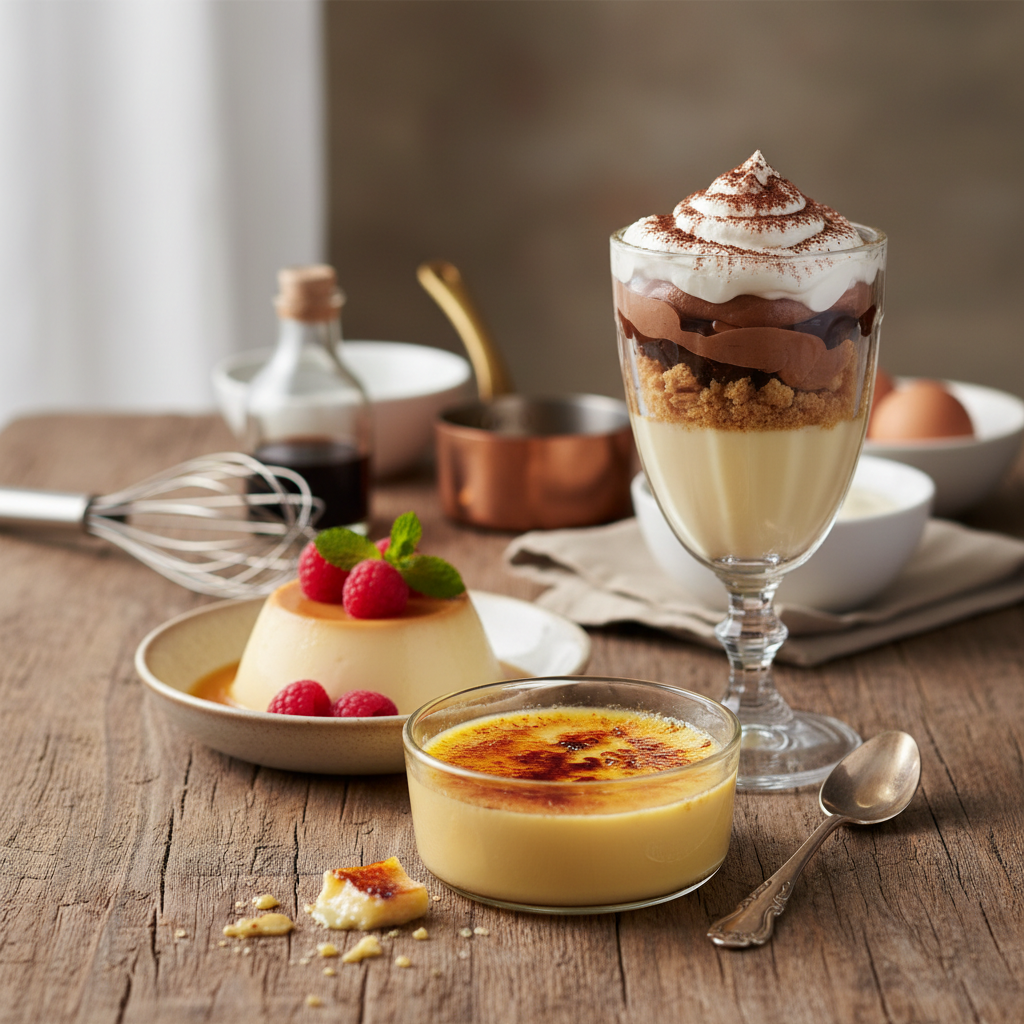
Custards and Creams: Mastering Delicate Bases
In the world of culinary arts, few creations are as refined and versatile as custards and creams. These delicate bases serve not only as delightful desserts on their own but also as fundamental components in a variety of dishes ranging from pastries to sophisticated sauces. The art of mastering custards and creams transforms a simple kitchen into a haven for culinary creativity, allowing home cooks to explore an array of flavors and textures. Whether it’s a silky crème brûlée, a luscious pastry cream, or a fluffy whipped cream, each of these bases deserves careful attention and practice, elevating the overall dining experience.
At the heart of these delicate preparations lies the science of balancing ingredients: eggs, dairy, sugar, and sometimes flavoring agents like vanilla or citrus zest must be combined with precision. Understanding the intricate role each ingredient plays allows the home cook to manipulate the outcome, resulting in perfectly smooth and creamy textures. The process may seem intimidating at first, especially given the potential for curdling or overcooking, but with practice and patience, anyone can achieve custards and creams that rival those of professional chefs.
As we embark on this culinary journey, we will explore different types of custards and creams, their varying applications, and the key techniques required to master them. Each section will provide not only recipes but also professional tips and insights to help you build confidence in your kitchen. So roll up your sleeves and prepare to dive into the world of custards and creams, where the only limit is your imagination.
The Classic Custard: Understanding the Basics
Custard is fundamentally a mixture of milk or cream and eggs, thickened by heat. It can be sweet or savory, baked or stirred, and comes in various textures depending on the cooking method and the proportions of its ingredients. The most classic version is a basic custard, often used in desserts, giving rise to velvety puddings and sauces.
Fundamental Ingredients and Ratios
The essential components of a basic custard include:
Combining these ingredients in the correct ratios is crucial for achieving the right texture. For a rich custard, the egg-to-liquid ratio should lean towards 1 egg for every ½ cup of liquid. Be careful not to overdo the sugar, as it can inhibit thickening.
Techniques for Perfect Custard
"The secret to a perfect custard lies in patience and careful attention to heat—hasty cooking leads to scrambled eggs, not silky custards."
Baking Custards
For baked custards like crème brûlée or flan, careful attention to temperature is essential. Bake them in a water bath (bain-marie) to ensure gentle cooking:
Checking for doneness can be tricky. Instead of using a thermometer, gently shake the baking dish; the custard should slightly sway without being liquid.
The World of Pastry Cream
Pastry cream, or crème pâtissière, is another essential custard in the pastry world, primarily used as a filling for éclairs, tarts, or cakes. It provides a creamy texture with a bit of firmness that holds its shape well.
Ingredients and Ratios
The combination of egg yolks and cornstarch results in a custard that not only has flavor but a substantial structure to support other pastries.
Steps to Make Perfect Pastry Cream
Flavor Variations
Once you have a handle on the basic pastry cream, consider experimenting with flavors:
"A good pastry cream is versatile—it can be the star of the show in a tart or the unsung hero in an éclair."
Whipped Cream: The Lightest Touch
There’s hardly a more versatile topping than whipped cream, which provides a fluffy texture and sweetness that complements a multitude of desserts. Making it at home is straightforward, and with a few tips, you can produce a luxurious whipped cream that outshines store-bought varieties.
Key Ingredients and Tools
Techniques for Light and Fluffy Whipped Cream
Flavor Variations and Uses
Whipped cream pairs beautifully with desserts like fruit tarts, cakes, and pies, but also serves wonderfully with coffee and hot chocolate.
"Homemade whipped cream is not just a topping; it is an experience that can transform an ordinary dessert into something extraordinary."
Mousse: The Enviable Combination of Custard and Whipped Cream
A mousse is a delightful combination of custard and whipped cream, achieving a balance of richness and lightness. It often includes whipped egg whites as well, adding airiness and volume to the dessert.
Essential Components
Preparation Steps for Mousse
Variations on Mousse
A properly made mousse will yield an airy yet decadent dessert that delights the palate.
Crème Anglaise: The Versatile Custard Sauce
Crème anglaise is a pouring custard that is typically used as a sauce over desserts. It’s rich, creamy, and can elevate everything from cake to fruit. The process for making crème anglaise is similar to that of a basic custard but usually has a lighter consistency.
Core Ingredients and Ratios
Crafting the Perfect Crème Anglaise
Serving and Storage
Crème anglaise can be served warm or chilled. It pairs excellently with cakes, pies, and even as a dip for fresh fruit.
"Crème anglaise is said to be the canvas upon which other desserts can shine— a delicate backdrop that enhances rather than overshadows."
Sauces and Uses for Custards and Creams
As a versatile element in many recipes, custards and creams can serve as fillings, toppings, or bases. Many popular desserts utilize one or more of these techniques, showcasing their transformative qualities.
Custard-Based Desserts
Cream-Based Sauces
Fusion Desserts
Combining various custards and creams can lead to innovative desserts that surprise and delight, such as:
By understanding the flexibility of custards and creams, you can elevate traditional recipes or invent new masterpieces to impress friends and family.
Conclusion
Mastering custards and creams is akin to entering the realm of culinary artistry. These bases open up a world of possibilities, from simple desserts to complex prize-winning pastries. With precise techniques and a little experimentation, home cooks can transform their kitchen into a hub of innovation, all while enjoying the process of creation.
As you venture forth to craft your custards, creams, mousses, and sauces, remember that practice makes perfect. Don’t shy away from mistakes—they are often the best teachers in the culinary world. As you grow more comfortable with the methods and ingredients, let your creativity flow, and consider how you can incorporate unique flavors or textures into your creations.
Armed with the knowledge of temperatures, ratios, and techniques, your newfound understanding will help you not only prepare desserts that impress but also nourish both body and spirit through the joy of cooking. Dive in, experiment, and savor your culinary adventures with these delightful bases!


Get the Next Recipe
Weekly recipes, techniques, and gear picks — straight to your inbox.
