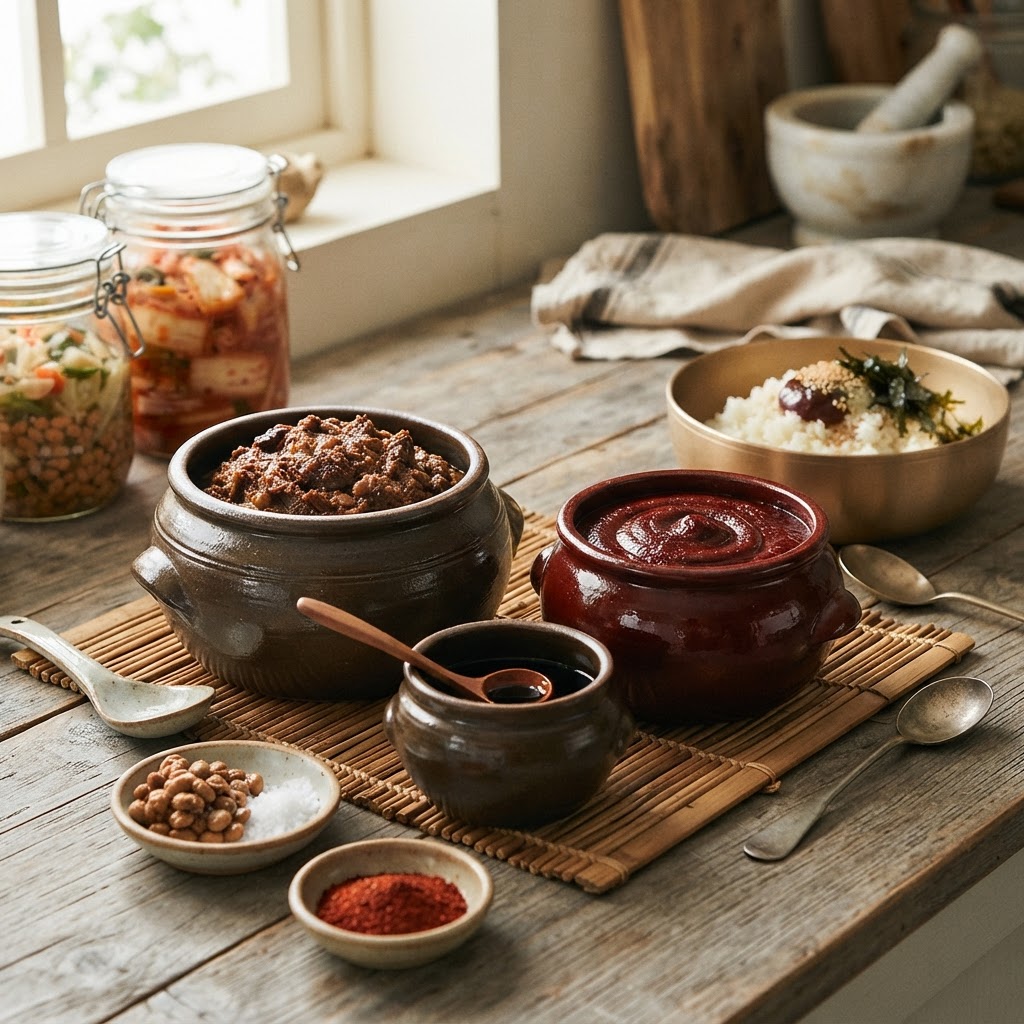
Decoding Korean Jang: Mastering Fermented Soy Foundations for Authentic Depth at Home
The soul of Korean cuisine does not reside in the flash of a high-heat wok or the complexity of a thousand-step banquet dish; it lives quietly, patiently, in the dark, earthenware vessels tucked away in the back of a pantry. For centuries, the backbone of every significant Korean meal has been defined by Jang, the fermented soybean pastes and liquids that transform humble ingredients into profound expressions of umami. To step into the world of Korean cooking is to accept that flavor is not merely added; it is cultivated through time, salt, and microorganisms. When you begin to understand the chemistry of fermentation, you stop looking at recipes as mere lists of instructions and start seeing them as biological processes you are curating within your own kitchen.
Many home cooks find themselves intimidated by the depth of traditional Korean sauces, assuming that the complexity they taste in a bustling Seoul restaurant is unattainable at home. This hesitation is precisely what we aim to dismantle at Blame The Chef. We believe that by mastering the fundamental fermented soy foundations, you gain the ability to manipulate balance—the elusive interplay of salt, sweetness, and deep, earthy funk—that defines the culinary identity of the Korean peninsula. Whether you are using a commercially prepared tub from a local market or embarking on the long journey of house-made Meju, the principles remain the same. Understanding these foundations is the difference between a dinner that tastes "like stir-fry" and a dinner that tastes like a legacy.
In this guide, we are moving beyond the surface level of "just add soy sauce." We will dive deep into the micro-biology of fermentation, the specific ratios of salt to bean to water, and the temperatures required to achieve that signature savory complexity. It is a process that requires patience, yes, but it rewards the home cook with a pantry so rich that you will find yourself questioning how you ever cooked without it. We aren't just making dinner; we are engaging with a culinary heritage that has survived wars, migrations, and modernization by remaining steadfastly rooted in the earth. It is time to roll up your sleeves, sharpen your palate, and prepare to turn your kitchen into a laboratory of ancient, delicious tradition.
The Triad of Umami: Understanding Doenjang, Ganjang, and Gochujang
At the heart of the Korean pantry lies the "Jang-dok-dae," or the collection of large clay pots that hold the three pillars of flavor. Doenjang (soybean paste), Ganjang (soy sauce), and Gochujang (red chili paste) are not just ingredients; they are living condiments. While modern production has streamlined these into shelf-stable goods, they all share a common ancestry rooted in the fermentation of the soybean. Each serves a distinct purpose, yet they all work toward the singular goal of providing the foundational depth that makes Korean soups, stews, and braises legendary.
The primary divergence in these products comes down to the length of fermentation and the additional ingredients introduced during the process. While soy sauce is the liquid byproduct of fermenting soybean bricks, the paste is the solids left behind. The chemistry involved is a delicate balance of proteolysis—the breaking down of proteins into amino acids—which results in the savory, mouth-coating sensation we recognize as umami. When you choose your jars at the store, look for labels that list only soybeans, salt, and water. Anything more, and you are likely dealing with additives that obscure the purity of the fermentation.
The Role of Microorganisms in Fermentation
It is important to remember that you are essentially managing a colony of bacteria and yeasts. The "starter," known as Meju, consists of boiled soybeans that have been pounded, formed into blocks, and dried. During the drying phase, it is naturally colonized by Bacillus subtilis and various molds. This is the transformation stage. When you submerge these blocks in a brine, the salt level—typically a 15% to 20% saline solution—acts as the gatekeeper, inhibiting harmful bacteria while allowing the beneficial strains to slowly convert the proteins into flavor compounds.
"True depth in cooking is not something you create in ten minutes; it is something you curate over years. Jang is the physical manifestation of patience."
Mastering Ganjang: The Liquid Gold of the Pantry
Ganjang, or soy sauce, is significantly more nuanced in Korea than its counterparts in Japan or China. Korean soy sauce is categorized into two main groups: Guk-ganjang (soup soy sauce), which is lighter in color but saltier and more potent in savory flavor, and Jin-ganjang, which is aged, darker, and slightly sweeter, often used for braising. The secret to a perfect Korean-style braise lies in knowing when to use which. If you are making a delicate radish soup, use a light soup soy sauce; if you are glazing short ribs, turn to a dark, aged variety.
The extraction process for artisanal Ganjang involves separating the liquid from the fermented soybean paste after a minimum of six months of aging. The liquid is then boiled to stop the fermentation process and then potentially aged further. Professional chefs often keep a "master jar" of soy sauce, adding newer batches to older ones, similar to a sourdough starter or a perpetual stew. This practice preserves the complex, fermented profile of the previous years, layering flavor over time.
Techniques for Enhancing Commercial Sauces
If you aren't ready to build a fermentation cellar in your basement, you can still elevate commercial soy sauce to mimic the complexity of aged Ganjang. One of my favorite professional tips is to simmer your soy sauce with aromatics like dried kelp (kombu), dried shiitake mushrooms, a knob of ginger, and perhaps a small piece of charred onion. By gently heating the liquid—never boiling it aggressively—you introduce earthy, forest-floor notes that mimic the natural aging process of traditional dark soy sauce.
Doenjang: The Earthy Foundation of the Korean Soul
If soy sauce is the salt of the Korean kitchen, Doenjang is its body. This fermented soybean paste is thick, grainy, and possesses a pungent aroma that can catch the uninitiated off guard. However, once incorporated into a bubbling Doenjang-jjigae (soybean paste stew), that funk dissipates, leaving behind a rich, nutty, and almost cheesy depth that anchors the entire dish. It is a fundamental building block that requires respect in its handling.
When cooking with Doenjang, temperature control is your best friend. Never add the paste to a boiling pot at the very beginning of the cooking process unless you want to lose those delicate fermented notes to high-heat evaporation. Instead, whisk the paste into the broth during the final few minutes of simmering, or use a fine-mesh strainer to dissolve it into the soup gently. This technique ensures that the paste maintains its structural integrity and delivers a consistent, silky texture to the stew.
Selecting the Right Paste
Not all pastes are created equal. When browsing the shelves, you will find both Doenjang and Miso. While related, they are not interchangeable. Japanese miso is typically fermented with rice or barley and is much sweeter and milder. Korean Doenjang is made almost exclusively from soybeans and salt, giving it a much more aggressive and savory profile. For authentic flavor, always seek out a product that specifies it is a traditional-style soybean paste. If you can find one with the soybeans still partially whole, you have found a superior product.
"The smell of fermenting soybeans is the smell of a promise—a promise that dinner will not just be food, but an experience that lingers on the palate long after the last bite."
Gochujang: Balancing Heat and Sweet
Gochujang is perhaps the most famous of the Korean condiments, beloved for its ability to provide heat without being one-dimensionally spicy. It is a fermented paste made from red chili powder, glutinous rice, fermented soybean powder, and malt barley syrup. The fermentation process here is critical; unlike many hot sauces that rely on vinegar for preservation and tang, the tang in Gochujang comes from the complex breakdown of starches into sugars and the natural acidity produced by the fermentation of the beans.
When working with Gochujang, you are essentially working with a thick, sugary paste that loves to burn if you aren't careful. Because of the high sugar content—naturally derived from the rice and malt—it caramelizes quickly. If you are adding it to a stir-fry, it is best added toward the end of the cooking process to avoid the sugars turning bitter. Alternatively, dilute the paste with a little bit of water, rice wine, or vinegar before adding it to the pan to ensure an even distribution of flavor.
Building the Perfect Marinade
The hallmark of a great Korean marinade is the balance between the heat of the Gochujang and the saltiness of the Ganjang. A classic ratio for a versatile marinade is 2 parts Gochujang to 1 part Ganjang, with a small splash of sesame oil to emulsify. This mixture is the perfect base for anything from Bulgogi (if you lean heavier on the soy) to Dak-galbi (spicy chicken stir-fry). Remember: the fermented ingredients are the star, so avoid masking them with excessive amounts of garlic or ginger.
2 tbsp Gochujang*
1 tbsp Ganjang*
* 1 tsp toasted sesame oil
* 1 tsp brown sugar or honey
* 1 tsp grated garlic
The Science of Storage: Maintaining Your Fermented Pantry
Once you have invested in high-quality Jang, it is imperative that you treat these ingredients with the same care you would a fine wine or a complex cheese. While these pastes and sauces are remarkably stable due to their high salt content, they are still biological entities. They react to light, heat, and air. Storing them in a cool, dark place is the minimum requirement, but moving them to the refrigerator once opened is the best practice for maintaining their flavor profile.
For those who purchase large tubs of Doenjang or Gochujang, professional chefs recommend pressing a piece of plastic wrap directly onto the surface of the paste before replacing the lid. This minimizes the amount of oxygen in contact with the product, which prevents the surface from drying out or developing an off-taste. You may occasionally see a darker color on the surface—this is just oxidation and is perfectly safe to eat, though you can scrape it off if you find the aesthetic unappealing.
The Problem of Salt Content
It is easy to become overzealous with these pastes. Because they are salt-dense, they act as a seasoning agent, a thickening agent, and a flavoring agent all in one. When developing your own recipes, always hold back on adding extra salt until the very end. Let the Jang do the heavy lifting. By tasting your broth or sauce midway through cooking, you can determine if you need to add more of the fermented element or if you need to add a splash of water to balance the salinity.
Culinary Applications: Beyond the Stew
Now that you have mastered the basics of the "Jang" triad, it is time to experiment with applications that go beyond the expected. One of my favorite ways to utilize Doenjang is in a compound butter. By blending a tablespoon of high-quality soybean paste with softened unsalted butter and a touch of honey, you create a spread that is absolutely transformative on grilled steak or charred vegetables. The umami in the paste acts as a flavor enhancer for the beef, making the meat taste "more" like itself.
Similarly, Gochujang makes an incredible addition to roasted root vegetables. Toss carrots or parsnips in a mixture of Gochujang, olive oil, and a squeeze of lime juice before roasting. The sugars in the paste will caramelize, creating a sticky, spicy, and tangy glaze that elevates a simple side dish to the status of a centerpiece. These are the "modern applications" that keep traditional foundations relevant in contemporary home kitchens.
"The true magic of Korean cooking is not found in a secret spice, but in the slow, rhythmic transformation of simple soybeans into something that can change the entire character of a dish with just a single spoonful."
The Importance of the "Jang" Marriage
In many Korean recipes, you will see a combination of Doenjang and Gochujang used together. This "marriage" of the two pastes is legendary for creating a depth that neither could achieve on its own. The Gochujang provides a bright, spicy lift, while the Doenjang provides a heavy, savory base. This combination is particularly effective in thick stews like Jigae or as a dipping sauce for fresh vegetables. If you find your cooking lacking that "restaurant quality" depth, try whisking these two together in your next sauce.
The Future of Your Kitchen
As you grow more comfortable with these ingredients, you will find that your palate starts to crave the complexity they provide. You will notice that "bland" becomes a word you use to describe food that lacks the fermented soul of the Jang trinity. This is the mark of a cook who has successfully decoded the fundamental language of Korean cuisine. You are no longer just following a recipe; you are participating in a tradition that celebrates the quiet, consistent work of time and microorganisms.
Don't be afraid to fail, and certainly don't be afraid to experiment. If a dish feels one-dimensional, reach for the Ganjang to add salt and depth. If it feels too thin, reach for the Doenjang to add body. If it lacks excitement, reach for the Gochujang to add heat and brightness. The Jang is your toolkit; the more you use it, the more intuitive the process becomes. You are building a palate that understands the necessity of fermentation, and that, in my opinion, is the hallmark of a true culinary artist.
Final Thoughts
Mastering the fermented foundations of Korean cooking is a journey that never truly ends. Whether you are simmering a simple bowl of soup for a weeknight dinner or preparing an elaborate meal for guests, remember that the "Jang" you use is the bridge between your kitchen and centuries of culinary wisdom. It is a humble, earthy, and powerful bridge. By respecting the process, controlling your temperatures, and understanding the unique roles of Doenjang, Ganjang, and Gochujang, you have unlocked the ability to create authentic, deep, and satisfying meals that reflect the very essence of Korea.
There is a sense of pride that comes with having a pantry filled with these living, evolving ingredients. It signifies a cook who values depth over convenience and tradition over trends. So, take your time. Source the best products you can find, treat them with care, and always—always—taste as you go. When you "blame the chef" for a meal that tastes particularly exquisite, you are really just acknowledging the silent work of the microbes and the patience of the hands that prepared the foundation. Now, go forth and ferment, stir, and season with the confidence of a master. Your journey into the heart of the Korean pantry has only just begun.


Get the Next Recipe
Weekly recipes, techniques, and gear picks — straight to your inbox.
