Decoding the Sichuan Kitchen: Mastering the Art of Mala and Doubanjiang at Home
Stepping into the world of Sichuan cuisine is akin to opening a door into a vast, sensory-driven universe where flavor is treated with the gravity of a complex architectural project. Many home cooks approach this regional Chinese style with a mixture of intimidation and intense longing, drawn in by the electric buzz of mala and the deep, fermented complexity of doubanjiang. There is a common misconception that one must possess a professional wok burner or access to impossible-to-find ingredients to truly capture the essence of Chengdu or Chongqing in their own kitchen. In reality, the magic of this cuisine lies in understanding the fundamental architecture of its seasonings and the rigorous application of heat control. Once you demystify the pantry, you realize that the Sichuan kitchen is not merely about enduring the burn, but about appreciating the nuanced dance between heat, numbing sensation, and savory depth.
The heart of this culinary tradition rests on a foundation of aromatic complexity, where the pairing of ginger, garlic, and scallions acts as the bedrock for almost every stir-fry, braise, or steamed dish. However, the true soul of the cuisine is found in the interplay of fermented pastes and preserved aromatics that provide a savory backbone—or umami—that balances the fiery temperament of the chilies. Learning to cook Sichuan food at home is a transformative journey that demands patience, a willingness to adjust your palate, and a respect for the transformative power of oil. As we strip away the myths, you will find that the techniques are remarkably accessible, relying on consistent heat management and the proper layering of ingredients rather than complicated equipment. This is a culinary school unto itself, and you are about to master the core principles that elevate a home-cooked meal to a restaurant-grade experience.
To master this art, we must start by shifting our perspective on spice. Sichuan pepper is not a pepper in the botanical sense; it is the dried husk of a citrus fruit, and its function is not to provide heat, but to provide a unique, tingling vibration known as ma. When combined with the capsicum heat of dried chilies—known as la—you achieve the legendary mala profile that defines the regional identity. Understanding this duality is the key to unlocking the balance of the cuisine. It is not about how hot you can make a dish; it is about how elegantly you can weave these sensations into a narrative of flavor that leaves the palate energized rather than overwhelmed. Today, we are going to dissect the pantry, refine your heat control, and ultimately, reclaim the kitchen as a space where these bold, traditional flavors become a staple of your repertoire.
The Pillars of the Sichuan Pantry: Beyond the Bottle
At the epicenter of the Sichuan kitchen sits the glorious Pixian Doubanjiang, a fermented broad bean and chili paste that acts as the "soul" of the cuisine. Unlike generic chili pastes found in standard supermarkets, authentic Pixian bean paste is aged for months, sometimes years, in earthenware jars. This fermentation process creates a deep, mahogany-colored paste that is thick with umami and a subtle, funky complexity that is non-negotiable for dishes like Mapo Tofu or Shui Zhu Yu. When you source your Doubanjiang, look for labels that explicitly state "Pixian" and check the ingredient list to ensure it contains broad beans; if it is just peppers and oil, you are missing the crucial depth of flavor that defines the genre.
Selecting Your Ingredients
Quality makes an insurmountable difference in this cuisine, where the ingredient list is often short but the flavor impact is high. You must prioritize the following:
Sichuan Peppercorns:* Always buy "red" peppercorns for a citrusy, floral punch; ensure they are fresh, as older, dusty batches lose their tingling potency.
High-Quality Dried Chilies: Look for whole dried red chilies, such as the facing heaven* pepper, which offers a bright, fruity heat rather than just a one-dimensional burn.
Aromatics:* Fresh ginger, garlic, and scallions are the "holy trinity." They should be prepped in uniform sizes to ensure they release their oils at the same rate during the initial stir-fry phase.
The secret to the legendary depth of Sichuan cooking is not in a secret sauce, but in the patient, meticulous sautéing of fermented aromatics in oil until the color bleeds out—a process known as 'frying the red oil.'
Another essential component is Chinkiang Black Vinegar, a dark, complex vinegar made from sticky rice that brings a necessary brightness to cut through the richness of the oil. It has a slightly malty, woodsy flavor profile that stands in stark contrast to the sharp, acidic bite of Western white or cider vinegars. When selecting your pantry staples, do not be afraid to invest in authentic labels imported directly from China, as the subtle differences in fermentation techniques significantly alter the finished result. Keeping these ingredients on hand ensures that you are never more than twenty minutes away from a truly authentic meal.
Mastering Mala: The Chemistry of the Tingle
The sensation of mala is unique in the culinary world because it engages the sensory receptors in a way that is both physical and flavor-based. Sichuan peppercorns contain a molecule called hydroxy-alpha-sanshool, which causes a vibration on the tongue that essentially "tricks" the brain into sensing a tingle. When you pair this with the pungent heat of dried red chilies, you move from simple spicy food to a complex sensory experience that keeps you coming back for another bite. The key to mastering this is balance; if the ma is too strong, the food becomes medicinal, but if the la is too aggressive, you lose the ability to taste the nuanced sweetness of the meat or vegetables.
The Technique of Roasting and Grinding
To get the most out of your peppercorns, you must treat them with care. Never use pre-ground peppercorn powder, as it loses its volatile oils almost immediately. Follow these steps for maximum impact:
"True Sichuan cooking isn't about setting your mouth on fire; it's about the interplay of the numbing pepper and the vibrant chilies, creating a symphony on the palate."
When using peppercorns in a stir-fry, adding them whole during the initial oil-infusion stage—often referred to as la jiao you—infuses the fat with a deep, numbing quality that permeates the entire dish. Alternatively, you can use the fine ground powder as a "finishing spice," dusting it over the dish at the very last second before serving. This dual approach—infusing and dusting—is the professional method used to ensure that the numbing sensation is present both in the texture of the sauce and as an aromatic top note.
The Art of Frying the Red Oil
The foundation of many signature Sichuan dishes is the process of creating the Red Oil (Hong You) base. This is the moment where the Doubanjiang and the aromatics are fried in oil until the fat turns a brilliant, deep crimson. This technique serves two purposes: it tempers the raw, aggressive nature of the fermented beans, and it extracts the vibrant pigments and oils from the chilies, which then bind the dish together. If you rush this step, your dish will taste raw and muddy; if you burn the spices, it will become bitter. Patience here is your greatest culinary asset.
Temperature Control is Everything
Maintaining the correct temperature during this phase requires vigilance. Use a neutral oil with a high smoke point, such as peanut, grapeseed, or canola.
Phase 1:* Heat the oil to roughly 300°F (150°C).
Phase 2:* Add your aromatics (ginger, garlic, and scallions). Sauté until they are fragrant but not browned, which should take roughly 60 seconds.
Phase 3: Introduce the Doubanjiang*. Reduce the heat to low. Stir continuously for 3 to 5 minutes. You are looking for the oil to turn a clear, brilliant red. This is the "red oil" extraction.
If at any point the garlic or ginger begins to brown, you have the heat too high. You are looking to infuse the oil, not sear the aromatics. Once the oil has taken on that signature ruby color and the raw smell of the bean paste has mellowed into a savory, deep, and earthy aroma, you have achieved the perfect base for your Mapo Tofu or Kung Pao sauce. This base can be made in larger batches and stored in the refrigerator, allowing you to cut your prep time significantly during the work week while retaining that restaurant-quality foundation.
The Wok and the Flame: Heat Management at Home
While most home kitchens lack the 100,000 BTU burners found in professional Sichuan restaurants, you can mimic the effect of "wok hei"—or the "breath of the wok"—with a few strategic maneuvers. The most important rule is don't crowd the pan. When you add meat or vegetables to a cold or lukewarm pan, they release moisture, which leads to steaming rather than searing. You want your ingredients to dance, not stew. To compensate for the lack of intense heat, work in smaller batches and ensure your ingredients are completely dry before they touch the oil.
Equipment Recommendations
Carbon Steel Wok:* This is the gold standard. It heats up quickly, responds well to temperature changes, and develops a non-stick patina over time. A flat-bottomed version is essential for standard induction or electric stoves to ensure consistent contact with the heat source.
Spider Strainer:* An essential tool for quickly removing fried ingredients from the wok or for blanching vegetables in boiling water before stir-frying.
High-Quality Spatula:* A long-handled metal spatula allows for the high-velocity tossing required to coat ingredients in the red oil evenly and quickly.
To effectively manage heat at home, always have your ingredients prepped in small bowls, arranged in the order they will enter the wok. This is the French concept of mise en place, and in a fast-paced stir-fry, it is non-negotiable. If you are fumbling for the salt while your garlic is burning, the dish is already compromised. By having everything at the ready, you can move with the rhythm of the flame, maintaining the high heat necessary to sear proteins and keep vegetables crisp while preventing the delicate spices from scorching.
Protein Preparation: Velveting for Perfection
One of the most defining characteristics of Sichuan stir-fries is the texture of the meat. Whether it is chicken, pork, or beef, the protein is almost always buttery, tender, and succulent—a technique known as velveting. This involves coating the thinly sliced meat in a mixture of cornstarch, a splash of Shao Xing wine, a dash of white pepper, and sometimes a small amount of egg white or oil before it is quickly flash-cooked. This process protects the meat from the harsh direct heat of the wok, sealing in the juices and giving it a silky mouthfeel that is impossible to achieve with standard pan-searing.
The Velveting Formula
To ensure your protein is restaurant-ready, use this basic ratio for every 8–10 ounces of sliced meat:
Let the mixture sit for at least 15 to 20 minutes before cooking. When it comes time to cook, you can either sear the meat in a hot wok and remove it while it's still slightly undercooked, or perform a "water velvet"—submerging the coated meat into warm (not boiling) oil or water for 30–60 seconds. Both methods are effective, but the key is to ensure that the meat is never overcooked. Once the meat is coated and succulent, it serves as the perfect canvas for your bold, mala-infused sauce.
The Science of Seasoning and Thickening
A great Sichuan sauce should be a thick, emulsified coating that clings to every ingredient, not a thin, watery liquid sitting at the bottom of the plate. This is achieved through the use of a slurry—a mixture of cornstarch and cold water, added at the very end of the cooking process. The goal is to bring the sauce to a boil, stir in the slurry, and then quickly remove it from the heat. This creates a glossy finish that looks professional and ensures that every bite is packed with the flavor profile you have worked so hard to build.
Balancing the Four Corners of Flavor
Your sauce composition should generally aim for a balance of savory, sweet, acidic, and spicy.
Savory:* Provided by soy sauce, dark soy (for color), and the fermented depth of Doubanjiang.
Sweet:* A small amount of sugar is almost always used to round out the harsh edges of the chili and the saltiness of the fermented paste.
Acidic:* Chinkiang vinegar or a touch of lime juice added at the finish provides a necessary contrast to the heavy oil.
Spicy:* The red oil and dried chilies provide the initial heat, while fresh peppercorn powder provides the numbing finish.
Always add your cornstarch slurry to a bubbling sauce; if the sauce isn't hot enough, the starch will turn into a clumpy, raw-tasting mess rather than a smooth, silky glaze.
Remember that the timing of your slurry addition is critical. Because Sichuan cooking relies on high-heat, high-speed techniques, the final stage—adding the liquid components and the thickening agent—happens in a matter of seconds. If the sauce is too thin, it will slide off the meat; if it is too thick, it will be gummy. Aim for a consistency that coats the back of a spoon. When you reach that perfect balance, the dish will have a lustrous sheen that is as inviting to the eye as it is to the palate.
Building Your Signature Mapo Tofu
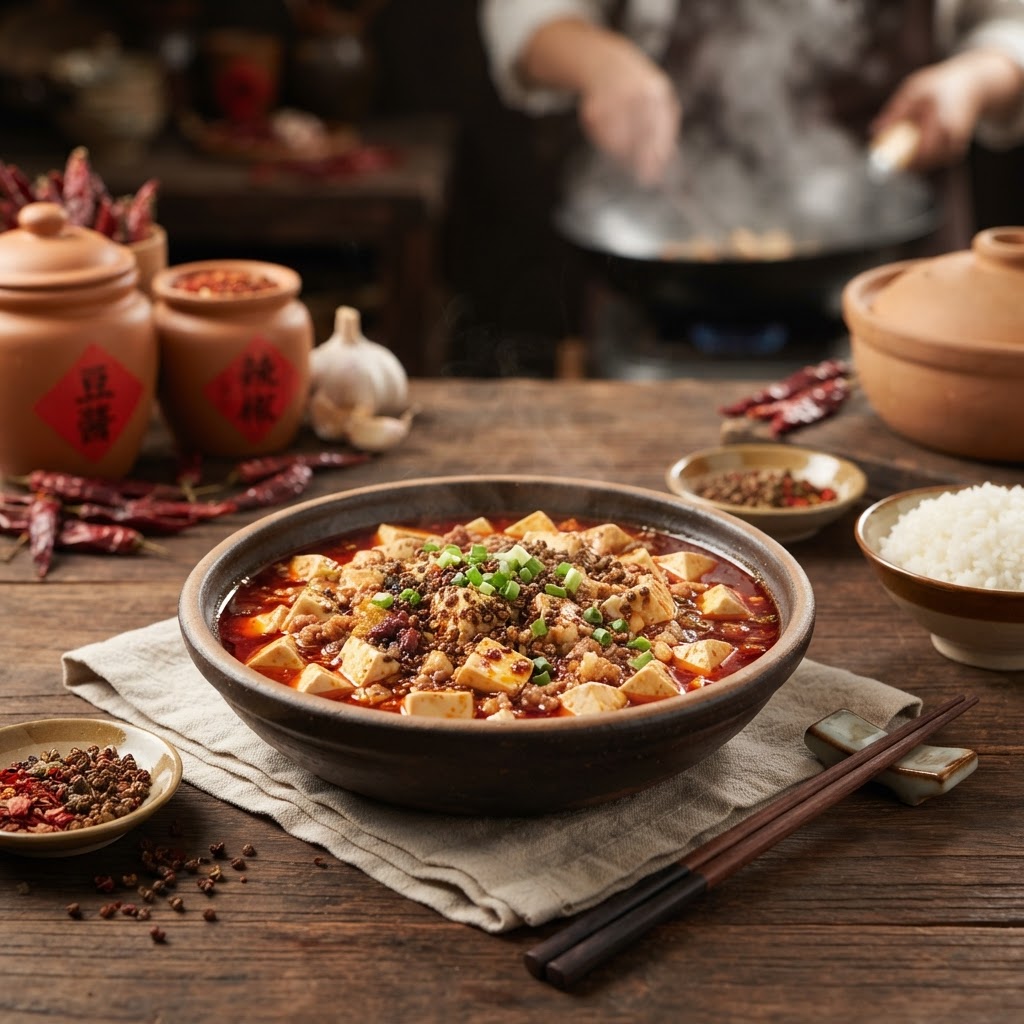
No discussion of Sichuan cuisine is complete without addressing Mapo Tofu, the ultimate test of a home cook's mastery over mala and bean paste. The dish relies on the contrast between the tender, silky tofu and the crispy, flavorful bits of ground pork or beef. By following the principles we have discussed—sautéing the aromatics, properly blooming the chili oil, and using a light slurry to finish—you can create a version of this dish that rivals any boutique restaurant in Chengdu.
The Steps to Success
The beauty of this dish is its accessibility. Once you have the technique down, you will realize that you don't need expensive ingredients to create a world-class meal. You need patience, you need the right base, and you need to respect the ingredients. This is the cornerstone of the Sichuan kitchen.
Final Thoughts
The journey into Sichuan cooking is not a destination but an ongoing education. As you become more comfortable with the timing of your stir-fries and the layering of your aromatics, you will find yourself intuitively knowing when to turn the heat up and when to pull back. You will stop measuring every grain of salt and start tasting for the balance of the mala profile. This is the moment you transition from following a recipe to becoming a cook, and it is a deeply rewarding evolution.
Remember that failure is part of the process. If your first attempt at a red oil base burns, or if your Mapo Tofu is a little too numbing, don't be discouraged. Treat these moments as data points. Did you have the flame too high? Did you use an old batch of peppercorns? The beauty of the Sichuan kitchen is that it is remarkably forgiving once you understand the basic mechanics. Keep your pantry stocked, keep your wok seasoned, and most importantly, keep cooking. The goal isn't just to replicate a flavor you once tasted in a restaurant; it is to create a space in your own home where these bold, traditional, and electrifying flavors can be explored, shared, and enjoyed with the people you love.
As you continue to refine your skills, don't be afraid to experiment with vegetables that aren't traditionally associated with the cuisine, or to adjust the level of "ma" and "la" to suit your specific preferences. The rules of the Sichuan kitchen are guidelines designed to help you understand the structural integrity of a dish, but your palate is the final judge. Whether you are tossing a simple pile of snap peas in a fermented chili oil or slow-braising a complex beef brisket, the techniques covered here remain the same. Take your time, focus on the quality of your aromatics, and enjoy the intoxicating aroma that fills your home every time you reach for that jar of Doubanjiang. Happy cooking, and may your wok always be hot and your peppercorns always fresh.


Get the Next Recipe
Weekly recipes, techniques, and gear picks — straight to your inbox.
