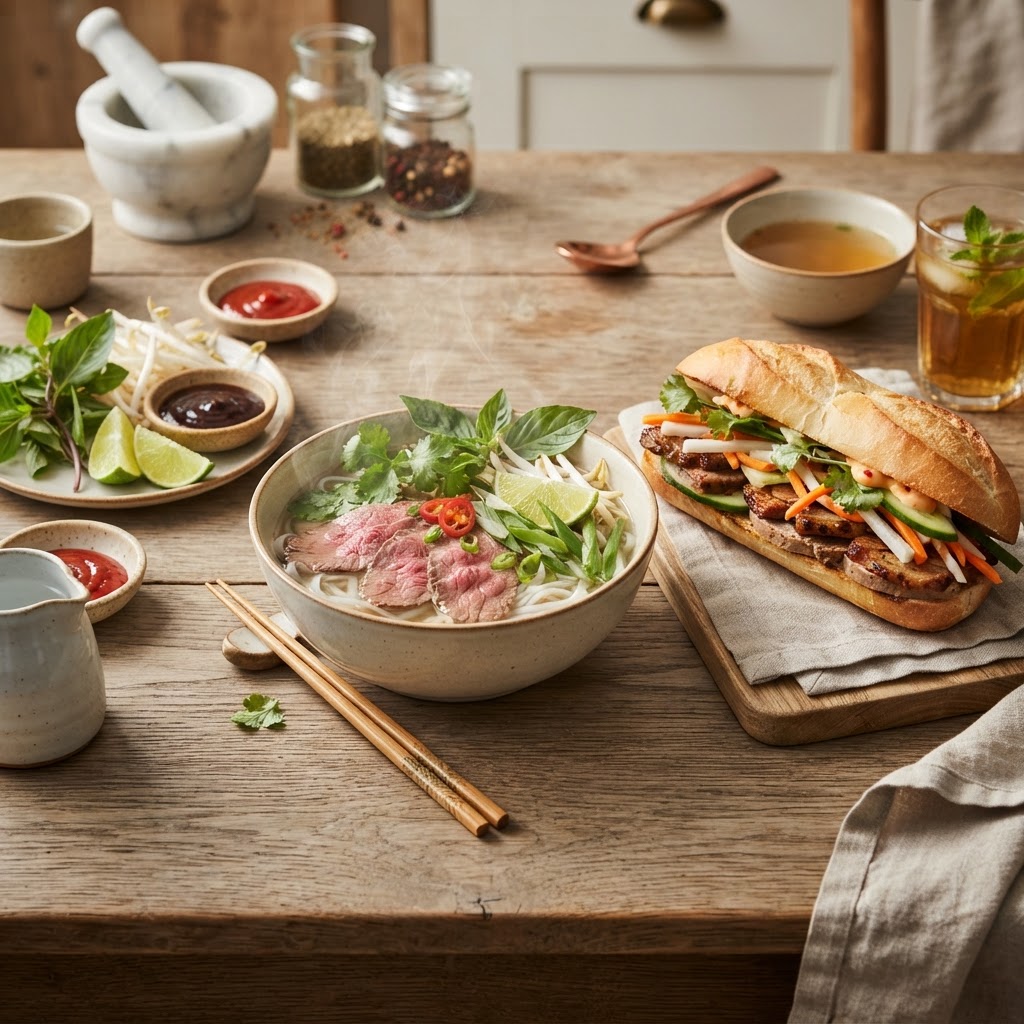
Demystifying Vietnamese Cuisine: The Ultimate Guide to Perfecting Pho and Banh Mi at Home
Vietnamese cuisine has captivated food lovers around the world with its remarkable balance of fresh herbs, bright acidity, gentle heat, and deep umami undertones. For many home cooks, however, the prospect of recreating dishes like a steaming bowl of pho or a crusty, overstuffed banh mi can feel intimidating—almost as if these recipes belong to a secret culinary canon reserved for grandmothers in Hanoi or professional chefs with decades of wok experience. The truth is far more welcoming: Vietnamese cooking is fundamentally about balance, and once you understand its foundational principles, the kitchen becomes a place of play rather than anxiety. At "Blame The Chef," we believe the best way to honor any cuisine is to understand it deeply, then make it your own with respect and curiosity.
What makes Vietnamese food so distinctive is its interplay of textures and temperatures: cold herbs scattered over hot broth, crisp crackling skin against soft noodles, pickled vegetables tucked into warm bread. These contrasts aren't accidents—they're the result of a culinary tradition that prizes harmony above all else. The French left their mark on Vietnamese bread-making and coffee culture, the Chinese influenced stir-fries and noodle soups, and Southeast Asian neighbors contributed lemongrass, fish sauce, and palm sugar. The result is a cuisine that is at once familiar and exotic, comforting and surprising. When you cook Vietnamese food at home, you're participating in a living conversation between cultures.
This guide is designed to take you from curious beginner to confident cook. We'll walk through the essential pantry ingredients you'll need, the techniques that define the cuisine, and two showstopping recipes: a deeply aromatic beef pho and a classic banh mi with multiple filling options. Along the way, you'll find specific temperatures, timing details, and the kind of chef tips that make the difference between a good dish and an unforgettable one. Don't worry if your first attempt isn't perfect—Vietnamese cooking rewards repetition, and every batch of broth teaches you something new. Let's blame the chef, then become one.
The Vietnamese Pantry: Building Your Foundation
A well-stocked Vietnamese pantry is the difference between fumbling through a recipe and cooking with intention. Most of these ingredients are now available at Asian grocery stores, and many can be ordered online. Once you have them, they'll keep for months—or years—and open the door to hundreds of dishes beyond pho and banh mi.
Fish sauce is the soul of Vietnamese cooking. Look for brands like Three Crabs or Red Boat—the latter is an unadulterated, first-press sauce with remarkable depth. Avoid cheap fish sauce that lists water or fructose as the first ingredient; it will taste flat and overly salty. A good fish sauce smells briny and complex, not putrid, and should be used as a seasoning rather than a dominant flavor. In dipping sauces, you'll often combine it with lime juice, sugar, water, and fresh chilies to create a balanced nuoc cham that lifts everything from grilled pork to spring rolls.
Rice and rice products form the carbohydrate backbone of the cuisine. Long-grain jasmine rice is the everyday staple, while rice noodles—both thin bun and flat pho noodles—are essential for soups and salads. Rice paper rounds are what you'll need for fresh summer rolls, and rice flour appears in crepes and steamed cakes. Keep a bag of dried vermicelli and a package of banh pho (flat dried rice noodles) on hand at all times; they're shelf-stable and cook in minutes.
The aromatics are where Vietnamese cooking truly sings. Lemongrass, with its citrusy, slightly floral scent, is bruised and minced into marinades. Galangal (a cousin of ginger with a piney, peppery flavor) is essential for pho broth. Thai bird's eye chilies bring clean heat, while shallots and garlic appear in nearly every savory dish. Fresh herbs—Thai basil, mint, cilantro, perilla, and rice paddy herb—are used not as garnishes but as integral ingredients, often served in large piles alongside the main dish so diners can customize each bite.
Vietnamese cooking doesn't ask you to layer flavors in secret—it hands you the herbs and lets you finish the dish at the table. That's a kind of generosity worth learning.
Essential Condiments to Stock
Understanding the Principles of Vietnamese Flavor
Before we dive into recipes, it's worth pausing to understand why Vietnamese food tastes the way it does. The cuisine operates on a five-element philosophy that maps to five flavors: sweet, sour, salty, bitter, and umami. A well-made dish touches all five, even if subtly. A bowl of pho, for instance, delivers umami through long-simmered bones, salt through fish sauce, sweetness from charred aromatics, bitterness from char, and sour brightness from a squeeze of lime at the table.
Balance is the cardinal rule. If you add more fish sauce, you must add more sugar or lime to compensate. If a dish is too rich, cut it with herbs and acidity. If it's too spicy, temper with sugar and fat. Vietnamese cooks rarely measure precisely; they taste constantly and adjust. As a home cook, train yourself to do the same—keep a spoon in your broth, taste your marinade before applying it, and trust your palate.
Freshness is non-negotiable. While the broths and braises of Vietnamese cooking can simmer for hours, the finished dishes rely on ingredients that are as fresh as possible. Herbs should be washed and stored between damp paper towels in the refrigerator, used within a few days. Limes should be heavy for their size, indicating juiciness. Chilies should be firm and glossy. The difference between a banh mi made with fresh herbs and one made with wilted cilantro is the difference between a memory and a disappointment.
Texture contrast is the third pillar. Vietnamese cooks think about how each component feels in the mouth: the slip of noodles, the crunch of pickled daikon, the chew of meat, the snap of fresh herbs. When constructing banh mi, layer ingredients in order of texture—crispy skin, soft pâté, crunchy pickle, tender herbs—so each bite delivers a sequence of sensations.
The Role of Char and Aromatics
Many Vietnamese recipes call for charring aromatics before adding them to broth or sauce. This isn't about burning them black; it's about developing Maillard reactions that add smoky depth. Hold ginger and onion over an open flame or under a broiler until the skin is blackened in spots, then scrape off most (but not all) of the char. For pho, this step is what gives the broth its characteristic mahogany color and subtle smokiness—without it, you'll have a perfectly decent beef soup, but not a true pho.
Perfecting Pho: The Art of the Broth
Pho is the dish most people think of when they hear "Vietnamese food," and for good reason. A great bowl of pho is a study in patience: the broth simmers gently for hours, extracting collagen and flavor from bones while aromatics slowly infuse. The payoff is a bowl that is simultaneously light and profoundly savory, a restorative that Vietnamese people eat for breakfast, lunch, or dinner.
The most common pho in the West is pho bo (beef pho), though pho ga (chicken pho) is equally beloved in Vietnam. We'll focus on beef, but the principles transfer. You'll need beef bones—marrow bones, knuckle bones, and oxtail if you can find them. The marrow provides richness, the knuckles provide collagen, and the oxtail adds meaty flavor. Aim for about 4 pounds of bones to yield roughly 4 quarts of finished broth. Roast the bones at 450°F (230°C) for 30-45 minutes until deeply browned; this step alone transforms the final color and depth.
While the bones roast, char your aromatics: two yellow onions (halved, unpeeled) and a 4-inch piece of ginger. Place them directly on a gas flame or under a broiler, turning occasionally, until blackened in spots—about 8-10 minutes. Rinse off the loose char under water, then add them to your stockpot with the roasted bones. Cover with cold water (about 6 quarts) and bring slowly to a bare simmer over medium-low heat. Never let pho broth boil vigorously—a rolling boil clouds the broth and emulsifies fat, ruining the clean appearance and delicate texture that define a proper pho.
The Spice Blend
The spice bouquet for pho is small but critical. Toast 2 star anise, 6 cloves, 1 cinnamon stick (about 3 inches), 1 tablespoon coriander seeds, and 1 teaspoon fennel seeds in a dry pan over medium heat until fragrant—about 2 minutes. Wrap them in cheesecloth or a spice bag and add to the pot after the first hour of simmering. Adding spices too early can make the broth taste medicinal; too late and they won't fully infuse. Simmer the broth for a total of 6 to 8 hours, skimming foam and fat regularly. In the final 30 minutes, season with 3 tablespoons fish sauce, 1 ounce rock sugar (or 2 tablespoons granulated sugar), and salt to taste.
The secret to pho isn't a secret at all: it's time. Six hours of gentle simmering does what no shortcut can replicate.
Assembling the Bowl
Cook banh pho noodles according to package directions, usually 3-5 minutes in boiling water, then rinse briefly under warm water to remove excess starch. Slice raw beef eye of round or sirloin as thinly as possible—freeze the meat for 20 minutes first to make slicing easier. Arrange noodles in warm bowls, top with a few slices of raw beef, and ladle boiling hot broth over the top; the heat cooks the beef to a perfect medium-rare in seconds. Serve immediately with a platter of Thai basil, mint, bean sprouts, lime wedges, sliced chili, hoisin sauce, and sriracha, allowing each diner to customize.
Building the Perfect Banh Mi
If pho is Vietnam's most famous soup, banh mi is its most famous sandwich—a direct descendant of French colonialism that has evolved into something entirely its own. The word "banh mi" literally means "bread" in Vietnamese, but in culinary context it refers to the whole sandwich: a split baguette filled with pâté, mayonnaise, pickled vegetables, fresh herbs, chili, and one or more protein fillings.
The bread matters most. A proper banh mi baguette is lighter and airier than a French baguette, with a thinner crust that shatters rather than tears. If you can't find Vietnamese baguettes (often sold at Asian bakeries), use a small French demi-baguette and lightly toast it to refresh the crust. Split the bread lengthwise, leaving a hinge, and hollow out some of the interior crumb to make room for fillings—this prevents the sandwich from becoming a dense, bready slog.
Quick pickled daikon and carrot (do chua) is the heart of banh mi. Julienne 1 cup daikon radish and 1 cup carrot into matchsticks about 2 inches long. Dissolve 1 cup sugar in 1 cup warm water, then add 1 cup rice vinegar and 1 teaspoon salt. Pour over the vegetables and refrigerate at least 1 hour, ideally overnight. These pickles keep for two weeks and appear in countless Vietnamese dishes beyond banh mi.
A banh mi without do chua is just a sandwich. The pickle is what makes it sing—tart, sweet, crunchy, and bright enough to cut through rich pâté and fatty meats.
The Pâté and Mayo Layer
Spread a thin layer of Vietnamese mayonnaise (or regular mayonnaise thinned with a little condensed milk for sweetness) on both cut sides of the bread. Then add a generous smear of chicken or pork liver pâté—about 2 tablespoons per sandwich. The pâté provides richness and a mineral depth that balances the pickles and herbs. If making pâté from scratch, sauté 8 ounces chicken livers with 1 small diced onion and 2 cloves garlic in butter until just pink inside, then blend with 2 tablespoons cognac, 1 teaspoon fish sauce, 1 teaspoon sugar, and 4 tablespoons softened butter until silky. Chill before using.
Choosing Your Protein
The classic banh mi filling is thit nuong—grilled lemongrass pork. Marinate 1 pound pork shoulder, sliced thin, in a mixture of 3 tablespoons finely minced lemongrass, 2 cloves minced garlic, 2 tablespoons fish sauce, 2 tablespoons sugar, 1 tablespoon soy sauce, 1 teaspoon five-spice powder, 1 tablespoon oil, and 1 teaspoon black pepper for at least 4 hours, ideally overnight. Grill over medium-high heat (400°F/200°C) for 2-3 minutes per side until charred at the edges and cooked through. Other excellent fillings include grilled chicken, Vietnamese meatballs (xiu mai), crispy pork belly, or even sardines in tomato sauce for a humble street-style version.
Final Assembly
Layer the sandwich in this order: mayo and pâté on both sides, a handful of do chua, 3-4 slices of cucumber, your protein, a few sprigs of cilantro, 2-3 mint leaves, a few pieces of Thai basil, sliced jalapeño or Thai chili to taste, and a final drizzle of soy sauce or Maggi seasoning. Press gently and serve immediately. The combination of textures—crackling crust, soft crumb, silky pâté, crunchy pickle, tender meat, and fresh herbs—should deliver a different sensation with every bite.
Common Mistakes and How to Avoid Them
Even experienced cooks stumble when approaching a new cuisine. The first and most common mistake in pho is boiling the broth. A vigorous boil emulsifies fat into the liquid, creating a cloudy, greasy result. Keep the heat low enough that you see only the occasional bubble break the surface—what cooks call a "smile" simmer. If your burner won't go low enough, use a heat diffuser or move the pot slightly off-center.
The second mistake is underseasoning. Pho broth should taste slightly too salty and slightly too sweet on its own, because the noodles, herbs, and lime added at the table will dilute it. Taste your broth after seasoning and don't be afraid to add another tablespoon of fish sauce or another teaspoon of sugar. A timid broth is a forgettable broth.
For banh mi, the most frequent error is overstuffing the bread. It's tempting to pile on more meat, more pickles, more herbs—but a banh mi should be eatable without ingredients sliding out with every bite. Hollow out the bread, layer thoughtfully, and remember that the sandwich is about harmony, not abundance. A well-made banh mi fits in two hands and can be eaten cleanly.
Another error is using stale herbs. Cilantro that's gone slimy, basil that's browned, mint that's wilted—none of these belong in your sandwich. Vietnamese cooking depends on the vibrancy of fresh herbs. If you can't find Thai basil, use sweet basil; if perilla is unavailable, skip it. But never substitute dried herbs for fresh in these recipes. The flavor profile is completely different.
Serving, Storing, and Reheating
Pho broth can be made ahead and stored in the refrigerator for up to 5 days or frozen for up to 3 months. Before storing, strain the broth through a fine-mesh sieve and chill rapidly in an ice bath. The next day, lift off the solidified fat from the surface—this keeps the broth clean and light. Reheat gently on the stove; never microwave pho broth, as uneven heating will cook the raw beef improperly.
Cooked banh mi fillings like thit nuong keep for 3-4 days refrigerated and reheat beautifully in a dry skillet over medium heat. Do chua lasts up to 2 weeks in its pickling liquid. Assembled banh mi, however, do not keep—the bread will soggy within an hour. If you're packing banh mi for lunch, wrap the fillings separately and assemble just before eating. This extra step takes two minutes and preserves the sandwich's defining contrast of crisp bread and moist interior.
For a complete Vietnamese meal, consider serving pho with fried chive cakes or Vietnamese donuts (quay) for dipping, and banh mi with a side of pickled green papaya salad or a light cucumber and herb salad. The principle is always the same: contrast, balance, and freshness.
Final Thoughts
Vietnamese cuisine is a generous teacher. It rewards patience, celebrates freshness, and insists on balance—lessons that improve every kind of cooking, not just the dishes from its own tradition. Once you've made pho from scratch, you understand broth more deeply. Once you've built a proper banh mi, you understand sandwich architecture in a new way. These recipes are not just meals; they're invitations to think differently about flavor.
Don't be discouraged if your first pho isn't as clear as you'd like, or if your banh mi falls apart when you bite into it. Every Vietnamese cook learned through repetition, and the best ones still adjust their broths daily. The goal isn't perfection on the first try; it's the slow, satisfying process of getting better each time. Your kitchen will smell incredible, your friends will be impressed, and you'll have taken a meaningful step into one of the world's great culinary traditions.
At Blame The Chef, we say: blame the chef when the dish disappoints, but credit the cuisine when it dazzles. Vietnamese food dazzles not because it's complicated, but because it's honest—honest ingredients, honest techniques, honest flavors. So light the flame under your stockpot, toast your spices, julienne your pickles, and give yourself over to the process. The bowl of pho waiting at the end is worth every minute.


Get the Next Recipe
Weekly recipes, techniques, and gear picks — straight to your inbox.
