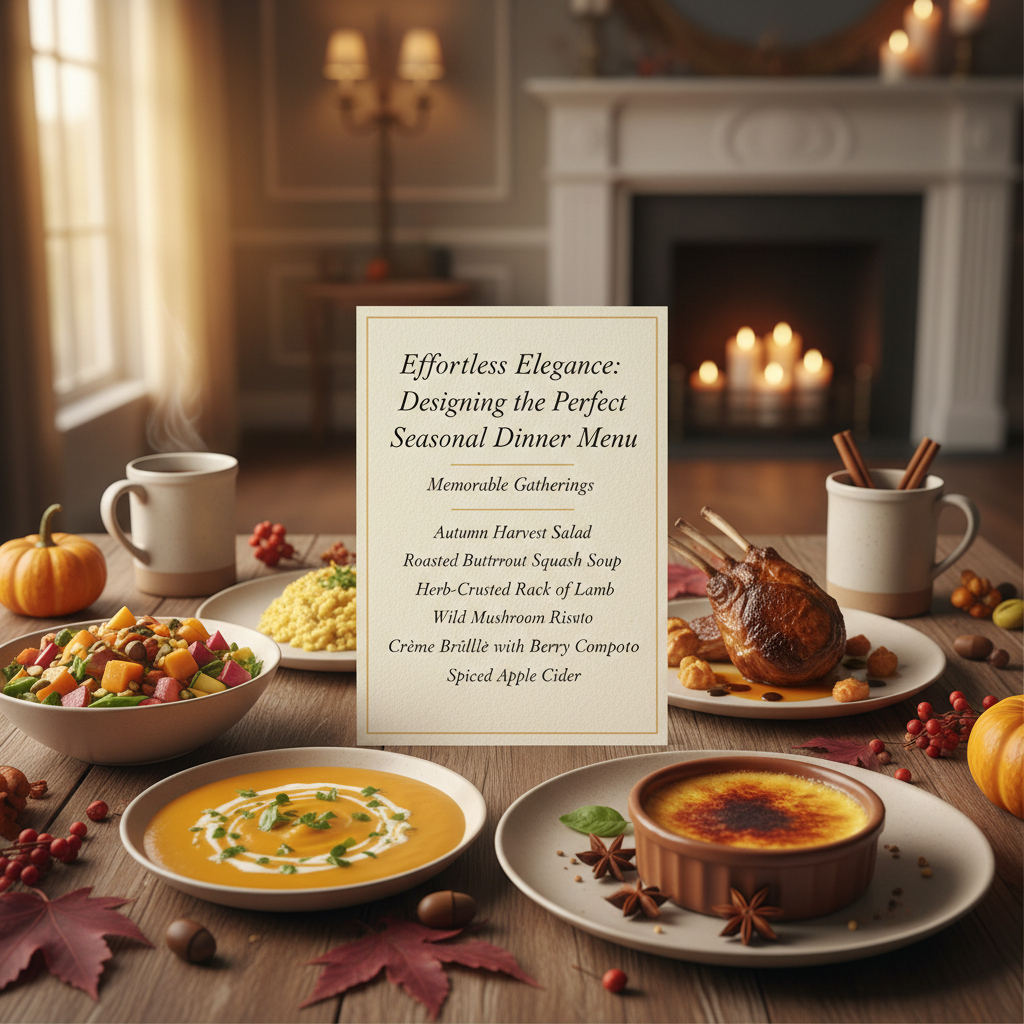
Effortless Elegance: Designing the Perfect Seasonal Dinner Menu for Memorable Gatherings
Crafting the perfect dinner menu for your next seasonal gathering is an art that can elevate any occasion from mundane to memorable. Whether you’re hosting a small family gathering or an expansive dinner party with friends, the right menu can set the tone, evoke seasonal sentiments, and showcase culinary creativity. The beauty lies in how effortless elegance can be achieved with thoughtful planning and execution—transforming simple ingredients into stunning dishes that leave a lasting impression.
As you embark on this journey of flavor and finesse, consider the seasonal ingredients that will foster freshness and vibrancy in your dishes. Seasonal cooking isn’t just about using what's available; it's about celebrating the essence of what each season has to offer. The rich harvest of nature provides an opportunity to explore flavors, textures, and techniques, allowing you to create a narrative through food that will delight your guests. With some inspiration, a clear structure, and careful attention to detail, you’ll be well on your way to mastering your dinner party menu.
Hosting can often be overwhelming, but with the right approach, it can also be a deeply rewarding experience. Balancing preparation with spontaneity, planning ahead while remaining adaptable, ensures that you remain calm and collected as the day unfolds. In this post, we will walk through the essential steps and strategies needed to design an attractive, diverse, and seasonal dinner menu that will not only impress your guests but also enhance your skills and confidence as a home cook.
Understanding the Essence of Seasonal Cooking
Why Seasonal Ingredients Matter
Incorporating seasonal ingredients into your menu is about more than just taste; it’s about ensuring that your meal is fresh, vibrant, and reflective of the time of year. Using seasonal produce often results in better flavor, more nutrients, and a lower carbon footprint. Ingredients harvested during their peak will naturally taste better and be more cost-effective, which is a win-win for both your palate and your pocketbook.
Utilizing seasonal ingredients not only honors the earth’s natural cycles but also sparks inspiration in the kitchen, allowing for a diverse spectrum of flavors and presentations.
Planning Your Menu
The process of designing a dinner menu begins with thoughtful planning. Start by considering the overall theme or style of your gathering. Is it casual, elegant, festive, or intimate? Once you have a clear idea of the atmosphere you want to create, you can choose dishes that align with that vision.
When planning your menu, consider the following steps:
By systematically selecting elements from different courses, you ensure a harmonious flow throughout the meal that feels cohesive and intentional.
Crafting Your Seasonal Dinner Menu
Starter Ideas
Begin your dinner with an inviting starter that sets the mood for the meal. Your starter is crucial not only for piquing the appetite but also for providing a glimpse into the evening’s culinary adventure.
#### Soups
A warm, comforting soup is a fantastic way to greet your guests. Depending on the season, consider options like a light asparagus soup in spring or a butternut squash soup in winter.
Asparagus Soup Recipe:
Steps:
#### Charcuterie Boards
If you prefer a more casual starter, a charcuterie board allows guests to mingle and nibble at their leisure. Load your board with an assortment of cured meats, cheeses, seasonal fruits (think figs in late summer or sliced apples in autumn), nuts, and artisanal bread.
Building a Charcuterie Board:
A well-curated board not only indulges the palate but provides a visual feast that sparks conversation.
Main Course Options
The main course is the heart of your dinner. Choose ingredients that reflect your seasonal theme while expressing your culinary style.
#### Roasted Chicken
A classic choice that never fails to satisfy is roasted chicken. The beauty of this dish lies in its versatility; it can be infused with a variety of flavors depending on the season.
Herb-Roasted Chicken Recipe:
Steps:
The aroma of a roasted chicken will fill your home, inviting guests to gather around and share in the warmth of the meal.
#### Vegetarian Options
For those who prefer a meat-free option, a stuffed acorn squash offers seasonal flavors and satisfying textures.
Stuffed Acorn Squash Recipe:
Steps:
This dish not only pays homage to the season but also provides a colorful and nutritious option for your dinner table.
Side Dishes to Complement Your Meal
Seasonal Salads
A well-crafted salad can elevate your meal, providing freshness and balance to heavier main courses. Incorporate seasonal greens that highlight local produce to add a lively aspect to your table.
#### Spring Greens Salad
A salad with a range of textures and flavors can surprise and delight your guests. For a spring salad, consider combining mixed greens, fresh herbs, and a light vinaigrette.
Spring Greens Salad Recipe:
Steps:
Root Vegetable Medley
For the colder months, accompany your main course with a root vegetable medley. Roasted vegetables like carrots, parsnips, and sweet potatoes add warmth and earthiness to your meal.
Roasted Root Vegetable Medley Recipe:
Steps:
With the addition of these sides, your meal transforms into a wholesome experience that appeals to all senses.
Elegant Dessert Ideas
Seasonal Fruit Tarts
For dessert, a seasonal fruit tart is both stunning and surprisingly uncomplicated to create. Using a shortcrust pastry and fresh seasonal fruit, this sweet finale offers a delightful crunch and sweetness.
Seasonal Fruit Tart Recipe:
Steps:
This bright, colorful dessert is sure to impress and is a great way to celebrate the harvest of the season!
Rich Chocolate Mousse
For chocolate lovers, a rich chocolate mousse could be the perfect way to end your meal. Lighter than it sounds, this dessert is smooth and luxurious, making it feel special.
Chocolate Mousse Recipe:
Steps:
This simple yet elegant dessert can be made ahead of time, allowing you to enjoy your gathering without being tethered to the kitchen.
Beverage Pairing: Wine and Non-Alcoholic Options
Selecting Wines
Pairing the right wines with your menu can enhance flavors and elevate the dining experience. Aim for a diverse selection that complements both your main dish and the overall theme of your dinner.
Crafting Mocktails
For non-drinking guests or as an alternative, consider crafting some delightful mocktails using seasonal fruits and herbs. A cucumber-mint lemonade or a spiced apple cider can provide refreshing options without alcohol.
Cucumber-Mint Lemonade Recipe:
Create a colorful drink station where guests can help themselves and mix their mocktails, turning beverage service into a fun activity.
"The right beverage can not only enhance the flavors of your dishes but can also create a shared experience among your guests."
Elevating Your Presentation
Plate Like a Pro
Presentation is essential in creating a dining experience that feels special. Every dish should be plated thoughtfully, transforming a simple meal into a culinary showcase. Key aspects include:
The Importance of Table Setting
An elegantly set table can elevate the entire dining experience. Consider these details as you prepare for your gathering:
The effort put into these details will be noticed and appreciated by your guests, creating an inviting and memorable environment.
Conclusion
Designing the perfect seasonal dinner menu is both a science and an art, blending creativity and careful planning. By focusing on seasonal ingredients, thoughtfully constructed dishes, and attentive presentation, you can create a memorable experience for your guests. Don’t forget that gatherings are about connection; the kitchen is a place of love and laughter.
As you put these strategies into practice, remember to embrace your individual culinary style. Allow your personality to shine through not only in the dishes you prepare but also in the warmth and hospitality you exude as a host. Relax, enjoy the process, and let your love for food and entertaining create an unforgettable evening.
In the end, the most memorable gatherings come from the heart. So, blame the chef? Only if that chef is you, crafting moments of joy through shared meals and connections at your table.
(Word Count: 2,491)


Get the Next Recipe
Weekly recipes, techniques, and gear picks — straight to your inbox.
