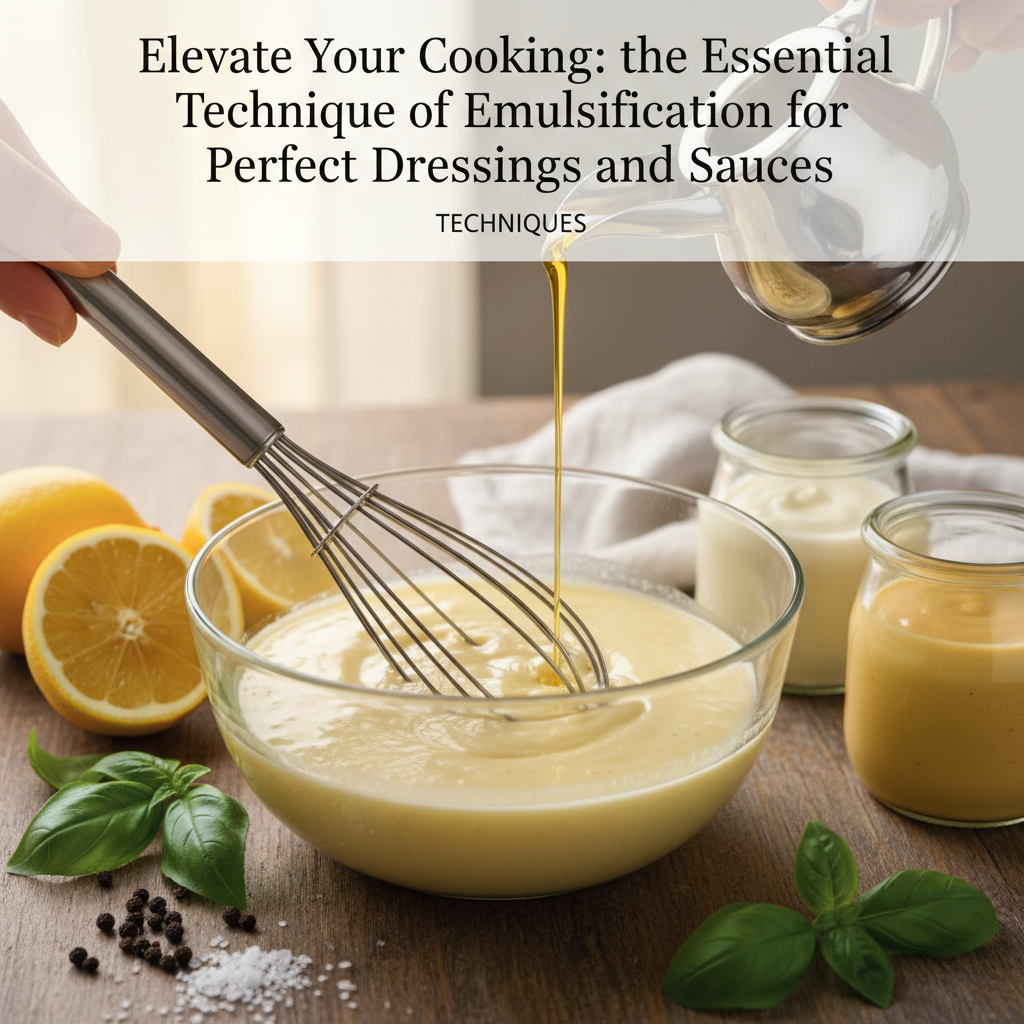
Elevate Your Cooking: The Essential Technique of Emulsification for Perfect Dressings and Sauces
Elevating your home cooking starts with understanding fundamental techniques that make a noticeable difference in your dishes, and one of the most vital among them is emulsification. This process, often a mystery to many home cooks, is essential for preparing everything from luscious salad dressings to velvety sauces. There’s a finesse in creating an emulsion that can transform simple ingredients into an exquisite culinary experience. Whether you're whipping up a homemade vinaigrette or a classic hollandaise, mastering emulsification will allow you to gain control of texture and flavor like never before.
At its core, emulsification involves blending two unmixable liquids, typically oil and water-based components, into a stable, homogeneous mixture. While it might sound straightforward, the magic happens when specific techniques are employed, and careful attention is paid to your ingredient ratios, temperatures, and mixing methods. Achieving the perfect emulsion might seem intimidating, but with practice and some insider knowledge, you’ll find that you can create restaurant-quality dressings and sauces right in your kitchen.
Understanding emulsions opens a world of possibilities. For instance, the ability to create a perfect vinaigrette not only elevates your salads but also becomes a building block for marinades, dips, and sauces. This blog post will guide you through the essential techniques of emulsification, explore the science behind it, and provide you with tested recipes and tips. Get ready to roll up your sleeves, because once you understand this technique, you'll be equipped to bring extraordinary flavors and textures to your plates!
The Science of Emulsification
At its essence, an emulsion is a mixture of fat and water that, in the presence of an emulsifier, becomes stable. The key players in this process are lipids (like oils and fats) and hydrophilic (water-loving) components, which can include vinegars, juices, or even eggs. Emulsifiers, such as mustard, honey, or egg yolks, contain molecules that have a dual nature: one end is hydrophilic, and the other is lipophilic (fat-loving). This unique structure allows them to stabilize the blend of oil and water.
Types of Emulsions
There are two primary types of emulsions:
Understanding the type of emulsion you are working with is crucial, as it dictates your technique and approach. For instance, when making mayonnaise, you start with the egg yolk and add the oil gradually to ensure a stable emulsion, whereas a vinaigrette can be more freely combined.
“Emulsification is the art of blending, where common techniques turn ordinary ingredients into extraordinary creations.”
The Emulsification Process
The emulsification journey can be broken down into simple steps:
While each type of emulsion has its specific techniques, the fundamental principle remains the same: by incorporating the fat into the water slowly and with force, you're able to create a celebrated synergy between two liquids that generally resist blending.
Essential Tools for Emulsification
When it comes to emulsification, having the right tools can make all the difference in achieving success. Here’s a boiled-down list of essential tools you should consider:
“The right tools can turn a simple task into a masterpiece; equip yourself for success in the art of emulsifying.”
Steps to Create Stable Vinaigrettes
Vinaigrettes are one of the simplest forms of emulsion, and they can greatly elevate your salads or grilled vegetables. Learning how to make a perfect vinaigrette will build your confidence in emulsification.
Basic Vinaigrette Recipe
Here’s a straightforward recipe to get you started:
Ingredients:
Instructions:
Tip: Store your vinaigrette in a mason jar that allows you to shake it up well before each use. Homemade vinaigrettes can last up to a week in the refrigerator.
Variations of Vinaigrettes
Once you master the basic vinaigrette, consider trying these delightful variations:
Experimenting with different oils (like walnut or avocado) and vinegars will also provide unique flavors and depth to your salads.
Mastering Mayonnaise
Mayonnaise is a classic example of a permanent emulsion, and it’s surprisingly easy to make at home. Once you learn how to create this versatile condiment, you’ll have the base for many sauces and dressings.
Classic Mayonnaise Recipe
Ingredients:
Instructions:
Troubleshooting Mayonnaise
“Homemade mayonnaise has a creamy texture and flavor that will elevate your dishes beyond the ordinary; it’s worth the effort!”
Making Traditional Sauces with Emulsification
Once you have the hang of vinaigrettes and mayonnaise, you can move on to classic sauces that utilize emulsification, such as hollandaise and aioli. These sauces can be daunting, but understanding the process will give you the confidence to tackle them.
Hollandaise Sauce
Hollandaise is an emulsion of egg yolks, melted butter, and lemon juice. Typically served over eggs Benedict or vegetables, it’s a staple of French cuisine.
#### Ingredients:
#### Instructions:
#### Tips for Perfect Hollandaise
Aioli
Aioli is a flavorful garlic mayo that enhances sandwiches, meats, and vegetables. While it resembles mayonnaise, its addition of garlic provides a delicious depth of flavor.
#### Ingredients:
#### Instructions:
Variations of Hollandaise and Aioli
Emulsification in Dressings Beyond Vinaigrette
While vinaigrettes are the classic application for emulsification, there are many other types of dressings that can benefit from this technique. Think creamy dressings, such as ranch, caesar, or even tahini dressings.
Creamy Ranch Dressing
This beloved American dressing is rich and delicious, often made with buttermilk, mayo, and fresh herbs.
#### Ingredients:
#### Instructions:
Tahini Dressing
A staple in Middle Eastern cuisine, tahini dressing is made with sesame paste for a nutty flavor that compliments salads and bowls.
#### Ingredients:
#### Instructions:
Experimenting with Dressings
Don’t shy away from experimenting with your dressings! Consider these points for crafting unique and personal flavors:
“Creative dressings can transform any mundane meal into a flavor-packed experience; let your palate lead the way!”
Conclusion
Whether you’re preparing a fresh salad, whipping up a sauce, or looking to impress with a homemade condiment, understanding the technique of emulsification is crucial. The beauty of mastering this technique lies in its versatility — once you’ve grasped the fundamentals, you’ll find endless avenues to explore.
By practicing with various oils, acids, and emulsifiers, you’ll develop a signature style that speaks to your culinary preferences. All it takes is some patience, enthusiasm, and experimentation. As you hone your skills, remember that cooking is not just about following recipes — it's about enjoying the process and discovering the joy of creating something delicious from scratch.
Now that you have a deeper understanding of emulsification, it’s time to hit the kitchen. Whether it be a classic mayonnaise, a tangy vinaigrette, or a sophisticated hollandaise, your mastery of this essential technique will undoubtedly elevate your cooking to new heights. So, get ready to impress yourself, your family, and your friends with outstanding homemade dressings and sauces that reflect your culinary journey. Happy cooking!
Get the Next Recipe
Weekly recipes, techniques, and gear picks — straight to your inbox.
