Essential Ingredients for Flavorful Homemade Stocks: A Comprehensive Guide
Creating flavorful homemade stocks is a fundamental skill that every home cook should master. Stocks form the base of countless dishes, providing depth and complexity that elevate the most basic recipes. Whether you are preparing a hearty soup, a robust sauce, or cooking grains to perfection, a well-made stock can transform ordinary ingredients into something spectacular. Understanding the essential ingredients and techniques for making stock will not only enhance the flavor of your dishes but also empower you to create variations that suit your taste preferences and dietary restrictions.
To embark on your journey of making satisfying stocks, it’s crucial first to identify the essential components that contribute to a rich and flavorful end product. Stocks typically consist of three primary categories of ingredients: bones (or vegetables for vegetable stock), aromatic vegetables, and seasonings. Each element plays a vital role in extracting flavors and nutrients, with the bones providing body and richness, aromatics offering depth, and seasonings enhancing the overall complexity. This triad is the foundation of stock-making, and mastering this balance will take your culinary skills to the next level.
As you begin to experiment with stocks, it’s important to note that cooking techniques, temperatures, and timings can greatly affect the outcome. Stocks benefit from a low and slow cooking process, allowing the flavors to meld harmoniously while extracting the gelatin and nutrients from the bones. This gentle simmering not only yields a clear and flavorful liquid but also offers a delightful aroma that fills your kitchen. In this comprehensive guide, we will explore various types of stocks, the essential ingredients to use, and the best techniques to create stocks that will impress your family and friends.
Understanding Different Types of Stocks
Stocks can be broadly categorized into three main types: white stock, brown stock, and vegetable stock. Each type offers a unique flavor profile and use based on the ingredients and techniques employed.
White Stock
White stock, often referred to as fonds blanc, is made primarily from raw bones, which can include chicken, beef, or fish. The key characteristic of white stock is its light color and delicate flavor, making it an ideal base for lighter soups and sauces.
- Raw bones (chicken, beef, or fish)
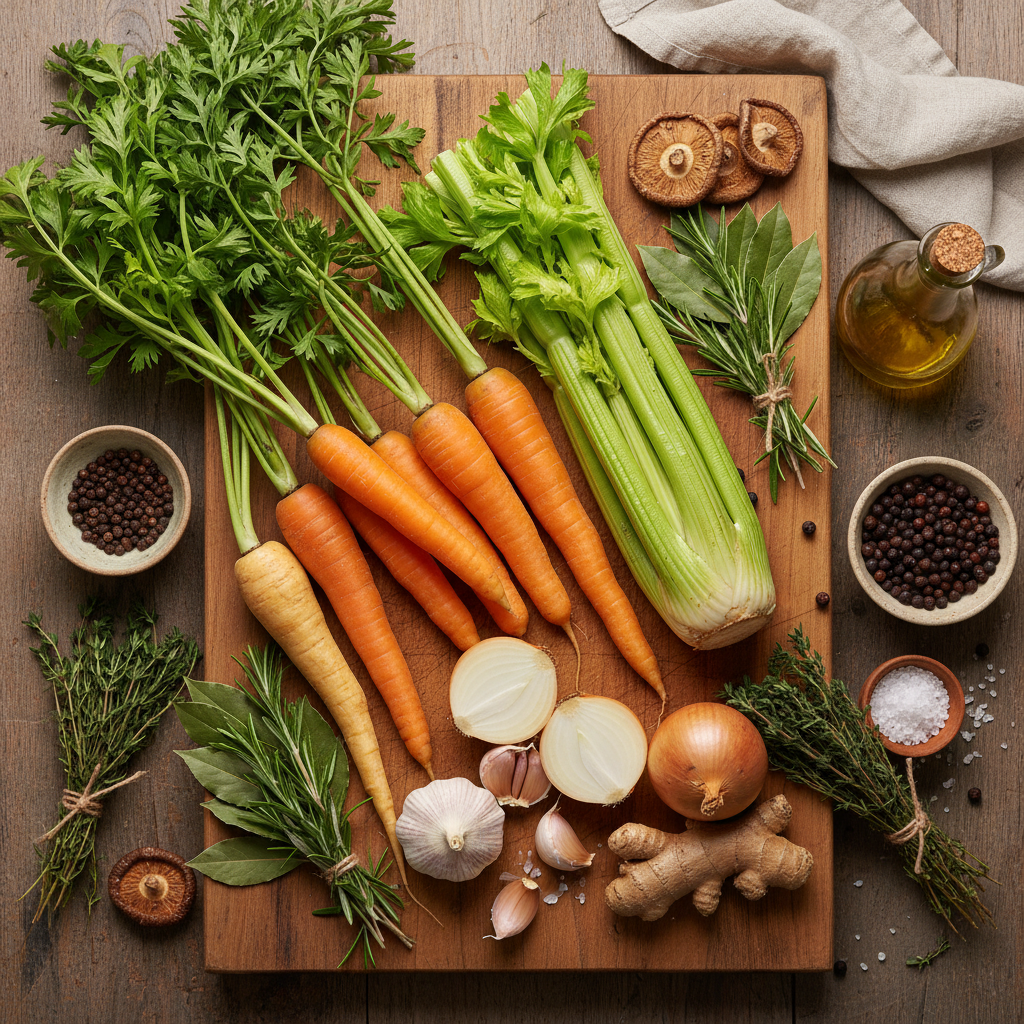
- Mirepoix (a mixture of onions, carrots, and celery)
- Herbs (such as thyme and bay leaves)
- Water
To prepare white stock, begin by rinsing the bones under cold water to remove any excess blood or impurities. Place the bones in a large stockpot and cover them with cold water. Bring the pot to a gentle simmer, allowing the scum to rise to the top. Skim off any foam that accumulates for a clear liquid. Add your mirepoix and herbs, and allow the stock to simmer for several hours—generally around 4 to 6 hours for chicken bones and 8 to 12 hours for beef bones. Strain the liquid and cool quickly before storing.
Brown Stock
Brown stock takes a more robust approach, utilizing roasted bones to develop a complex flavor. Often used in richer dishes, this stock is the go-to for hearty gravies and sauces.
- Roasted bones (beef or veal are preferred)
- Mirepoix
- Tomato paste (for additional depth)
- Herbs and spices
- Water
Start by roasting your bones in an oven preheated to 400°F (200°C) for about 30-45 minutes, until they are deeply browned. This caramelization process gives brown stock its characteristic rich flavor and dark color. After roasting, transfer the bones to a stockpot and sauté your mirepoix in the drippings left from the bones. Add tomato paste to the mirepoix and cook for an additional minute before adding the bones and water. Simmer for at least 8-12 hours, incorporating any additional herbs and spices you desire.
Vegetable Stock
Vegetable stock is a versatile, plant-based option that is perfect for vegetarian and vegan cooking. It offers a lighter alternative without sacrificing flavor.
- An assortment of vegetables (onions, carrots, celery, garlic, leeks)
- Fresh herbs (parsley, thyme, bay leaves)
- Seasonings (peppercorns, salt)
- Water
For vegetable stock, chop your chosen vegetables into large chunks. In a stockpot, sauté them briefly in a little oil to enhance their flavor, then add cold water. Bring it to a simmer and add herbs and seasonings, allowing it to simmer for 1 to 2 hours. Taste and adjust the seasonings as needed.
**"A well-crafted stock can elevate any dish, offering layers of complexity and nuance that can’t be achieved with store-bought products."**
Key Ingredients for Stock Making
Understanding what to use in your stocks will ensure delicious results every time. Here, we focus on the core ingredients that play pivotal roles in flavor and body.
Bones
The choice of bones significantly impacts the flavor, color, and richness of your stock. Different types of bones yield different results.
- Meaty Bones: These are rich in collagen; use neck, shank, or short ribs for a sumptuous texture.
- Marrow Bones: Perfect for adding a luxurious mouthfeel and depth to your stock; they impart a creamy quality when simmered.
- Poultry Bones: Chicken or turkey carcasses provide a delicate flavor and are ideal for making lighter stocks.
Aromatics
Aromatics form the flavorful backbone of your stock. The classic mirepoix—comprised of onions, carrots, and celery—is a traditional starting point.
Herbs and Seasonings
Herbs and seasonings enhance the profile of your stock, infusing it with aromatic qualities.
- Thyme: Adds an earthy dimension.
- Parsley: Brightens the flavor; use stalks for stocks.
- Bay Leaves: Provide a subtle complexity.
Using whole peppercorns rather than ground allows for the extraction of flavor without clouding the stock. It’s advisable to avoid salt until the end, allowing for better control over the final dish’s saltiness.
**"Investing time in crafting your stock pays off. The right bones, aromatics, and herbs work together to create something extraordinary."**
Techniques for Making Stock
Mastering the techniques of stock-making ensures that you maximize flavor extraction and maintain clarity in your final product.
Preparing Ingredients
Properly preparing your ingredients is crucial for achieving the best results.
The Cooking Process
The way you cook your stock is as important as the ingredients themselves. Managing temperature and time will yield the best results.
Skimming and Straining
Taking the time to skim and strain your stock will result in a clear, clean liquid.
Storing Stock
Proper storage is essential for preserving the flavor and freshness of your homemade stock. Knowing how to cool, store, and reheat stock will ensure it’s ready when you need it.
Cooling Techniques
Rapid cooling prevents bacterial growth and maintains quality.
Storage Options
Deciding how to store your stock depends on when you plan to use it.
Labeling and Organizing
Keep track of your stocks with proper labeling.
**"The best way to always have stock on hand is to make a significant batch and freeze it in portions. You’ll thank yourself when a last-minute soup craving strikes!"**
Customizing Stock for Flavor Variations
Making stock is not just about following a basic recipe; it’s about experimentation and personal touches.
Adding Spice
Incorporate spices to develop unique flavor profiles based on the dish you plan to prepare. Cardamom, cloves, or coriander seeds can add warmth and depth to your stock. Think about what you plan to use the stock for and season accordingly.
- For an aromatic Asian broth, consider ginger, lemongrass, and star anise.
- A Mexican-inspired stock can benefit from cumin, chili peppers, and cilantro.
Using Leftovers
Stocks are fantastic for utilizing vegetable scraps and unused ingredients.
Incorporating Flavorful Liquids
Experimenting with other liquids can enhance the stock further.
Cooking with Stock: Elevate Your Dishes
With your stock prepared and stored, the next step is utilizing it effectively. Knowing when and how to implement stock in your cooking can significantly impact your dishes' flavors.
Soups
Stocks serve as the foundational element in soups. Using a homemade stock will greatly enhance flavor over water.
Sauces
Rich sauces are made even better with homemade stock. When making gravies or reductions, use stock to deglaze the pan and create a robust sauce.
Cooking Grains
Cooking grains in stock instead of water vastly improves their flavor.
Conclusion
Creating homemade stocks is an invaluable skill for any aspiring cook, adding depth and flavor that elevate your culinary creations. By understanding the various types of stocks, the essential ingredients, and the techniques involved, you can produce delicious stocks that enhance soups, sauces, and countless dishes. With a little practice and experimentation, you will find yourself crafting awe-inspiring flavors that will impress even the most discerning palates.
Remember, the essence of making stock is about patience, quality ingredients, and technique. Embrace the process and allow the richness of flavors to develop over time. So, grab your bones, gather your aromatics, and let your next culinary adventure begin. Stock up your kitchen with homemade goodness and never look back at store-bought alternatives again!


Get the Next Recipe
Weekly recipes, techniques, and gear picks — straight to your inbox.
