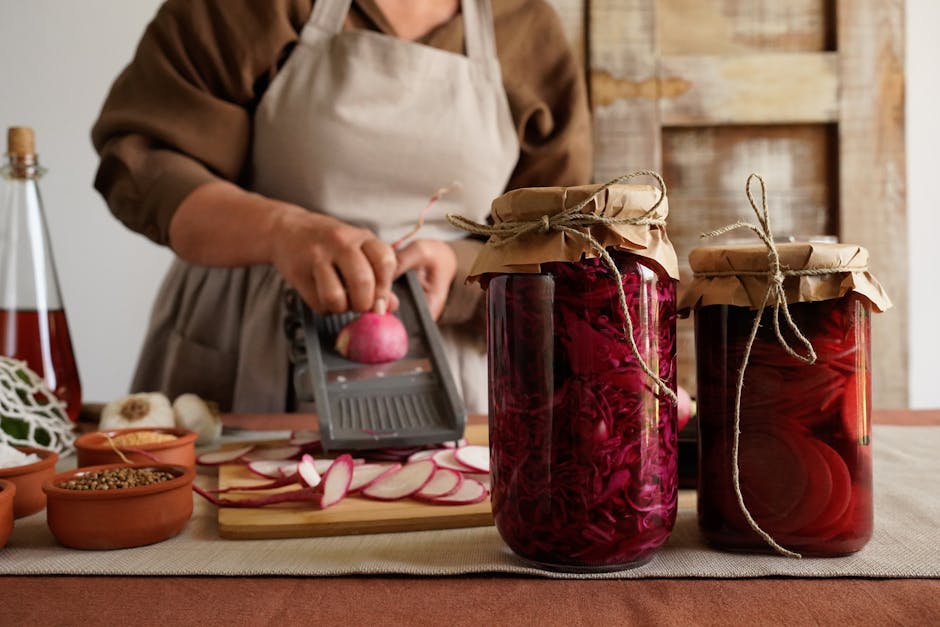
Fermentation Fundamentals: Unlocking Flavor Through Time
There is a profound, almost mystical transformation that occurs when we surrender our ingredients to the patient embrace of time. As home cooks, we are often obsessed with the immediate gratification of a searing pan or a bubbling stock, yet the most complex layers of flavor—those deep, umami-rich notes that linger on the palate—are rarely born of heat alone. Fermentation is the art of controlling decay, a biological alchemy that turns mundane vegetables, grains, and liquids into complex culinary powerhouses. It is the bridge between raw survival and the heights of gastronomy, demanding nothing more than a little salt, a controlled environment, and the willingness to let nature take the driver's seat.
When we talk about fermentation, we are really talking about an invisible workforce. Microscopic bacteria, yeasts, and molds are not the enemies of the kitchen; they are the most skilled line cooks you will ever employ. By creating the right conditions—adjusting salinity, temperature, and oxygen exposure—we selectively encourage beneficial microorganisms to thrive while suppressing those that cause rot. This is a scientific process that has preserved civilizations for millennia, and yet, in the modern home kitchen, it remains one of the most underutilized tools for elevating a dish from "good" to "unforgettable."
Understanding the fundamentals of this process is not merely about following a recipe; it is about developing a culinary intuition. You will learn to smell the difference between a healthy brine and an off-batch, to feel the texture of a vegetable as it softens under the pressure of salt, and to trust the process even when things seem stagnant. In this guide, we will peel back the layers of the fermentation crock, moving beyond simple sauerkraut to explore the science that makes your kitchen a laboratory of flavor. Prepare to reset your palate, as we dive into the rhythmic, slow-motion mastery of time itself.
The Microbial Landscape: Understanding the Players
At the heart of every ferment is the Lactobacillus family of bacteria. These are the workhorses of the vegetable fermentation world. They are lactic acid bacteria, meaning they possess the unique ability to consume sugars and starches present in our food and convert them into lactic acid. This process does two things: it acts as a natural preservative by lowering the pH of the food, creating an environment too acidic for harmful pathogens to survive, and it imparts that signature "tang" we associate with high-quality pickles and kimchis.
Understanding the hierarchy of your ferment is essential for safety and success. You are essentially fostering a monoculture. By adding salt, you create an osmotic pressure that draws moisture out of the vegetable cells, creating a brine. This salt creates a hostile environment for spoilage organisms that prefer fresh, unsalted environments. Once the Lactobacillus begins its work, it produces enough acid to effectively "pickle" the contents, rendering the environment shelf-stable for months, provided the vessel is properly sealed and stored.
The role of oxygen in this process is binary: it is either your best friend or your worst enemy. During the initial stages of some ferments, a small amount of oxygen can encourage the growth of specific starter cultures. However, for most lactic acid fermentations, we want to maintain an anaerobic environment. This is why we use weights to keep vegetables submerged beneath the brine; contact with air encourages the growth of kahm yeast or, worse, mold spores that can compromise the integrity of your hard work.
Selecting Your Starter Cultures
While many ferments are "wild"—relying on the naturally occurring bacteria on the surface of your produce—others require a deliberate introduction of cultures. Koji, the "national fungus" of Japan, is a perfect example of a controlled fermentation. When you introduce Aspergillus oryzae to steamed rice or barley, you are creating an enzymatic engine. These enzymes break down complex proteins into amino acids (specifically glutamic acid) and starches into simple sugars, laying the groundwork for miso, soy sauce, and amazake.
Wild Fermentation:* Relies on surface microbes (salt, vegetables, time).
Back-slopping:* Using a bit of a previous, successful ferment to jumpstart a new one.
Inoculated Fermentation:* Introducing commercial starters or spores (Koji, kefir grains, kombucha SCOBY).
"Fermentation is not an act of cooking; it is an act of cultivation. You are not just making dinner; you are acting as the curator of a microscopic garden."
The Science of Salinity and Preservation
Salt is the most important ingredient in your fermentation toolkit. It is not merely there for seasoning; it is a structural component of the preservation process. The salt percentage—usually calculated by the total weight of the vegetables plus the water—is what dictates the pace of fermentation. A lower concentration (1.5% to 2%) allows for a faster, more aggressive ferment, while a higher concentration (3% to 5%) slows the process significantly, allowing for more complex flavor development over a longer duration.
When calculating your brine, precision is key. A digital scale is non-negotiable for a professional kitchen result. If you are using the dry-salting method (commonly used for sauerkraut), you weigh your shredded cabbage and calculate 2% of that total weight in salt. For a brine-based ferment (like whole pickles or carrots), you calculate the weight of the water and the produce combined. This ensures that the concentration of salt is consistent throughout the entire vessel, preventing pockets where harmful bacteria could potentially take hold.
Temperature also plays a pivotal role in how salt interacts with your vegetables. The ideal range for most lactic acid ferments is between 65°F and 72°F. If your kitchen is too cold, the fermentation will stall, and the bacteria may go dormant. If it is too warm, the bacteria will work too quickly, resulting in soft, mushy vegetables that lack the satisfying snap we look for in a high-quality pickle. Consistency is the secret to a professional-grade ferment.
Managing Environmental Variables
The Koji Revolution: Unlocking Umami
If you want to move from "home cook" to "culinary scientist," you must master Koji. This is the secret weapon of the world’s most elite chefs. By inoculating a substrate like rice or barley with Aspergillus oryzae and keeping it at a specific temperature (85°F to 100°F) for 48 hours, you create a substance that is essentially an enzyme delivery system. When this Koji is mixed with cooked beans and salt, it becomes miso. When mixed with water and rice, it becomes amazake.
The magic of Koji lies in proteolysis and amylolysis. These enzymes essentially "pre-digest" the food. The starch-to-sugar conversion provides the sweetness, while the protein-to-amino-acid conversion provides the deep, savory, mouth-coating umami that defines great cuisine. When you incorporate Koji-based ferments into your everyday cooking—rubbing a steak with Shio Koji, for example—the enzymes go to work on the meat proteins, tenderizing them and deepening the flavor in ways that heat alone cannot achieve.
The technique for managing Koji requires more attention than a simple sauerkraut. You are balancing humidity and heat. A Koji-box (or a modified cooler with a heating pad and a temperature controller) is the professional's choice. You want to see the delicate, white, cotton-like mycelium growing through your grains. If you see yellow or green spores, the Koji has "sporulated," which changes the flavor profile significantly—often making it less sweet and more earthy.
"The presence of umami is the hallmark of a kitchen that understands chemistry. By leveraging the power of enzymes, we can extract richness from ingredients that would otherwise remain dormant."
Developing Flavor Through Aging
Patience is a virtue that pays dividends in flavor. Many home cooks make the mistake of stopping their ferment as soon as it tastes "sour enough." While that is a valid milestone, true depth comes from the aging process. After the initial, rapid fermentation stage, the bacteria reach a point of equilibrium. At this point, you can move your ferment to a cool, dark place, such as a cellar or a refrigerator. This is where secondary flavor compounds develop.
During the aging phase, the complex sugars break down into secondary metabolites. The raw, jagged edges of the initial lactic acid acidity soften and round out. This is why a six-month-old sauerkraut tastes significantly more refined than one that is only two weeks old. The texture also changes; the cells of the vegetables continue to lose their rigid structure, becoming more integrated with the brine, creating a harmonious, unified flavor profile.
It is helpful to keep a Fermentation Log. Write down the date, the weight of the ingredients, the percentage of salt used, and the ambient temperature of your kitchen. Tasting your ferment at one-week intervals and recording your notes will allow you to map your own preferences. You will eventually learn exactly when a specific batch reaches its "peak flavor" for your personal palate, allowing you to replicate it time and time again.
The Stages of Maturation
The Initiation (Days 1–3):* Brine forms, CO2 is released, initial fermentation kicks in.
The Bloom (Days 4–14):* Active bubbling, sharp rise in acidity, primary flavor development.
The Mellowing (Weeks 4+):* The flavor profile rounds out; enzymes continue to break down complex fibers for a more refined finish.
Troubleshooting Common Fermentation Woes
Even the best chefs encounter "bad" batches, but in fermentation, most issues are visual or olfactory rather than dangerous. Kahm yeast is the most common nuisance. It appears as a thin, white, powdery film on the surface of your brine. It is not harmful, but it can negatively affect the flavor, often making the ferment taste slightly yeasty or bland. The best way to deal with it is to skim it off regularly and ensure that your surface area is minimized.
If you smell "rot" or "vomit," however, it is time to discard the batch. A successful ferment should smell tangy, clean, and perhaps a bit effervescent. If the smell is rancid, putrid, or if you see fuzzy mold of any color (black, pink, or orange), do not attempt to salvage it. While food-grade salt and proper acidity are excellent protectors, they are not invincible. When in doubt, throw it out. Professional kitchens never risk a compromised ferment.
Another common issue is soft vegetables. If your pickles turn mushy within a few days, the culprit is usually one of two things: lack of tannins or too much heat. Tannins, found naturally in grape leaves, oak leaves, or even black tea, help keep the pectin in the vegetables firm. Adding a single tea bag to your pickle crock can provide enough tannins to keep your cucumbers crisp throughout the entire fermentation process.
Rules for a Healthy Ferment
Advanced Techniques: Beyond Vegetables
Once you have mastered the basics of vegetable ferments, you can begin to experiment with the world of lacto-fermented fruits and aromatics. Have you ever tried fermenting honey with garlic? The garlic cloves will lose their harsh, spicy bite, becoming mellow and sweet while the honey takes on an incredible, savory depth. This is a staple in many modern pantries for drizzling over roasted meats or glazing root vegetables.
Then there is the world of fermented hot sauces. By fermenting your chiles in brine for several weeks before blending them with vinegar, you are creating a product that possesses a complexity that mass-produced sauces simply cannot match. The fermentation process transforms the raw, vegetal heat of the pepper into something multidimensional—earthy, bright, acidic, and lingering. It is the difference between a one-note spice and a symphonic experience.
Finally, consider the application of garums. By fermenting fish or meat with Koji and salt, you are creating a liquid umami bomb that puts standard fish sauce to shame. This is the cutting edge of modern culinary technique. It requires patience and precision, but the result is a seasoning agent that can define the signature profile of an entire restaurant menu. It is, quite simply, the ultimate expression of what time can do to food.
Three Essential Projects for Every Home Cook
"The kitchen is a laboratory of infinite possibility, and the fermenting crock is the most powerful tool for exploration we possess. Do not fear the process; embrace the transformation."
Integrating Ferments into Your Daily Cooking
The beauty of having a "ferment library" in your refrigerator is the ability to instantly elevate your day-to-day meals. A simple piece of grilled chicken becomes a gourmet dish when topped with a spoonful of quick-fermented ramp kimchi. Your morning eggs are transformed by a side of kraut that provides both the necessary acid to cut the fat of the yolk and a hit of probiotic goodness. These ferments are not just garnishes; they are foundational building blocks of flavor.
Think about the way we use salt and vinegar. We use them to balance dishes, to brighten heavy flavors, and to bring life to bland ingredients. Fermented foods perform these same functions but with added depth. The lactic acid in a ferment is cleaner and more nuanced than the acetic acid found in store-bought distilled vinegar. When you add a bit of brine to a soup or a salad dressing, you aren't just adding acid; you are adding a complex base note of umami that elevates the entire profile of the dish.
Start by designating a shelf in your refrigerator as the "Fermentation Station." Keep a rotation of items: a jar of fermented carrots, a pot of miso, a bottle of fermented hot sauce, and perhaps a jar of preserved lemons. By having these ingredients ready to go, you will find yourself reaching for them intuitively. You will start to see the world of your pantry through the lens of what could be improved by a few weeks of time and a little bit of salt.
Final Thoughts
Fermentation is more than just a culinary technique; it is a philosophy of engagement with our food. In an age of instant delivery and highly processed, shelf-stable goods, taking the time to grow your own flavors is an act of defiance. It is a commitment to the idea that time, when harnessed correctly, is the most valuable ingredient in the kitchen. When you open that crock and hear that faint, satisfying hiss of gas escaping, you aren't just opening a jar of pickles; you are reconnecting with the ancient rhythms of human existence.
Mastering these fundamentals requires you to move past the fear of the unknown. You will learn that decay is not the end of the line, but a metamorphosis. You will learn to trust your palate over a rigid recipe. Most importantly, you will learn that the best things in life—the deepest flavors, the most complex textures—take time to develop. So, go to the market, buy the freshest cabbage, the crispest carrots, and the highest quality salt you can find. Your kitchen is ready for its transformation.
As you embark on your journey through these fundamentals, remember that every master chef was once a beginner who dared to wait. Do not be discouraged by the batch that doesn't turn out quite right, and do not be afraid to experiment with new vegetables or different spice profiles. The microbial landscape is vast and largely unexplored by the average home cook. By taking the first step today, you are joining a lineage of fermenters that stretches back to the dawn of humanity, and in doing so, you are bringing the soul of the restaurant kitchen right into your own home. Stay curious, stay precise, and always blame the chef—because the chef is the one who took the time to make it perfect.

Get the Next Recipe
Weekly recipes, techniques, and gear picks — straight to your inbox.
