How Many Teaspoons in a Tablespoon? Chart
In the high-pressure environment of a professional kitchen, precision is not just a preference; it is the fundamental language of consistency. Every recipe, whether it is a delicate emulsion or a rustic braise, relies on the accurate measurement of ingredients to achieve the desired outcome. For the home cook, understanding the nuances of volume measurements—specifically the relationship between teaspoons and tablespoons—is the first step toward moving from mere recipe-following to true culinary intuition. When you master these small but mighty ratios, you unlock the ability to scale recipes, adjust seasoning on the fly, and troubleshoot disasters before they happen, all while keeping your kitchen workflow efficient and stress-free.
The culinary arts are often romanticized as an intuitive, sensory experience, yet beneath the artistry lies a rigid framework of scientific ratios. Consider the standard teaspoon, a tool that might seem insignificant until you realize that overestimating a potent spice like cayenne or a binding agent like baking soda can render a dish inedible. By standardizing your approach to dry and liquid volume, you eliminate the guesswork that leads to dry cakes, overly salty soups, and collapsed soufflés. This guide is designed to anchor your technique in the foundational metrics that define professional-grade execution, ensuring that every measurement you make brings you closer to the consistency of a restaurant kitchen.
"Blame The Chef" is built on the philosophy that anyone can cook at a professional level if they respect the fundamentals. Measurement is the most common point of failure for home cooks, yet it is also the easiest to rectify with a bit of focus and the right information. We are going to break down the exact ratios for teaspoons and tablespoons, explore why the difference matters in complex baking chemistry, and examine the tools that keep your pantry organized. Whether you are tempering chocolate, whisking a vinaigrette, or perfecting a dry rub, the confidence that comes from knowing exactly how your tools interrelate will transform your relationship with the stove.
The Mathematical Foundation of Kitchen Volume
In the culinary world, accuracy starts with the standard conversion: 3 teaspoons equal 1 tablespoon. This ratio holds true across the board in the United States customary system, providing a predictable constant for your preparations. While this may sound elementary, understanding how to apply this ratio is what separates the average cook from the meticulous chef. When you find yourself in the middle of a recipe and realize you are missing a specific measuring spoon, this mental math allows you to pivot without breaking your stride, ensuring the integrity of your ratios remains intact.
Why the 3:1 Ratio Matters
Consistency is the cornerstone of professional cooking. When a pastry chef develops a recipe for a delicate sponge cake, every gram and every milliliter is calculated to achieve a specific rise and crumb structure. If you are scaling a recipe to feed a crowd, or perhaps shrinking one for a dinner for two, knowing that you need nine teaspoons of baking powder instead of three tablespoons keeps your leavening ratios perfectly balanced. Deviation here is not just about flavor; it is about the structural integrity of the final product.
Standardized Measurements
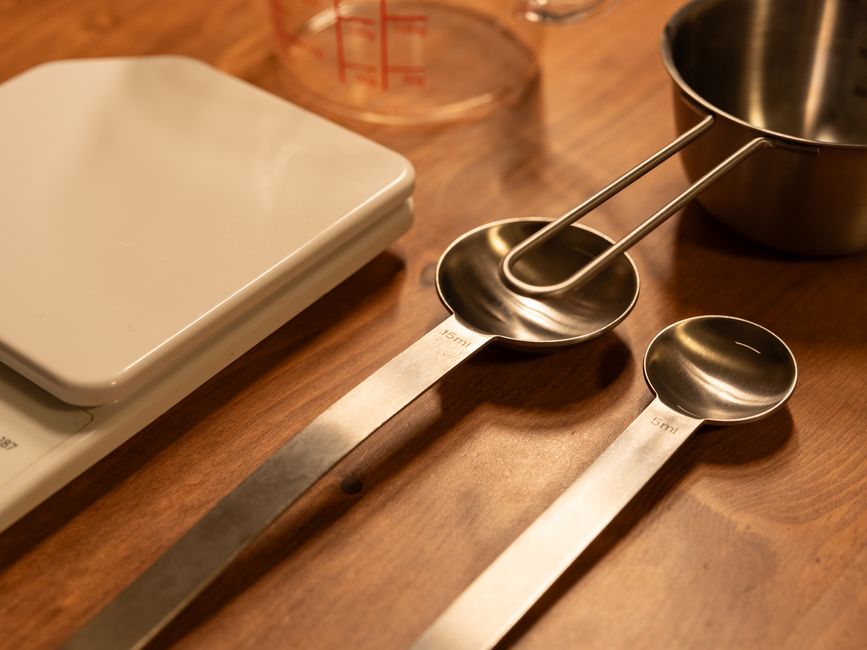
It is vital to distinguish between a "teaspoon" as a piece of cutlery and a "teaspoon" as a standardized unit of measure. Professional measuring tools are engineered to hold exact volumes, whereas your household silverware is often haphazard in its capacity. Always use calibrated stainless steel measuring spoons. These tools are designed for leveling, allowing you to scrape off the excess with a flat-edged spatula or the back of a knife to ensure that your "teaspoon" is exactly one-third of a "tablespoon" and not a rounded, imprecise approximation.
"Precision is the invisible ingredient that bridges the gap between a home-cooked meal and a culinary masterpiece; without it, you are merely guessing at greatness."
Mastering the Mechanics of Dry vs. Liquid
The way you treat a dry ingredient compared to a liquid one dictates how that 3:1 ratio performs in your final dish. For dry ingredients, you are aiming for a level measurement. You should scoop the ingredient, or spoon it into the measuring device, and then perform a "leveling sweep." For ingredients like flour, cocoa powder, or baking soda, the density can change if the ingredient is packed down, meaning a "packed" teaspoon might weigh significantly more than a "leveled" one.
The Art of the Sweep
To achieve professional results, never dip your measuring spoon directly into a bag of packed ingredients like brown sugar or flour, as this compresses the product. Instead, use a spoon to fill the measure, then sweep the excess off with the flat back of a knife or a bench scraper. This ensures the volume remains accurate to the intended recipe. If a recipe calls for a tablespoon of a potent spice, but you only have a teaspoon measure, performing three level scoops will yield the exact result required without the risk of an accidental flavor explosion.
Liquid Precision
Liquids behave differently than solids, yet the same 3:1 ratio applies to the volumetric space they occupy. When measuring liquids, you must ensure your eye level is perfectly aligned with the meniscus of the liquid inside the spoon. If you are measuring a tablespoon of vanilla extract, avoid pouring it directly over the mixing bowl; if you spill, you have inadvertently added double the required amount. Measure into a secondary container or directly over the sink, then transfer to the bowl to maintain strict control over your flavor profile.
The Role of Spices and Aromatics
Many home cooks approach seasoning with a sense of whimsy, but the most talented chefs approach it with scientific rigor. When working with dry spices, the 3:1 ratio is your best friend for scaling. If you are creating a custom dry rub for a roast, the ratio of cumin to coriander to chili powder is critical for the balance of heat, earthiness, and acidity. A tablespoon of salt and a teaspoon of cayenne might be perfect for a pound of protein, but reversing those ratios will destroy the balance.
Scaling Spice Blends
When you are blending spices, it is helpful to work in batches that use tablespoons as your base unit for larger quantities and teaspoons for the "accents." For instance, a classic Moroccan-style rub might call for 2 tablespoons of smoked paprika and 1 teaspoon of ground cinnamon. By maintaining this relationship, you can easily scale the blend from a single meal to a large-scale event. Always document your ratios in a kitchen notebook, as the most subtle tweaks—like adjusting a teaspoon of dried oregano to a tablespoon of fresh—will define your signature style.
Potency and Bloom
Remember that dried spices possess a concentrated intensity that differs from their fresh counterparts. When a recipe suggests a tablespoon of dried herbs, that equates to three teaspoons. However, because drying concentrates the essential oils, you should always bloom your spices in a bit of fat before adding liquid. This process releases the volatile compounds. If you measure your tablespoons of dry spices into a hot pan with oil, you will notice an immediate aromatic change that simple cold-mixing cannot replicate.
Tools of the Trade: Professional Gear
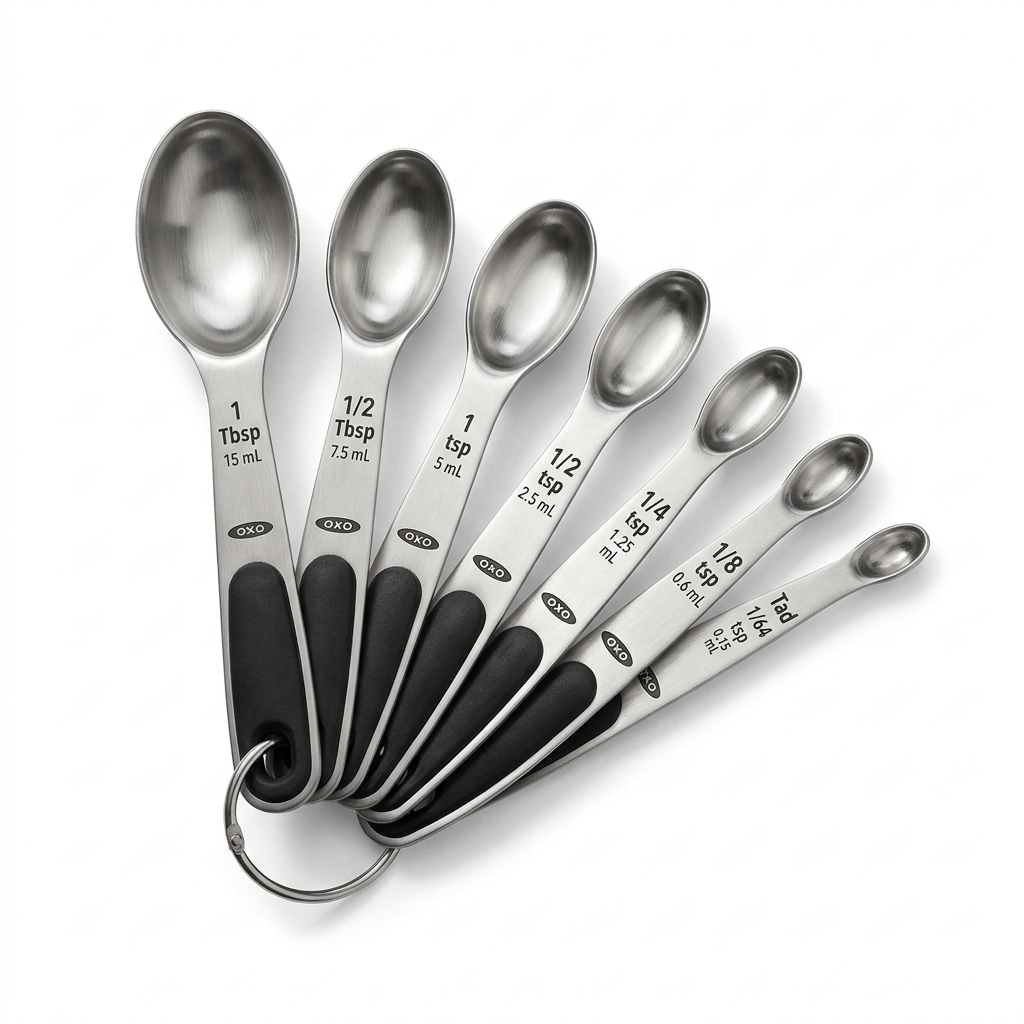
Not all measuring spoons are created equal. As a professional, I highly recommend investing in a set of heavy-duty, stainless steel measuring spoons. Avoid plastic sets, as they can warp over time, leading to inaccurate volumes. You want spoons that are clearly marked with both the Imperial and Metric measurements, as this provides a double-check system when working from various international cookbooks. A set that includes the standard 1/4, 1/2, 1 teaspoon, and 1 tablespoon is the absolute baseline for any serious kitchen.
The Importance of Narrow Spoons
One of the most annoying aspects of measuring is trying to fit a wide, round measuring spoon into a spice jar. Many professional chefs prefer narrow, oval-shaped measuring spoons. These are specifically designed to fit into standard spice tins, allowing you to reach the very bottom without spilling product all over your workspace. Efficiency is the key to maintaining a calm kitchen; if you are spending time trying to wedge a spoon into a container, you are losing focus on your preparation.
Maintenance and Care
Keep your measuring tools organized on a ring or in a dedicated drawer. A cluttered workspace leads to error. After each use, ensure the spoons are washed and completely dry before returning them to storage. Residual moisture can cause clumping in spices like baking powder or salt, which will negatively impact the volume of your next measurement. Treat your measuring spoons with the same care as your knives, as they are the primary instruments of your culinary precision.
"A kitchen without accurate measuring tools is like a ship without a rudder; you may be moving forward, but you are rarely on the correct course."
Common Kitchen Conversions for Scalability
Beyond the simple relationship between the teaspoon and the tablespoon, there are other conversions that you must internalize to remain fluid in the kitchen. Learning these by heart will make you a faster, more effective cook. For example, knowing that there are 4 tablespoons in a 1/4 cup allows you to quickly adjust recipes without stopping to consult a search engine. This mental mapping is the foundation of culinary independence.
The Conversion Cheat Sheet
3 teaspoons = 1 tablespoon*
4 tablespoons = 1/4 cup*
16 tablespoons = 1 cup*
2 tablespoons = 1 fluid ounce*
8 fluid ounces = 1 cup*
By keeping these numbers in your head, you can look at a recipe and instantly visualize how it can be adjusted. If you are roasting a chicken and the recipe calls for 4 tablespoons of butter, you know that’s exactly half of a standard stick (half a cup being 8 tablespoons). These small connections are the secret to moving from a novice who panics when a measurement is missing to a chef who can adapt any recipe on the fly.
Adjusting for Altitude and Humidity
While the 3:1 ratio remains constant, remember that environmental factors like altitude and humidity affect how your measurements translate into finished results. In higher altitudes, you may need to reduce your leavening agents—using perhaps 2 teaspoons of baking powder instead of a tablespoon—to prevent a cake from rising too quickly and collapsing. This is where the beauty of the 1/3 ratio shines, as it allows for precise micro-adjustments that maintain the chemical balance of your bake.
Troubleshooting Common Measurement Errors
Every chef makes mistakes. The true measure of a culinary professional is how they handle the error before it becomes a disaster. If you have accidentally added too much of a dry ingredient, such as salt, to a base, you are dealing with an imbalance that requires dilution. Understanding that a tablespoon is three times the volume of a teaspoon helps you understand the magnitude of your mistake; if you over-salt a soup by a tablespoon, you don't just add a splash of water; you need a significant increase in volume to counteract the sodium.
Recovering from Over-Seasoning
If you find yourself in a situation where the flavor balance is off due to an inaccurate measurement, start by tasting. Is it too salty? Add a fat or an acid to mask the intensity. If you have added too much of a potent spice, try adding a neutral component like Greek yogurt, coconut milk, or even a splash of broth. Because you know the math—that one tablespoon of mistake is equivalent to three teaspoons—you can better estimate how much balancing agent is required to rectify the dish.
The "Mise en Place" Advantage
The best way to avoid these errors is through the implementation of mise en place. Before you turn on the heat, measure all your ingredients into small ramekins or bowls. This is the gold standard of professional cooking. By measuring everything beforehand, you ensure that you aren't trying to estimate a tablespoon while simultaneously monitoring a sauté pan. This prep work allows you to verify your measurements calmly, ensuring that the 3:1 ratio is perfectly executed before it ever hits the heat.
Developing Your Intuition
As you gain experience, you will begin to "feel" what a tablespoon looks like. You will recognize the weight of a teaspoon of ground pepper in your hand. This is the transition from technique to intuition. While you should always rely on your tools, your sensory memory will eventually act as a secondary check. Trusting your tools, practicing your consistency, and documenting your ratios will inevitably lead to the high-quality results that define the "Blame The Chef" approach to home culinary success.
Conclusion
Mastering the relationship between teaspoons and tablespoons is more than just learning a conversion; it is about cultivating a mindset of professional precision. By treating these small volumes with the respect they deserve, you gain total control over the flavor profiles and structural integrity of your food. Remember that cooking is a cumulative process; it is built on the accumulation of thousands of small decisions, starting with how accurately you measure your first tablespoon of olive oil or your first teaspoon of salt.
As you continue your journey in the kitchen, keep this 3:1 ratio at the forefront of your process. Let it be the foundation for your scaling, your spice blends, and your confidence. When you stop guessing and start measuring with intention, you eliminate the variables that lead to kitchen frustration and open the door to culinary creativity. Never stop refining your technique, never stop checking your ratios, and always remain curious about the science behind the flavor.
By applying these standards, you are not just feeding yourself or your guests; you are participating in a tradition of excellence that separates the casual cook from the true chef. Use your tools, trust the math, and most importantly, enjoy the process. The kitchen is your laboratory, your stage, and your sanctuary—and with precision as your guiding principle, there is no limit to what you can create. Stay focused, stay organized, and keep cooking with the precision that defines true talent. Whether you are baking a delicate pastry or roasting a savory centerpiece, your commitment to the fundamental metrics will be evident in every bite. Go forth and cook with the confidence that comes from knowing exactly how to command your ingredients, and remember: if the meal is perfection, you have only your own dedication to thank. If it isn't quite right, well, you know exactly where the precision broke down—and you have the knowledge to fix it next time. Happy cooking.

Get the Next Recipe
Weekly recipes, techniques, and gear picks — straight to your inbox.
