
Japanese Knife Skills: Mastering the Art of Precision Cutting
There is an undeniable magic that happens when a sharp blade meets a fresh ingredient on a wooden cutting board. For many home cooks, the kitchen can feel like a place of chaos, but for the Japanese chef, it is a sanctuary of order, efficiency, and profound respect for the produce. Mastering Japanese knife skills is not merely about how fast you can chop an onion; it is about understanding the relationship between the steel, the board, and the delicate cell structure of the food you are preparing. When you learn to slice with intention, you unlock textures and flavors that simply cannot be achieved with a dull knife or haphazard technique. This journey into the art of precision cutting will transform your cooking from a daily chore into a meditative practice that yields professional-grade results in your own home.
The philosophy behind Japanese culinary technique is rooted in the concept of shokunin, or the artisan who endlessly pursues perfection in their craft. You do not need to be a sushi master to appreciate the value of a perfectly executed julienne or a precise brunoise. Every cut you make serves a purpose, whether it is to maximize the surface area for even caramelization or to ensure that a salad ingredient releases its juices at the exact right moment on the palate. By focusing on the ergonomics of your grip, the posture of your body, and the fluid motion of the blade, you can reduce fatigue and increase your speed significantly. This is the cornerstone of the "Blame The Chef" approach: we don't just teach you how to cook; we teach you how to master the tools that make the cooking possible.
As we dive into the anatomy of the knife and the mechanics of the stroke, keep in mind that consistency is your primary goal. A plate of sashimi where the slices are uneven will feel disjointed, while a vegetable stir-fry where the ingredients are cut to uniform sizes will cook perfectly within the same window of time. Professional chefs spend years training their muscle memory to perform these cuts without looking down, but you can start today by slowing down and prioritizing form over speed. As you progress, you will notice that your knife work becomes an extension of your own hand, allowing you to focus on the seasoning and timing of the meal rather than struggling with the preparation. Let us begin this transformation of your kitchen skillset by looking at the foundation of it all: the grip.
The Foundation: Proper Knife Handling and Ergonomics
The most common mistake amateur cooks make is treating a knife like a household tool rather than a precision instrument. To achieve professional results, you must first master the pinch grip. This technique involves placing your thumb and index finger on the blade itself, just in front of the bolster, while wrapping your remaining three fingers securely around the handle. This grip provides unparalleled control and balance, turning the knife into an extension of your forearm rather than a separate object you are wrestling with. By choking up on the blade, you shift the center of gravity, which reduces strain on your wrist and allows for significantly more accurate cuts.
Posture and the Guiding Hand
Beyond your grip, your body positioning is vital to maintaining accuracy during long preparation sessions. Always stand perpendicular to your cutting board, keeping your shoulders relaxed and your feet shoulder-width apart to provide a stable base. The "guiding hand"—the hand holding the food—is just as important as the cutting hand. Use the claw grip, where your fingertips are tucked inward and your knuckles serve as the guide for the blade’s spine. This simple adjustment protects your fingertips from accidental nicks while allowing you to slide the blade against your knuckles for consistent, measured slices.
"A sharp knife is a safe knife. A dull blade requires you to apply excessive force, which inevitably leads to slipping and injury. When you respect your edge, your ingredients reciprocate with flavor."
Maintaining the Cutting Surface
A high-quality Japanese blade deserves a high-quality home. Avoid glass, granite, or marble cutting boards at all costs, as these materials will destroy your edge within minutes. Instead, opt for end-grain wood boards made from soft woods like hinoki or rubberwood, which provide just enough "give" to cushion the blade without dulling it. Your board should be stable; if it wobbles, place a damp paper towel underneath it to lock it in place. Remember to clean your board immediately after use with a mild soap and warm water, never letting it soak, as moisture is the primary enemy of wood.
The Art of the Slice: Fundamental Japanese Cuts
In Japanese cuisine, the shape of the cut is directly related to the texture of the dish. Unlike Western cooking, where speed is often prioritized, Japanese techniques focus on the integrity of the cell walls. When you crush a herb or bruise a vegetable, you release enzymes that lead to oxidation and loss of flavor. By using a clean, drawing motion—often called a pull cut—you slice through the fiber rather than crushing it. This results in brighter colors, crisper textures, and cleaner flavors that stay vibrant long after the dish is prepared.
The Julienne and Its Variations
The julienne (or sengiri) is the most versatile cut in the kitchen, essential for salads, garnishes, and quick-cooking stir-fries. To perform a perfect sengiri, start by cutting your vegetable into a uniform rectangle, then slice it into thin planks. Stack the planks neatly, then slice them again into fine strips, aiming for a thickness of about 1/8 inch. Practice this with daikon radish or cucumbers to see how the uniform thickness creates a consistent crunch. Remember, the goal is uniformity; if your strips vary in thickness, they will cook at different rates, resulting in a dish that is partially mushy and partially raw.
Dice, Brunoise, and Beyond
Once you have mastered the sengiri, transition to the brunoise—the smallest, most precise dice. Start with your julienned strips, gather them into a tight bundle, and cross-cut them with the same precision. This produces tiny, uniform cubes that are perfect for garnishes or delicate sauces. Another essential technique is the roll-cut or rangiri. Used primarily for root vegetables like carrots or burdock root, rangiri involves cutting the vegetable at an angle, rotating it a quarter turn after each slice. This creates pieces with more surface area, which helps the vegetable absorb braising liquids faster and adds a rustic, elegant aesthetic to your plates.
"Precision is not about obsession; it is about equality. Every piece on the plate should be treated with the same respect, ensuring that the diner experiences the intended flavor in every single bite."
Knife Maintenance: Sharpening and Honing
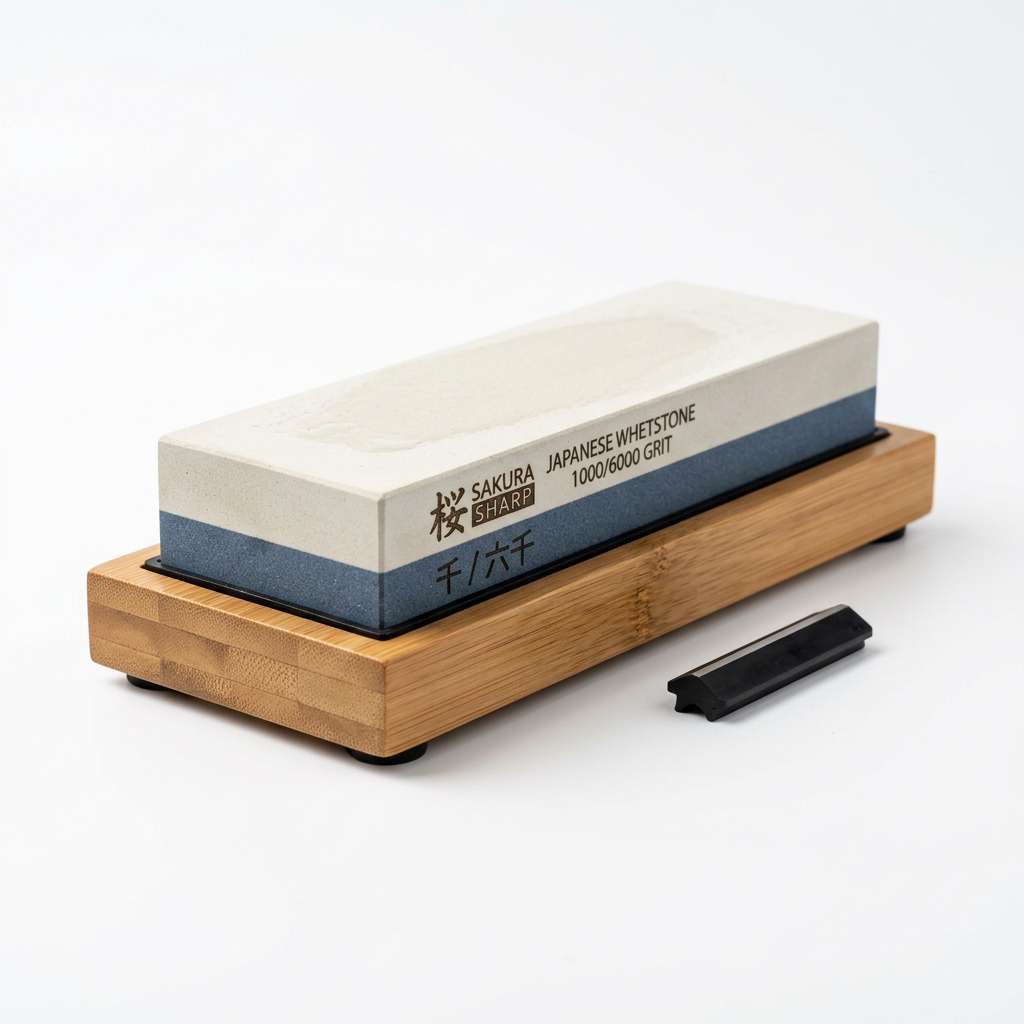
You cannot expect to perform high-level culinary techniques with a knife that has lost its edge. While honing steel is useful for realigning the microscopic teeth of a Western blade, Japanese knives—which are typically made of harder, higher-carbon steel—require whetstone sharpening. A whetstone set typically consists of a medium-grit stone (around 1000 grit) for setting the edge and a fine-grit stone (4000 to 6000 grit) for polishing. Learning to sharpen is a journey that takes patience, but it is the most rewarding skill a cook can master.
The Sharpening Process
Why Harder Steel Matters
Japanese knives are renowned for their hardness, measured on the Rockwell scale (often 60–64 HRC). This allows for a thinner edge profile, which slices through delicate fish or vegetables with surgical precision. However, this hardness also makes the blade more brittle. Never use your Japanese chef's knife for tasks like chopping through bone, frozen foods, or prying open jars. Reserve your high-end blade for its intended purpose: slicing, mincing, and chopping soft-to-medium density ingredients. For heavy-duty tasks, keep a "beater" knife made of softer, more forgiving stainless steel.
Mastering the Petty and the Gyuto
While the Gyuto (the Japanese equivalent of the Western chef’s knife) is your workhorse, the Petty knife is the secret weapon of the professional kitchen. A Petty knife typically ranges from 120mm to 150mm and is designed for fine work that would be awkward with a larger blade. When you are peeling ginger, cleaning strawberries, or de-veining shrimp, the Petty knife provides the maneuverability required for small-scale tasks. Integrating this knife into your workflow will save your Gyuto from unnecessary wear and tear and improve the speed of your prep work.
Techniques for the Petty Knife
Use the Petty knife for tasks involving "in-hand" cutting, where you hold the ingredient in one hand and the knife in the other. Because the blade is short, you have a much higher degree of tactile feedback. Practice using the tip of the Petty for scoring mushrooms or peeling small root vegetables. The key is to keep the blade clean and dry; because these knives are often used for acidic ingredients like citrus or tomatoes, they can develop a patina quickly. While a patina is harmless and often desired by enthusiasts, always wipe your knife immediately after cutting acidic items to prevent unwanted corrosion.
Scaling Up with the Gyuto
When moving to larger tasks with your Gyuto, such as slicing a large cabbage or breaking down a whole chicken, utilize the full length of the blade. Many home cooks make the mistake of using only the middle section of the knife. Instead, use the heel for tasks requiring more force and the tip for intricate, delicate work. A fluid, sweeping motion that utilizes the full length of the blade is significantly more efficient than a short, choppy motion. If you find yourself cutting with your elbow locked, adjust your stance to allow your shoulder to guide the movement.
Advanced Techniques: Katsuramuki and Beyond
If you want to truly push your boundaries, there is no higher test than katsuramuki, or the continuous rotary peel. This technique is often used to create paper-thin sheets of daikon radish that are so transparent they can be used to wrap sashimi or create elaborate garnishes. While it looks like a magic trick, it is actually a lesson in pressure management and blade angle. By holding the daikon in one hand and rotating it against the blade of your Usuba (a knife specifically designed for vegetables), you slowly peel the vegetable into a long, continuous ribbon.
The Importance of the Usuba
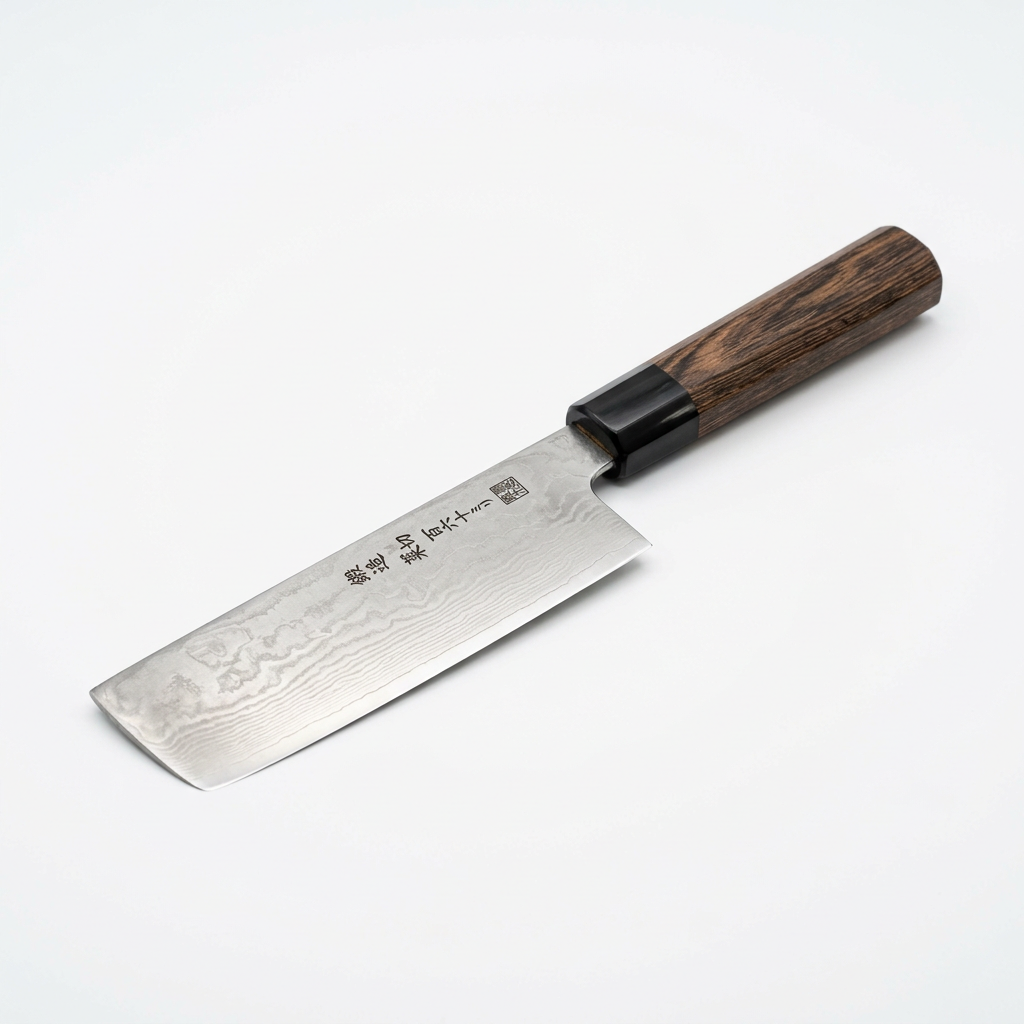
The Usuba is a single-bevel knife, meaning it is sharpened on only one side. This design allows for incredibly straight cuts, as the flat back of the blade acts as a guide against the vegetable. If you are serious about vegetable preparation, investing in an Usuba is the next logical step after mastering your Gyuto. The single-bevel design is also what allows for the extreme sharpness of professional Japanese knives, as it creates a much steeper angle than a double-bevel blade.
Practicing for Mastery
Don't be discouraged if your first attempt at katsuramuki results in a pile of radish chunks rather than a beautiful, long sheet. Start with easier vegetables like cucumbers to get the feel for the rotation. Focus on the rhythm—the sound of the blade moving through the radish should be consistent and rhythmic. Like any art form, this requires thousands of repetitions. But consider this: every time you pick up your knife, you are training your nervous system. By the time you reach your hundredth session, you will find that your hands move with a confidence that few home cooks possess.
"A kitchen is not a laboratory of strict rules, but a studio of continuous refinement. The tools do not make the cook, but they provide the canvas upon which the cook’s passion is written."
Seasonality and Ingredient Respect
In Japanese culture, the philosophy of shun refers to the specific window of time when an ingredient is at its absolute peak of flavor. When you are practicing your knife skills, consider the shun of your ingredients. A perfectly sharpened blade used on a winter-harvested carrot provides a different sensory experience than it does on a summer-harvested one. Knife work is part of the bridge between the farmer and the table; by cutting ingredients cleanly, you preserve their natural state, allowing the quality of the produce to shine through without the need for heavy masking with salt or fats.
Preparing Aromatics
One of the most frequent tasks in the kitchen is prepping aromatics like garlic, ginger, and scallions. Use your knife to create a fine paste of garlic by crushing it with the side of your blade, adding a pinch of salt, and then rocking the knife back and forth until the garlic turns into a smooth, fragrant paste. For scallions, practice the vertical slice—cut the scallion in half lengthwise, then stack the pieces and slice them into the finest possible rings. This maximizes the scallion’s ability to release its oils when added to a hot pan.
The Role of Temperature
Always keep your ingredients cold. When you are working with proteins like fish or meat, the fat remains firm, making it significantly easier to slice into thin, uniform pieces. If your fish begins to warm up on the board, the fat will soften, and the texture will become gummy, making it nearly impossible to achieve a clean cut. Keep your protein on ice or in the refrigerator until the very last second before you start your prep. This simple professional tip will elevate your plating immediately, giving your dishes that clean, high-end appearance found in elite restaurants.
Troubleshooting Your Technique
Even the most experienced chefs have days where their knife work feels off. If you notice that your slices are consistently uneven, don't keep pushing through; stop and evaluate. Check your board for stability, check your grip for tension, and check your blade for sharpness. Often, the culprit is simply fatigue. Your hand is a muscle; if it is tired, it will not perform with the necessary precision. Take a five-minute break, shake out your arms, and return to the board with a fresh perspective.
Correcting Common Faults
Wedge-shaped slices:* This usually happens when you are not holding the knife at a consistent angle or when the blade is not sharp enough to travel straight through the vegetable.
Crushed edges:* This is a sign of a dull blade. Stop and hone or sharpen your knife.
Sticking: If your vegetables are sticking to the side of the blade, use a granton edge* knife or learn to slightly tilt the blade away from the food after each cut.
Uneven thickness:* This is usually due to improper posture or a lack of focus on the guiding hand. Ensure your knuckles are consistently placed against the spine of the knife.
The Mental Aspect
Cooking is a sensory experience that requires your full presence. When you are practicing your knife work, turn off the television and focus on the sound of the blade hitting the board. This is your "Blame The Chef" moment—you are the conductor of this orchestra. By removing distractions, you allow your brain to better map the spatial relationship between your hand and the steel. This mindfulness will naturally lead to faster, more accurate cuts, and more importantly, it will make the process of cooking feel like a source of energy rather than a drain on your patience.
Conclusion
Mastering Japanese knife skills is a lifelong pursuit, but one that begins with a single, deliberate cut. You have taken the first step by understanding the importance of the pinch grip, the necessity of a quality wooden board, and the transformative power of a properly maintained whetstone. Remember that perfection is not a destination; it is the quality of the path you travel. Each time you step up to your cutting board, you are honoring the ingredients, your tools, and your guests. Do not be afraid to fail, to experiment, or to slow down. The beauty of this craft lies in the quiet moments of preparation where the world falls away and all that remains is the rhythm of your knife.
As you continue to practice, you will find that these skills integrate into your cooking subconsciously. You will find yourself chopping herbs while carrying on a conversation, or dicing onions with the rhythm of your favorite music. This is the mark of true culinary mastery: the ability to execute technique with such ease that it becomes an organic part of your expression. Whether you are prepping a simple miso soup for a Tuesday night dinner or crafting an elaborate multi-course meal for friends, your knife work will serve as the foundation of your success.
Finally, keep your blades sharp, your board clean, and your curiosity high. A chef never stops learning, and there is always a new technique to master or a new ingredient to explore. We at "Blame The Chef" are here to support you on this journey. Keep practicing your julienne, keep perfecting your brunoise, and never underestimate the impact of a job done with precision. The difference between a good meal and an unforgettable one often comes down to the care taken in the very first step of preparation. Now, go sharpen your steel, select your freshest ingredients, and enjoy the profound satisfaction that comes with mastering the art of the blade. Your kitchen is waiting for you to transform it, one precise cut at a time.

Get the Next Recipe
Weekly recipes, techniques, and gear picks — straight to your inbox.
