
Japanese Knife Skills: Precision Cuts That Transform Your Cooking
The heartbeat of any professional kitchen is not found in the fancy appliances or the expensive range hoods, but rather in the quiet, rhythmic sound of steel meeting a cutting board. Japanese knife skills are not merely a method of breaking down produce; they represent a fundamental philosophy of cooking that prioritizes precision, intent, and respect for the ingredient. When you observe a chef who has mastered these techniques, you aren't just watching someone chop vegetables; you are witnessing a deliberate choreography where every motion serves a purpose. Mastering these skills allows the home cook to bridge the gap between amateur preparation and professional execution, fundamentally changing the texture and flavor profile of every dish you assemble in your kitchen.
Many home cooks are intimidated by the sharpness and the specialized nature of Japanese cutlery, often reaching for the same dull, serrated blade for every task. This is a mistake that hinders the development of your palate and your efficiency, as a clean slice is vastly different from a ragged tear. When you use a high-quality, razor-sharp Gyuto or Santoku, you maintain the cellular integrity of the ingredients, preventing the loss of moisture and flavor during the cooking process. Embracing these techniques requires patience, but the transformation in your cooking will be immediate, turning mundane dinner preparation into a meditative practice that yields superior, restaurant-quality results.
As we delve into this guide, I want you to reconsider your relationship with your tools and your cutting board. You will learn how to hold your knife with confidence, how to maintain your blades with the proper whetstone technique, and how to execute the classic cuts that define Japanese culinary aesthetics. Whether you are prepping a delicate sashimi plate or a robust vegetable stir-fry, the principles remain the same: stability, consistency, and safety. Prepare to set aside your misconceptions and learn why, when the dish tastes better, you can confidently blame the chef—or in this case, the master of the blade that you are about to become.
The Anatomy of the Japanese Blade
To truly understand Japanese knife skills, you must first respect the instrument. Unlike many Western blades, which are often stamped from thick steel and designed for brute force, Japanese knives are forged for precision and edge retention. A classic Gyuto (the Japanese equivalent of a chef's knife) is typically thinner, lighter, and crafted from harder steel alloys, allowing it to be sharpened to a acute angle, often between 12 and 15 degrees per side. This sharpness is not just for show; it allows the blade to glide through fibers rather than crushing them, which is vital for delicate herbs and fibrous vegetables.
When selecting your primary tool, look for a blade that feels like an extension of your arm. The Santoku, which translates to "three virtues"—slicing, dicing, and mincing—is an excellent starting point for home cooks. Because it has a flatter profile than a Western chef's knife, it relies less on a rocking motion and more on a direct vertical push-cut, which is the hallmark of Japanese technique. Always prioritize a blade with a high-carbon content or a stainless-clad core that offers both durability and ease of maintenance.
Understanding the Handle and Balance
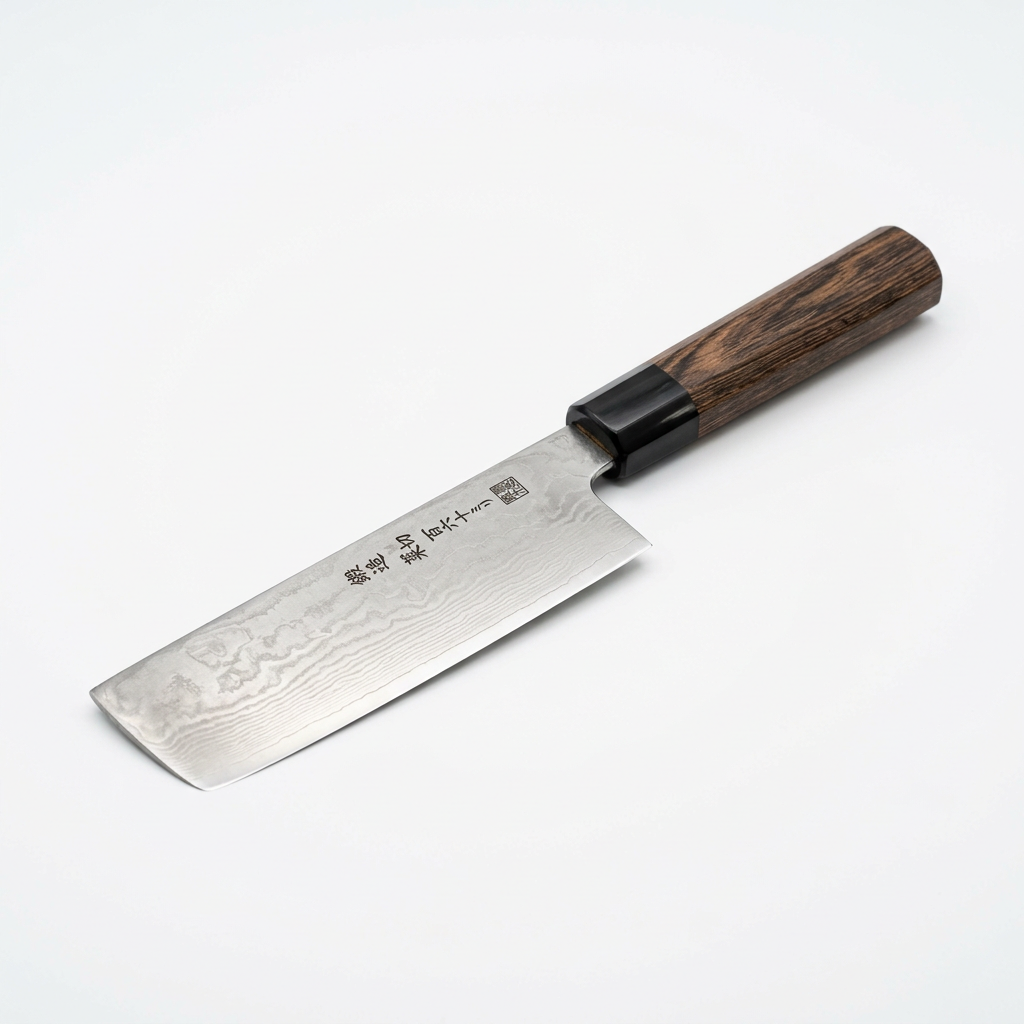
The handle of a Japanese knife, or the Wa-handle, is often cylindrical or octagonal, made from lightweight wood like magnolia. Unlike Western knives that feature a heavy bolster, Japanese knives are balanced toward the blade, which reduces wrist fatigue during long prep sessions. This balance allows the weight of the knife to do the work for you, rather than relying on your own strength. If you are struggling with control, check your grip; a proper pinch grip—where your thumb and index finger grasp the heel of the blade while the remaining three fingers wrap around the handle—is non-negotiable for safety and leverage.
"A sharp knife is a safe knife. A dull knife forces the user to apply unnecessary pressure, leading to slips, accidents, and bruised ingredients that bleed out their flavor before they even hit the pan."
Maintaining that balance requires consistent care. Never put your high-quality Japanese blade in the dishwasher; the heat and harsh detergents will destroy the delicate edge and compromise the handle. Instead, adopt a ritual of washing your blade by hand immediately after use, drying it thoroughly with a soft cloth, and storing it in a wooden sheath or on a magnetic rack where the edge will not touch other metal.
Mastering the Foundation: Grip and Stance
Before you make your first cut, you must establish a stable base. Professional chefs stand with their feet shoulder-width apart, ensuring they are rooted to the floor. Your cutting board should be large enough to accommodate your movements and, ideally, made of a soft material like Hinoki wood or high-density rubber, which protects the edge of your blade. If your board moves even a millimeter, place a damp kitchen towel underneath it to lock it in place; stability is the bedrock of precision.
The pinch grip is the first thing we teach in the kitchen. Place your thumb and index finger on the "choil" (the base of the blade) and your remaining fingers around the handle. This grip gives you complete control over the tip and heel of the knife, essentially turning the blade into a focused, agile tool. When you are chopping, keep your "guiding hand"—the one holding the vegetable—in the claw position. Tuck your fingertips inward, using the flat of your knuckles to guide the blade. This ensures that you can move quickly without the fear of nicks or cuts.
The Movement: Push-Cut vs. Rock-Chopping
While Western cooking often uses a rocking motion, Japanese knife skills emphasize the push-cut. This involves pushing the blade forward and down in one smooth, flowing motion. This is particularly effective with the Santoku or Nakiri, as the flat edge of the blade contacts the board along its entire length at once. For smaller items, use the tip of the knife to initiate the slice, pulling it back toward you, known as the pull-cut. Both techniques keep the blade sharp longer and result in cleaner cuts that preserve the cellular structure of your produce.
Essential Japanese Cuts for Every Cook
Once you have mastered the grip, it is time to apply these techniques to your mise en place. The most fundamental cut is the Katsuramuki, or peeling. While it is often reserved for daikon radish, the principle of creating a long, thin, uniform sheet is essential for understanding how to manipulate ingredients. You aren't just peeling; you are using the knife to follow the curve of the vegetable, maintaining a consistent thickness throughout the entire length of the product.
Another vital cut is the Rangiri, or "roll cut." This is used primarily for root vegetables like carrots, burdock, and daikon. By rotating the vegetable a quarter turn after every diagonal cut, you create irregularly shaped pieces with a large surface area. This is not just for aesthetics; it allows the vegetables to absorb more sauce and cook evenly, as the jagged edges provide multiple points of contact for heat transfer. This technique is a secret weapon for stews, curries, and braised dishes.
Achieving Uniformity: Julienne and Mirepoix
Uniformity is the hallmark of a professional chef. When your ingredients are the same size, they cook at the same rate, ensuring that your dish has a consistent texture. Whether you are producing a fine Julienne (matchstick-sized strips) for a salad or a small brunoise (tiny, perfect cubes) for a delicate garnish, the method is the same. Start by squaring off your vegetable to create a flat base, then slice it into thin planks, stack those planks, and cut them into strips.
"The difference between a home-cooked meal and a professional dish often comes down to the uniformity of the cuts. When every piece of carrot is identical, the cooking time is perfect, and the plate feels intentional."
To achieve a perfect brunoise, ensure your knife is at its sharpest. If the edge is dull, it will tear the delicate vegetable fibers rather than slicing them, causing the vegetables to lose their moisture into the cutting board instead of the pan. Aim for cubes that are roughly 2-3 millimeters on each side. While it may seem tedious, practicing this for ten minutes a day will turn your prep time from a chore into a highly rewarding display of skill.
Sharpening: The Ritual of the Whetstone
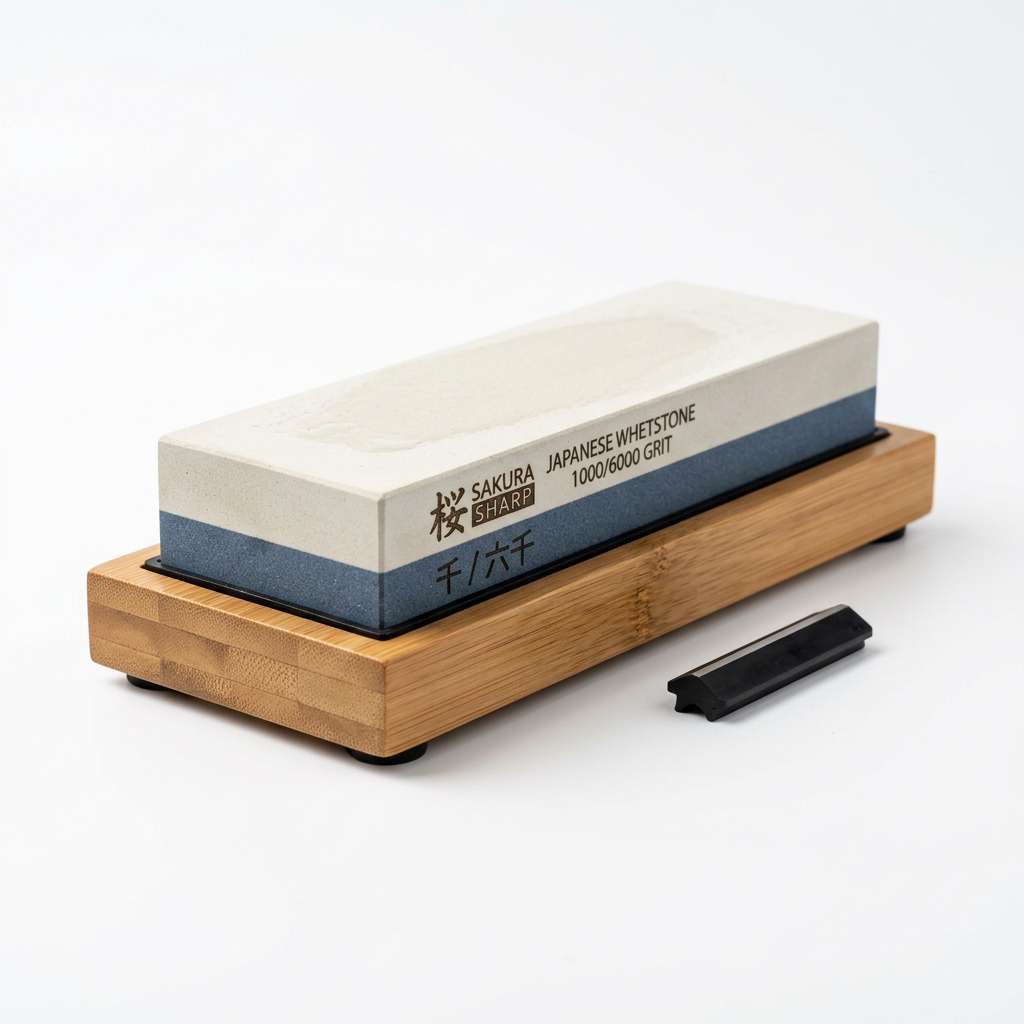
A Japanese knife is only as good as its edge. You should never rely on pull-through sharpeners, as they often take too much metal off and create a jagged, uneven edge. The whetstone is the only way to maintain the integrity of a high-quality blade. A standard kit should include a 1000-grit stone for sharpening and a 6000-grit stone for polishing or refining the edge.
To sharpen, submerge your stones in water for at least 15 minutes until no more bubbles emerge. Place the stone on a stable, non-slip surface. Hold your knife at a consistent 15-degree angle against the stone. A simple trick is to place two quarters under the spine of the knife to gauge the angle. Using long, fluid strokes, work the entire length of the blade, from heel to tip, until you feel a small burr—a microscopic fold of metal—on the opposite side of the edge. Once the burr is established, flip the blade and repeat on the other side.
The Importance of Polishing
After the 1000-grit stage, move to the 6000-grit stone. This is where you transform a "sharp" knife into a "hair-splitting" instrument. You are essentially polishing the metal, removing the deep scratches left by the coarser stone. Use lighter pressure here, focusing on the refined edge. Once finished, use a leather strop to remove any final microscopic particles, leaving your blade mirror-polished and ready to glide through a ripe tomato without even feeling the skin.
1000-Grit:* The workhorse stone for re-establishing the edge.
6000-Grit:* The refining stone for a mirror finish.
15 Degrees:* The ideal angle for most Japanese-style blades.
The Burr:* Your indicator that you have effectively worked the metal to the edge.
The Art of Slicing Proteins: Sashimi and Beyond
When slicing raw fish or meat, the philosophy changes slightly. Instead of the vertical push-cut, you often employ the draw-cut. Because you want to avoid sawing through the flesh—which damages delicate proteins—the draw-cut allows you to pull the blade through the ingredient in a single, smooth, continuous motion. This preserves the texture of the protein, ensuring it remains silky and tender rather than chewy or bruised.
For high-end preparation, such as slicing raw Hamachi or Ahi tuna, ensure your knife is perfectly dry and clean. Any residue on the blade will drag through the fish and tear the edges. Make a single, long incision from the heel to the tip, using the length of the blade to do the work. Do not push down; let the sharpness of the steel and the length of the stroke perform the separation. This technique is also ideal for slicing herbs like basil or cilantro, preventing the leaves from darkening and turning mushy.
Temperature and Ingredient Preparation
Temperature is a critical, often overlooked variable. When slicing proteins for sashimi, the fish should be kept as cold as possible—ideally just above freezing. Using a chilled knife can also help, as it keeps the fats in the fish firm, allowing for cleaner, more translucent slices. Conversely, when working with hardy vegetables, room temperature is fine. Always prepare your ingredients in batches and keep them covered with a damp cloth to prevent them from drying out before they hit the heat.
Safety, Ergonomics, and Kitchen Etiquette
Working in a professional kitchen is about more than just technique; it is about environment and awareness. Many accidents happen because the cook is distracted or fatigued. When you are using your knives, focus entirely on the motion. Do not look around the room or engage in conversation that takes your eyes off the board. If you need to walk across the kitchen, always point the tip of the knife toward the floor and walk with it by your side, never waving it in the air.
Ergonomics are also vital for long-term health. If you are standing at the counter for an hour prepping for a dinner party, check your posture. Is your back straight? Is your elbow at a 90-degree angle to the board? Many home cooks have counters that are too low, forcing them to hunch over. If your counter is low, consider using a thicker cutting board to raise the surface, or simply stand with a wider stance to lower your center of gravity.
Proper Blade Storage
Never, ever leave a knife in a sink full of soapy water. This is the number one cause of kitchen accidents, as the person reaching into the water cannot see the blade and is almost guaranteed to be cut. Furthermore, it is incredibly damaging to the edge. Always place your knife in a designated spot, away from the edge of the counter, and clean it immediately. A knife is a tool of the trade, not just another utensil in the drawer; treat it with the respect it deserves, and it will serve you faithfully for decades.
"A kitchen without respect for the blade is a kitchen built on chaos. When you treat your tools as partners in your culinary creation, the results inevitably reflect that level of care and precision."
Building Your Culinary Repertoire
Now that you understand the mechanics, it is time to build your repertoire. Start with simple tasks: practice dicing an onion using the horizontal, vertical, and cross-cut method to achieve perfectly uniform pieces. Move on to the julienne of bell peppers, ensuring that every slice is the same width. Eventually, challenge yourself with more complex shapes like the tourné (a seven-sided barrel shape), which is a classic test of knife control in French and Japanese fusion kitchens.
Remember that speed is a byproduct of precision, not a goal in itself. When you start, focus entirely on the quality of your cuts. Speed will come naturally as your muscle memory develops. There is no shame in moving slowly. In fact, professional chefs often work at a moderate, consistent pace that ensures 100% accuracy, rather than moving so fast that they make mistakes that have to be corrected later.
Applying Skills to Daily Cooking
Don't just practice on scrap vegetables. Use these skills every time you cook. If you are making a soup, ensure every vegetable is cut to the same size so they all finish at the same time. If you are making a salad, ensure your cucumber slices are uniform to improve the mouthfeel of the dish. By incorporating these techniques into your daily routine, you move from "chopping" to "processing" your ingredients with intention. This is where the magic happens: when the prep itself becomes an act of creation.
Conclusion
Japanese knife skills are not an exclusive club meant only for those with years of formal training; they are a set of principles that any home cook can master with dedication and the right tools. By shifting your focus from "getting the job done" to "executing the cut with precision," you transform your relationship with the ingredients. You will find that your food cooks more evenly, tastes cleaner, and looks more professional. The Gyuto or Santoku becomes a gateway to a deeper understanding of texture and flavor, allowing you to manipulate the components of your dish with the finesse of a master.
As you continue to refine your grip, your stance, and your sharpening ritual, remember that the goal is not to be a machine, but to be an extension of the craft. Cooking is a tactile experience, and there is no better way to connect with that experience than through the sharpened edge of a steel blade. Do not fear the sharp knife—embrace it. Protect it, sharpen it, and use it with the care that a professional chef would demand. When you serve a meal that displays perfect uniformity and care in every ingredient, you will see the impact on your guests' faces.
Finally, remember that the "Blame the Chef" mentality is a tongue-in-cheek nod to the idea that the chef is responsible for everything that comes out of the kitchen. When you hold the knife, you are that chef. You are responsible for the quality of the meal, the safety of the environment, and the enjoyment of the dinner table. So, go forth, keep your stones wet, your edges sharp, and your cuts precise. The journey toward culinary mastery is a long one, but it begins with the very first slice you make today. Practice, breathe, and trust your blade; the results will speak for themselves.
Keep your workspace clean, your focus sharp, and your passion high. There is a profound sense of satisfaction that comes from mastering a craft, and the kitchen is the perfect laboratory for that growth. Whether you are prepping for a simple weeknight dinner or an elaborate feast, these techniques will serve you for a lifetime. Treat every vegetable with respect, maintain your tools with consistency, and always push yourself to improve, even if it is just by a millimeter a day. The culinary world is vast, and with these skills in your arsenal, you are prepared to explore every corner of it. Happy cooking, and remember—your knife is your greatest ally in the pursuit of perfection.

Get the Next Recipe
Weekly recipes, techniques, and gear picks — straight to your inbox.
