
Japanese Knife Skills: Sharp Tools and Sharper Technique
There is a profound, almost spiritual connection between a chef and their blade that transcends the simple act of food preparation. For the uninitiated, a knife is merely a tool for demolition—a way to force ingredients into submission so they can be cast into a hot pan. However, when you step into the world of Japanese culinary arts, the knife transforms into an extension of the hand, a precision instrument capable of coaxing flavor and texture from even the most humble vegetables. Mastery of Japanese knife skills is not merely about speed or showing off; it is about respecting the integrity of the ingredient. Every slice, every dice, and every julienne is a deliberate choice that dictates how the final dish will cook, feel, and taste on the palate.
In this guide, we are moving past the clumsy, rhythmic thumping of a standard western-style chef’s knife and entering a realm of intentionality. Japanese blades, characterized by their high carbon steel composition and often single-bevel grind, require a different approach to maintenance, grip, and motion. When you embrace these techniques, you aren't just improving your efficiency in the kitchen; you are adopting a philosophy of mindfulness. It requires a quiet focus, a stable base, and a commitment to the discipline of repetitive motion. You will find that as your movements become more refined, your kitchen experiences become less about the stress of "getting it done" and more about the meditative pleasure of the craft.
As you embark on this journey, I want you to remember that perfection is not expected on day one. Your first attempt at a paper-thin katsuramuki—the rotatory peeling technique—will likely result in a jagged mess, and your julienne might look more like a rustic chop. That is perfectly normal, and honestly, it is part of the growth process that every professional cook goes through. We have all stood at the prep table, frustrated by a stubborn sweet potato or a slippery onion, wondering why the results don't look like those in the magazines. The difference lies in the nuances of finger placement, the angle of the blade, and the consistent maintenance of your edge. Let us begin the process of refining your hands so that your tools can finally work for you.
The Anatomy of the Blade and Your Grip
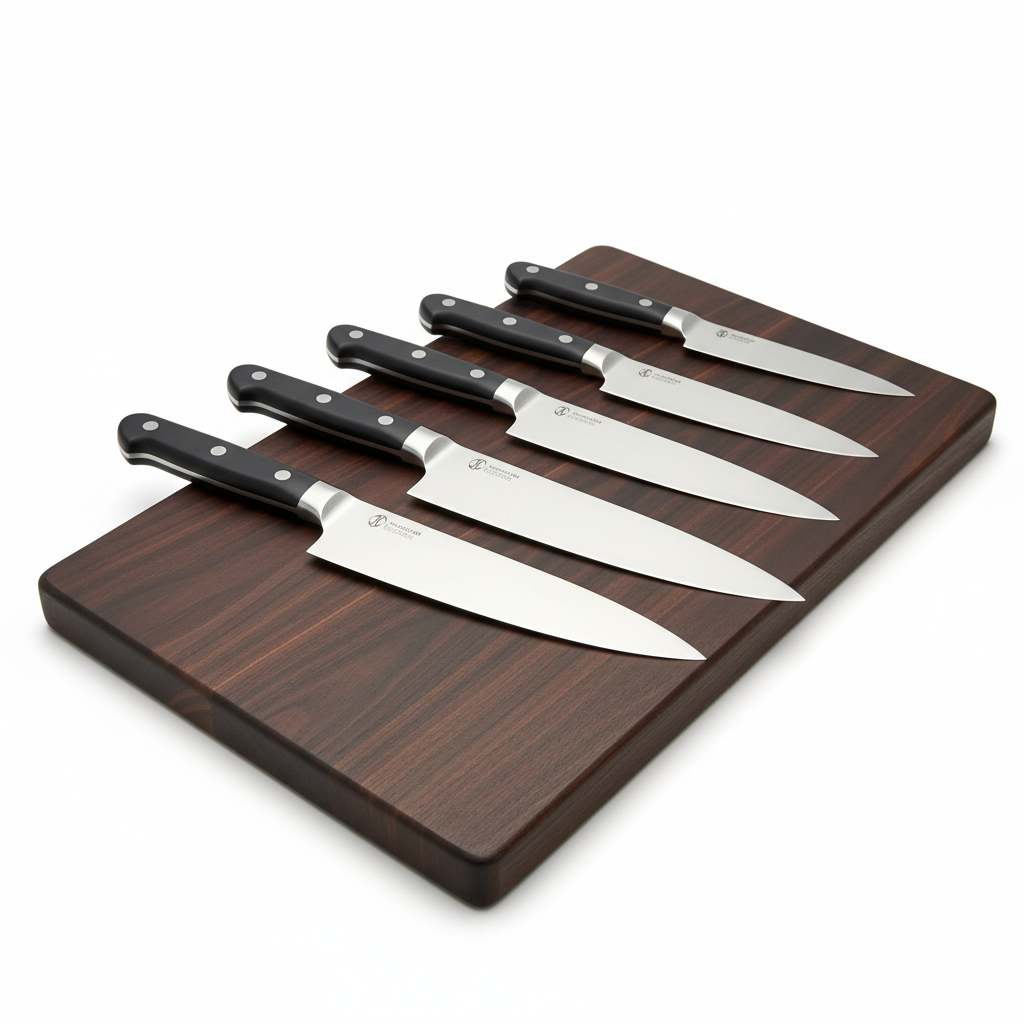
Understanding your instrument is the first step toward true mastery. Most Japanese knives, such as the Gyuto (the Japanese equivalent of a chef's knife) or the Santoku (a general-purpose utility blade), are lighter and thinner than their German counterparts. Because these blades are forged from harder steel, they hold an edge far longer but are more prone to chipping if handled aggressively against bone or frozen foods. You must treat your Japanese knife with a level of reverence that borders on the protective. The hardness, typically measured between 60 and 64 on the Rockwell scale, means that these knives are surgical in their precision, allowing you to slice through delicate aromatics without bruising the cell walls, which keeps the juices—and the flavor—locked inside the ingredient.
The way you hold the knife is the single most important factor in your consistency. Forget the handle-heavy grip where your entire hand wraps around the wood. Instead, use the pinch grip. Place your thumb and index finger on the blade itself, just forward of the bolster or the heel, while your remaining three fingers wrap comfortably around the handle. This shifts the center of gravity, making the knife feel like an extension of your own skeletal structure. By gripping the blade directly, you gain unparalleled control over the tip and the heel, allowing you to make micro-adjustments that are impossible with a standard hammer grip.
The pinch grip is the bridge between the amateur and the professional; it transforms the knife from a clunky tool into a precise instrument of surgical intent.
To master this, practice finding the balance point on your blade. When your fingers are placed correctly, the knife should feel weightless in your hand. If you feel the need to use your wrist to push the knife through a carrot, you are relying too much on force. Instead, focus on the "push-cut," where the knife does the work through the sheer quality of its edge and the leverage provided by your refined grip. Practice this grip for ten minutes while you are watching television or listening to music, simply getting comfortable with the weight distribution. Once it becomes muscle memory, you will find that your cutting becomes significantly smoother and faster.
Mastering the Claw and the Bridge
Even the sharpest blade in the world is a liability without proper hand safety. Many home cooks struggle with fear—fear of cutting their fingers, which leads to hesitation, which in turn leads to dangerous, erratic movements. The solution is the Claw Technique. Your non-dominant hand, which holds the food, should have the fingertips curled inward, tucked away from the path of the blade. The side of the knife blade should rest gently against your knuckles. By keeping your knuckles as your guide, you create a physical barrier that prevents your fingertips from ever meeting the edge of the knife.
When you are breaking down larger vegetables, such as a butternut squash or a large head of cabbage, you may find the claw technique to be too precarious. In these instances, employ the Bridge Technique. Create an arch with your non-dominant hand, essentially forming a tunnel over the ingredient. You can then safely pass the knife underneath the bridge to make your initial stabilization cuts. This ensures that the ingredient remains steady on the cutting board, which is essential because a moving vegetable is the primary cause of kitchen accidents. Always prioritize the stability of your ingredient before you even consider the speed of your blade.
Always use a wooden or rubber cutting board* to protect the edge of your Japanese steel. Avoid glass or marble surfaces at all costs.
* Keep your feet shoulder-width apart to maintain a steady center of gravity.
* Never attempt to catch a falling knife. Step back, let it fall, and retrieve it once it has settled.
The Art of the Push-Cut and Slicing
The push-cut is the hallmark of efficient Japanese-style prep. Rather than relying on the vertical chopping motion common in home kitchens, the push-cut utilizes the full length of the blade. You begin with the tip of the knife near the board and push forward and down, letting the curve of the belly do the slicing. This motion is fluid and rhythmic, and it minimizes the "wedging" that occurs when you simply push a knife straight down through a dense vegetable like a turnip or a potato. The goal is to finish the stroke with the heel of the knife touching the board, completing the cut in one elegant, sweeping movement.
When you move to herbs or soft ingredients like scallions, you shift to the pull-cut. This is particularly important for delicate items that might bruise if they are crushed under the weight of a heavy downward push. For herbs, you want to maintain a "rocking" motion, keeping the tip of the knife pinned to the board and using the length of the blade to glide through the greens. Do not mince herbs by smashing them repeatedly; instead, gather them into a neat pile and use the blade to slice through them gently. If you find your parsley or basil turning black, you are pressing too hard—the knife should be doing all of the work.
A sharp knife is safer than a dull one, because a sharp knife goes where you intend it to go, while a dull knife wanders, slips, and forces you to use dangerous amounts of pressure.
Mastering these two motions will change the texture of your dishes. When you use the push-cut to slice onions, for instance, you are cutting through the cellular structure rather than crushing it. This prevents the release of the harsh, acrid juices that occur when the onion is smashed, resulting in a cleaner, sweeter flavor profile in your finished sauté. Professional chefs know that technique is flavor; by changing how you interact with your ingredients, you are literally changing the chemical outcome of your cooking.
Maintenance and the Sharpening Ritual
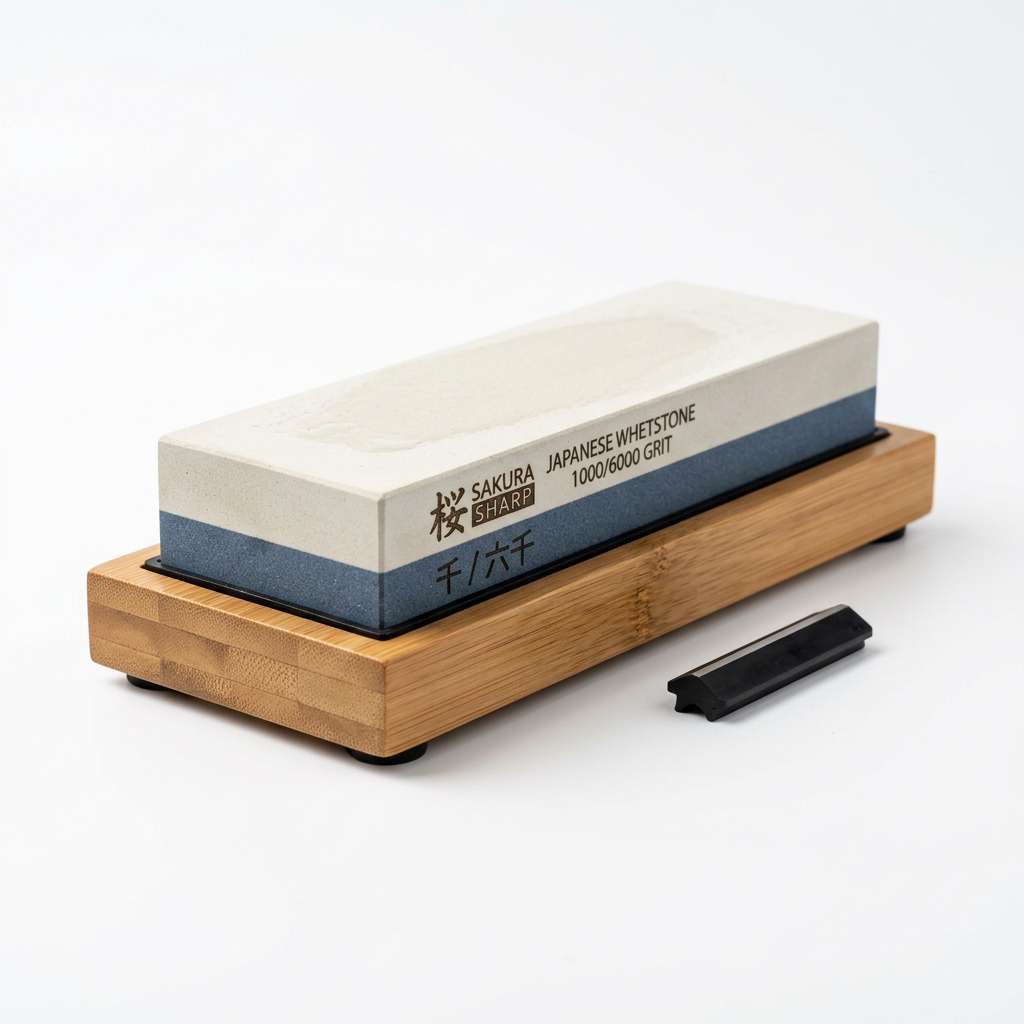
If you buy a high-end Japanese knife and never sharpen it, you have essentially purchased a very expensive paperweight. Japanese steel, especially high-carbon steel, requires consistent maintenance on whetstones. Do not rely on pull-through sharpeners, as they often ruin the specific angle—usually between 12 and 15 degrees—that Japanese knives are ground to. Invest in a dual-grit whetstone, perhaps a 1000-grit for regular maintenance and a 4000 or 6000-grit for polishing and refining the edge. The sharpening ritual is not a chore; it is an act of restoration.
To sharpen, submerge your stone in water for at least ten minutes until the air bubbles stop rising. Place it on a non-slip base. Hold the knife at the required angle—a helpful trick is to place two coins stacked together under the spine of the knife to visualize that 15-degree angle. Use consistent pressure on the push stroke, and lighter pressure on the return stroke. Work in sections: start at the heel, move to the middle, and finish at the tip. You are looking for a burr, which is a microscopic fold of metal on the opposite side of the blade. Once you feel that burr, flip the knife and repeat on the other side.
Regular honing on a ceramic rod (not a steel one, which can be too aggressive for hard Japanese steel) will keep your knife in good condition between deep sharpenings. Think of honing as straightening the edge that has drifted, while sharpening is the process of removing metal to create a new edge. If you hone your knife for thirty seconds before every prep session, you will find that you only need to hit the whetstones once every few weeks, depending on the volume of your cooking.
Essential Cuts and Prep Techniques
Now that your blade is sharp and your grip is secure, it is time to practice the fundamental shapes. We begin with the julienne, which is the gold standard for knife skill assessment. To achieve a perfect julienne, you must first square off your vegetable, creating a rectangular block. Then, slice it into thin, uniform planks about an eighth of an inch thick. Stack these planks neatly and cut them into matchsticks of the same thickness. This uniformity is not just for aesthetic appeal; it ensures that every piece of vegetable cooks at the exact same rate.
Next, master the brunoise, which is essentially a dice cut of the julienne. Once you have your perfect julienne matchsticks, group them together and cut across them at right angles. You are aiming for tiny, perfect cubes. This technique is often used for garnishes, sauces, or components that need to melt into a base, such as in a fine mirepoix. When you achieve a consistent brunoise, you will notice that your sauces have a much more refined mouthfeel because the vegetable components are uniform in size and texture.
Don't neglect the katsuramuki, or the rotary peel. While it is traditionally associated with daikon radish for garnishes, it is a fantastic way to develop blade control. The goal is to peel a long, thin, translucent sheet from the vegetable by rotating it against the knife. It requires a steady hand and a very sharp blade. Start with a cucumber or a zucchini, as they are smaller and easier to manage. If you can peel a cucumber into a single, uninterrupted strip that is paper-thin, you have truly begun to understand the sensitivity of the Japanese knife.
Mise en place*: Before you start your knife work, have your station organized. Keep your bench scraper nearby to move your finished cuts and clear your board instantly.
Uniformity is King*: If your pieces vary in size, the small ones will turn to mush while the large ones remain raw.
The 80/20 Rule*: Spend 80 percent of your energy on the setup—peeling, cleaning, and squaring—and 20 percent on the actual cutting.
Developing Speed Through Rhythm
Speed is a byproduct of precision, never a goal in itself. If you try to force speed before you have mastered the rhythm of the push-cut, you will simply become a danger to yourself and others. Professional chefs achieve high speeds because their movements are efficient. They don't lift the knife high off the board; they keep the blade low and the motions tight. Think of it as a piston moving up and down. Every movement should be purposeful, with no wasted energy. Your non-dominant hand should be feeding the ingredient to the blade in a steady, constant cadence.
To improve your speed, start by setting a timer. Give yourself ten minutes to prep a bag of onions or a stack of carrots. Don't rush; just focus on maintaining a constant, steady speed. You will find that after just a few sessions, your brain starts to anticipate the rhythm. The transition from one cut to the next becomes smoother. When you stop "thinking" about where your fingers are and instead "feel" where the knife is, you are on your way to achieving what we call the flow state. This is where the cooking becomes effortless.
The professional kitchen is a place of organized chaos, but the prep station must remain a sanctuary of order. If your board is messy, your mind is messy, and your food will suffer accordingly.
If you find yourself plateauing, go back to basics. Slow down. Put on a podcast or a piece of music and focus on the sound of the blade hitting the board. A dull thud means you are pressing too hard; a sharp, crisp "clack" means your edge is sharp and your technique is correct. It is a sensory experience. Listen to your knife. It will tell you when it’s happy and when it’s struggling.
The Cultural Connection to Japanese Knives
To fully appreciate these tools, one must understand the culture they originate from. The Japanese tradition of hocho—the art of the knife—is inextricably linked to the purity of ingredients. In sushi preparation, for example, the Yanagiba (slicing knife) is designed to cut raw fish in a single, long, drawing motion. This prevents the fish fibers from being torn, which preserves the texture and the sweetness of the flesh. When you use your own kitchen knife with the same care and intention, you are participating in a long lineage of culinary history that values the essence of the raw product.
Consider the Deba knife, a heavy-duty tool with a single bevel, used for butchering fish. It is not designed to be hacked through bone, but rather to use its weight and sharp angle to glide through cartilage and separate joints. Every Japanese knife has a specific purpose. While the home cook doesn't need ten different specialized blades, understanding why these knives are built the way they are will help you treat your own tools with more care. When you treat your blade as a specialized instrument rather than a generic utility, you will find yourself being much more deliberate in your kitchen prep.
Finally, remember that the goal of all these techniques is to serve the meal. A dish that is properly prepped is a dish that has been cooked with love and attention to detail. When your vegetables are uniform, they cook evenly. When your meat is sliced correctly, it is tender. When your herbs are chopped without bruising, the aromatics pop with freshness. By investing the time to learn these skills, you are elevating the quality of your home-cooked meals to a professional level. You aren't just cooking; you are curating.
Final Thoughts
We have traveled from the anatomical understanding of the blade to the nuanced, rhythmic movements of the professional chef. Mastery of Japanese knife skills is a marathon, not a sprint. Do not be discouraged if your hands feel clumsy at first or if your edges aren't perfect. The beauty of this craft lies in the evolution. Every time you sharpen your knife, you are learning more about the steel. Every time you dice an onion, you are refining your spatial awareness. Every time you step into the kitchen with intention, you are becoming a better cook.
Keep your blades sharp, keep your boards clean, and above all, keep your hands safe. The pinch grip, the claw, and the rhythmic push-cut are the foundations upon which your culinary confidence will be built. As you grow more comfortable with these techniques, you will find that the kitchen becomes less of a space where work happens and more of a space where creativity flourishes. You are no longer fighting the ingredients; you are working in harmony with them.
I encourage you to practice these techniques every single day, even if it is just cutting an apple for a snack or a single onion for a sauce. Repetition is the mother of skill. Your guests will notice the difference, your palate will appreciate the textures, and most importantly, you will find a quiet satisfaction in the work. Continue to seek knowledge, continue to hone your tools, and never lose that curiosity that brought you here in the first place. You have the tools and you have the technique—now go forth and create something beautiful. Blaming the chef becomes a thing of the past when you are the one in command of the steel. Keep practicing, stay hungry, and enjoy the process of becoming a true master of your kitchen. Happy cooking!


Get the Next Recipe
Weekly recipes, techniques, and gear picks — straight to your inbox.
