Knife Skills 101: From Julienne to Chiffonade, Cut Like a Pro
There is a pervasive myth in the culinary world that professional chefs are born with an innate, god-given talent for handling blades with effortless grace. In reality, the fluid motion you see in a high-end restaurant kitchen is the product of thousands of hours of intentional, repetitive practice. When you watch a chef fly through a mountain of onions, it isn't magic; it is an intimate understanding of physics, ergonomics, and the relationship between the steel and the ingredient. Mastering your knife skills is not just about making your plate look like a photograph from a food magazine, though that is certainly a perk. It is about consistency, which is the cornerstone of great cooking, ensuring that your food cooks evenly and tastes exactly how you intended every single time.
Many home cooks approach their knives with a degree of trepidation, and frankly, that fear is what leads to most kitchen accidents. When you are hesitant and shaky, your blade is unpredictable, and your cuts are uneven, leading to disparate cooking times where half your vegetables turn to mush while the rest remain raw. To cook like a pro, you must transition from treating your knife as a daunting tool to treating it as an extension of your own hand. This journey begins with selecting the right equipment, maintaining a razor-sharp edge, and learning the fundamental grip techniques that provide you with maximum control. It is time to stop blaming the chef for your lackluster results and start honing the skills that will empower you to command your kitchen with confidence.
Throughout this guide, we are going to dissect the anatomy of the cut, explore the most essential shapes used in professional kitchens, and demystify the complex-sounding French terminology that often intimidates beginners. We will cover everything from the humble brunoise to the elegant chiffonade, providing you with the exact measurements and techniques required to execute them with precision. You will learn why the claw grip is your best defense against injury and how the "bridge" method can help you tackle rounded, unstable ingredients safely. Whether you are prepping a complex mirepoix for a classic stock or simply slicing basil for a fresh caprese salad, these techniques will fundamentally change the way you prepare food. By the time you reach the end of this post, you will possess the foundational knowledge necessary to move from a frantic home cook to a measured, deliberate culinarian.
The Foundation: Knife Selection and Maintenance
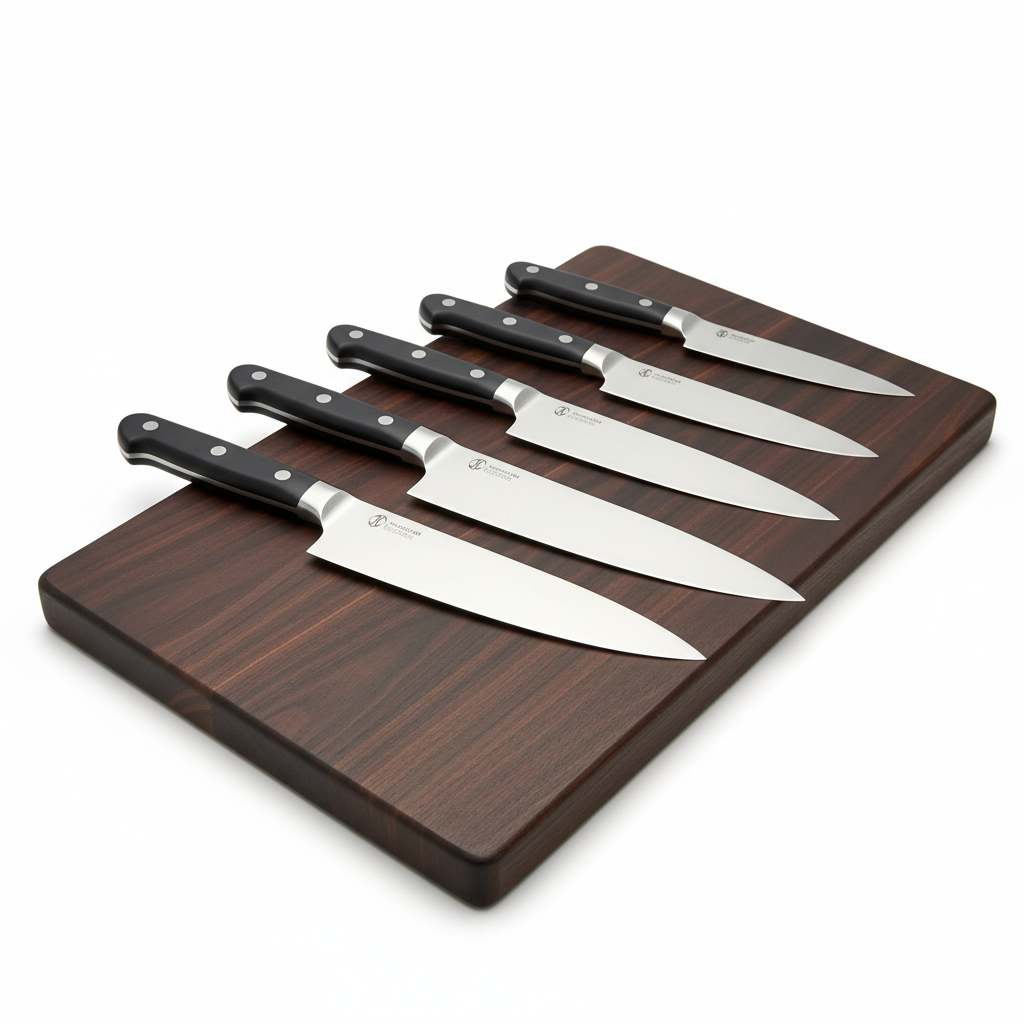
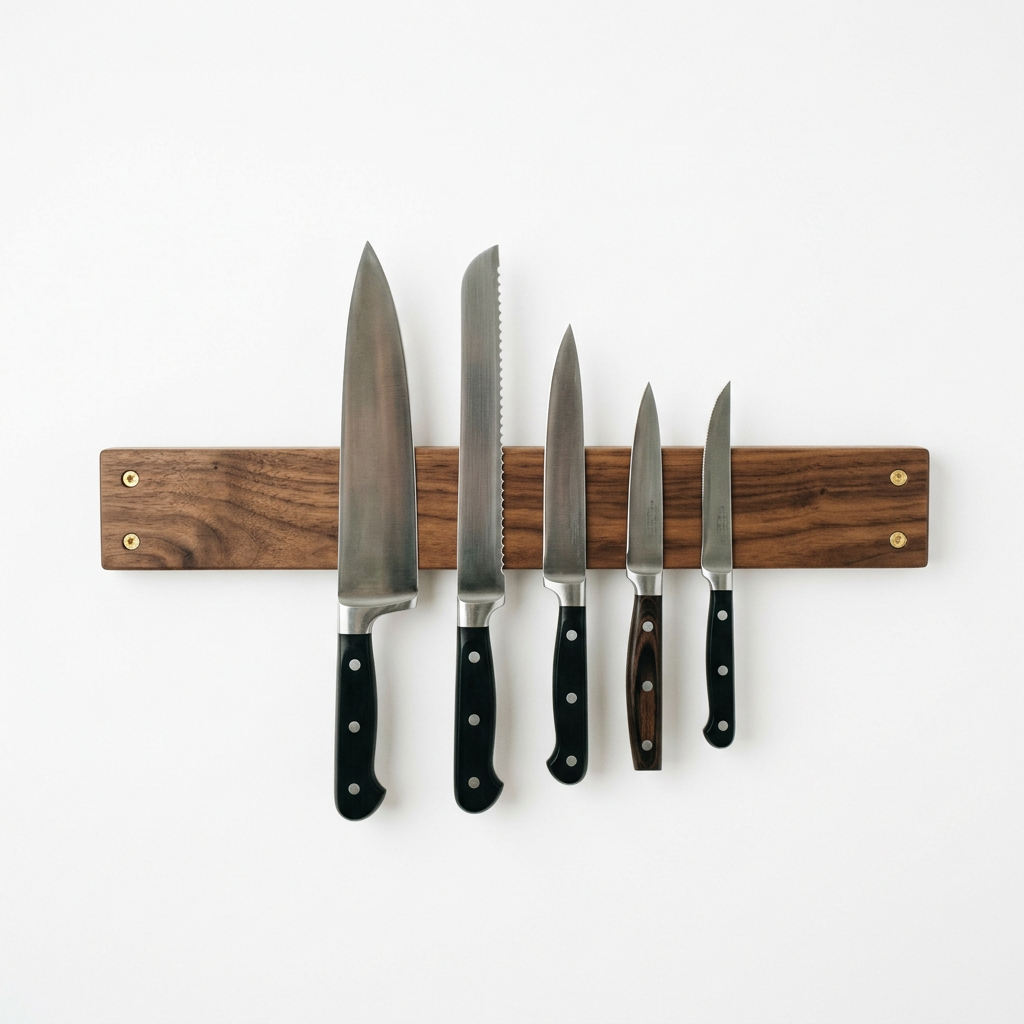
Before you even think about cutting an onion, you must ensure your tools are up to the task. Most home cooks struggle because they are working with dull knives, which actually require more force to push through food, significantly increasing the likelihood of a slip. A sharp knife is a safe knife because it bites into the ingredient, giving you complete control over its trajectory. You do not need a block of fifteen different knives; in fact, most professional chefs reach for the same three blades 90% of the time: a chef's knife (8 to 10 inches), a paring knife for delicate detail work, and a serrated bread knife.
Maintenance is just as important as the initial purchase. You should be using a honing steel before every single cooking session. This does not sharpen the knife in the traditional sense; rather, it realigns the microscopic metal burrs on the edge of the blade that become bent during normal use. Additionally, investing in a high-quality whetstone is the hallmark of a serious cook. Aim for a two-sided stone with a 1000-grit side for sharpening and a 3000-grit side for refining the edge. Dedicate time once a month to sharpen your primary blades, maintaining a consistent angle—usually between 15 and 20 degrees—to keep your edge performing like new.
Choosing Your Workspace
Your workspace is the stage for your craft, and it must be set up for safety and efficiency. Never work on a slick countertop; always place a damp paper towel or a non-slip silicone mat underneath your cutting board. A heavy, wooden cutting board is superior to plastic or glass, as it is gentler on your blades and provides enough heft to prevent the board from sliding while you work. Keep your board organized, with your pile of unwashed ingredients on one side and a designated area for your "mise en place" bowls, where your finished, uniform cuts can be collected for the pot.
"A dull knife is the most dangerous tool in the kitchen. When the blade cannot grip the food, it slides. When it slides, it seeks the path of least resistance—which is usually your fingertip."
The Science of the Grip and Stance
The way you hold your knife dictates the quality of your movement and the safety of your hands. The most common mistake beginners make is wrapping all four fingers around the handle, which leaves the knife feeling loose and clumsy. Instead, adopt the pinch grip. Place your thumb on the side of the blade and your index finger on the opposite side, pinching the "bolster" (the thick transition area between the handle and the blade). The remaining three fingers wrap comfortably around the handle. This grip feels slightly unnatural at first, but it provides a rigid connection between your arm and the steel, transforming the knife into a true extension of your limb.
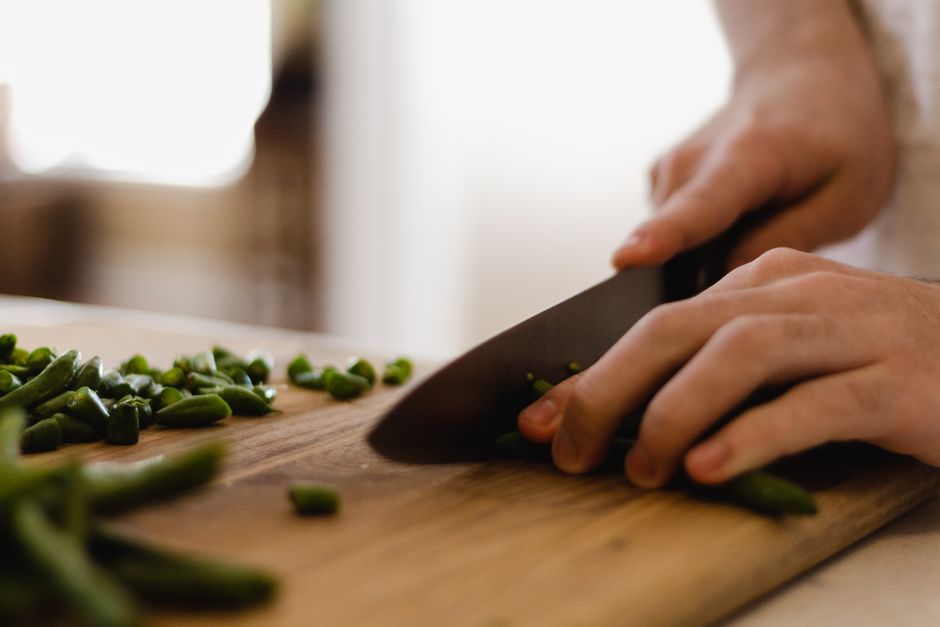
Your non-cutting hand, the one that holds the ingredient, is just as critical. This is where you master the claw grip. Tuck your fingertips inward, curled back toward your palm, and use your knuckles as a guide for the side of the blade. As you slice, the flat side of the knife rests against your knuckles, which allows you to move the knife back with precision without ever exposing your fingertips to the sharp edge. It is a rhythmic, almost mechanical process that, once learned, becomes second nature. It allows you to move rapidly through ingredients without needing to look down at your fingers constantly.
Mastering the Motion
The movement of the knife should be a fluid, rocking motion. Keep the tip of your chef’s knife on the cutting board at all times. By anchoring the tip, you focus the energy of the cut and ensure that you are slicing through the ingredient fully rather than hacking at it. Push forward and down as you make your cut, letting the weight of the knife and the sharpness of the blade do the heavy lifting. Avoid the temptation to saw back and forth, as this tears the cell walls of your vegetables and leaves your finished product looking bruised rather than clean.
The Art of the Mirepoix and Vegetable Prep
In professional kitchens, the mirepoix is the holy trinity of flavor: a mixture of onions, carrots, and celery, typically chopped into uniform, half-inch cubes. The ratio is strict—50% onion, 25% carrot, and 25% celery. Why uniform? Because vegetables with different densities cook at different speeds. If you have massive chunks of carrot swimming in a sea of finely minced onions, your base will be inconsistent. Achieving a perfect dice is about geometry. First, stabilize your vegetable by cutting a small flat edge on one side so it doesn't roll under your knife.
From there, we look at the specific dimensions required for classic techniques. A large dice is 3/4-inch by 3/4-inch, a medium dice is 1/2-inch by 1/2-inch, and a small dice is 1/4-inch by 1/4-inch. When working with onions, use the natural striations of the vegetable to your advantage. By leaving the root end intact, you create a natural handle that holds the layers together while you make your vertical and horizontal cuts. This is the secret to avoiding the "onion scramble" where the pieces go everywhere.
Consistent Cubing
For carrots or potatoes, start by creating a "plank" of your desired thickness, then stack those planks to create sticks, or batonnets. Once you have your batonnets lined up, cut across them at equal intervals. If you focus on making the batonnets identical, the resulting dice will naturally be uniform. Remember to collect your trimmings in a separate bowl; these are not trash. They are essential for enriching stocks, soups, and sauces, and they represent the professional commitment to minimizing waste in the kitchen.
Precision Cuts: Brunoise and Chiffonade
Once you have mastered the basic dice, you can move into the more refined, decorative cuts that add texture and elegance to a dish. The brunoise is essentially the smallest precision cut possible, a tiny 1/8-inch cube that is often used as a garnish for delicate soups or as an infusion of flavor in refined sauces. It requires a razor-sharp knife and patience. Because the pieces are so small, any variation in size will be immediately visible, so consistency is paramount. Treat each cut as a meditative exercise; do not rush the process until your speed increases naturally through muscle memory.
On the other hand, the chiffonade is the technique used for leafy greens and herbs like basil, mint, or spinach. Rather than a chopping motion, you are creating long, thin ribbons. Stack your leaves on top of one another, roll them tightly like a cigar, and use your knife to make fine, perpendicular slices. The key here is to keep the leaves tight and to use a sharp knife so you don't crush the leaves, which causes oxidation and turns the edges black within minutes. You want clean, vibrant ribbons that release their essential oils only when they hit the palate.
"A kitchen is not just a place where you make food; it is a laboratory of physics. The way you cut an ingredient changes how it interacts with heat, how it releases flavor, and how it feels on the tongue."
The Importance of Uniformity
Why go to the trouble of these small, specific cuts? It is all about the surface-area-to-volume ratio. A smaller, more uniform cut allows for quicker, more even cooking and faster flavor extraction. When you make a delicate vegetable infusion, you want all the pieces to reach the same level of tenderness at the exact same moment. If your cuts are irregular, the larger pieces will be raw, and the smaller pieces will disintegrate. Mastering these cuts is the barrier to entry between a cook who follows a recipe and a chef who understands the science of flavor.
Beyond the Board: Taming the Rounded Vegetable
One of the greatest challenges for a home cook is dealing with round, unstable produce like onions, bell peppers, or tomatoes. The common mistake is trying to cut them exactly as they are shaped, which inevitably leads to the vegetable rolling away from you. The "bridge" method is your solution. Form your hand into a bridge over the object, with the fingers on one side and the thumb on the other. Use your knife to create a flat base first. Once you have a flat side, turn the vegetable over so it sits securely on the board.
For bell peppers, the best method is to stand the pepper upright and cut down along the four sides, avoiding the core and seeds entirely. This leaves you with clean, flat panels of pepper that are easy to slice into uniform strips. For tomatoes, sharpness is non-negotiable. If your blade is dull, you will crush the tomato and lose the juice before you even get through the skin. Use a sharp, thin-bladed knife and a gentle sawing motion, letting the weight of the knife carry itself through the flesh.
Managing Waste and Efficiency
Efficiency is not about rushing; it is about reducing the number of times you handle an object. When you are peeling a vegetable, do it over a compost bin or a dedicated bowl. When you are prepping multiple items, do all of your cleaning and peeling first, then move to your chopping. This "batching" method keeps your board clear and your focus sharp. Always keep a damp rag nearby to wipe your board as you go—a cluttered, messy board leads to a cluttered, messy mind, and that is where mistakes happen.
Advanced Techniques: Tourné and Segmenting
While you don't need to perform a tourné (a seven-sided, football-shaped cut) to make a great dinner, learning it teaches you incredible control over your blade. This technique is reserved for high-end vegetable preparation where presentation is everything. It involves turning the vegetable against the blade to create a uniform, curved shape. It is a test of patience and fine motor skills. While it may seem excessive for a Tuesday night stir-fry, practicing this maneuver improves your overall dexterity, making simpler tasks like peeling potatoes or slicing fruit feel incredibly easy by comparison.
Segmenting citrus, also known as "supreming," is another essential skill that elevates your salads and desserts. You want to remove the skin and the pith, leaving only the pristine, juicy segments of the fruit. Start by cutting off the top and bottom of the fruit so it stands flat. Using your knife, follow the curve of the fruit to slice away the peel. Once the pith is gone, look for the thin membranes between each segment. Slice into the fruit just inside the membrane on both sides to "pop" the segment out clean.
Professional Tips for Citrus
* Use a very sharp, thin blade for citrus to avoid mangling the flesh.
* Work over a bowl to collect the juice that inevitably runs during the process.
* Do not throw away the remaining membrane; squeeze it over the bowl to extract the remaining juice for a vinaigrette.
* Practice with oranges first; they are firmer and more forgiving than lemons or grapefruits.
The Mental Game: Rhythm and Focus
Cooking is, at its core, a rhythm. When you watch a professional line cook in a busy restaurant, you aren't just seeing someone chopping; you are seeing someone who has found a tempo that they can sustain for hours. If you try to force speed, your technique will fail, and you will eventually cut yourself. Speed is an inevitable byproduct of consistency and comfort. As you practice your dice and your chiffonade, focus on the sound of the knife hitting the wood. It should be a steady, hypnotic "tap-tap-tap" sound.
Find your flow state. Some chefs prefer music, while others prefer total silence to concentrate on the tactile feedback of the steel. Whatever your preference, ensure that you are fully present. Most kitchen accidents occur when the cook’s mind starts to wander. Keep your eyes on the board, keep your knuckles forward, and keep your movements deliberate. If you feel yourself getting frustrated or tired, stop. Step away, reset, and come back. A frustrated chef is a dangerous one.
Building Your Speed
Repetition:* Commit to chopping one extra onion every day for a week.
Measurement:* Use a ruler occasionally to check your work; it builds your "eye" for size.
Posture:* Stand tall with your feet shoulder-width apart to ensure your body is balanced.
Breath:* Controlled, steady breathing helps you maintain a calm pace.
Conclusion
Mastering the art of the knife is a lifelong pursuit, but it is one of the most rewarding journeys you can take as a home cook. When you move past the fear of the blade and into the realm of intentional, controlled movement, you stop merely "preparing" food and start crafting it. You will find that your recipes taste better because they cook evenly, your plating looks more refined because your cuts are uniform, and your kitchen time becomes a source of relaxation rather than stress. Remember, every master was once a beginner who refused to put down the knife.
Keep your blades sharp, your board stable, and your focus centered on the task at hand. Do not get discouraged if your brunoise doesn't look like a computer-generated cube on your first attempt—or your fiftieth. It takes time, patience, and a constant dedication to the craft. By following these principles, you are not just learning how to chop vegetables; you are adopting the mindset of a professional. You are building the muscle memory that will serve you for decades, making you the chef that others turn to for advice, inspiration, and, most importantly, a truly delicious meal. Now, go sharpen your knife and start practicing; the kitchen is waiting.
Final Thoughts
As we wrap up this exploration of knife skills, I want to emphasize that you should never let the "rules" of the kitchen stifle your creativity. Use these techniques as a foundation, not a set of shackles. Once you can safely and accurately produce a chiffonade or a medium dice, you have the freedom to experiment with textures and presentations that were previously out of reach. Perhaps you'll find that you prefer a slightly rustic, uneven chop for a hearty winter stew, or a paper-thin slice for a raw vegetable carpaccio. That is the beauty of cooking—once you master the rules, you earn the right to break them with intention and style.
Furthermore, remember to be kind to yourself during the learning process. We have all had moments where we reached for a knife and felt entirely unsure of ourselves. It is part of the growth process. Your hands will get faster, your eyes will get sharper, and your confidence will grow with every single meal you prepare. Continue to seek out new ingredients to practice on, and don't be afraid to sharpen your skills—literally—whenever you get the chance. You have the tools, you have the knowledge, and now, you have the direction. Go forth and cook with the precision and the passion that you deserve, and never forget that at the end of the day, you are the one holding the steel. You are the architect of your kitchen, and every cut you make is a mark of your progress toward culinary excellence. Keep practicing, keep eating, and keep Blaming The Chef if you have to, but only if you've already mastered the basics.


Get the Next Recipe
Weekly recipes, techniques, and gear picks — straight to your inbox.
