Knife Skills 101: The Cuts Every Home Cook Should Master
If there is one thing that separates the home cook who struggles in the kitchen from the one who moves with grace and precision, it is the mastery of the knife. Many people treat their chef’s knife like a heavy-duty cleaver, hacking away at onions and carrots with reckless abandon, only to end up with uneven pieces and a fair share of frustration. The truth is that cooking is 90 percent preparation, and that preparation begins at the cutting board. When your pieces are uniform, they cook at the same rate, ensuring that your delicate shallots don’t burn while your thick-cut garlic remains raw. Learning to handle your blade is not just about aesthetics or looking like a professional; it is about efficiency, safety, and ultimately, achieving a much better texture in your finished dishes.
To get started, you must first understand the relationship between the cook and the tool. You should never feel like you are fighting your knife; it should feel like an extension of your own hand. This requires a shift in mindset: stop thinking about chopping as a chore and start viewing it as a rhythmic, almost meditative process. Proper knife skills are built on a foundation of stance, grip, and consistency, all of which are learned through repetition. Once you understand the physics of a sharp blade cutting through a firm vegetable, you will realize that you don’t need to apply massive amounts of force. In fact, most cuts are executed through a fluid, gliding motion that relies more on the sharpness of the edge than the strength of your wrist.
At "Blame The Chef," we believe that every home cook deserves to feel empowered in their workspace. Whether you are prepping for a simple Tuesday night stir-fry or putting together a complex mirepoix for a long-simmering beef bourguignon, your knife is the ultimate arbiter of quality. Throughout this guide, we will break down the essential cuts that every kitchen needs to function properly. We will discuss the mechanics of the "claw" grip, the importance of maintaining your edge, and how to approach different textures with confidence. It is time to leave the dull, uneven chopping behind and embrace the precision that will elevate your cooking from good to truly restaurant-quality.
The Fundamentals of Grip and Stance
Before you make your first slice, you must ensure your foundation is rock solid. The way you hold your knife dictates how much control you have over the tip, the belly, and the heel of the blade. Most beginners make the mistake of gripping the handle like a tennis racket, wrapping all four fingers around the plastic or wood. This "hammer grip" is inherently unstable and leads to fatigue because it forces your wrist to do all the work. Instead, you should adopt the pinch grip, which provides significantly more leverage and stability.
To achieve the perfect pinch grip, place your thumb and index finger on the blade itself, pinching the metal just ahead of the handle bolster. The remaining three fingers should wrap comfortably around the handle. This allows you to treat the knife as a natural extension of your arm, putting the weight of the tool directly over the product you are cutting. When you maintain this grip, your wrist remains neutral, which drastically reduces the risk of carpal tunnel strain and repetitive stress injuries during long prep sessions.
"A sharp knife is a safe knife. When the blade is dull, it forces you to use excessive pressure, which leads to slipping and erratic movements. Never blame the food—if the cut went wrong, blame the chef and their maintenance routine."
Safety is always paramount, and that means protecting your non-cutting hand. We call this the claw grip. Tuck your fingertips inward, curling them toward the palm of your hand so that the flat side of your knife blade rests against your knuckles. By guiding the blade with your knuckles, you create a physical barrier that prevents your fingertips from ever touching the sharp edge. As you move your hand backward along the vegetable, your knuckles serve as a guide that ensures consistent spacing, which is the secret to uniform cuts.
Mastering the Mirepoix: The Dice and the Chop
The mirepoix is the bedrock of Western culinary tradition, a combination of onions, carrots, and celery that provides the flavor base for countless stocks, soups, and sauces. Learning to dice these items consistently is a rite of passage for any cook. A standard small dice is typically 1/4 inch by 1/4 inch, while a medium dice is 1/2 inch by 1/2 inch. The key here is uniformity; if your pieces are inconsistent, the smaller bits will turn to mush while the larger bits remain crunchy.
The Onion Technique
When dicing carrots or celery, the technique changes slightly. Because these vegetables are cylindrical, they are prone to rolling, which is a major safety hazard. Always create a flat edge by slicing a thin piece off the length of the vegetable. This allows the produce to sit flush against your cutting board, giving you total stability. From there, you can cut the vegetable into planks of your desired width and then stack those planks to cut them into sticks, known as batons, before dicing them into cubes.
"Consistency is the silent ingredient in every professional dish. When your vegetables are uniform, they cook at the same rate, they release their sugars at the same time, and they provide a texture that feels intentional rather than accidental."
For the home cook, it is important to remember that speed should never come at the expense of safety. In a commercial kitchen, you see chefs chopping at lightning speed, but that is the result of years of muscle memory. Start slowly. Focus on your technique, ensuring that your knife is moving in a rocking motion rather than a chopping motion. By keeping the tip of the knife in contact with the board, you maintain control and prevent the blade from jumping or sliding unexpectedly.
The Art of the Batonnet and Julienne
Once you have mastered the dice, it is time to move on to the classic stick cuts. These are not just for aesthetic appeal; they are functional cuts used for roasting, stir-frying, or presenting raw vegetables with a dip. The batonnet is the foundation for many smaller cuts, measuring approximately 1/4 inch by 1/4 inch by 2 to 2.5 inches long. Think of this as the size of a standard French fry, and you get a sense of how vital this cut is for even cooking.
The Julienne Cut
* Square off the vegetable to create a rectangular block.
* Slice the block into long, thin planks that are 1/8 inch thick.
* Stack the planks carefully, ensuring they don't slide.
* Slice through the stack to create long, thin matchsticks that are 1/8 inch by 1/8 inch.
The julienne is a delicate, refined cut often used for raw preparations like slaws or quick-sautéed dishes where you want the vegetable to cook in under sixty seconds. The key to a great julienne is the sharpness of your knife. If your knife is dull, it will tear the cell walls of the vegetable rather than slicing through them. This causes the vegetable to lose moisture, wilt prematurely, and turn an unappealing color. A sharp blade keeps the vegetable crisp and bright for much longer.
When you are practicing these cuts, don't throw away the scraps. Those uneven ends of carrots or celery are perfect for vegetable stocks. Keep a gallon-sized freezer bag in your refrigerator and toss your trimmings in there. Once the bag is full, cover them with water, add some peppercorns and a bay leaf, and simmer for forty-five minutes. You have now used your scraps to create something that would cost five dollars at the grocery store. This is the mark of a truly efficient kitchen.
Precision Herbs: The Chiffonade and Mincing
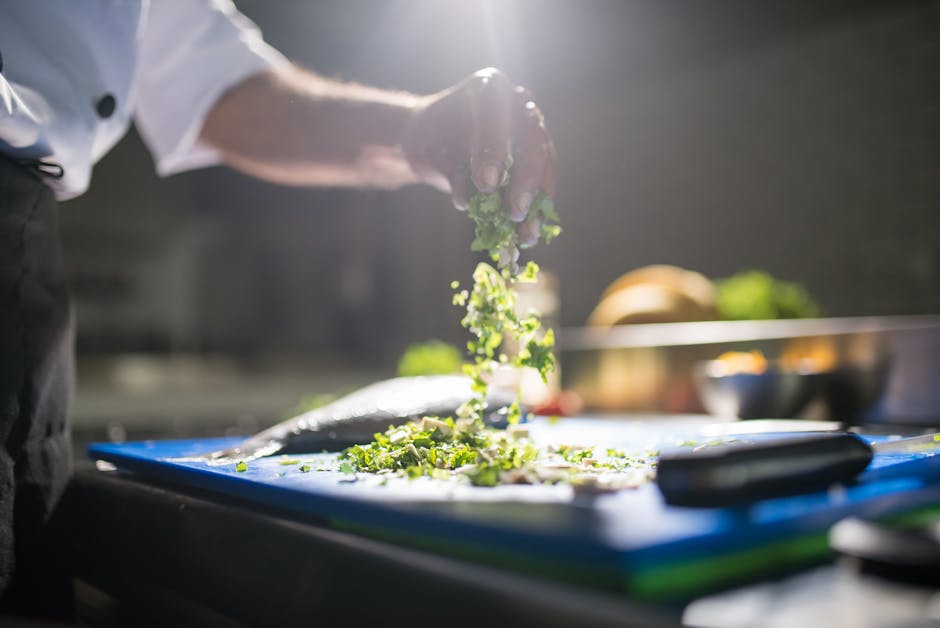
Herbs are often treated as an afterthought, but improper cutting can turn fresh basil or parsley into bruised, black sludge. The chiffonade is the technique used for leafy greens and herbs like basil, mint, or spinach. By stacking the leaves and rolling them tightly into a cylinder, you can slice them into beautiful, thin ribbons. This technique is elegant and ensures that the volatile oils in the herbs remain intact rather than getting crushed against the board.
Key Rules for Fresh Herbs
When you need to mince garlic or ginger, the goal is to create a paste-like consistency that will distribute evenly throughout your dish. Start by smashing the clove with the flat side of your knife to release the skin. Once peeled, slice the garlic thinly, gather it into a pile, and then move your knife back and forth over the mound. You can sprinkle a pinch of kosher salt over the garlic; the salt acts as an abrasive that helps break down the fibers, turning your mince into a smooth, fragrant paste in seconds.
Maintaining Your Equipment: Sharpening and Honing
You can have the most expensive knife in the world, but if it is dull, it is practically useless. There is a common misconception that sharpening and honing are the same thing. They are not. Honing is the process of realigning the microscopic teeth on the edge of your blade, which get bent out of place during normal use. You should hone your knife every single time you use it. It takes ten seconds and makes a world of difference in how the knife feels against the cutting board.
To hone your knife, hold your honing steel vertically, with the tip resting firmly on a cutting board or a damp cloth. Place the heel of your knife against the top of the steel at a 20-degree angle. Draw the knife down the length of the steel in a sweeping motion, pulling the blade toward you. Repeat this on the other side of the blade. Do this five to ten times on each side. This simple act keeps your knife performing at its best and reduces the frequency with which you actually need to have it sharpened professionally.
When to Sharpen
* If the blade struggles to slice through the skin of a tomato, it is time to sharpen.
* If you find yourself pressing down to get through a carrot, your edge is gone.
* Perform the paper test: hold a sheet of printer paper vertically and try to slice through it cleanly. If the blade catches, tears, or requires force, it is time for a whetstone or a professional sharpening service.
Sharpening, on the other hand, involves removing a microscopic layer of metal to create a brand-new edge. Depending on how much you cook, you should look to have your knives professionally sharpened or use a set of whetstones at home every six to twelve months. A well-maintained knife will last you a lifetime. Don't ever put your good knives in the dishwasher; the heat and the detergent will degrade the handle and dull the edge faster than anything else. Wash them by hand and dry them immediately.
Working with Protein: Deboning and Trimming
Trimming meat is an essential skill that saves money and ensures higher quality cooking. Buying whole chicken breasts or large roasts is significantly cheaper than buying pre-trimmed portions, and you get the added benefit of being able to control the exact size of your portions. When working with proteins, you want a dedicated boning knife or a very sharp, thin-bladed utility knife. The goal is to remove excess fat or connective tissue without sacrificing the meat itself.
Pro-Tips for Protein Prep
Cold is better:* Always trim meat while it is cold. If the fat gets warm, it becomes greasy and difficult to slice cleanly.
Use the tip:* When removing silver skin from a tenderloin, insert the tip of your knife under the white connective tissue, hold the silver skin tight with your non-cutting hand, and slice parallel to the cutting board, keeping the blade angled slightly toward the tissue to avoid removing the meat.
Cross-contamination:* Always have a dedicated cutting board for protein. Plastic is generally preferred for meat as it can be sanitized in the dishwasher, whereas wood is beautiful but harder to sanitize perfectly after cutting raw chicken.
When slicing meat for stir-fries, always slice against the grain. The "grain" refers to the direction of the muscle fibers. If you slice with the grain, the meat will be chewy and tough. When you slice across the grain, you physically shorten those muscle fibers, resulting in a much more tender bite. You can identify the grain by looking at the surface of the meat—you will see lines running in one direction. Orient your knife perpendicular to those lines, and your finished dish will have the texture of a high-end restaurant preparation.
Creating a Sustainable Workflow
The secret to being a relaxed chef isn't just knowing how to cut; it is knowing how to organize your space. We call this mise en place, a French term meaning "everything in its place." Before you turn on the stove, your cutting board should be clear, your vegetables should be washed and peeled, and your bowls for scraps and finished product should be set up. You shouldn't be wandering around the kitchen looking for a bowl while your onions are burning in the pan.
Set up your station in a way that makes sense for your movement. Place your cutting board in the center of the counter. Keep your trash bowl or compost bin to your left or right, depending on which hand is dominant. Once you finish a task, wipe down your board. A cluttered board is a dangerous board. If your board is sliding around, place a damp paper towel underneath it. This creates friction and keeps the board locked in place, providing the stability you need to execute precise cuts without fear of the board slipping.
"Cooking should be an expression of joy, not a battle against your tools. When you master your knife, you master your ingredients. When you master your ingredients, the food practically cooks itself."
Ultimately, the goal of "Knife Skills 101" is to give you the confidence to tackle any recipe you see in a magazine or online. Once you stop fearing the knife, you start seeing the potential in every raw ingredient. You’ll look at a whole pineapple and see perfectly cubed fruit for a salad rather than a prickly obstacle. You’ll look at a bundle of herbs and see a way to brighten a heavy sauce rather than a bunch of stems. The process of learning is ongoing; even the most seasoned executive chefs are still refining their dice and improving their speed.
Conclusion
Mastering the knife is an investment in your culinary future. It is the single most effective way to improve the quality of your cooking, the safety of your kitchen, and the efficiency of your workflow. By embracing the pinch grip, respecting the claw, and understanding the geometry of the vegetable, you are transitioning from a casual cook to a true craftsman. Remember that perfection doesn't happen overnight; it is the result of thousands of small, intentional cuts. Take the time to practice on onions, on celery, and on root vegetables until the movement feels as natural as breathing.
As you continue to cook, pay attention to the feedback the food gives you. If your sautéed vegetables are browning unevenly, look at your cuts. If your herbs are losing their vibrancy, look at your knife edge. Every dish is a puzzle, and your knife is the primary tool used to assemble the pieces. Continue to hone your skills, treat your tools with respect, and never be afraid to go back to the basics when you feel your technique sliding.
The journey to becoming a better cook is a long one, but it is one filled with delicious rewards. Whether you are slicing a radish for a salad or mincing garlic for a slow-cooked ragu, take pride in the cut. You are not just preparing food; you are developing a relationship with the ingredients that will make you a better, more thoughtful chef. Thank you for joining us at "Blame The Chef" to refine your technique. Keep your blades sharp, your station clean, and your passion for cooking burning bright. Happy chopping!
Get the Next Recipe
Weekly recipes, techniques, and gear picks — straight to your inbox.
