Knife Skills 101: The Fundamentals Every Home Cook Must Master
The transition from an enthusiastic home cook to a proficient culinary artist begins in a surprisingly humble place: the wooden block on your countertop. Many novice cooks believe that complex recipes, expensive gadgets, or exotic ingredients are the secret keys to professional-level meals, but the reality is far more grounded. True mastery in the kitchen is built upon the rhythm of your hands, the confidence of your grip, and the intimate understanding of your blade. When you learn to control your knife, you stop fighting your ingredients and start orchestrating them, transforming raw produce into uniform building blocks that cook evenly, look beautiful, and taste exactly as the recipe intended.
A dull knife is arguably the most dangerous tool in any kitchen, not because of its sharpness, but because of its unpredictability. When a blade lacks a keen edge, you are forced to apply excessive pressure to push through the skin of a tomato or the fibrous structure of an onion, which invariably leads to slipping and unnecessary accidents. By mastering basic knife skills, you replace that desperate, sawing motion with fluid, controlled strokes that require minimal effort. This transition turns the repetitive task of prep work into a meditative process, allowing you to focus on the textures and aromas of your mise en place rather than worrying about the integrity of your fingertips.
Welcome to the foundation of your culinary journey here at Blame The Chef. Over the coming thousands of words, we are going to dissect the anatomy of the kitchen knife, the geometry of the cut, and the ergonomics of your stance. We will move beyond the superficial goal of just "chopping things up" and delve into the technical precision that dictates how flavors release during the cooking process. Whether you are aiming to execute a perfect brunoise for a delicate consommé or simply trying to slice an onion without weeping, the principles remain the same. Prepare to refine your technique, sharpen your focus, and finally claim the title of chef in your own home kitchen.
Choosing and Maintaining Your Arsenal
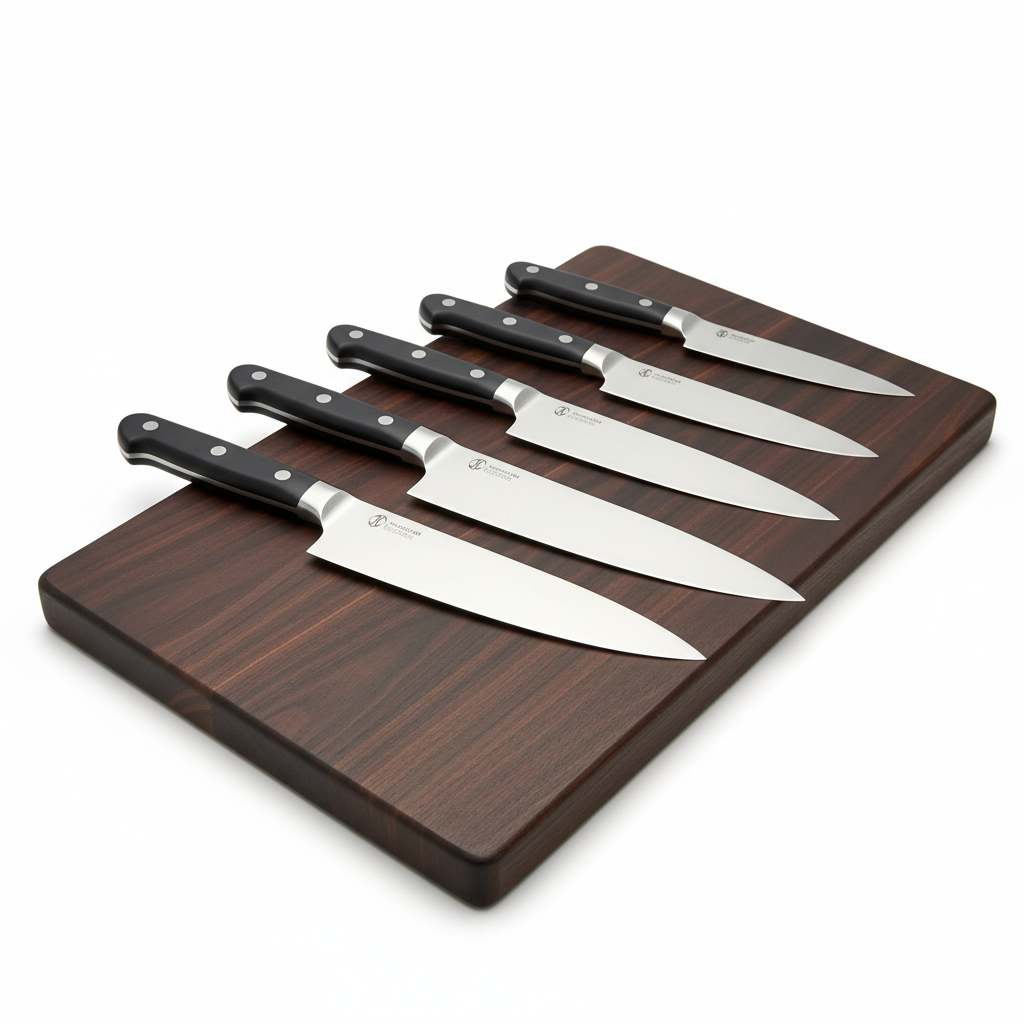
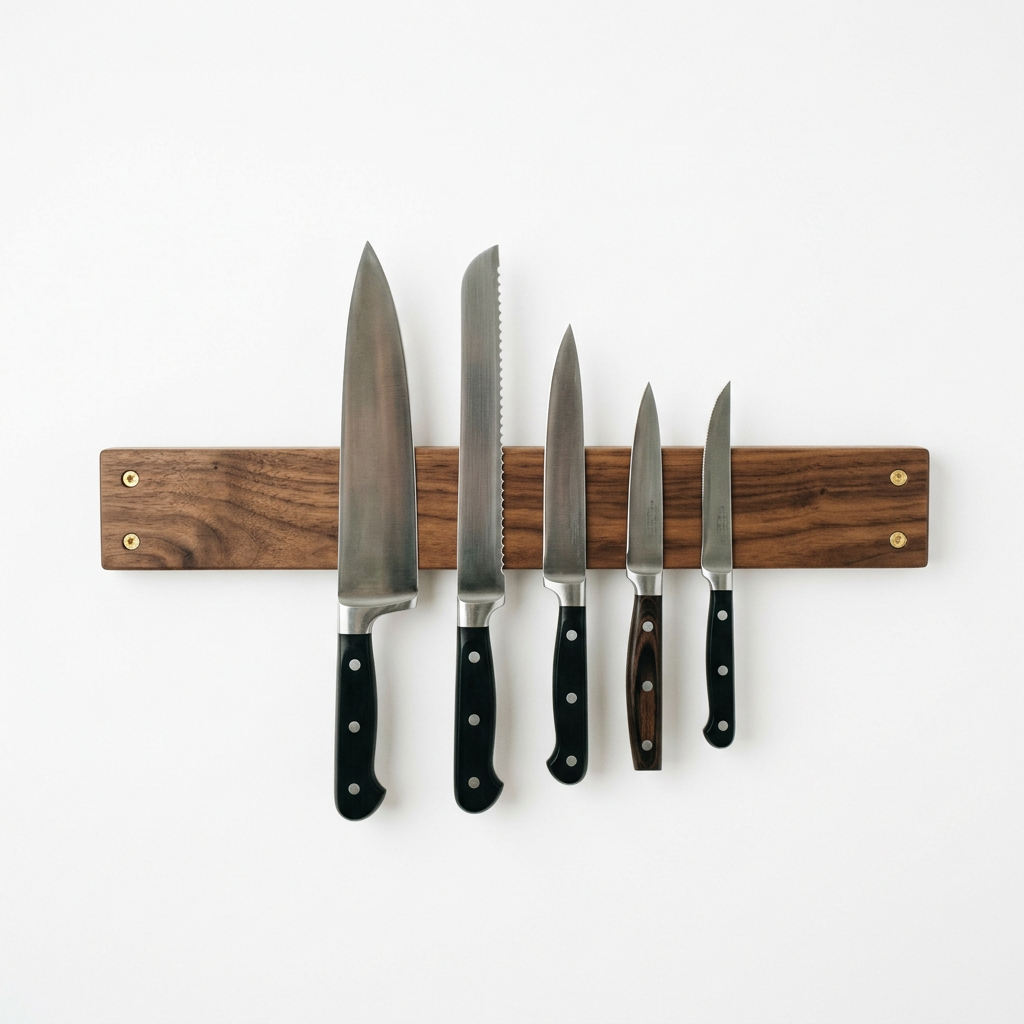
The first step toward culinary proficiency is understanding that you do not need an entire block of twenty specialized knives. In fact, most professional chefs rely on a small, versatile selection of blades to handle ninety-nine percent of their daily tasks. The Chef’s Knife, typically between eight and ten inches, is the undisputed workhorse of the kitchen. It should feel like an extension of your arm, balanced perfectly between the handle and the blade. A good paring knife is essential for precision tasks like peeling or deveining, and a serrated bread knife is necessary for handling items with tough exteriors and soft interiors without crushing them.
Beyond the selection process, maintenance is where the professional separates themselves from the amateur. A blade that is kept sharp through regular honing—using a honing steel to realign the microscopic teeth on the edge—will stay functional significantly longer between professional sharpenings. You should aim to hone your blade before every single heavy prep session. If your knife feels like it is "grabbing" the board or if you have to saw through an onion rather than slicing through it, you are long overdue for a visit to the whetstone.
A sharp knife is not just a tool; it is the most vital instrument of communication between the cook and the ingredient. When the edge is true, the resistance disappears, and the ingredient reveals its internal structure to you.
When choosing a knife, prioritize the grip. You should always test a knife in your hand before purchasing. Does the balance point sit comfortably at the bolster? Is the handle made of a material that provides a non-slip grip, even when your hands are slightly wet? Investing in one high-quality, forged steel knife is infinitely better than buying a cheap set of six that will lose its edge within a month. Remember, a knife is a long-term companion, and with proper care, it will serve you for decades to come.
The Importance of the Cutting Surface
The surface you cut upon is just as important as the blade itself. Avoid glass, marble, or ceramic boards, as these materials are harder than the steel of your knife, which will cause your edge to dull almost instantly upon contact. Instead, opt for high-quality end-grain wood boards or heavy-duty food-grade plastic. Wood boards are self-healing, meaning the fibers of the wood close back up after a slice, which is better for the edge of your blade and more hygienic in the long run. Ensure your board is stable by placing a damp paper towel or a non-slip silicone mat underneath it to prevent sliding.
The Foundation: Mastering the Grip and Stance
Before you make a single cut, you must master the way you hold your knife. The most common mistake beginners make is wrapping all four fingers around the handle like a tennis racket. This method sacrifices control and invites instability. Instead, you should adopt the pinch grip. Place your thumb and index finger on the blade itself, gripping the base (or the bolster) of the blade, while your middle, ring, and pinky fingers wrap around the handle. This provides a level of leverage and precision that makes the knife feel like a surgical instrument rather than a kitchen utility tool.
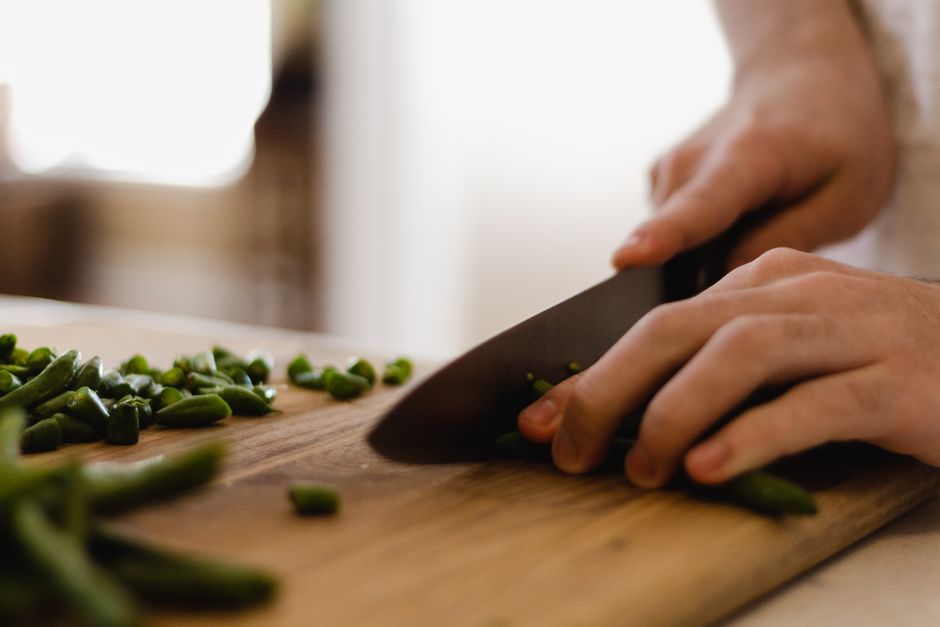
Your non-cutting hand—often called the "guiding hand"—requires its own specific set of rules to ensure safety. We use the claw grip, which involves tucking your fingertips inward toward your palm, using your knuckles to act as a guide for the side of the blade. As you move the knife along the vegetable, the blade rests against your knuckles. Because your fingertips are tucked safely away, you can work with speed and confidence. If the blade slips, it merely slides against your flat knuckles rather than making contact with your vulnerable fingertips.
Body Mechanics and Efficiency
Your knife work is not just about your hands; it is about your entire body. Position yourself squarely in front of your cutting board with your feet shoulder-width apart. Maintain a relaxed posture, keeping your shoulders down and your elbows slightly out. If you are hunched over or stiff, you will tire quickly and lose the fluid rhythm required for consistent cuts. Remember to keep the tip of your knife on the board for most slicing tasks. This pivot point technique allows you to rock the blade through the vegetable, which is much more efficient than lifting the entire knife off the board for every single slice.
The Geometry of Cuts: Beyond the Chop
Consistency is the hallmark of a professional kitchen. When vegetables are cut into uniform shapes, they cook at the same rate, which prevents some pieces from turning into mush while others remain raw. The julienne is one of the most fundamental cuts. To achieve this, first trim your vegetable into a rectangular block, then slice it into even planks (usually about 1/8 inch thick), and finally stack those planks to cut them into long, thin matchsticks. Mastering the julienne teaches you how to control the thickness of your blade and the uniformity of your spacing.
Once you have mastered the julienne, the brunoise becomes a natural progression. This is essentially a tiny cube, measuring roughly 1/8 inch on all sides. Take your julienne sticks, gather them together, and cut across them at equal intervals. This cut is perfect for aromatics like shallots or carrots that you want to incorporate into a sauce or a fine garnish where texture should be present but not overpowering. Accuracy is paramount here; if your cuts are uneven, the smaller pieces will burn while the larger ones remain tough.
Precision is not a chore; it is an act of respect for your ingredients. When you take the time to cut with intent, you honor the effort that went into growing that food.
Understanding the Dice
The dice comes in several standard sizes, and knowing which one to use depends on the dish. A small dice is typically 1/4 inch, a medium dice is 1/2 inch, and a large dice is 3/4 inch. For a long-simmering stew or a rustic roast, a large dice is appropriate because the vegetable needs time to break down without disintegrating into the liquid. For a quick sauté or a base for a pan sauce, the small dice is superior. Always aim for a "box" shape; a round vegetable should be squared off first to create a stable base, which prevents the vegetable from rolling while you cut.
The Art of the Onion: Technique and Tear Prevention
There is perhaps no vegetable more essential to the home cook than the onion. To prep an onion professionally, start by cutting off the stem end while leaving the root end intact. The root is the anchor that holds the layers together while you slice. Cut the onion in half through the root, peel back the skin, and lay the flat side down on your board. Make a series of vertical cuts toward the root, but do not cut all the way through the root itself. This holds the onion together while you make the next set of cuts.
Next, make a few horizontal cuts into the onion, keeping your hand flat on top. Finally, cut across the vertical slices to produce a perfect, uniform dice. By leaving the root intact until the very last moment, you maintain total control over the structure. This technique is not just about speed; it is about the physics of the onion. If you try to dice an onion by removing the root first, it will slide apart, making your cuts inconsistent and your work much more frustrating.
Why Do We Cry?
The chemistry of onion cutting is simple but impactful. When you crush the cells of an onion with a dull knife, you release enzymes that create a gas, which then irritates your eyes. By using a very sharp knife and a swift, clean slicing motion, you rupture fewer cells. This dramatically reduces the amount of gas released into the air. Pro tip: ensure your knife is freshly sharpened before tackling a pile of onions, and your eyes will thank you.
Advanced Techniques: Chiffonade and Mincing
The chiffonade is a delicate, elegant cut reserved for leafy greens and herbs like basil, spinach, or mint. To perform this, stack your leaves, roll them tightly into a cigar shape, and slice them into thin, ribbon-like strips. This technique releases the essential oils of the herbs and creates a beautiful garnish that elevates the presentation of any dish. When cutting herbs, avoid over-chopping, which will cause the herbs to bruise and turn black. Use a sharp, slicing motion rather than a heavy, pounding one to keep the herbs vibrant and fresh.
Mincing is the process of reducing an ingredient to the smallest possible uniform size. This is common for garlic, ginger, or parsley. Start by slicing or chopping the ingredient normally, then gather it into a pile in the center of your board. Place one hand on the handle of your knife and use the other to apply pressure to the top of the blade. Rock the knife back and forth, pivoting the tip on the board, until the ingredient reaches the desired consistency. Mincing garlic this way allows it to dissolve almost completely into dressings or sauces, distributing its flavor evenly.
The Importance of the Scrape
A common habit that ruins blades is scraping the cut food off the board using the sharp edge of the knife. This dragging motion dulls the edge against the board instantly. Instead, always flip your knife over and use the spine of the blade—the blunt back side—to scrape your ingredients into a pile or move them into the pan. This simple habit will significantly extend the time between sharpenings and keep your edge perfectly aligned.
Ergonomics and Workflow: The Mise en Place Philosophy
Your efficiency in the kitchen is directly linked to your mise en place, a French culinary phrase meaning "everything in its place." Before you begin cutting, clear your board of any debris. Keep a "trash bowl" nearby to discard peelings and scraps immediately. This keeps your workspace clean, reduces the risk of accidents, and allows you to move seamlessly from one task to the next. A cluttered workspace leads to a cluttered mind, and a cluttered mind leads to poor knife work.
Focus on your rhythm. Cooking should not be a frantic race. When you find your flow, you will notice that your knife work becomes rhythmic, almost musical. Focus on the sound of the blade hitting the board. If the sound is dull and muffled, you are likely not cutting all the way through or your board is not stable. If the sound is crisp and sharp, you have achieved the correct level of tension and control. This sensory feedback is how you grow as a cook.
Technique is the difference between a meal that is merely eaten and a meal that is truly experienced. When the prep work is executed with precision, the final dish carries a clarity of flavor that cannot be faked.
Managing Waste
Effective knife skills are also about being economical. Learn to trim your vegetables with minimal waste. For instance, do not peel an entire carrot if the skin is clean; a good scrub is often sufficient. When trimming broccoli, use the stems—they are flavorful and cook beautifully if you peel the tough outer layer. By understanding the anatomy of the ingredients, you save money and increase the yield of your kitchen. Professional chefs view every scrap as a potential component of a stock or a base, and you should adopt this mindset as well.
Conclusion
Mastering knife skills is a journey, not a destination. There will be days when your cuts feel shaky, and there will be days when you feel as though you can dice an onion in seconds with your eyes closed. Both are part of the process. Remember that the greatest chefs in the world were once beginners who stood exactly where you are, gripping a knife with uncertainty and hoping not to lose a finger. The key to improvement is consistent practice. Don't just focus on the technique when you are rushing to get dinner on the table; take time on the weekends to practice your dice on a bag of inexpensive carrots.
As you gain confidence, you will find that your palate evolves as well. You will notice the difference in texture between a coarse chop and a fine brunoise. You will appreciate how thin, uniform slices of zucchini absorb a vinaigrette compared to uneven chunks. This is the moment when the "chore" of cooking transforms into the "joy" of cooking. You are no longer just feeding yourself; you are crafting experiences. You are controlling the heat, the texture, and the presentation with a single, sharp edge.
In the world of "Blame The Chef," we believe that the kitchen is a space for constant growth. Your knife is your most important tool, and your skills are your most important asset. Keep your blade sharp, keep your fingers tucked, and always keep learning. The more you put into your technique, the more you will get out of your ingredients. Stay curious, stay precise, and most importantly, enjoy the process of becoming the cook you have always wanted to be. Your journey from enthusiast to master starts here, one slice at a time. Keep practicing, keep refining, and never stop pushing the boundaries of your culinary potential. The table is set, and the ingredients are waiting for your touch. Make every cut count.


Get the Next Recipe
Weekly recipes, techniques, and gear picks — straight to your inbox.
