Knife Skills Every Home Cook Should Master Before Anything Else
Stepping into a professional kitchen for the first time is often described as an exercise in sensory overload, but the most important lesson rarely happens at the stove. Long before a young line cook is allowed to handle a sauté pan or manage a reduction, they are placed at a prep table with a mountain of onions and a sharp knife. This isn't hazing; it is the fundamental understanding that the quality of your finished dish is entirely dependent on the uniformity and precision of your prep work. If your ingredients are cut unevenly, they will cook unevenly, leading to a plate where some pieces are mushy and overdone while others remain stubbornly raw. Mastering your knife skills is the singular most effective way to transition from a home cook who follows recipes to a chef who understands the architecture of flavor.
The beauty of honing your knife skills lies in the fact that it is a purely mechanical process that rewards consistency, repetition, and deliberate practice. Many home cooks struggle with the belief that they simply lack the innate talent of a culinary school graduate, but the truth is much less mystical. It is about ergonomics, the proper grip, and the repetitive motion of the blade against a stable surface. When you learn how to use the weight of the knife rather than your own muscle strength to do the work, the kitchen becomes a place of meditative flow rather than a site of high-stress fumbling. It is the first step toward building confidence, and once you have that confidence, you will find yourself experimenting more, chopping faster, and enjoying the process of creation.
We are going to strip away the intimidation factor and break down exactly what you need to master to take control of your cutting board. This guide will walk you through the anatomy of your tools, the essential grips that keep your fingers safe, and the specific cuts that define professional-grade home cooking. Whether you are prepping a complex mirepoix for a classic French stock or julienning peppers for a quick stir-fry, the techniques detailed below will elevate every single meal you make. Prepare to slow down, focus on your form, and embrace the rhythm of the blade. Once you internalize these patterns, you will stop blaming the ingredients or the stove for your culinary failures and finally realize that the power has been in your hands all along.
The Foundation of Comfort: Choosing and Caring for Your Tool
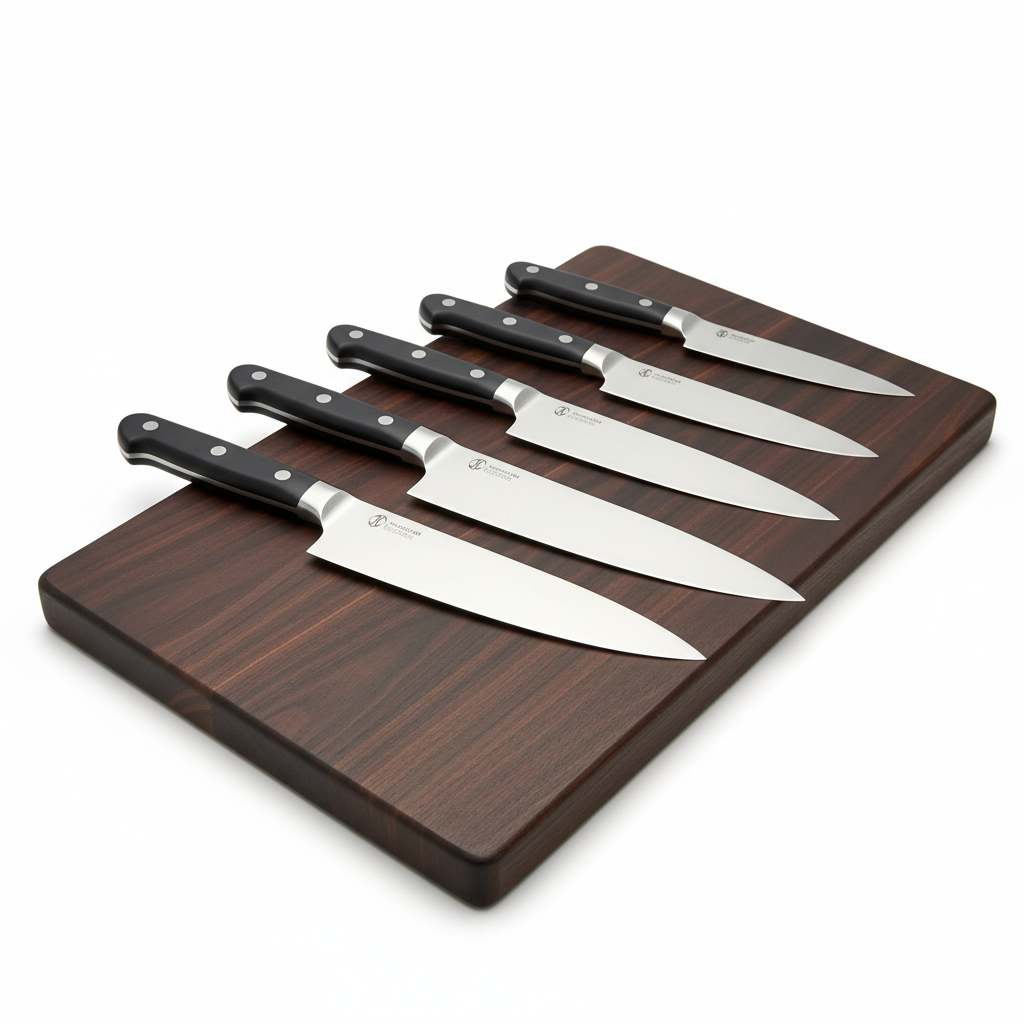
Before you make a single cut, you must understand that the knife is an extension of your own hand. Most home cooks struggle because they are using dull, cheap, or ergonomically incorrect knives that force them to fight against the ingredients. A sharp knife is actually much safer than a dull one because it requires less pressure to pass through food, meaning it is less likely to slip. You should look for a chef’s knife that is between 8 and 10 inches in length, balanced well between the handle and the blade. The handle should feel comfortable in your grip, not slippery or awkward, and the blade should have enough "belly"—the curve near the tip—to allow for a smooth rocking motion during chopping.
The Importance of the Pinch Grip
The most common mistake amateur cooks make is holding their knife like a tennis racket or a baseball bat, wrapping their entire hand around the handle. This grip provides almost no stability and encourages a clumsy, downward-chopping motion that is neither efficient nor accurate. Instead, you must master the pinch grip. Place your thumb and index finger directly on the metal of the blade, just forward of the handle. Wrap your remaining three fingers around the handle itself. This grip shifts the balance point of the knife closer to your hand, giving you surgical control over where the blade lands. It turns the knife into a precision instrument, allowing you to move with the speed of a professional.
The pinch grip is the single most important technique you can learn. By treating the blade as an extension of your finger, you gain a level of control that makes even the most daunting prep work feel like second nature.
Maintenance and Honing
You cannot expect a knife to perform if you do not respect the edge. A professional kitchen will have a steel rod, known as a honing steel, accessible at every station. Honing is not the same as sharpening; while sharpening removes metal to create a new edge, honing realigns the microscopic teeth of the blade that bend during regular use. You should hone your knife before every major prep session. Hold the steel vertically, place the heel of the blade against the top of the steel at a 20-degree angle, and draw the blade down along the steel in a smooth, sweeping motion. Repeat this five to ten times on each side. If your knife cannot slice through a ripe tomato under its own weight, it is time to have it professionally sharpened or use a high-quality whetstone.
The Claw: Keeping Your Fingers Intact
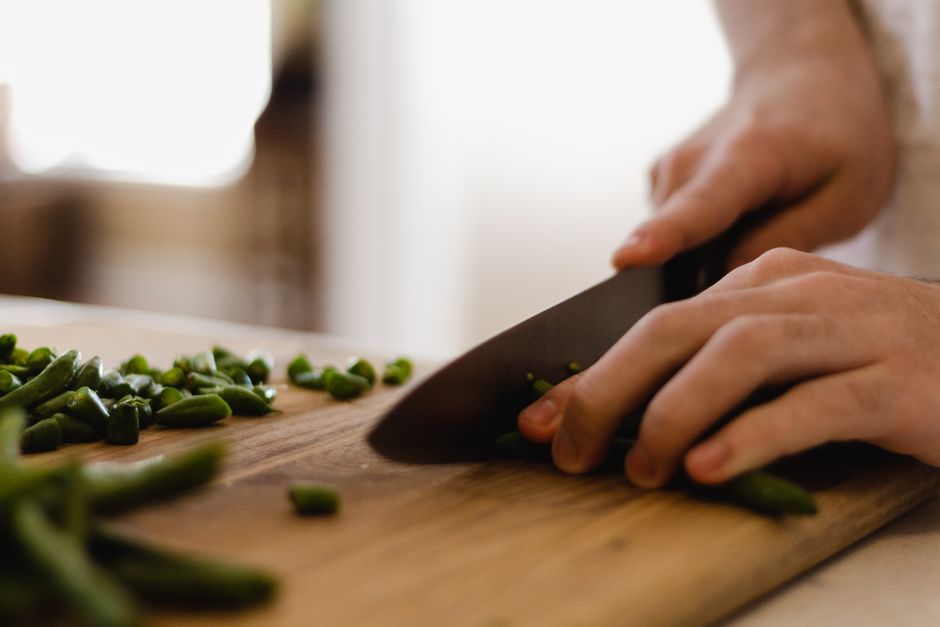
Safety is paramount, and the fear of a nasty cut is the primary reason home cooks move slowly and clumsily. To avoid injury, you must adopt the claw technique with your non-dominant hand. This involves tucking your fingertips inward toward your palm, using your knuckles as a guide for the blade of the knife. Your thumb should be tucked behind your fingers, completely protected from the edge. By keeping your knuckles pressed against the side of the blade, you ensure that the knife never cuts into your flesh. It feels unnatural for the first few hours, but after enough practice, it becomes an automated safety reflex that allows you to chop rapidly without looking at your fingers.
Establishing the Base
Never attempt to chop on a surface that slides around. A cutting board that shifts under pressure is a recipe for disaster. If your board doesn't have rubberized feet, place a damp paper towel or a thin kitchen towel underneath it. This creates friction and locks the board into place. You should also ensure that your board is large enough to hold all your ingredients without needing to move them constantly. When prepping, clear your board frequently; a cluttered cutting board is a dangerous cutting board. Keep your workspace organized, and always have a "trash bowl" nearby to discard peelings and scraps, preventing your work area from becoming a chaotic mess.
The Rhythm of the Rocking Motion
Once you have the pinch grip and the claw, you must learn the movement. For most vegetables, you aren't actually "chopping" in a vertical sense—you are rocking. Keep the tip of your chef’s knife on the cutting board at all times. Use the leverage of your wrist and the weight of the blade to push forward and down. The heel of the blade should be the primary point of force. By keeping the tip grounded, you ensure that you aren't lifting the knife too high, which minimizes the risk of injury and increases the speed of your cuts.
Mastering the Mirepoix and Essential Cuts
The mirepoix is the holy trinity of French cooking: onions, carrots, and celery, typically in a 2:1:1 ratio by weight. Mastering this is the gateway to soups, stews, sauces, and stocks. The goal here is uniformity. If your onion pieces are the size of marbles and your carrots are like toothpicks, the cooking times will be all over the place. To achieve the perfect dice, you first need to stabilize the vegetable. For an onion, leave the root end intact, as this acts as an anchor that keeps the layers together while you slice.
The Julienne and Batonnet
The julienne (a thin, matchstick-sized strip) and the batonnet (a thicker, finger-sized strip) are the foundation of your precision skills. To achieve these, you must first "square off" your vegetable. Trim the ends of a potato or carrot and slice off a thin sliver from all four sides to create a stable rectangular block. From here, you can slice the block into uniform slabs, and then slice those slabs into sticks. This is the process that creates consistent fries, roasted carrots, or salad garnishes. Don't throw away the scraps—toss them into your stock bag.
Understanding Dicing
Once you have your sticks, dicing is simple: gather them together, hold them with your claw, and slice across the sticks to create cubes. A brunoise is a very small dice (roughly 1/8 inch), while a macédoine is a larger, half-inch cube. The size of the dice should be dictated by the cooking time. If you are making a quick-cooking sauté, aim for a smaller dice so that the vegetables tenderize before they burn. For long-simmering braises or stews, a larger, rustic chop is perfectly acceptable and often preferred to prevent the vegetables from disintegrating entirely into the sauce.
A professional cook is defined by their consistency. If your carrots are all exactly the same size, your soup will not just taste better; it will have a superior texture and a more refined visual appeal.
Speed Without Sacrifice: The Efficiency of Professional Prep
Speed in the kitchen is a byproduct of efficiency, not rushing. When you see a chef chopping at high speeds, you are watching someone who has minimized their movements. They aren't lifting the knife unnecessarily high, they aren't repositioning their hands constantly, and they aren't pausing to look for the next item. They set up their "mise en place" (everything in its place) before the heat is even turned on. This involves having all your vegetables washed, peeled, and prepped, and your herbs picked and chopped before you ever touch a skillet.
Managing Workflow
One of the best habits you can adopt is "cleaning as you go." After you finish chopping a heap of onions, scrape them into a prep bowl immediately. Don't let your board get crowded. Use the spine of your knife to scrape the board clean rather than the sharp edge, which will dull the blade. Keep a clean towel by your side to wipe down your workspace, and always return your knife to a safe spot—never leave it buried under a pile of vegetable scraps where it can be accidentally grabbed or knocked off the counter.
The Psychological Component
The mental state of the cook is just as important as the physical state. Rushing leads to stress, which leads to mistakes. Start slow. Focus on the geometry of the vegetable and the placement of your fingers. When you achieve a perfect, uniform pile of diced bell peppers, take a second to acknowledge it. Culinary skill is about building muscle memory. If you spend one week focusing purely on dicing onions with the claw, you will eventually find that you can do it without even glancing down. Speed will come naturally once the movement pattern is hard-wired into your brain.
The Art of Herb Work and Aromatics
Herbs are the bright, aromatic highlights of a dish, but they are incredibly fragile. If you use a dull knife on basil or parsley, you will crush the delicate cells of the leaves rather than slicing through them. This results in bruised herbs that turn black and lose their flavor, leaving a bitter, metallic taste in your sauce or salad. When chopping herbs like parsley or cilantro, ensure they are thoroughly dry after washing. If they are wet, they will clump together, making an even chop nearly impossible.
The Fine Chiffonade
The chiffonade is a technique used for leafy greens and herbs like basil, mint, or spinach. Stack the leaves neatly on top of one another, then roll them into a tight cylinder, much like a cigar. Using a sharp knife, slice across the roll into very thin ribbons. This technique creates beautiful, elegant strands that add a professional finish to finished pastas or salads. It is all about the sharpness of the blade; if the knife is dull, the basil will oxidize and turn black within minutes. Keep it quick, sharp, and confident.
Crushing and Mincing Garlic
Garlic is a staple that deserves its own section. While garlic presses exist, they are often a nightmare to clean and don't provide the same texture as hand-chopped garlic. To prep a clove, lay your knife flat on top of the peeled clove and give it a firm, controlled hit with the heel of your hand. This crushes the clove and releases the oils. From here, you can mince it into a paste. Add a pinch of kosher salt to the pile of garlic on your board; the salt acts as an abrasive that helps break down the garlic fibers into a smooth, buttery paste that incorporates perfectly into dressings and marinades.
Troubleshooting Common Technique Errors
Many home cooks fall into a "plateau" where they feel like they aren't improving. This usually happens because they are repeating bad habits. The most common error is the "stair-stepping" effect—when you cut a vegetable, the pieces aren't the same size because you are pushing the knife away from your body at an angle rather than keeping it perpendicular to the board. Your knife should ideally be moving in a straight, vertical line. If you notice your slices are wedged or tapered, check your posture. Are you standing square to the board? Are your shoulders relaxed?
The "Slippery" Vegetable
Vegetables like onions and bell peppers have skins that can be difficult for a blade to bite into. This is where many people slip. When cutting an onion, start by slicing off the stem end, but leave the root intact. When cutting a pepper, place it skin-side down; the skin is the toughest part, and slicing through the flesh side first allows the blade to puncture the surface easily without slipping. Always prioritize stability. If a vegetable is rolling around, slice a small piece off the side to create a flat, stable base.
Dealing with Fat and Protein
Knife skills apply to proteins as much as produce. Trimming a chicken breast or a flank steak requires the same focus on safety and precision. When trimming silver skin or excess fat, use a boning knife or a paring knife if possible, but if you only have your chef’s knife, keep the blade angled slightly toward the meat to prevent wasting usable protein. Use long, smooth strokes rather than a sawing motion. This prevents the protein from tearing and ensures that your final portion is aesthetically pleasing and cooks evenly.
A sharp knife is not just a tool; it is a partner. Once you learn to trust the blade and focus on your hand position, the kitchen will become the most rewarding room in your house.
Conclusion
Mastering knife skills is not about becoming a robot who can slice an onion in four seconds flat; it is about building a foundation that allows you to cook with ease, safety, and consistency. When you remove the struggle from your prep work, you open up the mental space to focus on seasoning, flavor profiles, and the joy of cooking itself. By practicing your pinch grip, utilizing the claw, and maintaining your blades with care, you are moving away from the chaotic, messy home kitchen and toward a disciplined, professional approach that yields better results every single time.
Remember that every great chef was once a beginner who couldn't even dice a carrot without uneven, jagged pieces. The difference between you and them is simply the number of onions they have chopped. Do not be discouraged if your first attempt at a julienne looks more like a rustic chop. The goal is to improve your technique by five percent every time you step into the kitchen. Keep your workspace clear, your knives sharp, and your technique deliberate. Eventually, you will stop thinking about how to cut and start thinking about why you are cutting, which is where the true art of cooking begins.
There is a unique satisfaction in looking at a finished mise en place—a row of perfectly diced celery, a pile of uniform shallots, and a finely minced heap of garlic. It is the signature of a cook who cares about their craft. It shows that you value the process as much as the outcome. As you continue your culinary journey, treat your knife as your most valuable investment. Keep it clean, keep it stored properly, and keep it sharp. When you blame the chef for a dish that didn't turn out as expected, make sure that the chef you are looking at in the mirror is one who has put in the work to master the basics. You have the tools and the knowledge; now, pick up your knife and get to work.
Final Thoughts
The transition from a home cook to a confident kitchen artist is a marathon, not a sprint. You have now been equipped with the essential knowledge regarding grip, safety, maintenance, and the geometry of classic cuts. However, knowledge without application is merely a collection of facts. I encourage you to set aside time this week—perhaps a dedicated Sunday prep session—to practice these cuts. Buy a bag of onions or a crate of carrots. Don't worry about using them all in one meal; you can freeze your diced aromatics for future stocks or store them in the fridge for mid-week stir-frys.
Consistency is the key to excellence. By the time you reach your one-hundredth onion, you will no longer be thinking about your knuckles. You will be thinking about the depth of the flavor you are building, the balance of the dish, and the joy of the meal you are about to serve to your loved ones. Do not let the simplicity of these techniques deceive you into thinking they are unimportant; they are the bedrock of everything else you will ever make. Every sauce, every soup, every roast, and every salad starts here, on the cutting board. Treat it with the respect it deserves, and your kitchen will reward you with flavors you once thought were only possible in high-end restaurants. Stay curious, stay sharp, and keep cooking with purpose. The results, as you will soon discover, are well worth the effort.
Finally, remember that the culinary world is vast and the learning process never truly ends. Even after years in the industry, I still find myself focusing on my posture and the angle of my knife during a long day of prep. There is always room to refine, always room to improve, and always another skill to learn. But for now, focus on these fundamentals. Once you feel comfortable with these, you can begin to explore advanced techniques like deboning poultry, filleting fish, or the intricate work of vegetable carving. But for today, keep your claw tucked, your pinch grip firm, and your knife moving in that steady, rhythmic motion. You have everything you need to become the chef you’ve always wanted to be. Start today, and be patient with yourself as you grow. The path to greatness is paved with deliberate, consistent, and well-executed knife cuts. Good luck, and happy cooking.

Get the Next Recipe
Weekly recipes, techniques, and gear picks — straight to your inbox.
