
Knife Skills Mastery: From Julienne to Brunoise
The kitchen is a place of alchemy, but the foundation of all culinary excellence is not found in complex sauces or exotic spices; it is found in the rhythmic, deliberate movement of a blade against a cutting board. Many home cooks approach their knives with a sense of trepidation, viewing them as intimidating tools rather than extensions of their own hands. However, mastering knife skills is the single most effective way to improve the quality of your cooking, the consistency of your dishes, and the efficiency of your time in the kitchen. When you learn to handle a blade with precision, you move beyond mere recipe-following and into the realm of true craftsmanship, where the ingredients are respected and prepared to reach their peak potential.
At "Blame The Chef," we believe that your knife is your most trusted partner. A dull blade is not just a frustrating annoyance; it is a genuine safety hazard that encourages slipping and uneven cutting. By understanding the geometry of a cut and the mechanics of the chef's knife, you transform the mundane chore of chopping vegetables into a meditative practice. You will find that when your aromatics are cut uniformly, they sauté with even color and texture, creating a foundation of flavor that is fundamentally superior. Whether you are aiming for the delicate precision of a brunoise or the robust functionality of a rustic chop, the journey begins with confidence, posture, and the right grip.
As we embark on this comprehensive guide, we want you to shed the anxiety that often accompanies professional techniques. Cooking is a skill of repetition, and there is no substitute for the hours spent standing at the board, feeling the weight of the steel and the resistance of a crisp carrot or a firm onion. We will walk through the anatomy of the knife, the physics of the claw grip, and the specific measurements that define the classic French cuts. By the time you reach the end of this post, you will possess the vocabulary and the physical understanding to elevate your culinary game, turning every meal into a testament to your newfound technical mastery.
The Foundation: Selecting and Maintaining Your Tool
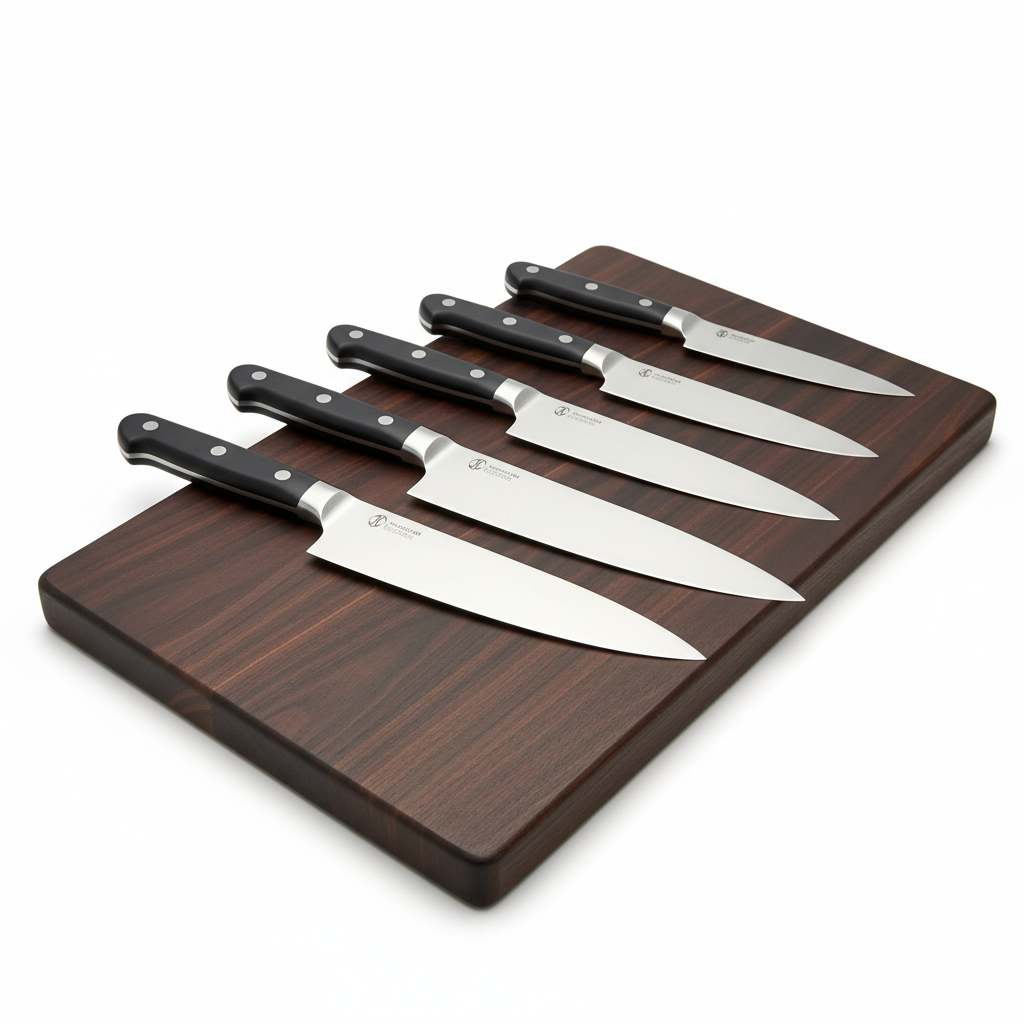
The relationship between a cook and their knife is intimate and essential. You do not need a massive, expensive block set to succeed; in fact, most professionals rely on a very limited selection of high-quality blades. For the vast majority of tasks, a 8-inch chef's knife or a 9-inch santoku is your primary workhorse. The blade should be made of high-carbon stainless steel, which holds an edge longer than standard stainless steel but remains resistant to the rust that plagues traditional carbon steel. Balance is key: the knife should feel like a natural extension of your arm, with the weight distributed evenly between the handle and the blade.
The Importance of the Edge
A sharp knife is a safe knife. When a blade is dull, it requires more downward pressure to pierce the skin of a vegetable, increasing the likelihood that the blade will slip off the surface and cause injury. Furthermore, a dull knife crushes the cell walls of herbs and delicate produce, leading to bruising, oxidation, and a loss of moisture. To maintain your edge, you should invest in a honing steel and use it before every major cooking session. Despite popular belief, the honing steel does not sharpen the knife; it realigns the microscopic "teeth" of the metal edge, ensuring that it remains true and biting for cleaner cuts.
The Cutting Board Environment
Your cutting surface is just as important as the blade itself. Avoid glass, marble, or ceramic boards at all costs, as these materials are harder than your steel and will blunt your knife almost instantly. Instead, opt for a thick, end-grain wooden board or a high-density polyethylene board. A stable board is a safe board; if your surface tends to slide, place a damp kitchen towel or a silicone mat underneath it to provide grip. A secure board allows you to focus entirely on your movement rather than compensating for a shifting surface, which is the root cause of many kitchen mishaps.
The secret to professional cooking isn't a hidden spice cabinet or a secret ingredient; it is the uniform preparation of ingredients, ensuring that everything cooks at the same rate and releases its flavor in harmony.
The Mechanics of Precision: Grip and Stance
Before you make a single cut, you must master the pinch grip. Beginners often fall into the trap of wrapping their entire hand around the handle, which limits the control you have over the tip of the blade. To execute the pinch grip, place your thumb and index finger on the blade itself, just in front of the handle’s bolster. Wrap your remaining three fingers firmly around the handle. This grip gives you superior leverage and stability, turning the knife into a pivot point that you can control with high precision. It feels unnatural at first, but with a few days of practice, it will become your default position.
The Claw: Protecting Your Fingers
Perhaps the most crucial safety technique in the professional kitchen is the claw grip. When holding the product you are cutting with your non-dominant hand, curl your fingertips inward toward your palm, using your knuckles as a guide for the side of the knife blade. Never leave your fingertips exposed. By pressing the side of the blade against your knuckles, you can safely move your hand backward as you slice, keeping your fingers tucked away from danger. This allows you to cut with speed and rhythm, confident that you are not going to accidentally shave your fingertips during a fast-paced prep session.
The Motion: Rocking vs. Pushing
Different cuts require different motions. For herbs or soft vegetables, a rocking motion is preferred, keeping the tip of the knife in constant contact with the board while you pivot the handle up and down. For harder vegetables like carrots or potatoes, a push cut is more efficient. In a push cut, you place the blade on the ingredient and push forward and down in one smooth, fluid motion. Avoid the "hacking" or "guillotine" motion, which is jerky, loud, and inefficient. A smooth, rhythmic sound—the sound of the knife hitting the board—is the hallmark of a cook who understands the flow of the kitchen.
The Hierarchy of Cuts: From Julienne to Brunoise
The world of classic French knife cuts provides a structured language for preparing vegetables. While these measurements may seem overly rigid, they serve a functional purpose: uniformity in size ensures uniform cooking times. If you have a mirepoix where half the onions are translucent and the other half are raw and crunchy, your final sauce or soup will lack the complexity of a well-balanced base. These cuts are not about pretension; they are about achieving consistent, predictable, and delicious results across every ingredient in your pan.
The Julienne and Batonnet
The batonnet is the starting point for many precision cuts. It is a stick-shaped cut measuring approximately 1/4 inch by 1/4 inch by 2 to 2.5 inches. Think of these as the dimensions of a perfect French fry. Once you have your batonnets, you can refine them into a julienne, which is much thinner—usually 1/8 inch by 1/8 inch by 2 inches. These thin strips are ideal for salads, stir-fries, or garnishes where you want a delicate texture that cooks almost instantly in high heat.
The Cube Family: Macedoine and Brunoise
Once you have your sticks, you can cross-cut them to create cubes. A macedoine is a 1/4-inch cube derived from the batonnet, perfect for hearty vegetable soups or potato salads. When you take the finer julienne strips and cross-cut them, you produce the brunoise, the smallest of the classic cubes at 1/8 inch. A brunoise is the hallmark of high-end culinary training; it is used for sauces, garnishes, and delicate fillings where you want the flavor of the vegetable to be present without a distinct "crunch."
A chef's knife is not a sledgehammer, and a board is not a chopping block. Treat your ingredients with the grace they deserve, and the blade will reward you with perfection.
The Small Dice and Large Dice
Between the tiny brunoise and the rustic chop lie the small dice (1/4 inch) and large dice (1/2 inch or larger). These are the bread and butter of the home cook. A large dice is perfectly acceptable for long-simmering stews or stocks, where the vegetables will spend hours in the liquid and eventually break down into the base. The key here is not perfection in measurement, but consistency in size. As long as your cubes are roughly the same, your stew will cook evenly.
Mastering the Onion: The Ultimate Test
The onion is the most used ingredient in the culinary world, and it is also the best tool for practicing your knife skills. Many people find chopping an onion to be a tear-inducing chore, but with the right technique, it becomes a fast, clean, and satisfying process. To start, cut the onion in half through the root. Peel back the papery skin. Place one half flat on the board. You now have a stable, non-rolling surface that is much safer to handle.
The Horizontal and Vertical Cut
To dice an onion, make a series of vertical cuts toward the root, but do not cut all the way through the root itself. This acts as an anchor to hold the layers together. Next, make two horizontal cuts parallel to the board, again stopping just before the root. Finally, slice across the vertical cuts to produce perfectly uniform, small pieces. This method prevents the onion from sliding around the board, and by leaving the root intact until the final moment, you maintain complete control of the structure.
Efficiency and Safety
The professional way to dice an onion is incredibly efficient, turning a messy job into a three-step movement. By keeping your knife blade parallel to your knuckles (the claw grip), you can work quickly and safely. If you find your eyes watering, ensure your knife is sharp—a sharp blade makes a clean cut, which releases fewer of the sulfuric compounds that cause tears. Keep your knife clean between cuts, and you will find that chopping an onion is the quickest way to build confidence in your technique.
The Art of the Herb: Chiffonade and Mincing
Herbs are the bright, aromatic highlights of a dish, and they require a light touch. If you crush your herbs with a dull knife, the essential oils will leach onto the board rather than into your food. For sturdy herbs like rosemary or thyme, strip the leaves from the woody stems and collect them into a tight pile. For leafy greens and soft herbs like basil, mint, or sage, the chiffonade technique is essential.
Executing the Chiffonade
To perform a chiffonade, stack your leaves on top of one another, roll them into a tight cigar shape, and use your sharpest knife to slice them into thin ribbons. The key is to avoid "re-chopping," as this will cause the herbs to blacken. One clean pass through the rolled leaves is all you need to create delicate, beautiful ribbons that garnish a pasta or a salad with grace. It is a simple technique that instantly makes a home-cooked dish look like it came from a professional kitchen.
The Mince
When you need to turn garlic or parsley into a fine paste, the mince is your go-to technique. After doing a rough chop, you can use the weight of your chef’s knife to rock back and forth over the pile. Some cooks like to add a pinch of kosher salt to garlic before mincing; the salt acts as an abrasive, helping to break down the fibers into a paste. Once you have reached the desired consistency, you can use the spine of your knife to scrape the mince off the board. Never use the sharp edge to scrape, as this will dull your knife and potentially damage your cutting board.
Beyond Vegetables: Proteins and Delicate Tasks
While vegetables are the primary focus of knife skills, proteins demand a different set of rules. When working with raw meat, sanitation is paramount. Always use a dedicated board for raw proteins—ideally a plastic one that can be sanitized at high heat—and wash your knife immediately after use. The technique here is all about "cutting against the grain." By identifying the direction of the muscle fibers and cutting perpendicular to them, you ensure that the meat is tender and easy to chew.
Filleting and Deboning
For fish and poultry, the boning knife is your best friend. Its flexibility allows it to follow the contour of the bone, minimizing waste. When filleting a fish, use long, sweeping strokes rather than short, hacking motions. The blade should do the work, not your shoulder. Keep your hand flat on top of the fillet to guide the knife as it glides along the skin. Practice makes perfect, and remember that even the scraps and bones can be used to make a flavorful fish stock, so never discard the "trim" until you have considered its potential.
The Precision of Slicing
Slicing a cooked steak or a roast is the final moment of the culinary process. If you have spent hours slow-roasting a piece of meat, do not ruin it with a jagged, uneven slice. Use a slicing knife or a very sharp chef's knife. Allow the meat to rest for at least ten to fifteen minutes before cutting; this allows the juices to redistribute throughout the muscle fibers. If you cut into the meat too early, the juices will escape onto the board, leaving you with dry meat and a messy prep area.
The professional kitchen is a place of rhythm. When you find yours, the ingredients seem to fall into place beneath your blade, and the task of cooking ceases to be a chore and becomes a performance.
Maintaining Your Equipment for the Long Haul
Your knife is an investment that, if cared for, will last a lifetime. Beyond daily honing, you must occasionally sharpen your blades using a whetstone. Whetstones come in various grits: a coarse grit for repairing nicks or dull edges, and a fine grit for polishing the blade to a razor-sharp finish. The process of sharpening is therapeutic; it requires focus, a steady hand, and an understanding of the angle—usually between 15 and 20 degrees for Western knives and slightly shallower for Japanese styles.
Storage and Handling
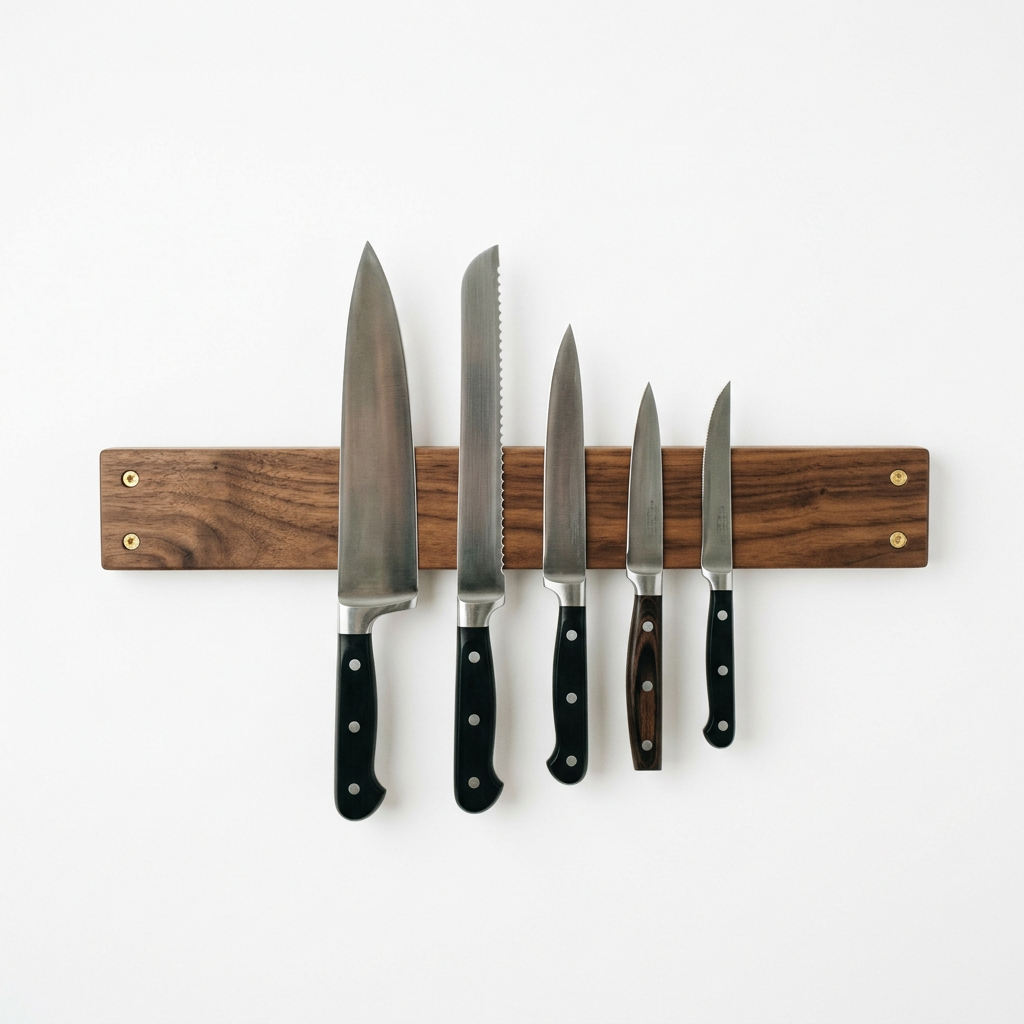
Never put your quality knives in the dishwasher. The harsh detergents and the extreme heat will damage the handle and corrode the metal edge. Furthermore, the rattling around in a dishwasher can cause your knives to strike other utensils, leading to chips and dullness. Hand wash them with mild soap and warm water, then dry them immediately with a clean towel. Store your knives on a magnetic strip or in a wooden block—never loose in a drawer, where they can be damaged or cause injury to someone reaching inside.
Professional Tips for the Home Cook
One of the most helpful pieces of advice we can offer is to "clean as you go." Keep a damp cloth nearby to wipe your board and your knife periodically. A cluttered board is a dangerous board. If you are working with multiple vegetables, cut the cleanest, least staining items first—like celery or potatoes—before moving on to onions, peppers, or heavy herbs. This keeps your board clean for longer and prevents the cross-contamination of flavors, ensuring that your celery salad doesn't taste like the garlic you just chopped.
Conclusion
The path to culinary mastery is paved with the mundane. It is not found in the grand gestures, but in the small, repeated actions that build the foundation of every meal. Mastering your knife skills is not about becoming a speed-demon in the kitchen; it is about developing a relationship with your ingredients, understanding the structure of what you are preparing, and finding a rhythm that makes cooking a joy rather than a task. When you hold your knife with the pinch grip, when you guide the blade with your claw, and when you see those perfectly uniform pieces on your board, you will understand why we emphasize these techniques so heavily here at "Blame The Chef."
Remember that everyone starts as a beginner. Your first brunoise will not be perfect, and your onions may not always be symmetric. That is entirely fine. The beauty of cooking lies in the process of improvement. Each time you step up to the board, focus on one aspect of your technique. Maybe today you focus on keeping your movements smooth, or maybe tomorrow you focus on your posture. Over time, these individual efforts compound. You will notice that your prep time drops, your consistency increases, and your overall confidence in the kitchen skyrockets.
We hope this guide serves as a constant resource for your journey. Whether you are prepping a simple weeknight stir-fry or a complex multi-course feast, the lessons of the knife remain the same. Respect your tools, practice your grips, and keep your blade sharp. The kitchen is yours to command, and with these skills, you are fully equipped to turn simple, raw ingredients into something truly extraordinary. Stay curious, stay sharp, and above all, keep cooking. There is no limit to what you can create when you master the basics.
Final Thoughts
As we wrap up this exploration of knife skills, consider the emotional component of your work. When you slice, chop, and mince with intention, you are infusing your food with the care that defines "home-cooked." There is a world of difference between food that is hastily hacked together and food that has been prepared with rhythmic, purposeful precision. Your guests, your family, and your own palate will notice the difference. Uniformly cooked vegetables have a sweetness and a texture that simply cannot be replicated by uneven, mismatched pieces.
Furthermore, do not be afraid to experiment with different produce. Use your knife skills on items you don't typically buy—root vegetables like celery root or parsnips, or firm fruits like firm pears or apples. The more you practice on a variety of densities and textures, the more intuitive your knife work will become. You will eventually reach a point where you no longer look at your hands while you cut, trusting the memory of your movements to guide the blade. This is the stage where cooking becomes truly creative, allowing you to focus on flavor profiles and seasoning while your hands handle the labor effortlessly.
Finally, keep a record of your progress. Take photos of your prep work if you like, and notice how your cubes become smaller and more uniform over the months. Look back at your early attempts and celebrate how far you have come. Mastery is not a finish line; it is a way of life in the kitchen. "Blame The Chef" is here to support you at every stage, so keep challenging yourself to try new cuts, maintain your steel, and approach every vegetable with the respect of a professional. Your culinary journey is just beginning, and the blade is waiting.
The essence of the chef’s craft is control. Whether you are dealing with a delicate herb or a heavy butternut squash, the ability to manipulate that ingredient into the perfect size and shape gives you total authority over the final dish. A recipe is just a map, but your hands are the engine. When you pair high-quality ingredients with solid, repeatable, and safe knife techniques, you unlock the potential to create restaurant-quality meals in the comfort of your own home. Never settle for "good enough" when you have the capacity to strive for "great."
Keep your workspace tidy, your knife sharp, and your mindset focused. By implementing the claw grip, the pinch grip, and the classic French cuts discussed in this guide, you are already miles ahead of the average home cook. Embrace the practice, enjoy the rhythm, and let the knife do the work. The kitchen is a place of endless learning, and we are thrilled to be part of your growth. Until next time, sharpen your steel and start chopping. The results will speak for themselves in every bite you take.
Your progression from novice to master does not happen overnight, but each session at the board is a building block. Be patient with yourself, accept that minor errors are part of the learning process, and always prioritize safety over speed. Once the safety and the technique are ingrained, speed will follow naturally as a byproduct of your comfort. There is a deep satisfaction in the flow of a well-executed prep session that no gadget or shortcut can ever replace. This is the heart of the kitchen, and it is here that you truly earn your apron. Keep pushing, keep practicing, and never stop refining your craft. The difference in your cooking will be profound.


Get the Next Recipe
Weekly recipes, techniques, and gear picks — straight to your inbox.
