
Knife Skills Mastery: From Rough Chop to Brunoise Like a Professional Chef
The secret to restaurant-quality cooking does not always lie in expensive appliances, exotic ingredients, or secret family recipes passed down through generations. Instead, the foundation of professional culinary success is built on a single, humble tool: your chef’s knife. Many home cooks view chopping as a tedious chore to be completed as quickly as possible, but in a professional kitchen, it is the meditative ritual that prepares the stage for every masterpiece. When you master your knife skills, you gain more than just efficiency; you gain consistency, which is the hallmark of great cooking. Ingredients that are cut to the same size cook at the same rate, ensuring that your sautéed vegetables don't end up as a mixture of mush and raw, crunchy chunks.
Stepping into the world of professional knife technique is less about raw strength and more about developing an intimate relationship with the blade and your own hands. It requires patience, a commitment to safety, and the understanding that speed is a byproduct of accuracy, not the goal itself. I have spent years training cooks who arrived with messy cutting boards and uneven dice, only to watch them transform into confident, rhythmic technicians who treat their boards like a canvas. You are about to embark on that same journey, moving away from "hack and slash" toward the precision of the French culinary tradition. By the time you finish this guide, you will approach your mise en place with a newfound sense of power and poise.
Blame the Chef is here to turn your kitchen anxiety into pure culinary confidence. We believe that if a dish fails, it is rarely the recipe's fault—it is almost always the lack of preparation or technique. By refining your knife skills, you eliminate the variables that lead to uneven cooking, flavor imbalances, and unnecessary stress. This is not just a lesson in how to avoid cutting your fingers; it is a masterclass in how to elevate the very texture, flavor, and visual appeal of your home-cooked meals. Let us pick up our knives, hone our blades, and learn the rhythmic language of the professional kitchen together.
The Foundation: Selecting and Maintaining Your Blade
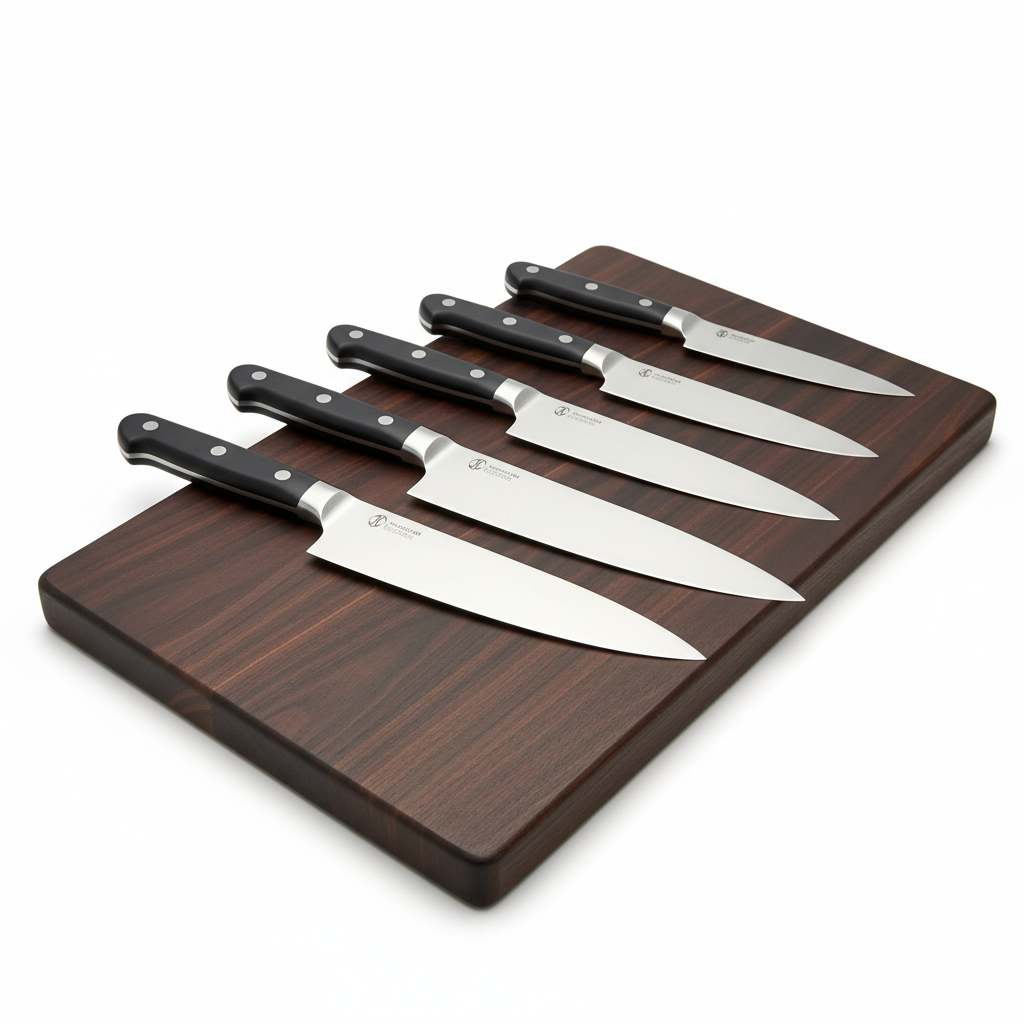
Before you can achieve a perfect brunoise, you must have the right tool for the job. Not all knives are created equal, and attempting professional techniques with a dull, flimsy, or ill-fitting knife is a recipe for frustration and injury. A standard 8-inch chef’s knife is the workhorse of any kitchen, and it should feel like a natural extension of your arm. When you are shopping for your primary blade, look for balance; the weight should be distributed evenly between the handle and the heel of the blade, allowing for effortless rocking motions.
Maintenance is arguably more important than the initial cost of the knife. A dull knife is significantly more dangerous than a sharp one because it requires more force to penetrate food, leading to slips and erratic cuts. You should hone your blade using a honing steel before every single use. While honing does not sharpen the knife by removing metal, it realigns the microscopic "teeth" of the edge, ensuring it remains keen and effective throughout your prep work.
"A dull knife is the greatest enemy of the home cook. It forces you to compensate with pressure, leading to fatigue, inconsistent cuts, and a far higher risk of injury than if the blade were sharp enough to do the work for you."
Professional sharpening should be done on a whetstone or by a professional service at least every few months, depending on how often you cook. Keep your blades stored in a block, on a magnetic strip, or in a protective sheath to ensure the edge does not ding against other metal tools. A well-maintained knife is the first step toward professional-level consistency.
The Grip: Establishing Control and Safety
The way you hold your knife dictates the quality of every slice you make. Many home cooks fall into the trap of the "handle grip," where all four fingers are wrapped tightly around the handle like a hammer. This grip is incredibly unstable and lacks the precision required for fine cuts. The professional standard is the pinch grip, which provides maximum control and safety by turning the knife into a true extension of your hand.
How to Execute the Pinch Grip
With the pinch grip, you are effectively "pinching" the blade, which gives you complete control over the tip and the heel. When you use this grip, notice how much easier it is to perform a controlled rocking motion against the cutting board. You will no longer feel like the knife is fighting you; you will feel like you are guiding the blade through the produce with minimal effort. This stability is the difference between a ragged, torn piece of parsley and a clean, vibrant chiffonade.
The Non-Cutting Hand: The Claw Technique
While your knife hand does the cutting, your non-cutting hand—the "guide hand"—is responsible for your safety and the consistency of your cuts. If you don't master the claw technique, you are leaving your fingertips at risk every time you prep onions or garlic. This technique keeps your fingers tucked away from the path of the blade while providing a stable, vertical surface against which the side of your knife can rest.
The Anatomy of the Claw
* Curl your fingertips inward toward your palm, creating a "claw" shape.
* Rest your knuckles against the blade of the knife, specifically the flat side of the blade.
* Use your knuckles to guide the movement of the knife; as you move the blade forward, you slide your knuckles back along the vegetable.
* Always keep the blade pressed lightly against your middle knuckle; this ensures the blade stays at a consistent, safe distance from your sensitive fingertips.
By keeping your knuckles out and your fingertips tucked, you create a physical barrier that prevents accidental cuts. This feels awkward at first, but with practice, it becomes second nature. Professionals use this grip to move rapidly through ingredients without looking at their hands, trusting the spatial relationship between the blade and their knuckles. Once you master the claw, you will find that you can prep a mountain of mirepoix in a fraction of the time it previously took you.
Mastering the Cuts: From Rough Chop to Brunoise
Precision in the kitchen is measured in millimeters. The terms used in professional culinary arts—julienne, batonnet, brunoise, chiffonade—are not just fancy French words; they are specific instructions for how an ingredient should interact with heat. Larger pieces take longer to soften, while smaller, uniform pieces cook quickly and distribute flavor evenly throughout a sauce or sauté.
The Hierarchy of Size
"Consistency is not about obsession; it is about physics. When every piece of potato is the exact same size, every piece finishes cooking at the exact same moment. That is how you achieve professional results."
Let’s take the onion as an example. To get a perfect, fine brunoise, you first peel the onion and cut it in half through the root. Place the flat side down on your board. Make a series of vertical cuts toward the root, but do not cut all the way through the root (it keeps the layers together). Next, make a few horizontal cuts into the onion toward the root, again keeping it attached. Finally, cut across your previous vertical lines. The result is a perfect, uniform pile of diced onion that will sweat evenly in a pan without burning.
Mise en Place and Workflow Management
In the professional world, mise en place—"everything in its place"—is a way of life. It begins with your workstation. A cluttered, small, or unstable cutting board is the enemy of efficiency. Ensure your board is large enough to handle your ingredients, and if it slips, place a damp paper towel or a non-slip silicone mat underneath it. Never work on a board that shifts while you are applying pressure, as this is a primary cause of accidental cuts.
Workflow is equally important. Group your ingredients by the order in which they will be cooked. If you are making a soup, prep your aromatics (onions, carrots, celery) first, then your heartier root vegetables, and finally your delicate herbs. By organizing your board, you minimize the "traffic" of ingredients moving from the cutting surface to the bowl. Keep a bench scraper handy; this simple, inexpensive tool is used by every chef to quickly clear the board of waste or to transport your prepped, chopped vegetables directly into the pot.
Do not be afraid to take your time. In the beginning, your goal should be 100% uniformity, not speed. Speed is a byproduct of repetition. If you force yourself to go fast, you will make mistakes, your cuts will be irregular, and your final dish will suffer. Instead, focus on the rhythm: slice, slide back, slice, slide back. When your rhythm is consistent, your speed will naturally increase without you even realizing it.
The Art of the Herb Chiffonade
Working with leafy herbs like basil, mint, or sage requires a delicate touch. A heavy, hacking motion will bruise the leaves, turning the vibrant green edges to an unappealing dark brown or black. This bruising releases the volatile oils too early, losing their aromatic potency before they even hit the pan. The technique for handling these ingredients is the chiffonade, which produces beautiful, thin ribbons.
Step-by-Step Chiffonade
* Stack your herb leaves neatly on top of one another, largest to smallest.
* Roll the stack tightly like a cigar, ensuring the roll is compact.
* Using a very sharp knife—a dull one will crush the leaves—make thin, parallel slices across the herb roll.
* Once you have finished, use your fingers to gently toss the ribbons to separate them.
* Use these ribbons immediately as a garnish or a fresh addition to a finished pasta or salad.
Remember, fresh herbs are delicate. You should always use the sharpest part of your blade (the heel or the middle, depending on your style) and slice with a pulling or pushing motion, never pressing straight down. If you see juice collecting on your board after chopping herbs, your blade is too dull, and you are effectively juicing your herbs rather than cutting them. Keep your knife edge light and swift to preserve the integrity of the leaves.
Understanding Ingredient Texture and Density
Every ingredient has a different cellular structure, and your knife work must adapt accordingly. Cutting a firm carrot requires a different amount of force and a different blade angle than slicing a soft, ripe tomato. When working with firm root vegetables, use the heel of the knife and a rocking motion to leverage the weight of the steel. When working with delicate items, use the tip of the blade and a lighter, slicing motion to prevent mashing.
Understanding these densities helps you plan your cooking time. If you are roasting a medley of vegetables, the density dictates your cut size. For example, a dense potato takes longer to roast than a soft zucchini. To make them finish at the same time, you should cut your potatoes into smaller, 1/2-inch cubes and your zucchini into larger, 1-inch chunks. This is where knife skills transition from simple mechanics to a deeper understanding of flavor development and proper cooking technique.
"A chef does not just cut food; a chef understands the resistance of the produce. When you know how a vegetable responds to the blade, you know how it will respond to the heat of the oven or the pan."
Always consider the finished dish when deciding how to prep. If you are making a delicate, quick-cooking stir-fry, everything must be cut thin and small so it cooks in ninety seconds flat. If you are making a long-simmering beef stew, larger, more rustic cuts are appropriate because the long cooking time will break down the vegetables regardless of their size. Adjusting your knife work to the cooking method is the hallmark of a cook who understands the "why" behind the "how."
Troubleshooting Common Mistakes
Even the best chefs occasionally struggle with consistency. If you find that your dice are uneven, stop and assess your technique. Are you moving the ingredient as you cut? Are you using the claw? Is your blade dull? One common error is "the pivot." This happens when you don't keep the tip of your knife on the cutting board. When the tip leaves the board, you lose the pivot point, and your cuts become wild and inconsistent. Keep that tip planted firmly until the slice is complete.
Another common issue is "wedging." This happens when you are cutting dense vegetables like carrots or potatoes, and the blade gets stuck in the middle. This is often because you are using a knife with a blade that is too thick. For fine precision work, a thinner blade is preferred. If you do get stuck, do not twist the knife to pry the vegetable apart—that can chip your blade or cause it to snap. Instead, withdraw the knife and reposition it, or use a slightly wider-based cutting motion to provide clearance for the blade.
Finally, do not be embarrassed by the "leftover" bits. Every chef has a pile of "trim" at the end of their prep—the uneven ends of the carrot, the bits of onion that didn't form a perfect square. Don't throw them away. Keep a container in your freezer for these scraps; when it is full, you have the base for a high-quality homemade vegetable stock. This is how professional kitchens keep waste low and flavor high. Your scraps are not a sign of failure; they are the seeds of your next great sauce.
Developing Your Personal Rhythm
Rhythm is the final stage of mastery. After you have internalized the grip, the claw, the blade maintenance, and the geometry of the cuts, you will enter a flow state. This is the moment when you no longer think about where your fingers are or how you are holding the handle. You simply see the onion, and your hands move with purpose and precision. This rhythm is silent, clean, and incredibly efficient.
In professional kitchens, we often talk about the "sound of the board." You can tell a professional cook just by the sound they make while prepping. It is a steady, rhythmic, almost musical sequence of taps and slides. If you find yourself making loud, chaotic banging noises, slow down. You are using too much force. A professional knife cut is a graceful, sliding motion. It should be quiet and elegant. If you can achieve this level of control, you will find that you look forward to the prep time as much as the actual cooking time.
Practice daily, even if you are only cutting a single clove of garlic. Challenge yourself to make every single slice uniform. If you are making a simple salad, take the time to julienne your cucumber rather than just slicing it. If you are roasting vegetables, take the time to ensure they are all the exact same size. These small, deliberate acts of practice will compound over time. Before long, you will look at your cutting board and see a clean, professional workspace, and your friends and family will wonder how your meals suddenly taste so much more cohesive and well-crafted.
The Importance of Safety and Hygiene
As we conclude this journey into knife mastery, we must reiterate the importance of safety. A kitchen is a dangerous environment, but it is manageable when you respect the tools. Always, without exception, keep your knife in its place. Never place a knife in a sink full of soapy water where it can't be seen; someone—perhaps you—will reach in and get cut. Always wash your knife immediately after use, dry it thoroughly with a towel facing away from your hand, and place it back on the strip or in the block.
Hygiene is the other side of the safety coin. Ensure your cutting boards are sanitized, especially when working with raw proteins. While we focus here on vegetable prep, the same principles of precision apply to butchery. However, always keep a separate board for raw meat and raw produce to prevent cross-contamination. A professional kitchen is organized, clean, and methodical. By adopting these standards in your home, you are not just cooking; you are running a professional operation.
Conclusion
Mastering your knife skills is a lifelong pursuit, but it is one that pays dividends in every single meal you prepare. You have moved from the basics of selecting a tool to the advanced concepts of rhythm and consistency. You understand the pinch grip, the power of the claw, and the importance of the mise en place. You have learned that the size of your cut is not just for show; it is a critical component of how food cooks and tastes.
Remember that every great chef started exactly where you are now, with a dull knife, an awkward grip, and a pile of uneven, frustrated produce. The difference between the home cook and the professional is not an innate talent; it is the discipline to practice the fundamentals until they are second nature. Be patient with yourself. Give yourself the grace to go slowly as you develop your muscle memory.
The next time you head to the kitchen, don't just "chop" your vegetables. Prepare them. Treat the board with respect, hold your knife with confidence, and listen for that steady, rhythmic sound of a professional at work. You are no longer just a person following a recipe; you are a culinary technician with the power to transform raw ingredients into something truly exceptional. Blame the Chef, or better yet, thank the chef you are becoming. Your kitchen is now truly yours, and every slice you make brings you closer to the professional standard you have been striving to achieve. Keep sharpening, keep practicing, and above all, keep enjoying the process of creation. Happy cooking!


Get the Next Recipe
Weekly recipes, techniques, and gear picks — straight to your inbox.
