Mastering the Perfect French Omelette: Silky Technique for Rolling-Curl Perfection
The French omelette is often whispered about in culinary circles as the ultimate litmus test for a chef’s fundamental dexterity. Unlike its rustic country cousin—the browned, folded, and stuffed American omelette—the French variety is an exercise in restraint, elegance, and precise thermal control. It should emerge from the pan as a pale, golden cylinder, smooth as satin on the exterior, with a slightly runny, creamy interior known as baveuse. Achieving this requires you to shed your preconceptions about frying eggs and embrace a process that feels more like an orchestrated dance of protein coagulation. When you get it right, you aren't just making breakfast; you are crafting a foundational piece of gastronomy that transforms two simple ingredients into something transcendent.
To master this dish, you must cultivate a high degree of patience and an almost intuitive connection with your pan. We aren't looking for the aggressive sizzle of a griddle or the deep-brown Maillard reaction that characterizes a classic diner egg. Instead, we are aiming for a gentle, uniform set that avoids any color entirely, preserving the delicate, milky flavor of the eggs. This is not a dish for when you are in a rush; it is a dish for when you want to refine your touch and respect the beauty of ingredient-focused cooking. By stripping away the bells and whistles, you are forced to confront the technique itself, which is exactly why this remains the standard for testing potential line cooks in professional kitchens worldwide.
At "Blame The Chef," we believe that every home cook possesses the capacity to reach professional-level standards if they are willing to observe the science behind the plate. Over the next two thousand words, we are going to dissect the anatomy of the perfect French omelette, moving beyond simple instructions to understand the thermodynamics, the physics of egg protein, and the rhythmic movements required to achieve that elusive, iconic curl. Prepare to burn a few eggs and perhaps experience a moment of frustration, but know that each attempt brings you closer to the silky, uniform finish that defines true culinary mastery. Put on your apron, sharpen your focus, and let us begin the journey toward the perfect roll.
The Science of the Egg and Thermal Regulation
The French omelette is fundamentally a study in egg protein denaturation and coagulation. When you whisk eggs, you are essentially creating a complex matrix of proteins that will bind together when exposed to heat. In a standard scramble, we allow these proteins to bond tightly, creating a firm and sometimes rubbery texture. In a French omelette, our goal is to keep those proteins loose and hydrated for as long as possible. We want the butter to act as a lubricant, preventing the eggs from sticking while simultaneously adding a luxurious, velvety mouthfeel that only dairy fat can provide.
Managing Your Heat Source
Heat is your most volatile variable. If the pan is too hot, the eggs will seize, brown, and lose their delicate, custard-like consistency. If the heat is too low, the eggs will become greasy and fail to set enough to be rolled into a cylinder. The ideal temperature range is a medium-low flame that allows the butter to foam but never brown. You should observe the butter carefully; if it begins to darken, you have already moved past the point of no return. The goal is to keep the eggs pale, ivory-yellow, and impossibly soft.
The Role of the Pan
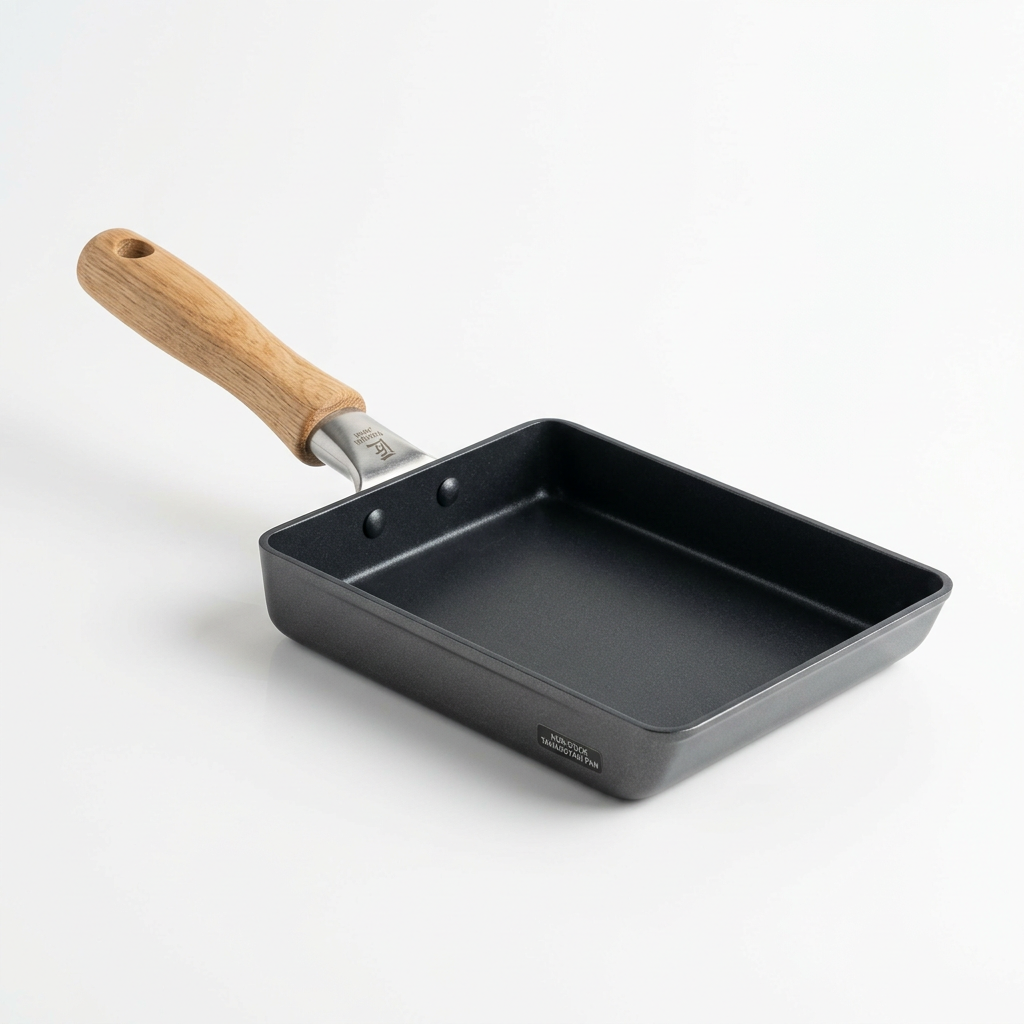
The pan you choose is just as important as the technique you employ. You need a non-stick skillet, preferably 8 inches in diameter. This specific size is crucial because it gives the eggs enough depth to create that necessary baveuse layer while still being small enough to maneuver with a fork. A heavy-bottomed pan will retain heat more consistently, preventing the "hot spots" that cause localized browning. If you attempt this in a standard stainless steel pan, you will find yourself in a struggle against the physics of adhesion, and the result will likely be a scrambled mess rather than a folded masterpiece.
"The secret to the perfect French omelette lies not in the speed of the cooking, but in the calmness of the chef’s hand during the manipulation of the curds."
Prepping for the Perfect Fold
Before you even turn on the stove, your preparation must be absolute. There is no time to reach for the salt or grab a fork once the eggs hit the pan. You need a dedicated silicone spatula—one that is heat-resistant and thin enough to scrape the sides of the pan without tearing the forming egg sheet. Many professional chefs use a fork to agitate the eggs, which is a traditional method that creates smaller, more uniform curds, but for the home cook, a silicone spatula provides a much greater margin for error and prevents damage to your non-stick surface.
The Importance of Whisking
When you break your three large eggs into a bowl, you aren't just blending them; you are incorporating air and breaking down the chalazae. Use a tine fork or a balloon whisk to beat the eggs until the yolks and whites are completely unified, with no streaks remaining. Do not over-whisk to the point of creating a frothy top layer, as this will lead to a dry, aerated omelette that lacks the desired silkiness. A light, consistent whisking for about thirty seconds is sufficient to create a homogenous golden liquid that will cook evenly across the pan.
Seasoning and Additions
Salt should be added just before cooking. If you salt the eggs too far in advance, the salt begins to break down the proteins, potentially turning the eggs slightly watery or grayish over time. For herbs, keep it strictly classic: finely minced chives, tarragon, or chervil. Do not fold in bulky ingredients like mushrooms or cheese at this stage, as they will disrupt the structural integrity of your roll. The French omelette is a minimalist dish; the flavor comes from the quality of your butter and the precision of the cook, not from heavy, overbearing fillings.
The Cooking Process: Step-by-Step
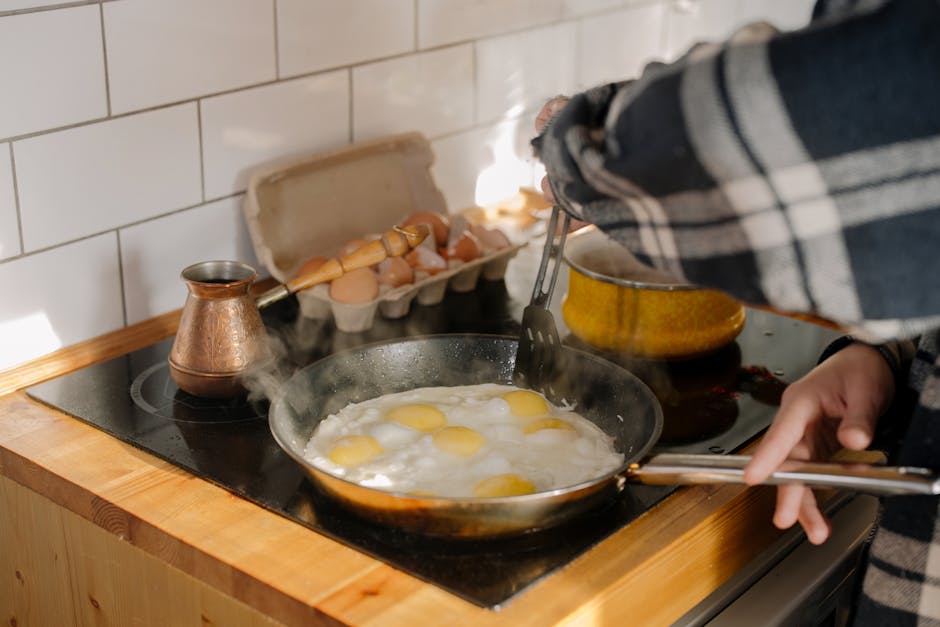
Start by melting about one tablespoon of high-quality unsalted butter in your 8-inch non-stick skillet over medium-low heat. Once the butter is bubbling—but before it turns golden—pour in your whisked eggs. Immediately begin to agitate the pan with your left hand while moving your spatula in a circular motion with your right hand. This is the most crucial phase. You are essentially creating a million tiny, soft curds rather than one single sheet. The goal is to reach a texture that looks like a loose, creamy porridge within about 60 to 90 seconds.
The Aggressive Agitation Phase
Keep moving the pan back and forth on the burner. The motion of the pan combined with the stirring of the spatula ensures that new liquid egg is constantly coming into contact with the heat source. If you stop moving, the eggs at the bottom will set too quickly, creating a tough crust. By keeping the mixture moving, you are maintaining a uniform temperature throughout the pan. As the mixture begins to firm up but still looks very wet on top, stop stirring and use your spatula to smooth the surface into an even layer.
Letting the Omelette Set
Once you have achieved that smooth, semi-liquid layer, stop agitating for about 10 to 15 seconds. This allows the very bottom of the omelette to form a thin, cohesive skin. This is the "shell" of your roll, and it needs to be strong enough to hold the soft, creamy interior curds inside. If you tip the pan slightly, the eggs should no longer be liquid, but they should certainly not be dry. You are looking for a state of "set but soft," which is the hallmark of a professional-grade French omelette.
The Art of the Curl
Now comes the moment of truth: the roll. Tilt the pan away from you at a 45-degree angle. Starting at the handle side, use your spatula to gently nudge the edge of the egg sheet toward the center. Begin rolling the omelette over itself, moving toward the far edge of the pan. This is where your technique with the spatula is paramount; you are folding the egg like a blanket, ensuring that the loose curds on the top are tucked inside the firmer outer layer.
The Final Tuck
As you reach the far edge of the pan, stop. You should now have a cigar-shaped cylinder of eggs. Use your spatula to gently tuck the loose end underneath the omelette, sealing it. If the omelette looks a bit messy, don't worry. You can use the edge of the pan and the spatula to nudge it into a perfectly smooth, symmetrical shape. A little bit of clarified butter brushed on the outside at the very end will provide that classic, glossy sheen that looks like it came straight out of a Paris bistro.
Handling and Serving
When you move the omelette to the plate, hold the pan handle with an overhand grip. Tilt the pan directly over your warmed plate, allowing the omelette to slide out, seam side down. If the fold is on the bottom, it will stay sealed and present a beautiful, smooth exterior. Garnish with a fresh sprinkle of minced chives and perhaps a tiny knob of cold butter on top, which will melt slowly into the eggs as you serve it.
"A French omelette is not cooked in the pan; it is cooked in the mind of the chef, who must anticipate the state of the proteins before they reach the point of no return."
Troubleshooting Common Failures
If your omelette is brown, your heat was simply too high. It is a common mistake to think that higher heat equals faster results, but with eggs, time is the only way to achieve tenderness. If your omelette is rubbery, you left it on the heat for too long or your eggs were over-whisked. If the omelette breaks when you roll it, you didn't allow the bottom layer to set properly, or you attempted the roll while the eggs were still far too liquid. Every mistake is a lesson in temperature control.
The "Dry" Omelette
A dry omelette often results from leaving the pan on the heat for even five seconds too long. Eggs have a massive amount of "carry-over heat." Even when you pull the pan off the burner, the residual heat in the pan and the egg proteins themselves will continue to cook. This is why you must pull the omelette from the pan when it looks slightly underdone—the last few seconds of cooking will happen on the plate as you prepare to serve it.
The "Stuck" Omelette
If your eggs are sticking to the pan, your non-stick coating may be compromised, or you didn't use enough fat. Don't be afraid to use a full tablespoon of butter; it acts as a non-stick barrier and provides essential flavor. If you are using an old, scratched-up pan, no amount of technique will compensate for the lack of a smooth surface. Invest in a high-quality, dedicated 8-inch non-stick skillet that is reserved exclusively for eggs.
Elevating the Experience with Garnishes
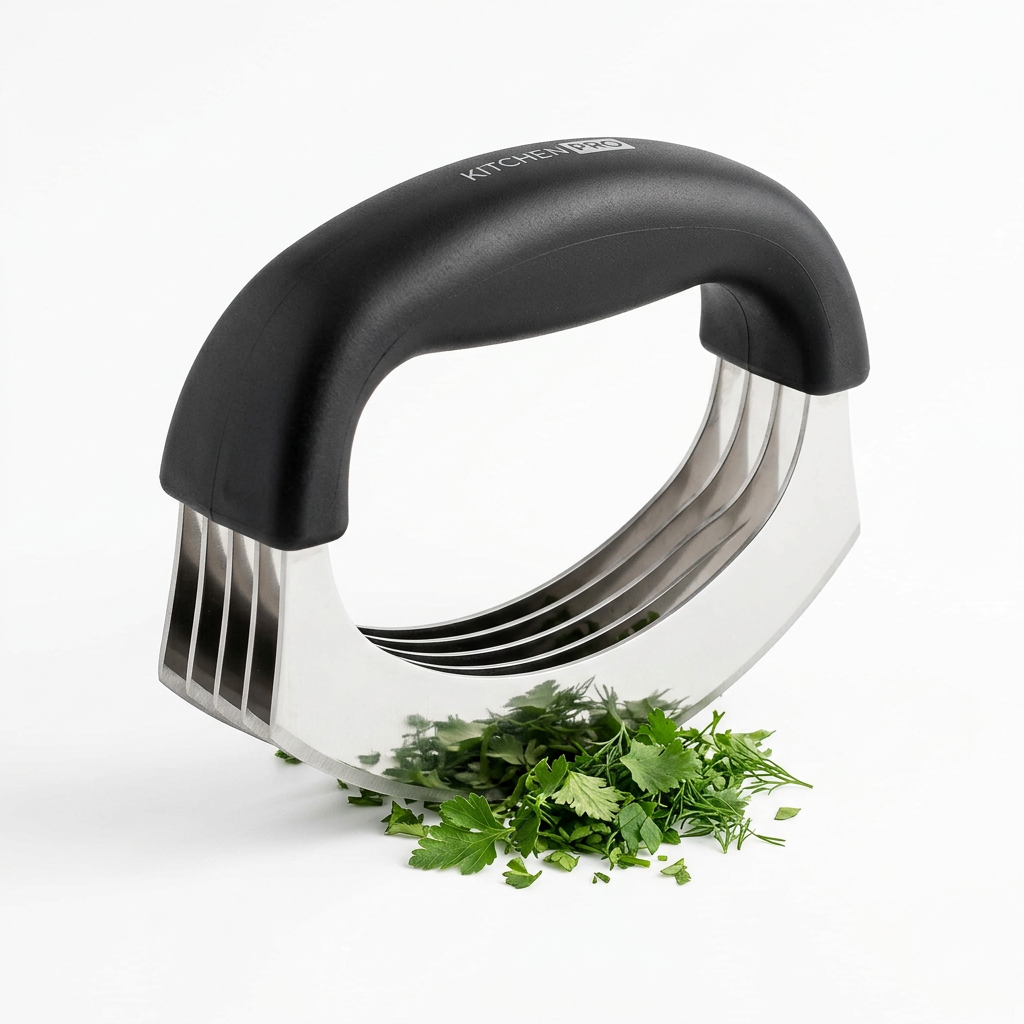
Once you have mastered the technique, you can begin to think about subtle ways to introduce flavor without compromising the texture. The classic Fines Herbes blend—a combination of parsley, chives, tarragon, and chervil—is the traditional pairing for a reason. These herbs have a delicate, fresh profile that cuts through the richness of the eggs and butter without overwhelming them. Add them only at the very last second before the roll begins to ensure they stay vibrant and green.
Compound Butters
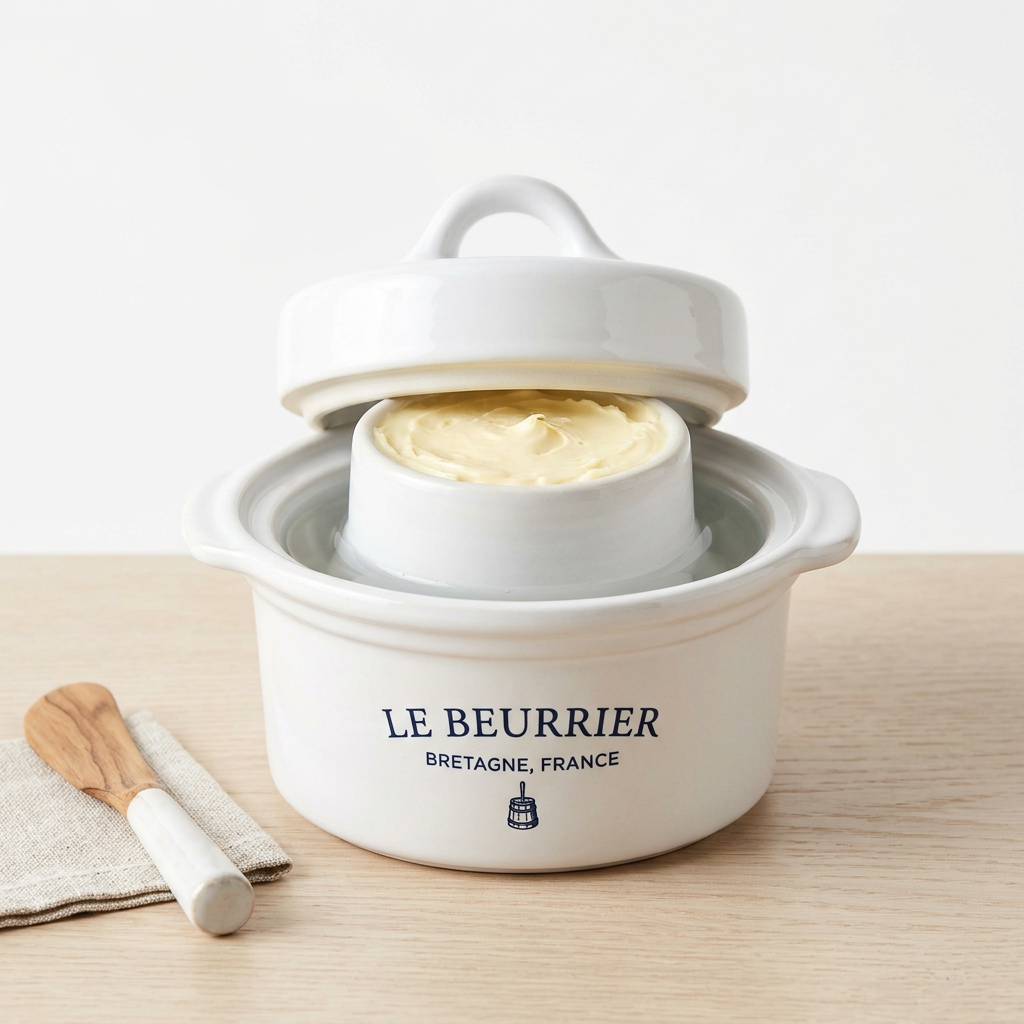
If you want to take your omelette to the next level, experiment with finishing it with a small amount of compound butter. A garlic-herb butter or even a touch of truffle butter can elevate a simple breakfast into a fine dining experience. Place the butter on top of the finished omelette right before you serve it, allowing it to pool and create a sauce-like consistency that coats every bite.
Proper Plating
A French omelette should be served on a warm plate. Cold ceramic will instantly kill the texture of your eggs, turning that beautiful baveuse center into something dense and unappealing. Simply run your serving plates under hot water and dry them thoroughly before sliding the omelette off the pan. It is these small, thoughtful details that separate a home cook from a true chef. Presentation is the final stage of the culinary process, and it sets the stage for the guest’s experience.
The Philosophy of the Omelette
At the heart of the French omelette is a philosophy of simplicity. We live in a world of complexity, where we are constantly bombarded with ideas for "hacks," shortcuts, and gimmicks. The omelette rejects all of that. It demands that you stand at the stove, pay attention to the sound of the butter, the smell of the eggs, and the tactile feedback of the spatula. It is a meditative practice that forces you to be present in the moment.
The Mastery of Time
Mastery in the kitchen is not about knowing a thousand recipes; it is about knowing how to execute a few things with absolute perfection. If you can cook a perfect French omelette, you have mastered heat control, you understand protein, and you have developed the hand-eye coordination required for high-level cooking. When you serve this dish to others, you aren't just serving food; you are serving your own patience, your discipline, and your respect for the craft.
Continuing the Practice
Do not be discouraged if your first ten attempts do not look like the ones in the magazines. Even in the world's most prestigious culinary schools, students spend weeks exclusively on egg work. Each time you crack an egg, you are learning. Each time you roll an omelette, you are building muscle memory. The path to perfection is paved with a few broken eggs and many hours of practice. Keep going until the movement feels as natural as breathing.
Conclusion
The pursuit of the perfect French omelette is a journey that never truly ends. Even the most seasoned chefs return to this dish to sharpen their senses and reconnect with the basics of their craft. You have now been equipped with the knowledge of thermal regulation, the physics of egg coagulation, and the precise techniques of the roll. The rest is entirely up to your commitment and your willingness to keep refining your process. Remember that the "Blame The Chef" philosophy is built on the belief that culinary success is rarely about luck—it is about preparation, patience, and the continuous desire to improve.
As you stand at your stove with your whisk and your pan, remember that the goal is not just a finished product; it is the process of getting there. Treat your ingredients with respect, keep your flame consistent, and always strive for that silky, golden finish. Whether you are cooking for yourself on a quiet Sunday morning or preparing a demonstration for friends, the French omelette remains the most elegant way to start any day. It is an honest dish, a humble dish, and ultimately, a powerful testament to the skill of the cook who prepares it with love and precision. Now, go forth and master the roll, and remember—if it doesn't come out perfectly the first time, you have the recipe, the techniques, and the time to try again. Happy cooking, and may your omelettes always be creamy, pale, and perfectly curled.
Get the Next Recipe
Weekly recipes, techniques, and gear picks — straight to your inbox.
