
Metric to US Conversion Chart for Cooking
Cooking is a language of precision, and much like any language, it is spoken in different dialects depending on where you are standing in the world. For the American home cook, the standard vocabulary revolves around cups, fluid ounces, and degrees Fahrenheit, but the global culinary stage—and many of the best cookbooks ever written—speaks in the language of the metric system. Navigating between grams, milliliters, and Celsius can often feel like trying to translate poetry while standing in the middle of a bustling, hot commercial kitchen. However, mastering these conversions is not just about avoiding errors; it is about liberating yourself from the rigid constraints of volumetric measurement and stepping into the more accurate world of mass-based cooking.
At "Blame The Chef," we believe that the kitchen should be a laboratory of creativity, but that creativity must be underpinned by a solid foundation of technical knowledge. When you rely solely on volume—measuring your flour by scooping it into a cup, for instance—you introduce a staggering margin of error that can ruin a delicate soufflé or leave a loaf of sourdough leaden and dense. By learning to toggle between the Imperial system and the metric system, you are essentially upgrading your internal culinary compass. This guide is designed to be your constant companion, a bridge between the American kitchen you know and the scientific accuracy that defines professional pastry work and high-level gastronomy.
We often hear home cooks lament that they don't have the "baker’s touch," but more often than not, it is simply a matter of inconsistent measurements rather than a lack of intuition. Whether you are scaling up a complex dinner party recipe found in a French culinary tome or simply trying to get your oven calibration dialed in for a precise roast, the ability to convert metrics on the fly is a superpower. We will dismantle the myths surrounding conversions, provide you with the exact ratios you need to commit to memory, and show you why a high-quality digital scale will quickly become the most important tool in your arsenal. Let us strip away the confusion and replace it with the calm, methodical confidence that every great chef possesses.
The Foundation of Accuracy: Mass vs. Volume
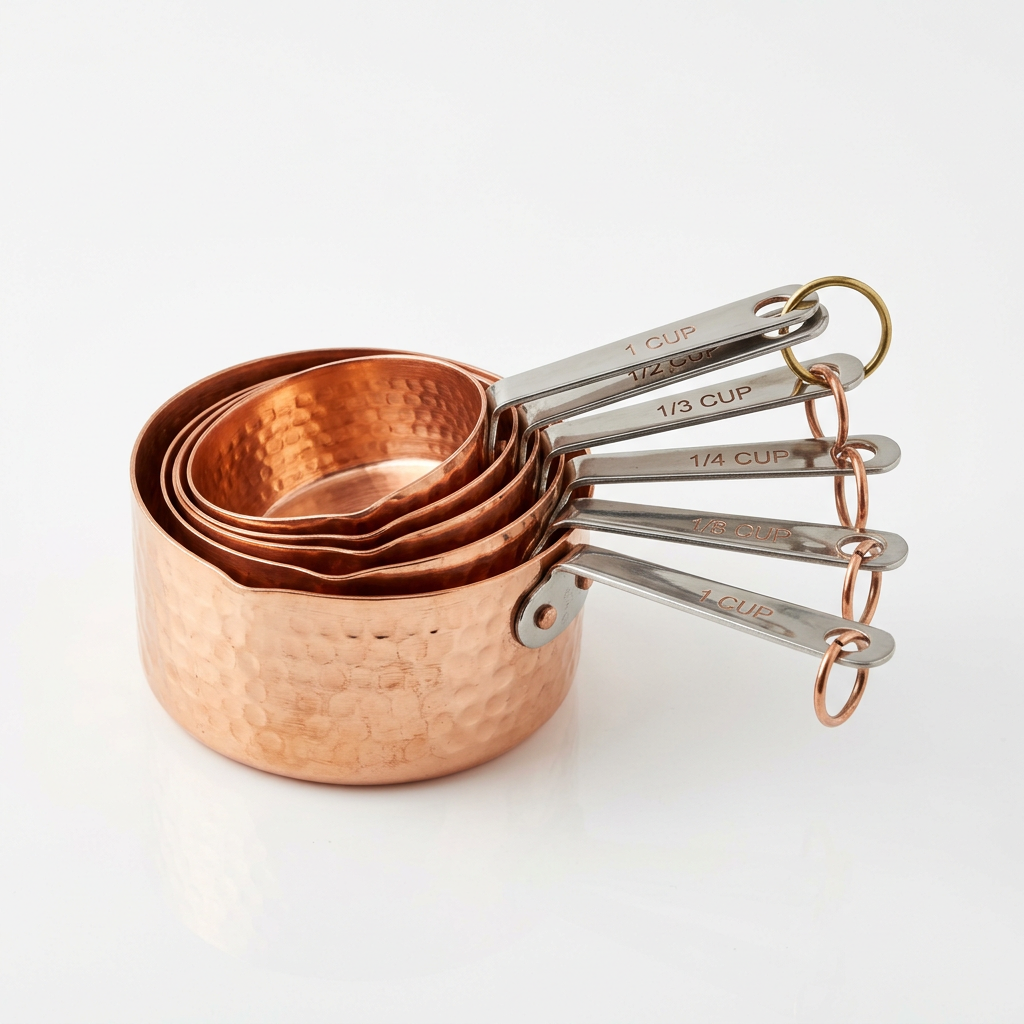
The most significant shift a home cook can make is the move from measuring ingredients by volume—using cups and spoons—to measuring by mass, or weight. In the United States, we are conditioned to think in terms of how much space an ingredient occupies, but space is deceptive. A cup of sifted flour can weigh significantly less than a cup of flour that has been packed down in the bag. When you use a digital scale, you remove the variables of human error, atmospheric pressure, and even how firmly you shake the measuring cup. Weight is an absolute constant, and in the world of professional baking and precise cooking, constants are what prevent catastrophic culinary failures.
When working with liquids, the transition is slightly more intuitive because milliliters and fluid ounces share a physical relationship. However, the density of a liquid—think of the difference between water, honey, and heavy cream—means that even though they might look the same in a measuring cup, their weight will differ drastically. Understanding that 1 milliliter of pure water weighs almost exactly 1 gram is the cornerstone of metric success. This simple relationship allows you to calculate the weight of any water-based liquid instantly, providing you with a level of precision that volumetric tools simply cannot match.
Why You Need a Scale
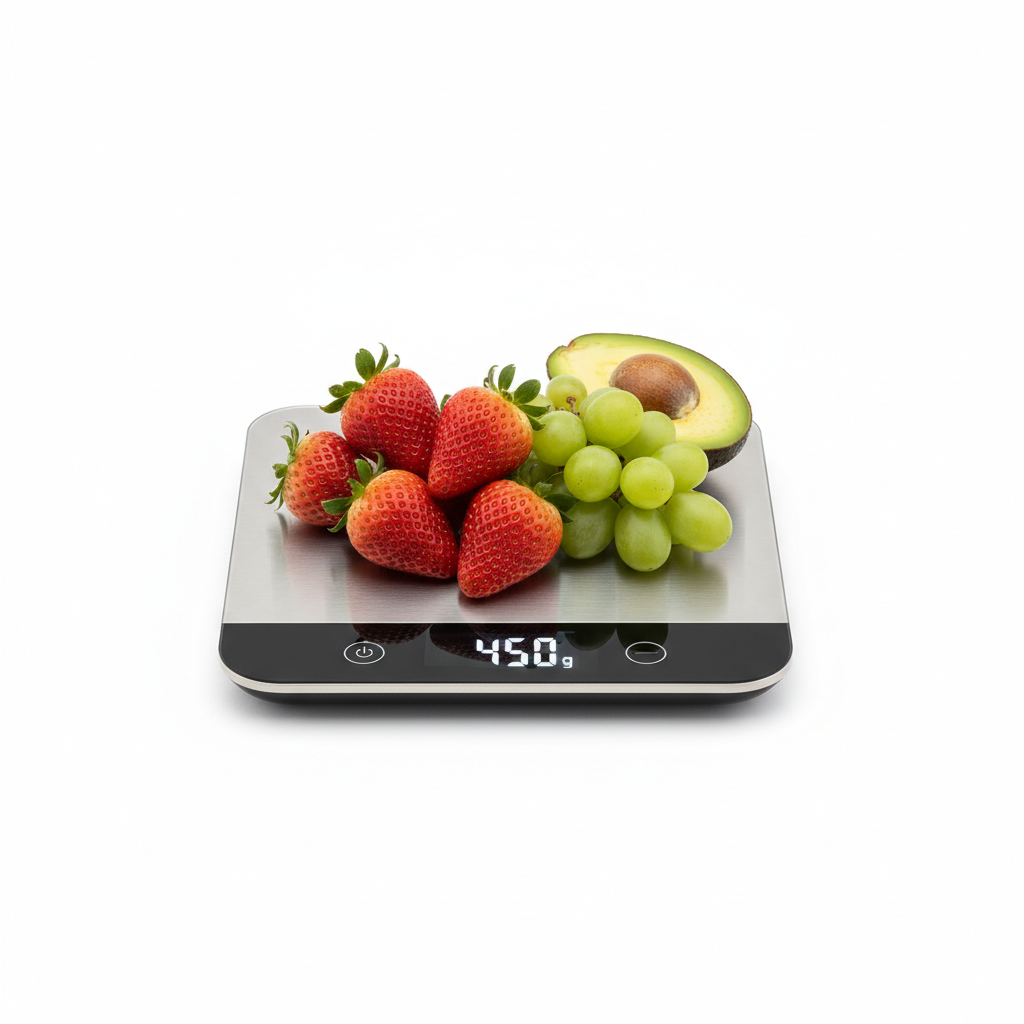
If you take nothing else away from this guide, let it be this: invest in a reliable digital scale that can toggle between grams and ounces. A good scale should be thin, easy to clean, and capable of weighing up to at least 5 kilograms. Look for a model with a tare function, which allows you to reset the scale to zero after placing a container on it, enabling you to add ingredients sequentially without doing mental gymnastics. Professional chefs rarely look at a cup measure; they look at the readout on their scale, and your pantry and recipes should be treated with the same level of respect.
"Cooking is at once child's play and adult joy. And cooking done with care is an act of love, but cooking done with precision is an act of professional mastery."
Mastering the Ratio: Grams, Milliliters, and Ounces
To be fluent in both worlds, you need to understand the fundamental conversions that appear most frequently in your daily cooking. While there are thousands of unit combinations, about 90% of your recipe conversions will revolve around a specific set of numbers. Remember that 1 ounce is approximately 28.35 grams, though in most practical cooking applications, rounding to 28 or even 30 grams—depending on the scale's sensitivity—is perfectly acceptable. Precision is key, but culinary reality rarely demands an accuracy beyond a single decimal point.
When it comes to temperature, the conversion is a bit more mathematical, but it follows a consistent pattern. The difference between Fahrenheit and Celsius is defined by their freezing and boiling points: 32°F and 212°F versus 0°C and 100°C. To convert Fahrenheit to Celsius, subtract 32 from the Fahrenheit temperature, multiply by 5, and divide by 9. Conversely, to go from Celsius to Fahrenheit, multiply the Celsius temperature by 1.8 and add 32. Keeping a small cheat sheet near your oven—or just memorizing key benchmarks like 180°C being roughly 350°F—will save you immense frustration when working with European recipes.
The Cheat Sheet for Daily Use
1 cup* of water is roughly 240 milliliters.
1 tablespoon* is approximately 15 milliliters.
1 teaspoon* is approximately 5 milliliters.
1 pound* of dry weight is approximately 454 grams.
350°F (the standard baking temperature) is approximately 175°C to 180°C*.
The Art of Scaling Recipes
One of the greatest benefits of the metric system is the ease with which you can scale recipes. If you are preparing a dish for a family of four, but suddenly need to serve twelve for a holiday dinner, scaling up by volume can lead to errors that compound as you add more ingredients. When you use the metric system, you are essentially working with base-10 mathematics. If your original recipe calls for 250 grams of flour, you simply multiply by your scaling factor, moving the decimal point accordingly. This eliminates the awkwardness of trying to calculate "three-quarters of a cup plus two tablespoons" multiplied by three.
When you scale up, remember that cooking times and evaporation rates do not always scale linearly. For example, if you are braising a larger roast, the surface area to volume ratio changes, meaning you may need a slightly lower heat for a longer period to ensure the interior reaches the desired internal temperature without overcooking the exterior. This is where the thermometer becomes as important as your scale. Always use a high-quality probe thermometer to check the internal temperature, which is the only reliable way to judge doneness, regardless of the scale of your recipe.
Tips for Successful Scaling
"A recipe is merely a suggestion, but the laws of chemistry are a mandate. If you respect the science of the ingredient, the flavor will follow."
Temperatures and Heat Management
Temperature management is the invisible hand of the kitchen. In the United States, we obsess over degrees Fahrenheit, but the rest of the world works in Celsius. When you are sous-vide cooking, or perhaps tempering chocolate, a difference of just two or three degrees can represent the difference between success and a ruined batch. Understanding the specific thermal threshold of your ingredients is critical. For instance, most home ovens fluctuate significantly, so knowing your conversion allows you to place a secondary thermometer in the oven and adjust your dial to hit the true target temperature, whether that is 200°C for a crusty loaf or 55°C for a perfectly cooked medium-rare steak.
Professional kitchens often use "low and slow" techniques where the precision of the degree is paramount. When you convert a European recipe that calls for an oven setting of 160°C, you are looking at roughly 320°F. If your oven doesn't have a 320 setting—most dial ovens jump from 300 to 325—you now have the knowledge to decide whether to lean toward the lower or higher end based on the delicate nature of the dish. This level of granular control is what separates the home cook who follows instructions from the chef who understands the why behind the process.
Understanding Oven Benchmarks
150°C (300°F):* Ideal for slow-roasting meats or drying out meringues.
180°C (350°F):* The gold standard for most cakes, cookies, and general baking.
200°C (400°F):* The starting point for roasting vegetables and achieving a good char.
220°C (425°F):* Necessary for high-heat searing and initial bread oven spring.
Handling Moisture and Hydration
One of the most complex areas of cooking involves hydration, especially in the realm of baking. Whether you are making a sourdough baguette or a simple pizza dough, the ratio of water to flour—the baker's percentage—is the most critical metric in the kitchen. In the metric system, we calculate hydration by weight, not volume. If you have 500 grams of flour and 350 grams of water, you have a 70% hydration dough. This is a universally understood metric that allows bakers from Tokyo to New York to communicate exactly how a dough should behave, feel, and bake.
When you try to convert these percentages using cups, you are doomed to failure. A cup of water and a cup of flour will never give you a consistent percentage because of the variation in density mentioned earlier. By sticking to grams, you gain total control over the texture of your crumb, the crispness of your crust, and the overall reliability of your bakes. If a recipe says "add more flour until the dough is smooth," ignore it. Add exactly the amount that hits your hydration target, and rely on your technique to develop the gluten.
The Role of Precision Tools
Digital Gram Scale:* Your most important investment; look for 0.1g increments for baking.
Instant-Read Thermometer:* Essential for checking internal doneness of proteins and dough.
Graduated Cylinders:* While rare in home kitchens, they are the gold standard for measuring small liquid quantities with absolute accuracy.
The Professional Mindset: Troubleshooting Conversions
Even with the best tools and conversion charts, errors occur. Perhaps you misread a source, or your scale wasn't properly tared. The sign of a great cook is not someone who never makes a mistake, but someone who knows how to troubleshoot and recover. If you accidentally added too much flour to your dough, you must balance it by adding a proportional amount of water, keeping the hydration percentage intact. This is only possible if you are tracking your ingredients by weight; if you are working with cups, you are essentially guessing at the ratios, which rarely ends well.
Always keep a "culinary log" if you are feeling ambitious. Record the weights of your ingredients, the oven temperature, and the results. If a recipe turns out perfectly, you will have a permanent record of the exact metric measurements that led to that success. If it fails, you can look back and see if you perhaps swapped a milliliter measurement for a fluid ounce or if your oven calibration was off. This scientific approach to cooking turns every mistake into a lesson and every success into a repeatable standard.
"The kitchen is a place where intuition meets discipline. When you master the metrics, you free your intuition to focus on flavor, texture, and presentation, rather than worrying about whether your measurements are accurate."
Final Thoughts: The Metric Advantage
Transitioning to a metric-first approach in your kitchen might feel daunting at first, but it is a transition that will pay dividends for the rest of your culinary life. When you stop worrying about how many teaspoons fit into a tablespoon and start looking at the absolute mass of your ingredients, you begin to see recipes differently. You stop seeing them as a list of arbitrary instructions and start seeing them as a logical set of chemical and physical interactions. This shift in perspective is what empowers you to improvise, to scale, and ultimately, to create.
Don't be afraid to keep a physical copy of a conversion chart taped inside your cupboard. Even the most seasoned professional chefs have moments where they need to confirm a conversion, especially when switching between regional styles of cooking. Over time, these numbers will settle into your muscle memory. You will eventually know exactly what 50 grams of butter looks like without looking at the scale, and you will understand the relationship between Fahrenheit and Celsius without thinking twice.
Ultimately, cooking is about the joy of feeding yourself and those you love. By removing the friction of inaccurate measurements, you are removing the barriers to that joy. You are creating a kitchen environment that is efficient, precise, and deeply satisfying. So, put down the measuring cups, pick up your scale, and embrace the metric system. It is a small change that will fundamentally elevate every single meal you prepare, from the simplest weekday supper to the most complex pastry centerpiece. Happy cooking, and remember: if the dish fails, you can blame the ingredients, but if it succeeds, you can certainly take the credit.
Conclusion
We have explored the vital importance of moving toward a metric-based kitchen, emphasizing the shift from volumetric measurement to the absolute precision of weight. By focusing on grams, milliliters, and Celsius, you are adopting a language that is shared by chefs across the globe. You now understand the necessity of a reliable digital scale, the relationship between mass and density, and the power of scaling your recipes using simple, base-10 mathematics. These skills are not just technical flourishes; they are the bedrock of culinary success.
As you move forward, challenge yourself to abandon the cups and spoons for at least one week of cooking. Measure your flour, your liquids, and your fats by weight. Pay attention to the internal temperatures of your proteins and the precise oven settings. You will notice a shift in your consistency—your cakes will rise with more regularity, your meats will be cooked to the perfect degree of doneness, and your frustration levels will plummet. The goal of this guide was to provide you with the tools to become a more confident and accurate home cook, and we hope you feel empowered to take these principles into your kitchen starting today.
Remember that excellence in the kitchen is a journey, not a destination. There will always be new techniques to master and new ratios to explore. Whether you are perfecting a classic sourdough or attempting a delicate French pastry, the logic of the metric system will remain your most trusted ally. Keep your scale clean, keep your thermometer handy, and never stop questioning the "why" behind your recipes. The difference between a good cook and a great chef is often nothing more than the commitment to precision. Now, head into your kitchen, turn on that scale, and start creating something magnificent. The world of precision cooking is waiting for you, and we have no doubt you will excel in every dish you prepare. Your journey into the professional world of cooking begins with these numbers, and we are thrilled to have guided you through the conversion. Good luck, and keep those burners hot.

Get the Next Recipe
Weekly recipes, techniques, and gear picks — straight to your inbox.
