
Professional Knife Skills: Techniques Every Home Cook Should Master
The kitchen is often described as the heart of the home, but for those who aspire to cook with real intention, it is also a workshop of precision and discipline. Many home cooks approach their meal preparation with a sense of trepidation, viewing the cutting board as a place where chores happen rather than where artistry begins. By mastering the fundamental mechanics of knife work, you transition from someone who merely assembles ingredients to someone who understands the physical texture and structural integrity of what they are serving. Professional chefs spend years refining their grip, their stance, and their rhythm, not just for speed, but to ensure that every vegetable, protein, and herb is processed in a way that optimizes flavor and cooking time.
When you develop professional-grade knife skills, the kitchen becomes a significantly safer, more efficient, and infinitely more creative space. It is a common misconception that speed is the primary goal of professional cutting; in reality, the focus is always on consistency and safety. When every piece of a mirepoix is cut to the same dimensions, they release their sweetness into a stock or sauté simultaneously, preventing the uneven cooking that often plagues amateur dishes. You will find that as your confidence grows, the mental load of cooking decreases, allowing you to focus on seasoning, temperature control, and the delicate balance of flavor profiles rather than struggling with a stubborn onion.
Embarking on the journey to improve your knife technique is not about mimicking high-pressure restaurant environments, but about respecting the ingredients you bring into your home. A dull knife is significantly more dangerous than a sharp one because it requires excessive force, which inevitably leads to slipping and injury. Conversely, a razor-sharp blade that moves with intentional, fluid motions allows for clean cuts that keep cell walls intact, preserving juices in meats and the crunch in fresh produce. As we dive into these techniques, I encourage you to slow down, focus on your body mechanics, and embrace the rhythm of the blade—your transition from a home cook to a culinary technician starts right here.
The Foundation of Control: Grips and Stance
Before you ever make the first slice into a carrot or an onion, you must establish the correct physical relationship with your equipment. Most home cooks use a "handle grip," holding the knife by the handle as if it were a hammer. This provides very little control and forces the wrist to do all the work, leading to fatigue and poor accuracy. Instead, professional chefs use the pinch grip, which involves placing your thumb and index finger directly on the blade of the knife, just ahead of the handle, while your remaining three fingers wrap securely around the handle itself.
Your posture is equally important, as it dictates your stability and the range of motion in your shoulders. Stand with your feet shoulder-width apart, keeping your core engaged and your body positioned perpendicular to the cutting board. This allows you to stand comfortably for hours without lower back pain, while also keeping your body safely away from the line of fire. Always ensure your cutting board is stable; if it slides on your counter, place a damp kitchen towel underneath it to lock it firmly in place. This simple, often overlooked step is the hallmark of a prepared professional.
The Claw Technique
The claw technique is the most critical safety habit you will ever learn. When holding the item you are cutting, tuck your fingertips inward toward your palm so that your knuckles are facing the blade. Use your knuckles as a guide for the side of the knife blade. Because your fingertips are tucked safely away, the knife cannot possibly make contact with them, allowing you to move with confidence and speed. This technique may feel awkward for the first few days, but with enough repetition, it will become an subconscious reflex that protects you in any kitchen environment.
"A sharp knife is a chef's best friend, but a controlled hand is their true superpower. When you master the claw, you master the board."
The Anatomy of the Cut: Essential Shapes
The culinary world relies on a standard language of shapes to ensure that food cooks uniformly. Whether you are preparing a rustic stew or a refined salad, knowing your cuts will drastically improve your consistency. The most common cuts you will encounter include the dice, the julienne, and the brunoise. These are not just aesthetic choices; they are functional. A smaller cut increases the surface area, meaning the vegetable will cook faster and integrate more thoroughly into sauces or pan juices, whereas larger, uniform cuts are better for long-simmering dishes where you want the produce to retain some structural integrity.
When working with vegetables, consistency is king. If you are preparing a classic mirepoix (a mix of onions, carrots, and celery), aiming for a 1/4-inch dice ensures that every piece caramelizes at the same rate. If you have some pieces that are 1/2-inch and others that are 1/8-inch, the smaller pieces will burn before the larger ones are even softened. Take the time to square off your vegetables by trimming the rounded edges into a rectangle; this creates a stable base that prevents the ingredient from rolling around on the cutting board, which is a common cause of accidents.
Mastering the Julienne and Brunoise
The julienne is essentially a matchstick cut, typically measuring 1/8-inch by 1/8-inch by 2 inches. To achieve this, slice your vegetable into uniform thin slabs, then stack those slabs and slice them into thin strips. If you take that julienne and cut it crosswise, you create the brunoise, which is a tiny, precise cube that is perfect for garnishes or delicate sauces. These cuts require a sharp knife and patience, but they are essential for elevating your cooking from domestic to professional.
Blade Maintenance: The Art of the Honing Steel
A professional chef understands that the cutting edge is the most important component of the kitchen. However, many home cooks confuse honing with sharpening. Sharpening is the process of removing metal from the blade to create a new edge, usually done with a whetstone or an electric sharpener once every few months. Honing, on the other hand, is the process of realigning the microscopic teeth of the blade's edge, which get bent out of shape through daily use. You should hone your knife before every single use to maintain a straight, effective edge.
To hone your knife, hold your honing steel vertically, with the tip resting firmly on the cutting board. Place the heel of your knife against the top of the steel at a 20-degree angle. With light, consistent pressure, draw the blade down the steel toward the handle, moving from the heel of the knife to the tip. Repeat this motion on the other side of the blade, maintaining that 20-degree angle the entire time. Do this five to ten times on each side, and you will notice an immediate difference in how the knife glides through an onion or a bell pepper.
The Paper Test
If you are unsure whether your knife is sharp enough, perform the "paper test." Hold a piece of printer paper in the air and try to slice through it with your knife. If the blade tears the paper rather than slicing through it cleanly, it is time to have your knife professionally sharpened or to spend some time on your whetstone. A dull knife creates friction, which crushes the cells of your food instead of slicing through them. This is why a dull knife makes onions make you cry—you are crushing the onion cells, releasing more of the volatile compounds that irritate your eyes.
The Chef's Knife: Your Most Versatile Tool
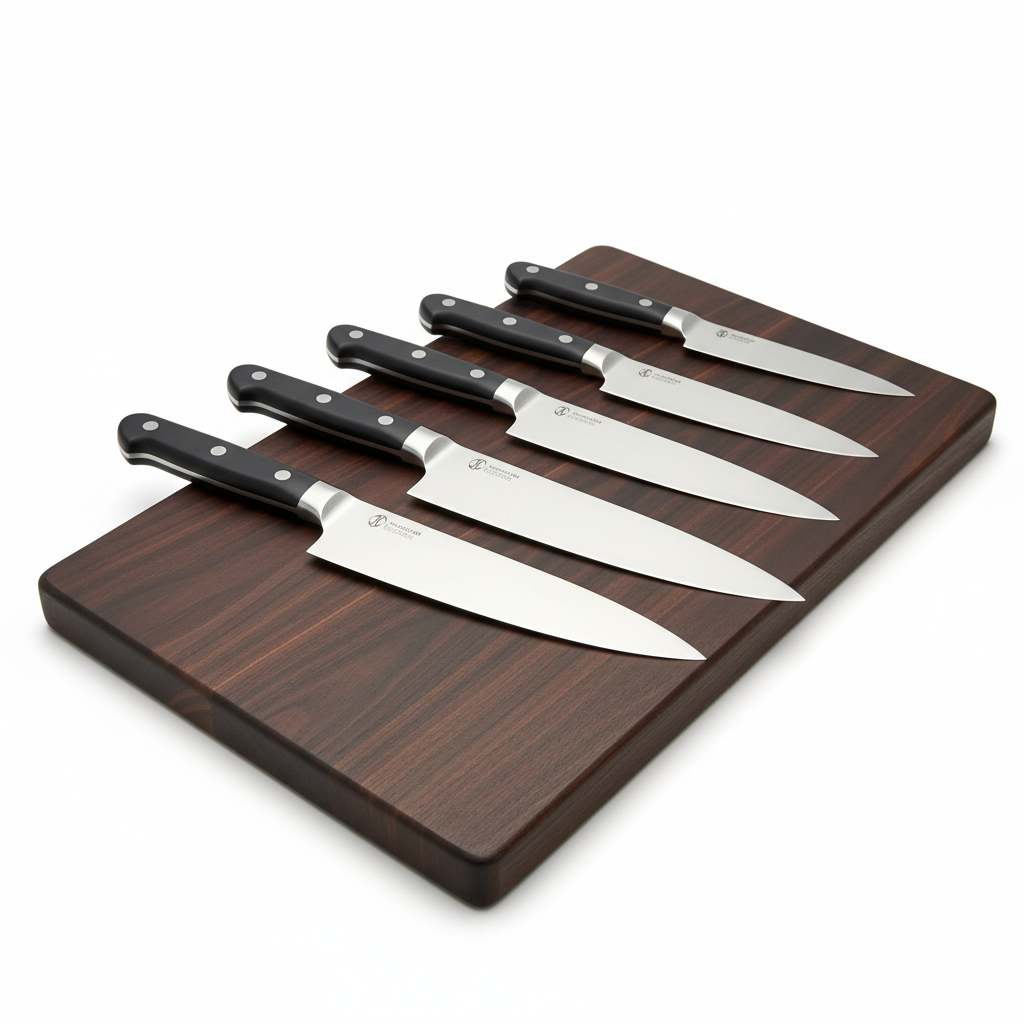
While many home cooks invest in large, complex knife blocks filled with specialty tools they never use, a professional kitchen usually only requires three knives: a chef's knife, a paring knife, and a serrated bread knife. The chef's knife, usually between 8 and 10 inches, is the workhorse. You should be able to perform 90% of your prep work with this single tool. When purchasing a knife, prioritize how the handle feels in your palm and the balance of the blade. A well-balanced knife should feel like an extension of your arm, not a heavy object you have to wrestle with.
When cutting soft items like tomatoes or herbs, you may be tempted to use a sawing motion. This is a mistake. A sharp chef's knife should rely on the weight of the blade and a "rocking" or "sliding" motion. For herbs, gather them into a tight bundle and use the rocking motion of the chef's knife, keeping the tip of the blade pinned to the board. For protein, such as chicken breast or steak, always cut against the grain to ensure the final bite is tender. If you follow the muscle fibers with your blade, you are making the meat harder to chew; cutting perpendicular to those fibers shortens them, yielding a much better texture.
Maintaining Edge Longevity
Never, under any circumstances, place your quality knives in the dishwasher. The heat, the moisture, and the clanging against other utensils will destroy the edge of your blade and weaken the handle material, especially if it is wood. Always wash your knives by hand with warm, soapy water immediately after use and dry them thoroughly before putting them away. Storing them in a knife block or on a magnetic wall strip is superior to tossing them into a drawer, where the edges will bounce against other metal objects and dull instantly.
"Your tools are an extension of your intent. A clean, sharp knife isn't just about efficiency—it is about the respect you show your ingredients and the process of creation itself."
Advanced Techniques: Deboning and Trimming
As you gain confidence with standard vegetable prep, you can start exploring the more advanced skills of trimming and deboning proteins. This is where you can save a significant amount of money by buying whole chickens or large cuts of meat rather than pre-cut portions. For instance, breaking down a whole chicken requires you to identify the joints where the connective tissue is softest. By using the tip of your knife to navigate these joints, you can remove the breasts, thighs, and wings with minimal waste, leaving you with a carcass that is perfect for making homemade chicken stock.
When trimming fat or silver skin from a piece of beef or pork, use a boning knife or a paring knife held with a firm grip. Slip the edge of the blade between the meat and the layer of fat or connective tissue, and use a slight upward angle to slice away the excess. You want to move slowly, using long, steady strokes. If you try to hack away at the meat, you will end up removing too much of the lean protein, which is an unnecessary waste of resources. Precision here is key to maximizing your yield.
The Importance of the "Fish Eye"
When trimming vegetables or preparing proteins, always look for the "fish eye," which refers to the center of a junction or a connective point. In butchery, hitting the joint correctly feels like the knife is falling through space because there is no bone resistance. If you feel resistance, stop. Adjust your angle. A professional chef never forces the blade through bone or hard gristle; they navigate around it. Learning these anatomy-based shortcuts will make you faster and more accurate, and your preparation will look indistinguishable from a high-end restaurant service.
The Role of Rhythm and Flow
Culinary success is often dictated by the "mise en place" philosophy, which means "everything in its place." Before you begin cutting, clear your board of debris, organize your ingredients, and ensure you have a "garbage bowl" nearby for scraps. Having to walk back and forth to the trash can while you are in the middle of a delicate task disrupts your rhythm and slows down your service. A professional kitchen is a quiet, rhythmic place where the sound of the knife hitting the wood is a consistent, steady beat.
Try to practice your cuts with a focus on metronome-like consistency. Do not worry about speed. If you focus on making each slice the exact same width as the one before, speed will naturally follow as your muscle memory develops. Practice by cutting a single onion into a perfect dice three times a week. It costs pennies, but the experience you gain is priceless. Over time, you will notice that your hands move with a fluid grace that requires very little conscious thought, allowing you to focus entirely on the sensory experience of cooking.
Managing Waste
A hallmark of a professional is how they treat their waste. Vegetable peels, onion ends, and herb stems are not "trash"—they are the foundation for flavor. Keep a large freezer bag in your refrigerator dedicated to vegetable scraps. Once the bag is full, simmer these trimmings in water for an hour to create a flavorful, zero-cost stock. By viewing your prep process as a circular system, you reduce your environmental footprint while simultaneously building a pantry of high-quality, homemade flavor enhancers.
Final Thoughts: The Path to Mastery
Mastering knife skills is a journey that lasts a lifetime. Even the most seasoned executive chefs find themselves learning new techniques, adjusting their grip, or refining their process after decades in the kitchen. Do not be discouraged if your first attempts at a brunoise look uneven or if your julienne is more of a ragged mess; the goal is continuous improvement, not immediate perfection. Every time you pick up your knife with the intention of practicing these techniques, you are investing in your own capability as a cook.
Remember that the kitchen is a place of joy. While we emphasize precision and technique, these are simply tools to help you create better food for the people you love. As your technique improves, you will find that you are more relaxed, more organized, and more adventurous in the recipes you choose to tackle. You will no longer see a long list of prep work as a barrier to entry, but as a soothing, meditative process that prepares you for the act of cooking itself. Keep your blades sharp, your station clean, and your focus on the rhythm of the board.
The skills we have discussed—the pinch grip, the claw, the maintenance of a sharp edge, and the consistency of your cuts—are the building blocks of every great meal you will ever prepare. They are the invisible forces that turn simple, raw ingredients into harmonious, delicious plates of food. Stay patient with yourself, celebrate the small victories of a perfect dice or a clean cut of meat, and always remember that every professional chef started exactly where you are today. With the right techniques and a consistent practice, you are well on your way to claiming the title of chef in your own home. Enjoy the process, and may your knives always remain sharp and your cuts consistently precise.


Get the Next Recipe
Weekly recipes, techniques, and gear picks — straight to your inbox.
