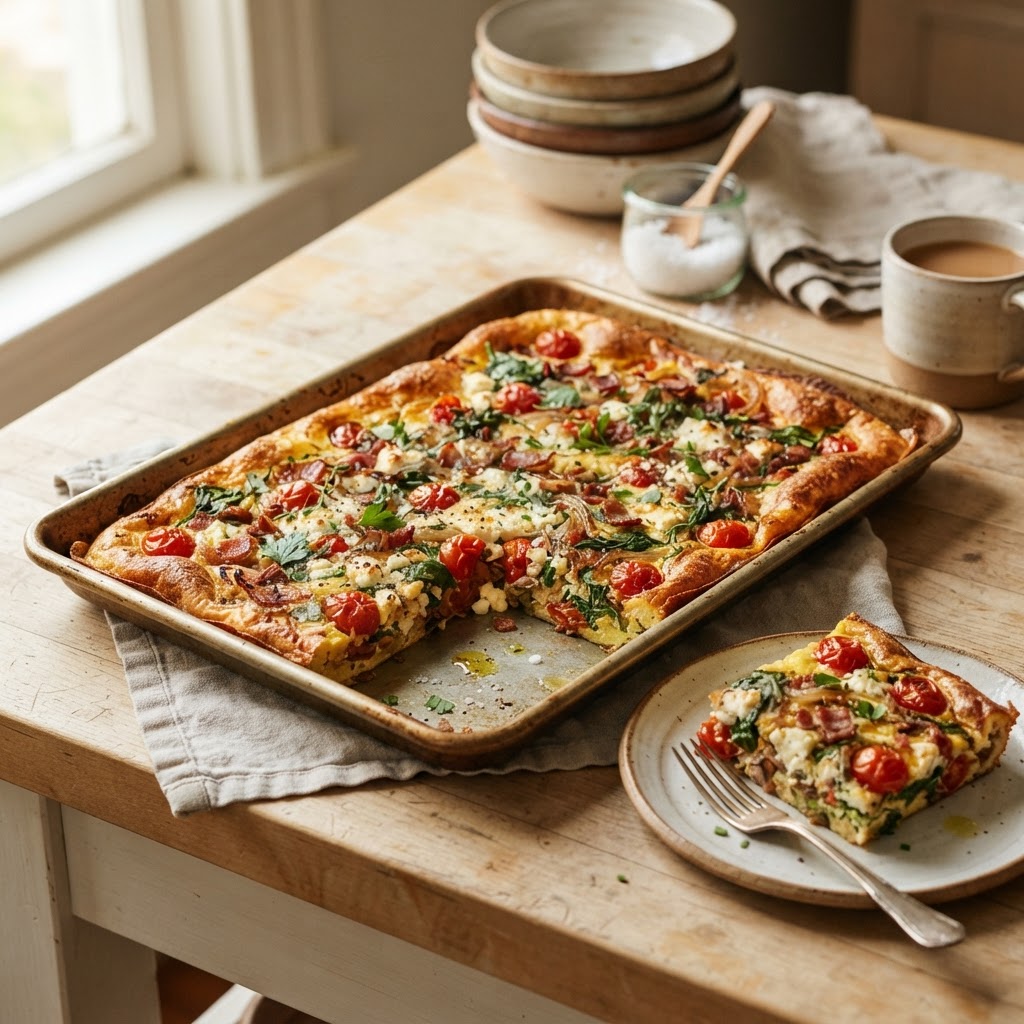
Savory Sheet Pan Frittata: A One-Pan Recipe for Busy Mornings
Creating a frittata can often feel like a culinary challenge, especially during busy mornings when time seems to elude us. Picture the aroma of a savory omelette wafting through your home as you breeze past the kitchen, juggling the demands of breakfast, a bustling family, or the ever-present clock. Thankfully, there's a solution—savory sheet pan frittata. This dish not only simplifies the breakfast-making process but also allows you to conveniently serve a nutritious, hearty meal that everyone can enjoy. Instead of standing over the stove whisking eggs, you can set everything in a single pan and let the oven work its magic, freeing you up to attend to other morning rituals.
One of the greatest benefits of a sheet pan frittata is its versatility. It’s an open invitation to use whatever ingredients you have on hand, making it perfect for cleaning out the fridge. Whether you have leftover vegetables from yesterday's dinner or some cheese loitering in the back of the fridge, almost anything can be added to this mix. Adding seasonal vegetables will also not only enhance the flavor profile but can provide a gorgeous array of colors that make your frittata not only delicious but visually appealing as well.
Moreover, this dish embraces the concept of meal prep. You can whip it up over the weekend to ensure that quick breakfasts are easily accessible during the week. Simply reheat slices or serve it cold—yes, frittatas are excellent at any temperature! This dish can easily become a staple in your breakfast rotation by mastering a few basic techniques and understanding the science of egg cooking. So gather your ingredients, roll up your sleeves, and let's dive into the process of making a sheet pan frittata that everyone will love.
Understanding Frittatas: A Brief Overview
Before we jump into the actual recipe, it’s essential to understand what makes a frittata unique compared to other egg dishes. A frittata is essentially an Italian dish that began as an egg-based meal that could be easily prepared in one pan. The primary characteristic that distinguishes a frittata from an omelette or quiche is its cooking method and texture.
The Cooking Method
Unlike an omelette, which is cooked on the stovetop and typically folded over fillings, a frittata is cooked slowly on low heat, allowing it to set evenly. The ingredients are mixed into the egg mixture, rather than being layered in, as you would with a quiche. Once combined, the frittata is usually finished in the oven, giving it a fluffy, yet firm texture that holds together well when sliced.
Texture and Flavor Profile
The key to achieving that perfect frittata lies in understanding egg chemistry. Eggs are made up of proteins that coagulate upon cooking. When cooked slowly, as in a frittata, these proteins form bonds that create a custard-like texture. This is why low and slow is the mantra for successful frittatas; you’re not after a rubbery texture. By adding different ingredients, flavors can complement one another, creating a harmonious dish.
Frittata vs. Omelette vs. Quiche
Understanding these distinctions not only enhances your appreciation of the frittata but also gives you insight into the kinds of techniques that will yield the best results.
The Perfect Base: Eggs and Dairy
Selecting the right eggs and dairy is the foundation for crafting an outstanding frittata. While this dish is quite forgiving, using high-quality ingredients elevates the final product.
Choosing the Right Eggs
Eggs are not just a source of protein; they're the heart of any frittata. When choosing eggs, consider:
Dairy Options
The addition of dairy adds richness and creaminess to frittatas, creating a luscious mouthfeel. Here are your options:
Ratios Matter
A good rule of thumb for egg to dairy ratio is roughly six eggs to a quarter cup of dairy. This ratio will yield a fluffier, creamier consistency.
Ingredients Galore: Fillings and Flavorings
What makes a sheet pan frittata really shine are the fillings. Feel free to think outside the box; the filling choices are practically endless.
Vegetables
Include a variety of vegetables to boost nutrition and flavor. Some favorites include:
Proteins
Incorporating protein adds vitality and zest to your frittata. Here are a few popular protein choices:
Herbs and Spices
Don't forget to flavor your frittata with fresh herbs and spices. Some complementary choices include:
Step-by-Step Guide to Making Savory Sheet Pan Frittata
Now that we've covered the basics, let’s get into the nitty-gritty of preparing your savory sheet pan frittata. Follow this systematized guide for incredible results!
Step 1: Gather Your Ingredients
To start, you’ll need:
Step 2: Preheat the Oven
Set your oven to 375°F (190°C). Preheating ensures that your frittata cooks evenly and the edges begin to set properly without overcooking the center.
Step 3: Prepare Your Sheet Pan
Line a rimmed sheet pan with parchment paper for easy removal and cleaning. If the pan is nonstick, ensure it is lightly greased to prevent sticking.
Step 4: Sauté Vegetables
In a skillet, heat a tablespoon of olive oil over medium heat. Add the chopped vegetables and cook until slightly softened—this usually takes about 5-7 minutes. If using protein, add it in the last couple of minutes to warm through. Remove from heat and let cool.
Step 5: Whisk Eggs and Dairy
In a large mixing bowl, whisk together the eggs, dairy, and a generous pinch of salt and pepper. This process should take about a minute or until the mixture is well-blended and frothy.
Step 6: Combine and Pour
Fold in your sautéed vegetables and protein to the egg mixture until evenly incorporated. You can mix in half of your cheese if desired. Pour the entire mixture into the prepared sheet pan, ensuring even distribution.
Step 7: Bake
Place the pan in the preheated oven and bake for approximately 20-25 minutes, or until the eggs are set in the center and slightly puffed. A good indicator of doneness is when the edges begin to pull away from the sides of the pan.
Step 8: Add a Cheese Topping
If you would like to add a cheese topping, sprinkle it over the frittata in the final five minutes of baking. This gives it time to melt while providing a delicious, golden top.
Step 9: Cooling and Cutting
Once out of the oven, allow the frittata to cool for about 5-10 minutes. This will help it set further and avoid crumbling when you slice it. Cut into squares or wedges and serve warm, or allow it to cool completely for meal prep use.
Storing and Reheating Frittatas
Despite its incredible taste, you might not finish the entire frittata in one go! Luckily, it stores exceptionally well.
Cooling and Storing
Reheating Techniques
To reheat:
Freezing
For longer storage, you can freeze the frittata. Cut it into portions and wrap tightly in foil before placing them in a freezer-safe bag. It can be frozen for up to 3 months. When ready to eat, simply thaw overnight in the refrigerator and reheat as described above.
Creative Variations on Your Frittata
Once you feel comfortable with the basic recipe, feel free to experiment with flavors and ingredients. Here are some ideas to get your culinary creativity flowing:
Mediterranean Frittata
Ingredients:
Combine under the same methods described, and you’ll have a deliciously vibrant frittata that sings with fresh Mediterranean flavors.
Southwest Frittata
Ingredients:
This variation adds a spicy kick that’s perfect for breakfast or brunch. Spice it up with additional chili powder or cumin.
Italian Herb Frittata
Ingredients:
Season with Italian herbs like thyme, rosemary, and parsley for an aromatic frittata that is wholesome and filling.
Managing Dietary Preferences
Cooking for different dietary preferences? The versatility of a frittata allows you to adapt the recipe to suit various needs.
Vegetarian Options
Simply omit meat and load up on vegetables. You can also add sources of protein like beans or tofu. Explore using ingredients like nutritional yeast for that cheesy flavor without dairy.
Gluten-Free
Good news for gluten-free eaters! Eggs are naturally gluten-free, so focus on fresh ingredients and be cautious with pre-packaged fillings.
Dairy-Free
For a dairy-free frittata, eliminate the cheese and substitute any dairy with nut milk or coconut cream. Nutritional yeast can also add a cheesy flavor without any dairy.
Final Thoughts
A savory sheet pan frittata is undeniably a game-changer for anyone looking to simplify breakfast while still delivering a nutritious and delicious meal. As we’ve explored, the beauty of this dish lies not only in its versatility but also in its ability to cater to your tastes, preferences, and available ingredients. By focusing on the quality of your primary components—particularly the eggs, dairy, and fillings—you can create a dish that impresses everyone at your table.
Embracing this one-pan marvel will transform your mornings, offering a delightful start to the day with minimal effort. So why wait? Gather your ingredients, embrace your creativity, and let the oven work its magic. Your future self will thank you for the easy breakfasts ahead! Whether you devour it straight from the pan or treat it as a convenient meal prep option, a savory sheet pan frittata is a recipe you’ll cherish for years to come.
Now it’s your turn—what unique twist will you add to your next frittata creation? The choices are endless, much like the goodness that comes from it!
Word Count: 2,128

Get the Next Recipe
Weekly recipes, techniques, and gear picks — straight to your inbox.
