Thai Cuisine Essentials: Balancing Sweet, Sour, Salty, and Spicy
Thai cuisine is often described by those who experience it for the first time as a symphony of sensory contrasts, a delicate dance of flavors that shouldn't work together but somehow create culinary magic. At its core, the Thai kitchen is governed by a singular, non-negotiable philosophy: the harmony of four essential pillars, namely sweet, sour, salty, and spicy. When you walk through a bustling night market in Bangkok or step into a high-end restaurant in Chiang Mai, you are immediately enveloped by the intoxicating aroma of lemongrass, galangal, and kaffir lime leaves. This is not food meant to be eaten in silence; it is vibrant, bold, and unapologetically expressive of the geography and culture from which it hails. Understanding these fundamentals is the first step for any home cook looking to transition from simply following recipes to truly mastering the art of Thai cooking.
To truly understand how these flavors interact, you must first let go of the Western tendency to prioritize one singular flavor profile per dish. In the West, we often think of a dessert as sweet or a soup as savory, but in Thai cooking, a single bowl of Tom Yum Goong will challenge your palate by hitting every single one of those four notes simultaneously. This is achieved through the layering of specific, high-quality ingredients that serve as the foundation for virtually every dish in the repertoire. Fish sauce provides the salt, fresh lime juice brings the sour, palm sugar offers a complex sweetness, and a variety of fresh or dried chilies deliver the heat. It is a balancing act that requires a keen sense of taste and the willingness to adjust your seasoning as you go, rather than relying strictly on measurements.
As we embark on this journey through the Thai culinary landscape, it is important to remember that this is a cuisine rooted in the concept of communal dining. Dishes are rarely served in individual portions; instead, they are placed in the center of the table to be shared, allowing diners to curate their own experience of flavors and textures with every bite. The texture is just as important as the taste, with a focus on the contrast between crisp, crunchy, tender, and creamy elements. By learning how to balance these components, you will find that your kitchen becomes a place of exploration rather than a chore. Whether you are pounding your own curry paste from scratch or mastering the perfect pad thai, the following sections will provide you with the professional techniques and foundational knowledge needed to bring the spirit of Thailand into your own home.
The Chemistry of the Four Pillars
The foundation of Thai flavor lies in the precise, intuitive manipulation of four core components that define every dish. The salty element is almost exclusively provided by nam pla (fish sauce), a fermented condiment that adds a depth of umami that salt alone cannot replicate. Sour notes are typically derived from fresh lime juice, tamarind pulp, or occasionally vinegar, providing a bright acidity that cuts through rich fats. Sweetness is rarely achieved with processed white sugar; instead, chefs utilize palm sugar, which carries an earthy, caramel-like complexity. Finally, the spicy element is the soul of the dish, utilizing various chilies like the potent bird’s eye chili to elevate the profile and stimulate the senses.
Achieving Perfect Equilibrium
The key to balance is not about masking flavors, but about enhancing them so that no single component dominates the palate. Professional chefs often suggest a "tasting and adjusting" phase during the final moments of cooking, particularly with curries or soups. If your dish tastes too sharp, a small amount of palm sugar can round out the edges. If it feels too flat or one-dimensional, a splash of fish sauce and a squeeze of lime juice will almost always bring it back to life. You must train your tongue to recognize the "missing link" in the flavor profile, which often requires patience and repeated testing throughout the cooking process.
The Role of Umami
Beyond the four pillars, umami serves as the hidden fifth element that ties everything together. While fish sauce contributes significantly to this, ingredients like shrimp paste (gapi) and dried shrimp add a layered, funky complexity that is essential for authentic dishes. Gapi is a pungent, fermented shrimp paste that should be wrapped in foil and toasted over an open flame for 30 seconds before being pounded into a curry paste. This process removes the raw "fishy" edge and converts it into a deep, savory foundation that gives Thai cooking its distinct personality.
"True Thai cooking is not about following a recipe to the letter, but about respecting the ingredients and finding the point where the salt, the heat, and the acid arrive at a harmonious conclusion."
Mastering the Art of Curry Pastes
The curry paste is the beating heart of Thai cuisine. While modern life often encourages the use of store-bought jars, there is a profound difference in vibrancy and aroma when you pound your own ingredients using a heavy granite mortar and pestle. The process of manual grinding releases essential oils from the lemongrass, galangal, and chilies that a food processor simply cannot achieve. When you grind these fibrous ingredients, you are creating a cohesive, aromatic paste that will emulsify perfectly into coconut milk or broth during the cooking process.
Preparing Your Aromatics
To prepare a professional-grade paste, you must prep your aromatics with precision. Lemongrass should be trimmed of its woody tops and the outer leaves removed, then sliced as thinly as possible before hitting the mortar. Galangal, which is earthier and more piney than ginger, should be peeled and chopped fine to ensure no large, woody chunks remain in the final paste. When adding your chilies, remove the seeds if you prefer a milder heat, but keep them in for the authentic, fire-forward experience that characterizes Thai street food.
The Grinding Technique
When pounding your paste, begin with the hardest ingredients first—the dried spices like coriander seeds or peppercorns—before adding the fibrous roots and finally the softer chilies and aromatics. Use a rhythmic, circular motion with the pestle to crush the cells of the ingredients, gradually pulling in more material until a smooth, uniform paste is formed. This physical labor is a form of meditation, and it ensures that the flavors are fully integrated before they ever touch the heat of your wok. Remember that a fresh, homemade paste will last in the refrigerator for up to a week, or you can freeze it in small portions for future use.
The Science of Wok Cooking
The wok is the primary vessel for most Thai dishes, and mastering its use is essential for achieving the elusive "breath of the wok" or wok hei. This smoky, char-infused flavor is a hallmark of high-heat stir-frying, created when the oil hits the searing hot metal and vaporizes, infusing the ingredients with a subtle, campfire-like essence. To achieve this at home, your wok must be properly seasoned and your heat source must be as high as it can possibly go.
Heat Management
One of the biggest mistakes home cooks make is overcrowding the wok, which drops the temperature of the surface too quickly and causes the food to steam rather than sear. To maintain a high temperature, work in small batches and ensure your ingredients are completely dry before they hit the oil. Use an oil with a high smoke point, such as grapeseed, peanut, or avocado oil, to avoid burnt flavors. Once the oil shimmers and barely begins to smoke, you are ready to introduce your aromatics and proteins in rapid succession.
Ingredient Sequencing
Order of operations is paramount in the stir-fry. Always start by frying your aromatics—garlic, shallots, and chili—until they are fragrant, being careful not to burn the garlic as it will turn bitter instantly. Follow with your protein, searing it quickly before adding your vegetables or sauces. Vegetables with high water content, like bell peppers or onions, should be added last to preserve their crunch. For sauces, have them premixed in a small bowl next to your station so you can add them at the precise moment the protein is finished, allowing the liquid to bubble, thicken, and glaze the food within seconds.
Essential Ingredients: Beyond the Basics
To create authentic Thai food, your pantry must be stocked with specific, high-quality staples. Do not compromise on ingredients like fish sauce—choose a reputable brand where the only ingredients are anchovies and sea salt. Similarly, for coconut milk, look for brands that do not contain stabilizers or thickeners like guar gum, which can interfere with the way the coconut fat separates and emulsifies into a curry sauce. These small, thoughtful choices in ingredient sourcing result in a vastly superior final product.
The Fresh vs. Dried Spectrum
Thai cuisine relies heavily on fresh herbs, and there is no substitute for fresh kaffir lime leaves, Thai basil, or cilantro roots. Cilantro roots, in particular, are a treasure of the Thai kitchen, containing more concentrated flavor than the leaves; they are frequently pounded into curry pastes or used in marinades for grilled meats. If you cannot find fresh kaffir lime leaves, you may find them in the frozen section of Asian grocers, where they retain most of their potent, citrusy scent.
Pantry Essentials Checklist
"A well-stocked Thai pantry is not about quantity, but about the quality of the fermented, dried, and fresh elements you keep on hand. When you have the right building blocks, you can create a meal from virtually nothing."
The Technique of Coconut Milk Curries
Creating a Thai curry is a study in emulsion. Unlike Indian curries, which often rely on tomato bases, Thai curries start by "cracking" the coconut milk. This involves cooking the thick coconut cream over medium-high heat until the water evaporates and the white fat separates from the protein solids. Once the oil begins to separate and shimmer, you add your curry paste and fry it in that coconut oil until it becomes deeply fragrant. This technique ensures that the aromatics are fully bloomed and that the final sauce has a silky, rich texture rather than a watery one.
Emulsification Strategies
Once your paste is fried in the coconut fat, you gradually incorporate the remaining coconut milk or broth. It is vital to add this liquid slowly to ensure the emulsion holds. If the sauce looks broken, a whisk or a vigorous stir will usually pull it back together. Remember that the balance of the curry should be adjusted after the liquid has been added; since the flavors will intensify as the sauce reduces, it is best to add only half of your seasoning at the beginning and save the final balancing of fish sauce and palm sugar for the last few minutes of simmering.
Balancing Textures
A good curry should have a variety of textures. Consider adding vegetables like bamboo shoots, pea eggplants, or squash, which absorb the flavors of the sauce while providing a satisfying bite. Proteins such as chicken breast, prawns, or fried tofu should be added toward the end of the cooking process to ensure they remain tender and succulent. Always finish the dish with a handful of fresh Thai basil leaves added just as you remove the pot from the heat; the residual warmth will wilt them and release their peppery aroma without turning them into a mushy green mess.
Street Food Secrets for Home Cooks
Street food is the soul of Thailand, characterized by speed, intensity, and deep, punchy flavors. Many home cooks feel intimidated by the idea of replicating dishes like Pad Kra Pao (holy basil stir-fry) or Som Tum (green papaya salad), but these are actually the most accessible dishes once you understand the technique. The secret to street food is preparation; everything must be chopped, measured, and ready to go before you light your burner, as the entire cooking process for these dishes often takes less than three minutes.
The Art of the Papaya Salad
Som Tum is a masterclass in the balance of the four pillars. Using a mortar and pestle, you start by crushing garlic and bird’s eye chilies to your preferred level of heat. Add long beans and palm sugar, crushing them until the sugar is dissolved into the lime juice and fish sauce. The green papaya is then added and bruised gently—not pulverized—to ensure it remains crunchy while absorbing the dressing. Adding peanuts and dried shrimp at the final stage provides that essential contrast in texture that makes this dish so addictive.
High-Heat Stir-Frying
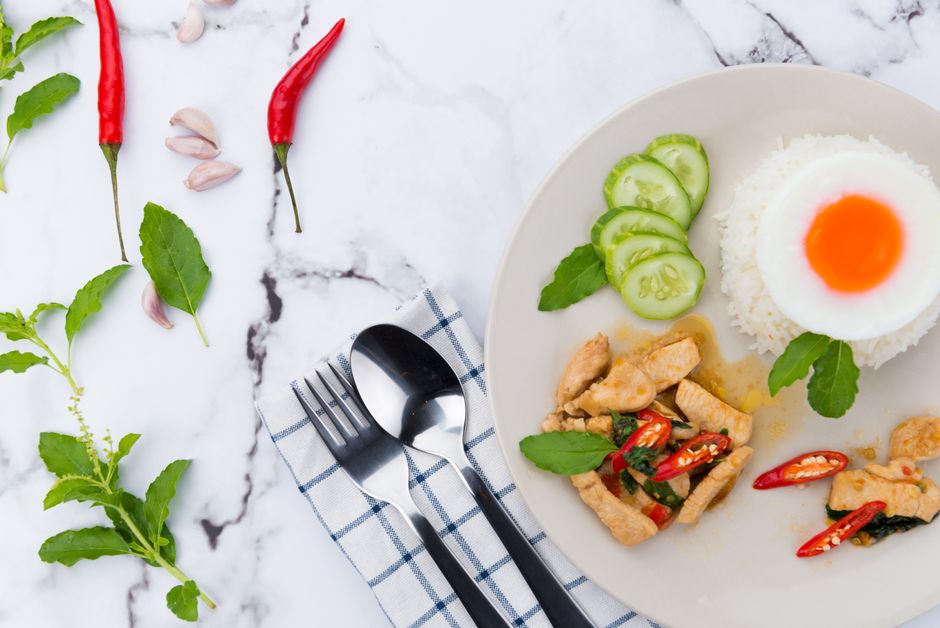
For dishes like Pad Kra Pao, the focus is on the intensity of the protein. The garlic and chilies should be smashed and fried in hot oil until they are almost crispy, followed immediately by the protein (traditionally minced pork or chicken). Once the meat is browned and cooked through, add your sauce (a mix of fish sauce, light soy sauce, dark soy sauce for color, and palm sugar). The final, non-negotiable step is the inclusion of a large handful of fresh holy basil. Holy basil is different from standard sweet basil; it has a spicy, clove-like scent that is essential to the dish. Toss it in, remove from the heat instantly, and serve over steaming jasmine rice with a crispy fried egg on top.
Understanding Rice and Garnish
Rice is not merely a side dish in Thailand; it is the center of the meal. Jasmine rice is the standard, known for its long, slender grains and delicate, floral aroma. To cook it perfectly, start by rinsing your rice under cold, running water until the water runs clear. This removes excess surface starch, which prevents the rice from becoming gummy. The ratio for perfect jasmine rice is typically 1:1.25 (one part rice to one and a quarter parts water). Once the water comes to a boil, turn the heat to the lowest setting, cover tightly, and allow it to steam for 15 minutes. Let it rest off the heat for an additional 10 minutes before fluffing with a fork.
The Power of Garnish
Garnishes in Thai cooking are functional as well as aesthetic. They provide that final, necessary hit of freshness or texture to cut through the richness of the main dish. Fresh cilantro, sliced red chilies, fried shallots, and crushed roasted peanuts are staples that elevate a simple plate into something restaurant-quality. When plating, consider the visual appeal; a sprinkle of fresh herbs can transform a monochromatic curry into a vibrant, appetizing centerpiece.
The Condiment Caddy
In a traditional Thai home or restaurant, you will often find a condiment caddy on the table known as phuang phrik. This usually contains four small jars filled with fish sauce with chilies, chili flakes, sugar, and vinegar. This is not for decoration; it is for the diner to customize the dish to their personal preference. If your cooking ends up a little too mild, a spoonful of chili-vinegar will brighten it up. If it lacks salt, a splash of the fish sauce will fix it. Empowering your guests to adjust their own food at the table is a key part of the communal Thai dining experience.
"The true measure of a Thai dish is not found in the initial bite, but in the lingering sensation of balance—where the heat fades into the brightness of the lime, and the salt leaves you craving just one more mouthful."
Final Thoughts
Mastering Thai cuisine is an ongoing process of refining your palate and developing an intuitive understanding of the interplay between flavors. Do not be discouraged if your first attempt at a curry or stir-fry is not perfectly balanced; the beauty of this style of cooking is that it is remarkably forgiving and highly adjustable. By focusing on the fundamentals—the quality of your fish sauce, the freshness of your aromatics, and the constant balancing of sweet, sour, salty, and spicy—you will eventually find the rhythm that feels natural.
Cooking is an act of love, and Thai cooking specifically is an act of generosity. It is about bringing people together around a table filled with bowls of steaming rice, vibrant curries, and zesty salads, each dish playing its part in a larger, harmonious narrative. Whether you are pounding a paste for the first time or perfecting your wok technique, remember to take your time and enjoy the sensory experience of the kitchen. Let the aromas guide you, let your taste buds dictate the seasoning, and above all, have fun with the process.
As you continue to explore the nuances of this incredible culinary tradition, try to source the best possible ingredients your local market offers. Seek out the real thing—the pungent shrimp paste, the authentic palm sugar, and the freshest possible herbs. These choices will elevate your home cooking and bring you closer to the authentic flavors found in the streets of Bangkok. Thank you for joining me on this deep dive into the essentials of Thai cuisine. May your kitchen always be filled with the intoxicating scent of lemongrass, the heat of the chili, and the joy of a perfectly balanced meal shared with those you love. Go forth, experiment, and don't be afraid to blame the chef if the heat gets a little too intense—that is, after all, the mark of a meal well made.
Get the Next Recipe
Weekly recipes, techniques, and gear picks — straight to your inbox.
