The Anatomy of a Perfect Pan Sauce: How to Master the Emulsion Method for Restaurant-Quality Results
There is a particular kind of heartbreak that happens in the home kitchen when you spend thirty minutes searing a beautiful piece of protein, only to plate it with a side of dry, lifeless grains and nothing to bridge the gap between the two. We have all been there, staring at a gorgeous ribeye or a perfectly crispy chicken breast, feeling that the meal is technically finished but aromatically incomplete. The secret to elevating that humble home-cooked dinner into something that feels like a Tuesday night at a Michelin-starred bistro doesn’t require an expensive sous-vide machine or a collection of hard-to-find garnishes. It requires only the knowledge of how to salvage the "fond" left behind in your skillet and transform it into a glossy, velvety pan sauce. This is the hallmark of restaurant-quality cooking, a technique that relies on chemistry and heat control to create a bridge of flavor that makes every bite cohesive.
Mastering the pan sauce is not merely about following a recipe; it is about learning to listen to the language of your pan. When you sear meat, the Maillard reaction leaves behind a mosaic of browned proteins and caramelized sugars, known technically as the fond. To the untrained eye, this looks like a mess to be scrubbed away, but to the professional chef, this is liquid gold. By using the emulsion method, we can take these concentrated flavor molecules and suspend them in a mixture of fat and liquid, resulting in a sauce that coats the back of a spoon with perfection. It is a fundamental skill that shifts your culinary identity from someone who just cooks food to someone who understands how to build flavor profiles from the ground up, one deglazed pan at a time.
Throughout this guide, we are going to strip away the intimidation factor often associated with French culinary techniques. You do not need formal training to execute a beurre monté or a classic pan reduction; you simply need the right sequence of operations and an understanding of how temperature dictates texture. We will explore the critical role of deglazing, the importance of mounting with cold butter (monter au beurre), and the delicate balance of acidity versus fat. By the time you reach the end of this post, you will view that charred, sticky pan not as a cleaning chore, but as the most important ingredient in your repertoire. Let’s get into the anatomy of the perfect pan sauce and start turning those kitchen scraps into the highlight of your meal.
The Chemistry of the Fond
The foundation of any great pan sauce begins the moment your protein hits the hot oil. The Maillard reaction is a chemical process that occurs when amino acids and reducing sugars react under high heat to create hundreds of different flavor compounds. These compounds are responsible for the deep, savory, and complex notes that we associate with a "meaty" taste. In a professional kitchen, we aren’t just trying to cook the meat; we are intentionally building a layer of fond on the bottom of the stainless steel or cast-iron skillet. If your pan is non-stick, you will struggle to develop this, which is why choosing the right vessel is your first step toward success.
Understanding Surface Tension and Heat
Heat management is the primary factor in developing a quality fond. If your pan is too cold, the meat will steam, releasing moisture that prevents browning. If it is too hot, those sugars will burn and turn bitter, resulting in a sauce that tastes like acrid char rather than concentrated juice. Aim for a medium-high flame and ensure your meat is patted completely dry with paper towels before it enters the pan. Moisture is the enemy of the sear; the more surface liquid you remove, the faster the protein will begin its transformation into that golden-brown crust.
Selecting the Right Protein
While you can make a pan sauce from almost anything, proteins with a higher fat content or a collagen-heavy structure tend to yield better results. A skin-on chicken thigh, for example, renders fat that helps toast the bits of fond as it cooks. Beef, lamb, and pork chops are also prime candidates. Remember that the fond needs to be consistent, not scorched. If you notice the bottom of your pan turning black, lower your heat immediately and add a tiny splash of oil or fat to buffer the reaction.
The secret to a professional pan sauce isn't in the fancy additives or expensive wine; it is in the patience you show while building the fond. If you rush the sear, you are essentially starting with a blank canvas when you should be starting with a masterpiece.
The Art of the Deglaze
Once your protein is rested and removed from the pan, you are left with the essence of your meal. The process of deglazing is the single most transformative step in the entire procedure. By adding a room-temperature or slightly warmed liquid to a hot, dry pan, you create a rapid evaporation effect that lifts the caramelized solids from the surface. This is where the depth of your sauce is locked in, as the liquid dissolves those concentrated proteins and integrates them into a single, cohesive foundation.
Choosing Your Liquid
The choice of liquid will dictate the character of your sauce. A dry white wine provides an acidic, sharp finish that cuts through the richness of poultry or pork. A bold red wine adds tannins and body, ideal for hearty red meats like steak or lamb. If you prefer to avoid alcohol, high-quality chicken or beef stock works, provided you reduce it further to concentrate the flavor. You can also experiment with brandy, sherry, or even balsamic vinegar for a touch of sweetness.
The Technique of Scraping
Use a wooden spoon or a high-heat silicone spatula to scrape the bottom of the pan while the liquid is bubbling. This process, often called "deglazing with a purpose," is not just about cleaning; it’s about extraction. Ensure you work the corners and edges of the pan where the heat often concentrates. Once the liquid has been poured in, allow it to reduce by at least half. This concentration is essential; if you don’t reduce, the sauce will be watery and lack the intensity required to stand up to your protein.
Mastering the Emulsion
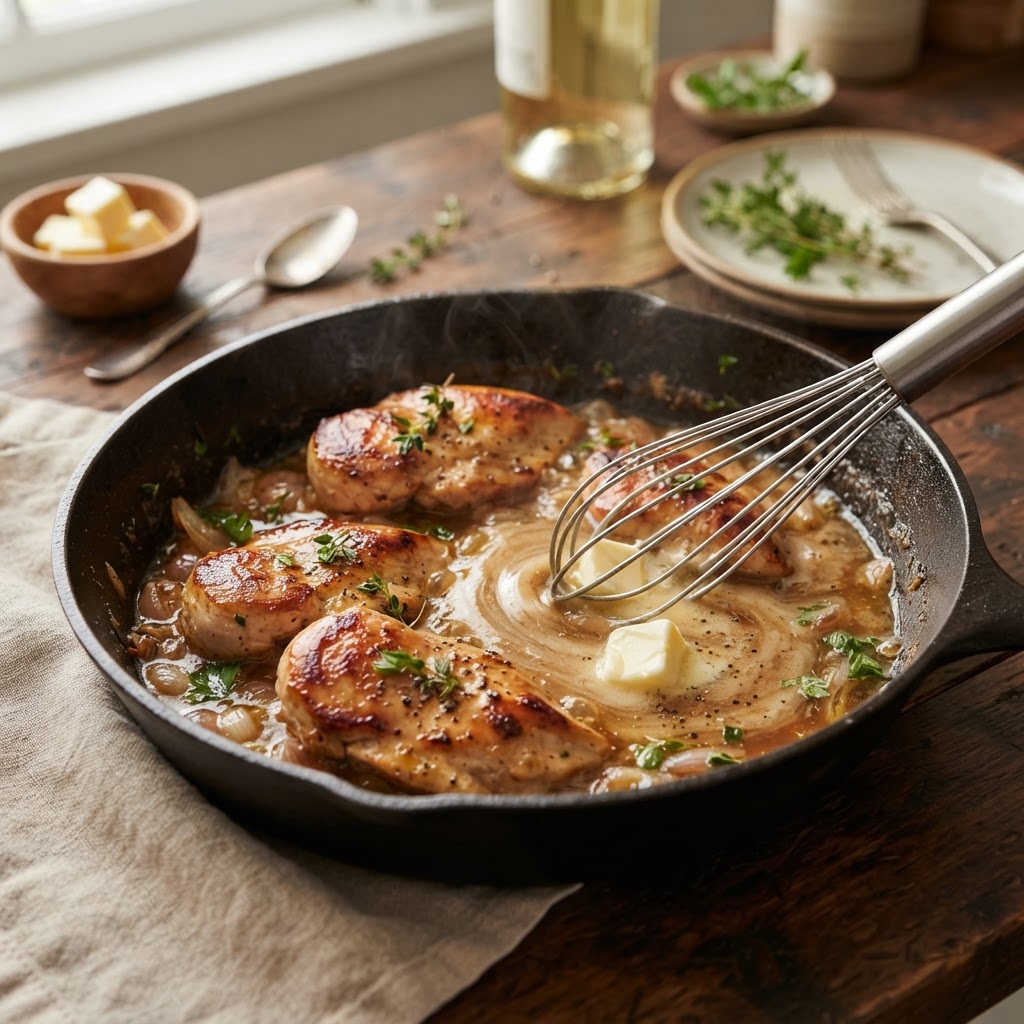
The transition from a thin, watery liquid to a luscious, velvety sauce is achieved through emulsification. An emulsion is a mixture of two liquids that typically do not want to stay together—in this case, your wine/stock base and cold fat. In French cooking, the technique of monter au beurre (mounting with butter) is the standard for creating this luxurious texture. By whisking in small cubes of cold, unsalted butter into your reduced liquid, the fat particles are suspended throughout the sauce, creating a sheen that is both visually appealing and texturally superior.
The Importance of Cold Butter
Temperature is the defining factor here. If your butter is melted before it hits the pan, or if your pan is too hot, the butter will simply separate into clear oil and milk solids, resulting in a greasy, broken mess. By using chilled butter cut into small, uniform cubes, you ensure that the fat emulsifies slowly. Whisk the butter into the reduction away from direct high heat, allowing the residual warmth of the pan to do the work. The goal is a sauce that coats the back of a spoon—a professional standard often called "nappe."
Troubleshooting a Broken Sauce
Even the best chefs occasionally see a sauce break. If you notice pools of oil separating from the liquid, don’t panic. The solution is usually adding a tablespoon of cold liquid (stock or water) and whisking vigorously off the heat. This helps to re-introduce water into the mix and encourages the fat to re-emulsify. Remember, the sauce is a living element; stay attentive, use your whisk, and keep the pan away from the hottest part of the burner during the finishing phase.
A sauce that has been mounted correctly with butter will have a glossy finish and a smooth, coating consistency. It should never feel heavy or cloying; it should feel like a silk ribbon of concentrated flavor that enhances the natural taste of the protein.
Building Complexity with Aromatics
While the fond and the deglaze provide the structural foundation, aromatics provide the personality. By introducing ingredients like shallots, garlic, fresh herbs, or peppercorns, you add layers of interest that keep the palate engaged. The timing is crucial here; aromatics should generally be added after the pan has been deglazed or just before, depending on their density. You want to infuse their essential oils into the sauce without burning them, as burned garlic or herbs will introduce an unpleasant bitterness that can ruin an otherwise perfect reduction.
The Role of Shallots and Garlic
Shallots are the gold standard for pan sauces because they possess a sweetness that onions lack and a delicacy that doesn't overpower the meat. Mince them finely so they soften into the sauce rather than remaining crunchy. Add them to the pan right after you remove your protein but before you add your liquid, sautéing them until translucent in the leftover pan fat. This allows the shallot to sweat and release its sugars, which will then be picked up during the deglazing process.
Herb Infusion Strategies
Hard herbs like rosemary and thyme should be added during the reduction phase to allow their woodsy notes to seep into the liquid. Soft herbs like parsley, chives, or tarragon should be added at the very last second, just before serving, to maintain their bright, fresh color and aroma. Avoid overcooking soft herbs, as they lose their vibrancy quickly and can turn the sauce a muddy, unappealing color.
Seasoning and Balancing
The final stage of crafting a pan sauce is the adjustment of flavor. Even if your base is perfect, a sauce that lacks proper balance can fall flat. A pan sauce is essentially a concentrated extraction of flavor, which means it can easily become too salty or too acidic. The goal is to reach a state where the acidity brightens the saltiness of the fond, and the fat from the butter mellows the harshness of the wine. It is a constant game of "adjust and taste" that separates the technician from the cook.
The Acid Check
If your sauce feels heavy or one-dimensional, it is almost always missing a hit of acidity. A squeeze of fresh lemon juice or a teaspoon of high-quality vinegar (such as Sherry or Champagne vinegar) can act as a flavor highlighter. It "wakes up" the palate and makes the richness of the butter feel cleaner. Always add acid at the very end of the cooking process; if you add it too early and let it simmer for too long, the sharp, bright quality of the acid will dissipate.
Salt and Pepper Discipline
Be extremely careful with your salt levels. Remember that the fond itself contains salt from the initial seasoning of your protein, and your stock may be salty as well. Always wait until the final reduction is complete before adding additional salt. If you find the sauce has become too salty, a common chef's trick is to add a small amount of heavy cream or unsalted butter to dilute the intensity, though you should be careful, as this will change the consistency of the sauce.
The Professional Toolkit
Success in the kitchen is often dictated by the quality and design of your tools. For pan sauces, you specifically need a pan that provides a large surface area and excellent heat conductivity. A heavy-bottomed stainless steel skillet is the professional’s choice because it allows for the development of fond without the non-stick coating that prevents caramelization. Cast iron is a fantastic alternative, provided it is well-seasoned, though it holds onto flavors more than stainless steel, which might be a consideration if you are switching between drastically different dishes.
The Whisk and the Spoon
Your whisk is your most important tool during the emulsification phase. Use a small, balloon-style whisk that can easily reach the edges of your pan. If you are using a non-stick pan (which we don't recommend for this technique, but understand is common), use a silicone whisk to avoid scratching the surface. Your wooden spoon or heat-resistant spatula is the primary tool for the deglazing phase; ensure it has a flat edge to effectively scrape the floor of the pan.
Mise en Place: The Key to Speed
A pan sauce happens fast. Once your protein is out of the pan, you are working against the clock to ensure the meat stays warm while you finish the sauce. This is where mise en place is non-negotiable. Have your shallots minced, your herbs chopped, your wine measured, and your butter cubed and chilled before you even start searing the meat. If you are scrambling for ingredients while the pan is hot, the fond will burn, the meat will cool down, and the sauce will suffer.
"Cooking is not a race, but the pan sauce is a sprint." When you are at the stove, your ingredients should be ready to deploy. The difference between a sauce that tastes like a restaurant creation and one that tastes like a mistake is often just the difference between preparation and panic.
Final Thoughts
Mastering the anatomy of a perfect pan sauce is a transformative milestone for any home cook. It changes your perception of the kitchen from a place of work to a laboratory of flavor. You begin to understand that a great meal isn't defined by the complexity of the ingredients, but by the mastery of the technique. By leveraging the fond, executing a clean deglaze, and perfecting the emulsion, you are performing the same steps that line cooks in top-tier restaurants perform every single night. The result is not just a sauce; it is a testament to your growing confidence and skill.
Do not be discouraged if your first attempt isn't perfect. Like any high-level technique, pan sauce making is tactile and intuitive. You have to feel the resistance of the whisk against the thickened liquid and hear the change in the sound of the liquid as it reduces. You have to taste at every step, learning how the intensity shifts from the moment the wine hits the pan to the moment you fold in that last knob of butter. Each time you step up to the stove, you are getting better at reading the signs that the pan is giving you.
Ultimately, "Blame The Chef" is about taking ownership of your results and finding the joy in the process. When you pour that glossy, deeply flavored sauce over your perfectly rested steak or chicken, you are closing the loop on a story you started the moment you placed the meat in the pan. You are creating a cohesive, professional-level experience that brings people to the table and keeps them there. So, the next time you finish searing that protein, don't just clear the pan—use it. Master the sauce, master the meal, and enjoy the incredible, restaurant-quality results that follow.
As you continue your culinary journey, remember that the pan sauce is infinitely adaptable. You can change the liquid, swap the aromatics, and adjust the finish to suit any cuisine—from a classic French red wine reduction to a bright, citrusy white wine sauce with capers and lemon zest. Experimentation is the engine of improvement. Keep your pans hot, your butter cold, and your palate ready for the next delicious iteration. You are now equipped with the fundamental logic of the professional line; all that remains is to get into the kitchen and make it your own. Happy cooking!
Get the Next Recipe
Weekly recipes, techniques, and gear picks — straight to your inbox.
