The Art of Knife Skills: Techniques Every Home Cook Should Master
There is a quiet, rhythmic beauty to a professional kitchen that often goes unnoticed by the casual observer. It is not found in the chaotic flare of a flambé pan or the frantic plating of a busy dinner service, but rather in the steady, hypnotic sound of steel meeting a wooden cutting board. For many home cooks, the culinary journey begins with a recipe, but it truly matures the moment they realize that the secret to a perfect dish lies as much in how you prepare your ingredients as it does in the final application of heat. Mastering your knife skills is not about speed, nor is it about showing off; it is about building a foundation of consistency that transforms cooking from a chore into a meditative art form.
When you walk into a professional kitchen, the first thing a mentor will assess is your station—your "mise en place." If your board is cluttered and your cuts are jagged, your ingredients will never cook evenly, regardless of the quality of your stove or the cost of your cookware. A carrot diced into mismatched chunks will result in a sauté where half the pieces are mushy and the other half remain raw, ruining the texture of your mirepoix. By honing your blade technique, you are effectively ensuring that your food is treated with the respect it deserves, leading to superior flavors and a more professional presentation on your dinner table.
Welcome to "Blame The Chef," where we believe that anyone can master the craft if they are willing to put in the time. We are going to strip away the intimidation factor often associated with high-end culinary training and focus on the fundamental movements that define great cooking. Throughout this guide, we will explore the anatomy of the knife, the physics of the cutting motion, and the specific geometries of classical French knife cuts. Prepare to change the way you interact with your ingredients, because once you master these skills, you will never look at a humble onion or a bell pepper the same way again.
The Foundation: Choosing and Maintaining Your Tools
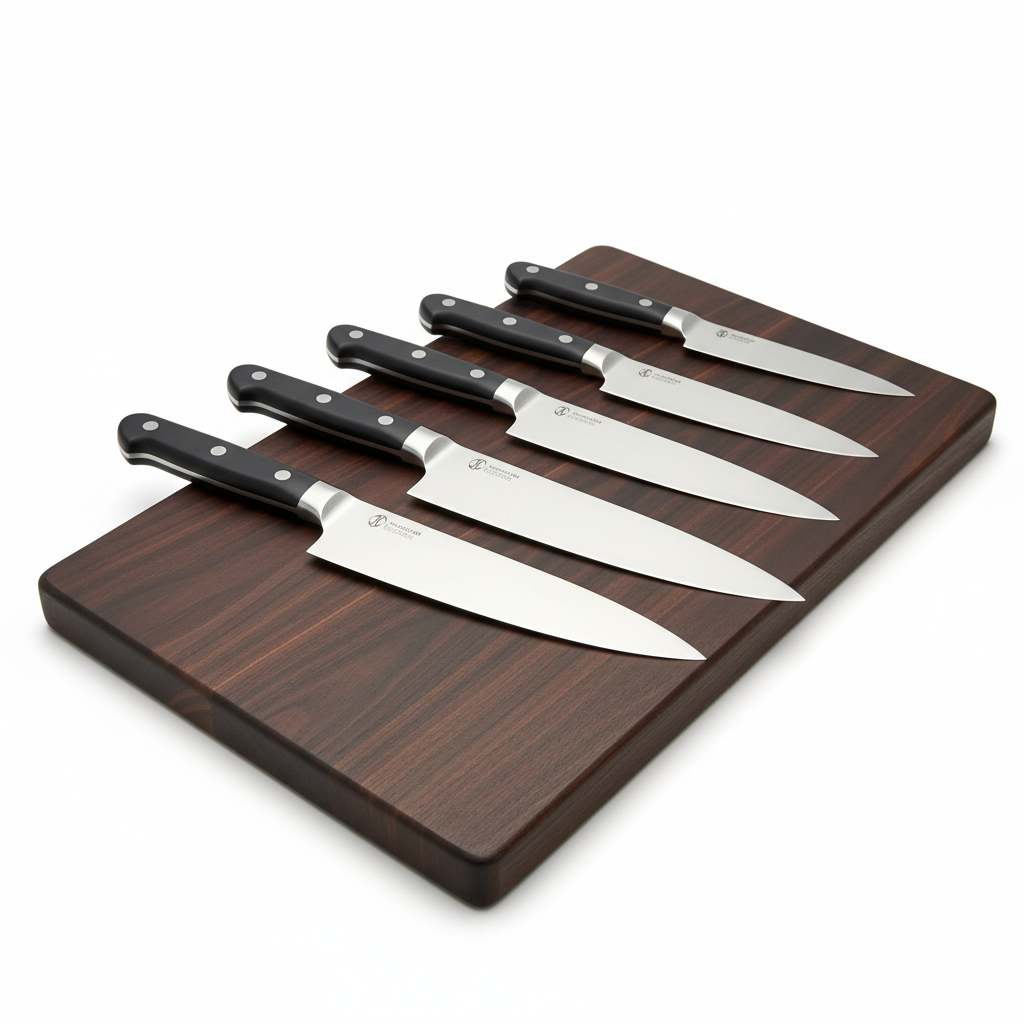
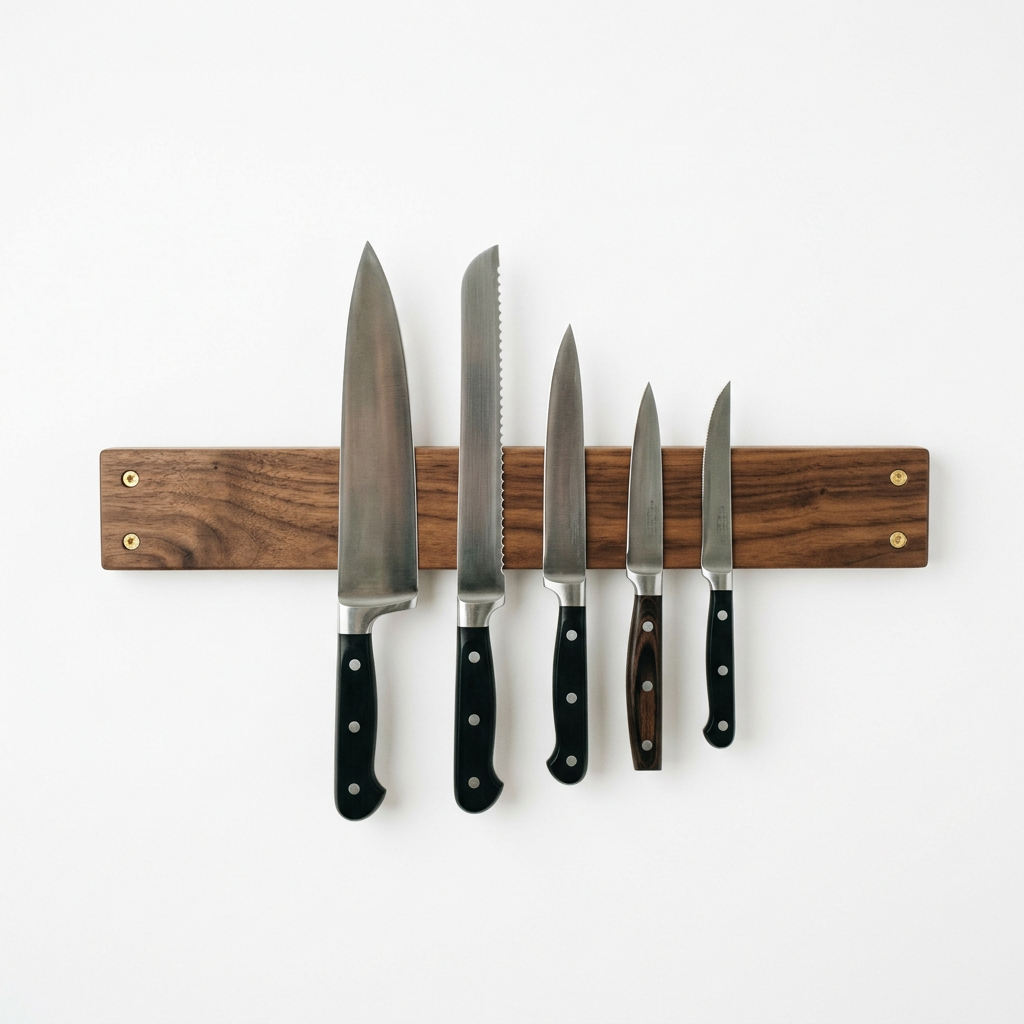
Every journey begins with the right equipment, and in the world of professional cooking, your knife is an extension of your own hand. You do not need a massive, expensive block of twenty different blades to be an effective cook. In fact, most professional chefs reach for the same three knives ninety percent of the time: a Chef’s Knife (usually 8 or 10 inches), a Paring Knife for intricate work, and a Serrated Bread Knife. The Chef’s knife is your workhorse; it should feel balanced in your palm, with the weight distributed evenly between the handle and the heel of the blade.
The Importance of Sharpness
A common misconception among home cooks is that a sharp knife is more dangerous than a dull one. In reality, the opposite is true. A dull blade requires excessive force to penetrate the surface of an ingredient, which leads to slipping and, invariably, accidents. A sharp knife, by contrast, "bites" into the surface of the food, allowing you to control the blade with minimal effort. You should be able to slice through a ripe tomato without crushing it; if you find yourself sawing at the skin, it is time to sharpen your steel.
"A sharp knife is a chef’s best friend, not because it is fast, but because it is predictable. When you know exactly where your blade is going to land, you gain the confidence to cook with intent."
Maintenance and Honing
Owning a quality knife requires a commitment to maintenance. You must learn the difference between honing and sharpening. Honing—using a steel rod—does not remove metal; it simply realigns the microscopic "teeth" on the edge of the blade that bend during regular use. You should hone your knife before every single prep session. Sharpening, on the other hand, involves removing a small amount of metal using a whetstone to create a new edge. Aim to sharpen your primary knives every three to six months depending on frequency of use.
The Claw and The Pinch: Mastering Your Grip
Before you ever make a cut, you must master the two most important safety grips in the kitchen: the Pinch Grip for your dominant hand and the Claw Grip for your non-dominant hand. Most home cooks make the mistake of holding a knife like a tennis racket, wrapping their fingers entirely around the handle. This provides very little control and forces the wrist to do all the work. Instead, you should grip the base of the blade by pinching the spine and the heel between your thumb and index finger, wrapping the remaining three fingers around the handle.
The Power of the Claw
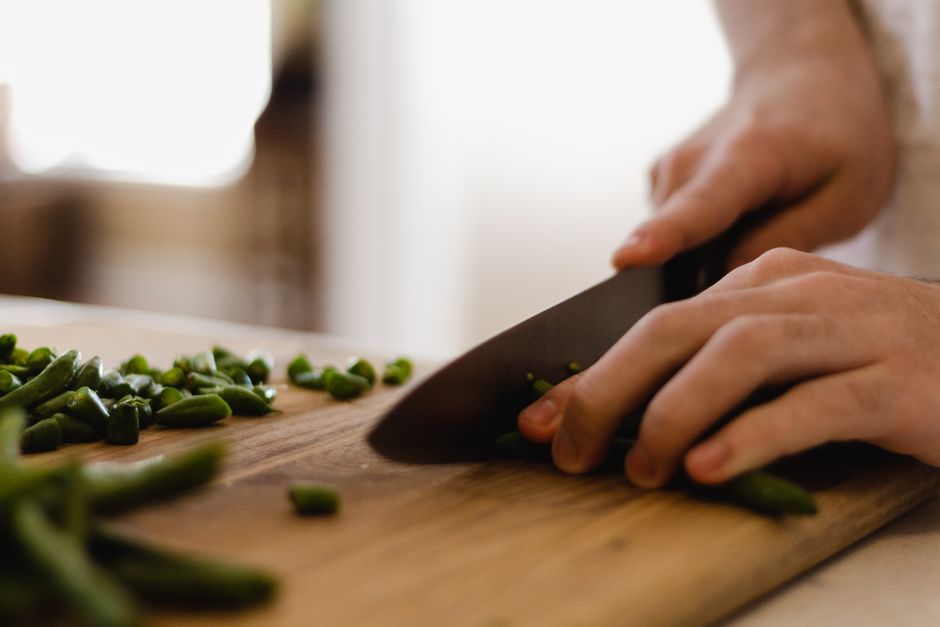
Your non-dominant hand is the "guide" hand. To keep your fingers safe, tuck your fingertips inward to form a "claw" or "bridge." The flat side of the knife blade should rest gently against your knuckles. By using your knuckles as a guide for the blade, you ensure that you can move your hand back incrementally as you cut without ever exposing your fingertips to the sharp edge. This technique is not just about safety; it allows for high-precision, rapid-fire slicing once you build muscle memory.
Body Mechanics and Posture
Beyond your hands, your entire body should be engaged. Stand square to your cutting board with your feet shoulder-width apart. Your cutting board should be at a height where your elbow is slightly higher than the surface, allowing you to use your whole arm and shoulder rather than just your wrist. If you are hunched over, you will fatigue quickly and your cuts will lose their precision. Breathe through the movement, and remember that slow, intentional practice leads to speed naturally over time.
Classical Geometry: The Foundation of French Cuts
In professional culinary training, there are specific terms for different cuts because they serve functional purposes. When a recipe calls for a specific shape, it is not just for aesthetics; it is because that shape dictates the surface area-to-volume ratio, which directly impacts how quickly an ingredient will cook or release its flavor into a liquid. Understanding these shapes will allow you to achieve the perfect texture in your braises, stocks, and sautés.
The Julienne and the Batonnet
The Batonnet is the foundation of many other cuts. It is a rectangular stick, usually measuring 1/4 inch by 1/4 inch by 2 to 2.5 inches. If you take that batonnet and slice it into thinner, matchstick-sized pieces, you have a Julienne (roughly 1/8 inch by 1/8 inch). These cuts are essential for stir-frys, slaws, and delicate vegetable garnishes. Consistency is key here; if your batonnets are uneven, your roasted carrots will come out with raw centers and charred ends.
The Dice: Small, Medium, and Large
The Dice is simply the batonnet cut into cubes.
"Cooking is a physical expression of your intentions. When you take the time to uniformize your dice, you are telling your guests that every bite of the dish is as important as the first."
Mastering the Onion: The Chef's Greatest Test
The onion is the most common ingredient in the professional kitchen, and the way you process it says everything about your skill level. Many home cooks struggle with "weeping" or end up with a messy pile of translucent pulp. To achieve a perfect dice, you must first leave the root end intact. The root acts as an anchor that keeps the layers together while you make your horizontal and vertical incisions.
Step-by-Step Dice
Minced Onion and Shallots
For preparations like vinaigrettes or pan sauces, a fine mince is required. This is achieved by taking the diced onion and running your knife through it repeatedly, using a rocking motion with your non-dominant hand resting on the spine of the knife for extra pressure. Ensure your knife is extremely sharp for this, as a dull blade will crush the cells of the onion, releasing too much sulfurous acid and making the flavor harsh.
The Art of Herb Prep: Chiffonade and Mincing
Herbs are fragile, and they bruise easily. When you are working with soft herbs like basil, mint, or cilantro, the goal is to cut through the leaves once without "bruising" the oils. If you run your knife over the same pile of herbs repeatedly, you will find that the board turns dark green and the herbs lose their vibrant, fresh aroma. This is a sign of oxidized, bruised vegetation—avoid it at all costs.
The Chiffonade Technique
To create a Chiffonade, stack your leafy herbs (like basil or spinach) on top of one another. Roll them tightly into a cigar shape. Using a very sharp knife, slice the roll into thin, ribbon-like strips. This technique is perfect for garnishing pastas, soups, or salads, providing a refined look that signals a professional touch. Always perform this just before service, as the increased surface area means the herbs will wilt or lose color quickly if left to sit.
The Rock-Chop for Woody Herbs
For woody herbs like rosemary, thyme, or parsley, the Rock-Chop is your best friend. Strip the leaves from the woody stems first. Gather the leaves into a tight pile in the center of your board. Place the tip of your chef’s knife on the board and keep it there as a pivot point. With your non-dominant hand on the spine of the blade, rock the knife back and forth in a circular motion over the herbs until you achieve the desired fineness.
Efficient Prep: The "Mise En Place" Mindset
In the professional world, Mise en place (everything in its place) is a religion. It is the practice of having every ingredient prepped, measured, and organized before you turn on the burner. If you are stopping to chop your garlic while your onions are already in the pan, you are setting yourself up for failure. The heat does not wait for you; once a pan reaches 350°F to 400°F for a proper sear, every second counts.
Organization for the Home Cook
Before you start cooking, clear your workspace. Have a bowl for your scraps and a clean space for your finished ingredients. If you are working on a multi-step recipe, use small prep bowls to keep your ingredients organized. This reduces mental clutter and allows you to focus entirely on the technique of the cut and the timing of the cook. Professionals often prep their hardest tasks first, moving from the vegetables to the proteins, ensuring that they can move through the cooking process without interruption.
Cleaning as You Go
Part of your knife skills is maintaining a clean environment. If your board is covered in onion skins and herb stems, you lose the visibility necessary to maintain safety. Keep a damp towel under your cutting board to prevent it from sliding, and use a separate, dry towel to wipe away debris as you finish each task. By the time you start your first sear, your station should look as clean as it did when you started.
The Professional Chef’s Secret: Timing and Heat
Knife skills are intrinsically linked to timing. Because you have learned to create uniform cuts, you can now predict how your food will react to heat. For example, a small 1/4-inch dice of carrots will cook in a sauté pan in approximately 4 to 6 minutes over medium-high heat. If you were to cut them into uneven, 1-inch chunks, you would be looking at 15 to 20 minutes, potentially causing your other aromatics to burn in the process.
Understanding Sauté and Braise
When you are sautéing, you want the pieces to be uniform so they hit the pan simultaneously and caramelize evenly. When braising, the pieces are generally larger to withstand the long, slow cook in liquid without turning into mush. By mastering your cuts, you are effectively controlling the Maillard reaction, the chemical process that creates the complex, savory flavors we associate with perfectly browned food.
The Final Assessment
Always taste your food throughout the process. Note how the size of the vegetable impacts the overall mouthfeel. Did the onions disappear into the sauce, or did they retain a bit of bite? Was the garlic bitter because it was minced too small and burned, or did it provide a subtle foundation of flavor? These are the questions a professional asks themselves every time they stand before a stove. Use your knife to dictate the outcome, not the other way around.
Conclusion
Mastering the art of knife skills is a journey that lasts a lifetime. Even executive chefs with decades of experience under their belts continue to refine their grip, their speed, and their consistency. Do not be discouraged if your first attempts at a perfectly uniform julienne look a bit more like "rustic" matchsticks. The beauty of cooking is that the results—even the imperfect ones—usually taste wonderful when seasoned with care and attention.
Start by practicing your basic cuts with inexpensive ingredients. Buy a bag of potatoes and spend an hour practicing your batonnets and medium dice. It is a low-cost way to build massive confidence. Once you are comfortable with the blade, you will find that your speed increases organically. You will no longer view prep as a tedious hurdle to clear before the "real" cooking begins; you will view it as the most critical step in crafting a delicious meal.
Remember, the knife is a tool, but you are the artist. The way you handle that tool defines the character of your food. Keep your blades sharp, your station clean, and your focus sharp. At "Blame The Chef," we believe the difference between a good meal and an unforgettable one is the attention to detail applied long before the heat is ever turned on. Stay hungry, keep practicing, and enjoy the rhythm of the blade. The kitchen is yours to conquer.
Beyond the physical mechanics of the cut, there is a profound psychological benefit to focused prep work. In a world that is constantly asking for our attention in fragmented bursts, the act of standing at a cutting board, concentrating on the precise alignment of a carrot or the gentle slice of an onion, provides a unique form of focus. It is a moment of calm before the controlled heat of the stove takes over. As you develop your skills, try to find that rhythm. When you stop "fighting" the ingredient and start working with its natural grain, you’ll notice that your speed will double, and the quality of your output will soar.
When you look at a professional chef in action, you are witnessing years of repetitive, intentional practice. They aren't thinking about where their fingers are; their hands have developed a "second nature." You too can reach this level of fluid efficiency. Start by dedicating just ten minutes of your next prep session to conscious, slow, perfect cuts. Focus on the geometry. Feel the weight of the knife and the resistance of the vegetable. Observe how the shape of the cut changes the way the ingredient releases its juices as you begin to sauté.
We often talk about the "soul" of a dish, but in reality, that soul is built upon the structural integrity of your prep. If your garlic is bruised, your flavor will be harsh. If your vegetables are uneven, your cooking will be inconsistent. There is no shortcut to mastery, but there is immense joy in the progress. Take pride in your board, take care of your tools, and always, always respect the edge. You are building a skill set that will serve you for the rest of your life, making every dinner party, family meal, and quiet Tuesday night snack a testament to your craft.
As you continue to cook, let your knife skills evolve with your palate. Perhaps you'll move from basic cubes to the intricate curves of a turned vegetable, or perhaps you will master the art of butchering a whole chicken, which is simply a series of well-placed cuts along the joints. The principles we have discussed here—the pinch grip, the claw, the organization of the board—remain the constants. Master these, and you have the keys to the kingdom.
Thank you for joining us for this deep dive into the foundational art of knife work. We hope this empowers you to step back into your kitchen with a renewed sense of purpose and a sharper blade. Remember that every chef started exactly where you are now: with a knife, a cutting board, and the desire to make something delicious. Stay patient with yourself, keep your knife honed, and continue to find the joy in the small, precise movements that define true culinary mastery. Until next time, happy chopping, and may your mise en place always be ready.

Get the Next Recipe
Weekly recipes, techniques, and gear picks — straight to your inbox.
