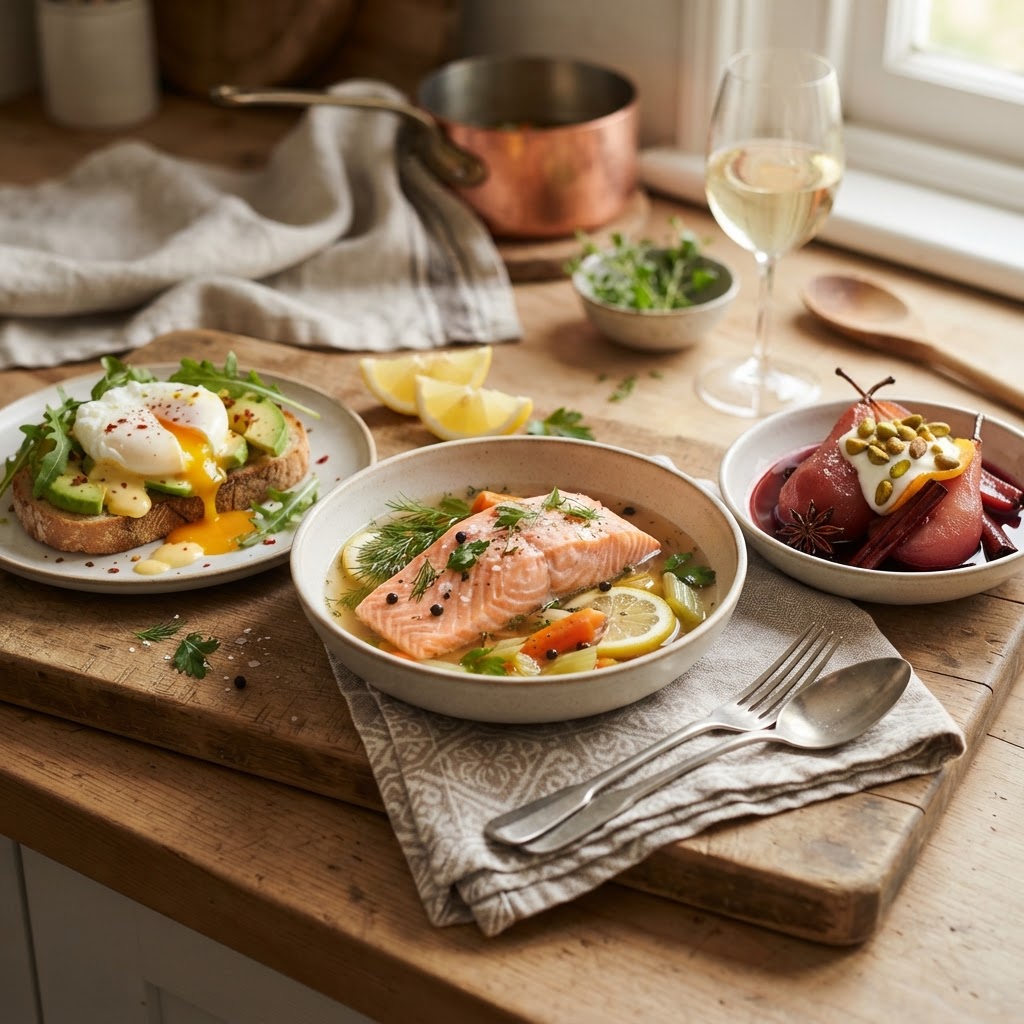
The Art of Poaching: A Home Cook’s Guide to Gentle, Flavor-Infusing Techniques for Fish, Eggs, and Fruit
The kitchen is a place of transformation, yet many home cooks approach the stove with a heavy hand, favoring the aggressive sear or the blistering heat of a high-temperature oven. While these methods undoubtedly build flavor through the Maillard reaction, they often obscure the delicate nuance that lies within gentle, precise cooking methods. Poaching, often misunderstood as a dull or overly health-conscious endeavor, is actually the ultimate showcase of a cook's control over temperature and texture. By submerging ingredients in a liquid kept just below a simmer, you move away from the harsh intensity of direct heat and into a realm where moisture is preserved, flavor is infused, and the integrity of your ingredients is honored.
Mastering this technique requires a shift in mindset; you are no longer fighting against the heat to achieve a crust, but rather coaxing the best out of a protein or piece of fruit through patience and observation. It is a method that demands mindfulness, requiring you to listen to the surface of your poaching liquid and understand what the tiny, lazy bubbles are telling you about the environment you have created. When performed correctly, poaching results in textures that simply cannot be replicated by any other cooking medium, whether it is the silky, buttery structure of a perfectly cooked piece of halibut or the tender, vibrant sweetness of a wine-poached pear. It is the secret weapon of the professional kitchen, hidden in plain sight, waiting for the home cook to reclaim it as a tool for elevating everyday meals into something extraordinary.
Welcome to "Blame The Chef," where we believe that every dish tells a story, and the story of poaching is one of elegance, restraint, and profound flavor. Throughout this guide, we will peel back the layers of this essential technique, moving beyond the intimidation factor that keeps so many people from exploring it. We will dive deep into the science of temperatures, the alchemy of aromatic poaching liquids, and the nuances that separate an amateur attempt from a restaurant-quality result. Prepare to change the way you cook, not by adding more heat, but by learning how to master the gentle art of the slow, steady soak.
Understanding the Poaching Spectrum
At its most fundamental level, poaching is a moist-heat cooking method that occurs in a temperature range between 140°F and 180°F. Unlike boiling, which creates chaotic agitation that can shred delicate proteins or pulverize fruit, poaching is defined by its stillness. You are looking for what chefs call a "shimmering" surface. If you see large, rolling bubbles, you have lost control; the liquid is too hot, and your delicate ingredients will surely suffer as a result. The key is to manage your heat source so that tiny beads of liquid rise to the surface only occasionally, creating a serene environment where the ingredient can cook evenly from the outside in.
The liquid you choose is the backbone of your final dish. This is where you can infuse personality and depth. A simple water-based poaching liquid is rare in professional kitchens; instead, we build court-bouillon, a seasoned liquid composed of water, wine, aromatic vegetables (onions, carrots, celery), herbs, and spices like peppercorns and bay leaves. The ratio is generally fluid: you want enough liquid to completely submerge the ingredient, ensuring that there are no exposed parts that could dry out or cook unevenly. By incorporating acidic components like lemon juice, white wine, or vinegar, you not only flavor the protein but also help to firm up the cell walls of fish or fruit, preventing them from turning into mush during the longer cooking process.
Temperature control is your most significant challenge and your greatest asset. Investing in an instant-read thermometer is not optional if you want to become proficient in this technique. Because poaching happens in a "low and slow" environment, there is a very thin margin of error between perfectly cooked and over-done. You aren't aiming for the hard, browned exterior of a steak, so your visual cues are limited. By monitoring the internal temperature of the liquid and the protein, you remove the guesswork and replace it with empirical precision. It is the difference between a dry, stringy piece of chicken breast and one that is succulent, tender, and incredibly moist.
"The magic of poaching lies in the silence. When you stop listening for the roar of the boil and start looking for the whisper of the shimmer, you have mastered the true pace of the professional kitchen."
The Importance of the Aromatic Base
To build a professional poaching liquid, think of it as creating a tea of savory elements. The aromatic base should be brought to a simmer first to extract the essential oils and flavors before you ever introduce the main ingredient. This process, often referred to as "blooming" the aromatics, ensures that the poaching liquid has a finished, complex flavor profile that will permeate the item you are cooking. If you throw cold water, cold vegetables, and your fish into a pot all at once, you will not get that depth of character.
Managing Liquid Temperature
140°F - 160°F (Deep Poaching):* Ideal for very delicate fish or fruits where you want a slow, gentle transition.
160°F - 180°F (Shallow Poaching):* The sweet spot for eggs, poultry, and firmer fruits like apples or pears.
180°F+:* You are entering the simmer phase; use caution, as delicate textures will begin to degrade.
The Master Class: Poaching Fish and Seafood
Fish is perhaps the most famous candidate for poaching, and for good reason. Because fish is composed of delicate protein fibers and low levels of connective tissue, it is incredibly prone to drying out when subjected to dry heat. Poaching preserves the natural oils of the fish, resulting in a buttery, flakey texture that essentially melts on the tongue. The goal is to reach an internal temperature of about 125°F to 130°F for most white fish. At this range, the proteins have coagulated, but they have not yet tightened to the point of turning chalky or dry.
When poaching fish, the method of shallow poaching is often preferred by chefs. In this technique, you place the fish fillets in a wide, shallow pan and add just enough liquid to come halfway up the sides of the protein. You then cover the fish with a piece of parchment paper cut to fit the pan, known as a cartouche. This simple addition is vital; it keeps the fish moist on the top, ensures even heat distribution, and prevents the poaching liquid from evaporating too quickly. It turns your shallow pan into a miniature, self-basting oven that works with the gentlest of thermal currents.
For added sophistication, incorporate the cooking liquid into your final sauce. Once the fish is removed, the remaining liquid—now infused with fish proteins and aromatics—is a concentrated base. You can strain it, reduce it by half, and whisk in cold cubes of butter or a splash of heavy cream to create a luxurious velouté or beurre blanc. This is the hallmark of fine dining: taking the byproduct of your cooking technique and elevating it into the sauce that ties the entire plate together.
Tips for Perfect Seafood
* Always pat your fish dry before seasoning; it helps maintain the integrity of the flesh.
* Remove the fish from the liquid the moment it is done. Even a few minutes in a cooling poaching liquid can result in over-cooked edges.
* Use a stainless steel or enameled cast iron pan to avoid metallic off-flavors from acidic poaching liquids.
The Egg: A Study in Minimalist Luxury
Poaching an egg is a classic rite of passage for every home cook, yet it is shrouded in unnecessary myth. Many people believe they need expensive poaching pans or specific vortex techniques to get a decent result. In reality, the perfect poached egg is about three things: freshness, a splash of acid, and temperature management. A truly fresh egg has a thick, viscous albumen (the white) that will cling to the yolk. As an egg ages, that white thins out, which is why your eggs might spread into "wisps" across the pot if they aren't fresh from the farm or store.
To prepare the water, bring it to a steady 170°F. Add one tablespoon of distilled white vinegar to the water. The acid helps to denature the proteins in the egg white, causing them to coagulate more quickly before they have a chance to spread out. If you are worried about the taste, don't be—once the egg is lifted from the water and given a quick blot on a paper towel, the vinegar is undetectable. The yolk should remain warm and liquid, while the white should be opaque, firm to the touch, and completely set.
For the most professional finish, crack your egg into a small fine-mesh sieve before adding it to the water. This allows the thin, watery part of the white—the stuff that causes the wispy mess—to drain away before you even begin cooking. Then, gently slide the egg into the water and let it cook undisturbed for three to four minutes. The result will be a compact, beautiful, tear-drop-shaped egg with a perfectly hidden center of golden liquid gold. Serve it atop sourdough toast with a sprinkle of sea salt and cracked black pepper for a simple, elegant breakfast.
"The poached egg is the ultimate litmus test of a cook’s control. It requires nothing more than water, heat, and time, yet it demands total attention to the variables at play."
The "Sieve Trick" for Eggs
Fruit: The Dessert Renaissance
Poaching fruit is an underutilized dessert technique that allows you to transform firm, seasonal produce into something sophisticated and tender. Pears, peaches, plums, and even stone fruits are ideal candidates. Unlike poaching protein, where you are looking for savory notes, fruit poaching allows for the use of complex syrups infused with spices like star anise, cinnamon sticks, cardamom pods, and vanilla bean. The fruit absorbs these flavors, becoming translucent and incredibly fragrant as it cooks slowly in the liquid.
The key to poaching fruit is to maintain a slightly higher temperature than you might for fish, usually around 175°F to 180°F. Because you are breaking down the cellulose in the fruit, this process takes longer—often 20 to 40 minutes depending on the ripeness and variety of the fruit. You want the fruit to be tender enough to be pierced easily by a paring knife, but not so soft that it loses its shape and turns into sauce. The poaching liquid should be a syrup of sugar, water, and aromatics, often finished with a splash of wine or liqueur like Grand Marnier or Port.
Once the fruit is finished, don't discard the liquid. This is liquid gold. Take the poaching syrup and boil it down further until it becomes a rich, glossy gastrique or reduction. Drizzle this over the poached fruit, serve it with a dollop of fresh crème fraîche or vanilla bean mascarpone, and you have a restaurant-grade dessert that is light, elegant, and entirely impressive. This technique is especially useful when your fruit is slightly under-ripe, as the poaching process helps to soften the texture and pull out the inherent sweetness.
Aromatics for Fruit Poaching
Warm Spices:* Cinnamon, star anise, whole cloves, and black peppercorns.
Citrus:* Lemon, lime, or orange peel (avoid the bitter white pith).
Liquids:* Dry Riesling, Pinot Noir, or even a spicy red wine for a deep, dramatic color.
Poultry: Achieving the Impossible Moistness
Chicken breast is the most commonly overcooked protein in the home kitchen. Because it is lean, it goes from "perfectly cooked" to "dry sawdust" in a matter of sixty seconds of overcooking. Poaching is the single best way to ensure that chicken breast remains juicy, tender, and flavorful. Instead of poaching in water, use a well-seasoned chicken stock fortified with onions, garlic, and fresh herbs. The chicken will absorb the aromatics, resulting in a piece of meat that is far superior to anything you could achieve in a frying pan or oven.
Begin by bringing your stock to 170°F. Carefully place your chicken breasts into the pot, ensuring they are fully submerged. Keep the temperature steady; if it creeps up, the exterior of the chicken will become tough while the interior remains under-cooked. A standard 6-ounce chicken breast will take about 15 to 20 minutes to reach an internal temperature of 165°F. However, if you are planning to shred the chicken for a salad or a sandwich, pull it out when the thermometer hits 160°F and let it carry-over cook while it rests in a bowl.
For a true chef's trick, poach your chicken with the skin on if you can find it, or add a piece of chicken fat or butter to the liquid. The fat emulsifies slightly with the poaching liquid, creating a richer environment that helps the chicken stay succulent. Once the chicken is done, let it rest in the liquid for five minutes before removing it. This step is crucial, as it allows the muscle fibers to relax and reabsorb some of the moisture they displaced during the heating process. When you finally slice into it, you will notice the difference immediately.
Essential Poultry Poaching Checklist
Advanced Techniques: The Sous-Vide Influence
While traditional poaching happens in a pot on the stove, the advent of sous-vide cooking has effectively taken the poaching technique to its logical, scientific extreme. Sous-vide is essentially "bagged poaching." You place your ingredient in a vacuum-sealed bag with aromatics and butter, and submerge it in a water bath that is kept at an exact, unwavering temperature. This removes the variable of human error entirely, ensuring that the ingredient cannot be overcooked even if you leave it in the water for an extra hour.
Many of the principles of traditional poaching still apply here. You are still using low temperatures and long durations to change the texture of the food, and you are still focusing on flavor infusion. The main difference is the precision. Where a stove-top poaching liquid might fluctuate by 5 or 10 degrees despite your best efforts, a sous-vide circulator holds the water to within 0.1 degrees of your target. This is particularly transformative for tough cuts of meat that require long-term poaching to break down collagen, such as short ribs or lamb shanks.
However, even for a home cook who does not own a circulator, understanding the science of sous-vide helps improve your stovetop poaching. It emphasizes the importance of consistency. The lesson to take away is that heat is a tool that should be used with precision. If you find yourself struggling to keep a pot of water at 165°F, try using a heavier pot, like a Dutch oven, which provides more thermal mass and helps to stabilize the temperature. Or, move your pot to the oven, which is often more accurate than a stove burner for maintaining a steady, low-temperature water bath.
"The difference between a good home cook and a great one is the ability to understand how heat interacts with their ingredients. Poaching teaches you to respect the nuance of protein and produce."
Applying Sous-Vide Principles to the Stove
Use Heavy Cookware:* Cast iron or thick-bottomed stainless steel pots hold heat longer.
The Oven Method:* If your stove burner is too erratic, set your oven to 170°F and place your covered poaching vessel inside.
Aromatics:* Don't be afraid to put your herbs in a tea ball or cheesecloth bag; it makes straining the liquid significantly easier.
Final Thoughts
Poaching is a technique that rewards the patient, the observant, and the curious. It requires you to step away from the high-octane energy of modern cooking and embrace a more measured, thoughtful approach. By mastering the gentle shimmer of a poaching liquid, you unlock a world of culinary possibilities that extend far beyond the basic egg or fish fillet. You learn to appreciate the subtle, transformative power of low heat, and you gain a deeper understanding of how flavors are built and maintained.
As you embark on your own experiments with poaching, remember that failure is just a data point in your culinary journey. If the fish falls apart, perhaps the liquid was a degree or two too hot. If the fruit lacks flavor, perhaps it needed a longer soak or a more aromatic syrup. Do not be afraid to adjust your variables, to take notes, and to trust your thermometer over your instincts. The "Blame The Chef" philosophy is all about empowerment through knowledge—the more you understand about the 'why' behind the cooking, the less you will need to rely on recipes, and the more you will be able to cook with intuition.
Take this knowledge into your kitchen this week. Start with something simple—a perfectly poached egg for a quiet Sunday morning, or a few pears poached in a light Riesling for a midweek treat. Pay attention to the way the liquid moves. Notice the change in color and texture of your ingredients as they soften and absorb the aromatics. When you finally sit down to eat, you will taste the difference that patience makes. You are no longer just preparing a meal; you are orchestrating a process of transformation, and in that process, you are finding the true art of the kitchen.
Finally, remember that the liquid is just as important as the food itself. Whether you are using a court-bouillon to poach a delicate piece of sea bass or a spiced wine to poach a plum, that liquid carries the soul of your dish. Save it, taste it, and look for ways to incorporate it into your next creation. Every step of the poaching process offers an opportunity to build flavor, and as you become more comfortable with this gentle, ancient technique, you will find that your cooking becomes more refined, more vibrant, and undeniably more professional. Enjoy the process, respect the heat, and welcome to the elevated world of poaching.
As you refine these skills, consider the broader implications of poaching on your overall culinary style. It is a method that encourages balance. While a perfectly seared steak or a crispy roast chicken will always have a place on the dinner table, the addition of poached dishes provides a necessary contrast, a lightness that makes a multi-course meal feel harmonious rather than heavy. It is a skill that serves the home cook year-round, from the bright, citrusy poaching liquids of spring to the deep, spice-laden broths of the colder months.
There is a profound sense of satisfaction in pulling a beautifully cooked, intact piece of fish from a pot of water, knowing exactly what happened to it during every second of its time in the liquid. It is a testament to your focus and your commitment to the craft. Don't let the simplicity of poaching fool you; it is a sophisticated, high-level skill that separates those who simply cook from those who truly understand the medium of heat. Keep practicing, keep tasting, and keep pushing your boundaries. The art of the gentle soak is now yours to command.
Get the Next Recipe
Weekly recipes, techniques, and gear picks — straight to your inbox.
