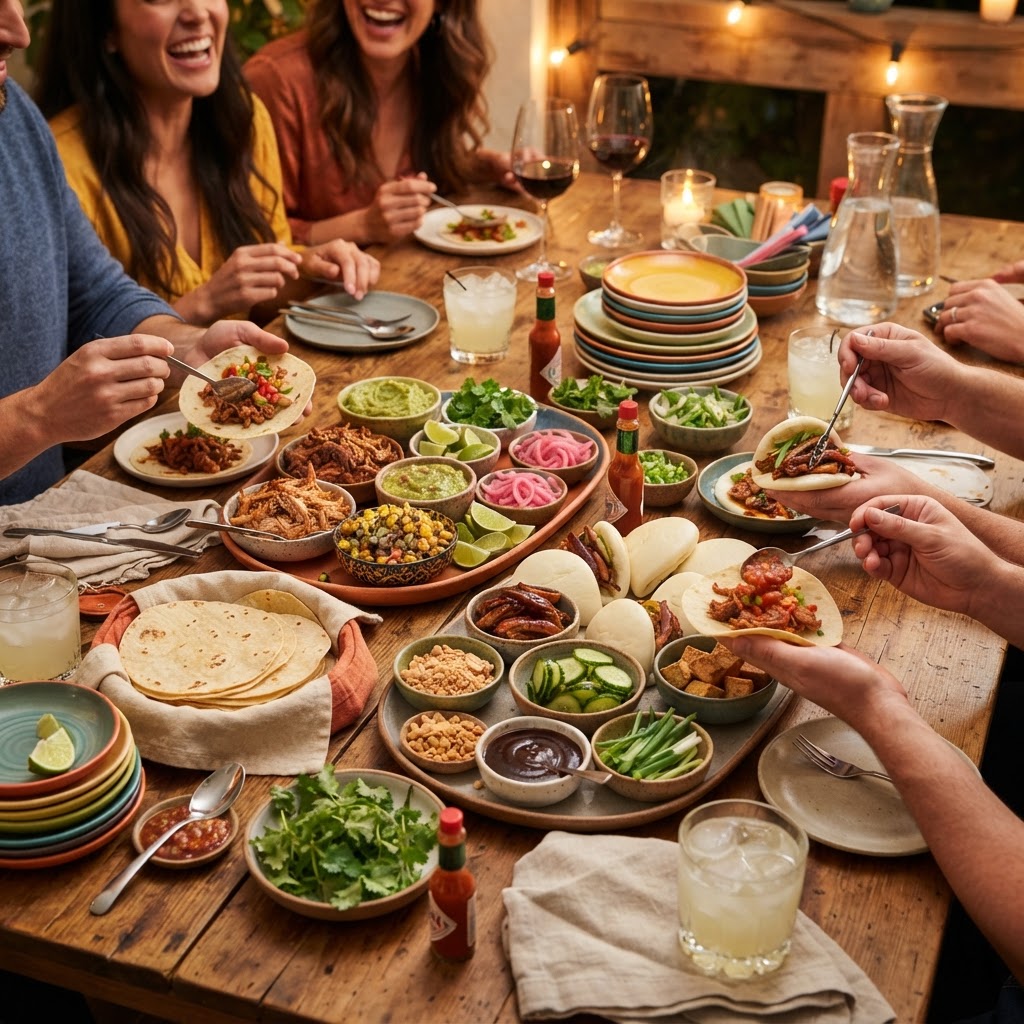
The Art of "Tabletop Assembly": Mastering DIY Taco or Bao Bars for Stress-Free, Interactive Hosting
The anxiety of hosting often stems from a misplaced desire to play the role of the solitary magician, whisking hot plates from the kitchen just as guests are settling in, only to find the conversation has moved on without you. We have all been there, standing over a searing skillet while the laughter drifts from the dining room, feeling the frantic pulse of timing mismanagement. The secret to modern, sophisticated entertaining is not in the complexity of the dishes you prepare, but in the intentionality of how you serve them. By embracing the concept of the Tabletop Assembly, you shift the labor from the final service window to the preparation phase, allowing yourself the luxury of being a participant rather than a prisoner of your own stove.
This approach—be it a taco bar or a bao station—is rooted in the principles of mise en place, ensuring that every component is ready, chilled, or kept warm long before the doorbell rings. It transforms a meal into an interactive experience, empowering guests to customize their culinary canvas according to their specific palate. The beauty of this format lies in its inherent modularity; it invites dietary flexibility without requiring separate menus, and it effectively dismantles the formality that can sometimes stifle genuine connection. When you relinquish the need for "plated perfection," you gain the freedom to enjoy your own party, which is, ultimately, the most important element of any successful social gathering.
Mastering this style requires a shift in mindset: focus on textures, vibrant colors, and temperature contrasts to keep the experience engaging. We are looking for a symphony of flavors where the acid cuts through the fat, and the crunch of fresh vegetables balances the richness of slow-cooked proteins. Throughout this guide, we will explore the structural integrity of the perfect taco, the delicate steam-management of bao buns, and the aesthetic orchestration of a spread that looks as professional as it tastes. Forget the stress of individual plate-ups; it is time to treat your dining table as a workspace for communal creativity and genuine hospitality.
The Foundation of The Tabletop Assembly
The core of any DIY assembly bar is the "blank canvas." Whether you are opting for the crisp bite of a corn tortilla or the cloud-like fluff of a steamed bao bun, your selection dictates the structural integrity of the meal. For tacos, I always recommend sourcing nixtamalized corn tortillas, which offer a depth of flavor and structural durability that generic supermarket flour shells simply cannot match. If you are serving bao, the golden rule is steam-to-table service. Bao buns are notorious for turning gummy if they sit too long, so keep them in a bamboo steamer lined with parchment paper, positioned right in the center of the display to ensure they remain warm and supple throughout the night.
Consistency in your prep is the hallmark of a seasoned cook. When assembling your tabletop, you want to follow a logical flow: start with your carriers (the buns or shells), move to your proteins, then to your fresh toppings, followed by sauces and garnishes. This creates a logical assembly line that prevents crowding and allows guests to navigate the spread with ease. I suggest grouping your items in varying elevations—use small wooden crates or cake stands to elevate your bowls—which creates visual interest and makes reaching for ingredients more ergonomic.
"True hospitality is not about the complexity of your recipes, but the ease with which you allow your guests to inhabit your home. The Tabletop Assembly removes the boundary between the kitchen and the dining room, turning a meal into a communal work of art."
Mastering the Protein Component
When planning for a crowd, select proteins that hold up well under low-and-slow heat. For taco bars, think braised beef barbacoa or carnitas. Both of these dishes benefit from being made 24 hours in advance, allowing the flavors to meld and the fat to redistribute, resulting in a more succulent final product. I recommend keeping these in a cast-iron Dutch oven or a slow cooker set to "warm" (around 140°F) to ensure the moisture levels remain consistent. If you are going the bao route, five-spice pork belly or crispy tofu are excellent choices that provide that necessary umami punch.
Pro-Tip:* If using a slow cooker for proteins, stir in a quarter-cup of reserved cooking liquid or citrus juice right before service to keep the meat from drying out.
Temperature Control:* Keep meat at an internal temperature of at least 145°F for food safety, but never exceed 165°F for long periods to avoid overcooking the connective tissue.
Ratio:* Calculate 1/4 to 1/3 pound of protein per person. This provides a generous serving without leaving an excessive amount of waste at the end of the evening.
The Architecture of Toppings: Texture and Acid
If the protein is the heart of your dish, the toppings are the soul. You must provide a mix of textures—think the crunch of a radish, the creaminess of avocado, and the brightness of pickled onions—to ensure no bite feels one-dimensional. The biggest mistake amateur hosts make is leaving the toppings in large, unwieldy bowls. Instead, use small, shallow vessels that allow guests to scoop with ease. Remember that acid is the secret weapon of the professional chef; a simple quick-pickled red onion (prepared with vinegar, sugar, salt, and water) will transform a standard taco into something restaurant-grade.
The Role of Freshness
Always incorporate a "fresh factor." This could be a micro-cilantro garnish, a slaw made of thinly sliced cabbage, or a fresh herb salad with mint and Thai basil if you are leaning toward Asian-inspired bao fillings. The goal is to provide a palate cleanser in every bite. Slice your vegetables using a mandoline to achieve uniform thickness, which not only looks professional but also ensures the correct ratio of crunch in every mouthful. Avoid pre-chopping delicate herbs more than an hour in advance; keep them covered with a damp paper towel to prevent oxidation.
Pickling Ratio:* For a quick pickle, use a ratio of 1:1 vinegar to water, with 1 tablespoon of sugar and 1 teaspoon of salt per cup of liquid. Heat the liquid, pour over sliced onions, and let sit for at least 30 minutes.
Avocado Management: To prevent browning, keep avocado in a lime-juice-based emulsion or cover the surface directly with plastic wrap to exclude air. Better yet, serve a guacamole* with at least two tablespoons of lime juice per two avocados.
"Texture is the unspoken language of the palate. When you build a taco or a bao, you are essentially constructing a miniature building. If you don't have a stable foundation, crunchy walls, and a soft roof, the whole thing collapses before it ever reaches the guest."
Sauce Strategies for Interactive Dining
Sauces are the connective tissue of your DIY bar. They should be categorized into creams, salsas, and glazes. For tacos, a crema (sour cream thinned with lime and cilantro) and a roasted tomato salsa are essential. For bao, consider a hoisin-sriracha reduction or a scallion ginger oil. The goal is to provide enough variety that guests can experiment, but not so many options that they feel overwhelmed. I always recommend placing small, labeled squeeze bottles on the table; they look clean, prevent the mess of spoons being dropped into sauces, and offer a professional aesthetic.
The Importance of Heat Levels
It is vital to cater to varying heat tolerances. I advocate for a "heat-neutral" approach: serve your main proteins without heavy spice, and provide a range of hot sauces on the side. This allows your guests to dial in their own spice level. For a sophisticated touch, create a chili crisp or a serrano-tomatillo salsa that offers heat but also complex fruit and earth notes. When labeling these items, keep it simple: use small slate tags or chalkboard markers to identify the level of heat—"Mild," "Medium," "Hot"—so guests know exactly what they are getting into.
Squeeze Bottle Efficiency:* Cut the tips of your squeeze bottles slightly wider to accommodate thicker sauces like hoisin or chunky salsas.
The "Neutralizer":* Always have a mild cooling option available, such as a yogurt-based tzatziki or a cucumber-lime crema, for those who find the spice levels reaching a threshold.
Managing the Flow: Logistical Precision
The flow of your Tabletop Assembly is just as important as the food itself. If guests have to cross paths or navigate a narrow space to reach the napkins, the efficiency of your setup is compromised. Arrange your layout so that the "carriers" (buns or tortillas) are at the start, followed by proteins, then the cold toppings, and finally the sauces and garnishes. Place the plates at the very beginning of the line—or better yet, keep them at the table so guests can build their tacos while sitting down—to reduce the amount of time they spend standing.
Creating an Engaging Environment
Your setup should be as beautiful as it is functional. Use a variety of textures in your serveware; mix ceramic, wood, and metal to create a visual hierarchy. I am a proponent of layering: use a table runner to anchor the space and place your bowls directly on that, rather than using heavy placemats for every item. This creates a cohesive look that feels curated rather than cluttered. Ensure that there is adequate lighting over the table, as guests need to clearly see what they are adding to their taco or bao to avoid accidental cross-contamination or unpleasant flavor pairings.
Troubleshooting the "Tabletop" Experience
No matter how well-prepared you are, minor hiccups can occur. The most common issues are items running out, sauces thickening too much, or proteins cooling down. To address the latter, keep a secondary serving of your protein in a small pot on the stove, ready to be swapped out if the main vessel begins to look empty. If your tortillas become brittle, keep them wrapped in a clean, dry kitchen towel inside an insulated warmer; the residual steam will keep them pliable for at least 45 minutes to an hour.
Handling Dietary Restrictions
In the modern culinary landscape, the DIY bar is the ultimate solution for accommodating dietary restrictions. Because each element is separate, it is incredibly easy to offer gluten-free corn tortillas alongside flour ones, or to provide a plant-based protein like charred cauliflower or braised jackfruit alongside your meat options. Label your ingredients clearly, including a small "Contains" note if you have guests with severe allergies. This level of consideration goes a long way in making your guests feel welcome and safe, which is the cornerstone of any great host's philosophy.
The Gluten-Free Swap:* Always keep gluten-free tortillas in a separate basket to avoid cross-contamination with the flour options.
The Dairy-Free Option:* Use coconut milk or silken tofu bases for your creamy sauces instead of sour cream or heavy yogurt.
The Vegetarian Check:* Ensure your beans or vegetable sides are cooked in vegetable stock rather than chicken or beef stock, and label them as such.
The Aesthetic of Abundance
While we focus heavily on the mechanics of the meal, we cannot ignore the aesthetic impact. A tabletop bar should look like an invitation to indulge. Think in terms of abundance: fill your bowls to the brim, use plenty of fresh herbs, and scatter extra limes or lemon wedges around the serving platters. The visual "fullness" of the display signals to your guests that they are free to eat as much as they like, which creates a relaxed, generous atmosphere. Don't be afraid to use natural elements; fresh bay leaves, whole chili peppers, or sprigs of cilantro can be scattered on the table runner to fill in empty spaces and add a touch of professional polish.
The Role of Lighting and Music
A successful Tabletop Assembly is not just about the food; it is about the sensory environment. Use warm lighting—dimmers are your friend—to create an intimate vibe. If you are using candles, ensure they are placed far enough from the food that they don't impact the temperature or present a fire hazard. The music should be energetic but unobtrusive, providing a background hum that encourages conversation. When the lighting is soft and the music is right, the "assembly" process feels less like a chore and more like a social ritual.
"A well-executed taco bar is a testament to the host's respect for the guests' autonomy. You are providing the components of a memory, and then getting out of the way so they can build it exactly how they want."
Final Thoughts
Mastering the Tabletop Assembly is about finding the balance between rigorous preparation and relaxed execution. By investing your energy upfront in the mise en place, you earn the right to be a guest at your own event. The goal is to strip away the artifice of the "perfectly plated meal" and replace it with the warmth of shared experience. Whether your guests are building the perfect pork belly bao or a spicy, crunchy carnitas taco, the success of the evening will be measured not by the complexity of the food, but by the laughter echoing across the table.
Remember that perfection is the enemy of hospitality. If a bowl of salsa needs a little more lime or the tortillas aren't perfectly aligned, don't let it ruffle your feathers. Your guests are not there to audit your kitchen skills; they are there to enjoy your company and the vibrant, fresh meal you’ve provided. Keep your recipes simple, your ingredients high-quality, and your focus on the people around the table. As you refine this style of entertaining, you will find that the "Blame The Chef" approach isn't about escaping responsibility—it's about owning your role as the architect of the evening, then successfully transitioning into the role of the life of the party.
As you close out this guide, I encourage you to try hosting your first tabletop assembly this coming weekend. Start small: perhaps a selection of three proteins, four toppings, and two signature sauces. Once you master the rhythm of the prep, you can expand your repertoire to include more complex fillings or experimental flavors. Keep your knives sharp, your herbs fresh, and your table ready for the inevitable joy that comes with communal, interactive dining. The art of the assembly is yours to command—so go forth and make it your own.
If you find yourself feeling overwhelmed, revisit the basics of the list. Did you prep the proteins the day before? Is the table layout logical? Are the sauces in easy-to-use dispensers? If the answer is yes, then you have already won. All that remains is to pour a glass of wine, turn up the music, and let your guests do the rest. Hosting doesn't have to be a battle against the clock; when done correctly, it is one of the most rewarding creative outlets available. Embrace the chaos of the assembly, enjoy the vibrancy of the colors, and most importantly, remember to eat a taco or two yourself before the night is through.
Finally, do not underestimate the power of a good finishing touch. A squeeze of fresh lime, a sprinkle of flaky sea salt, or a few sprigs of fresh micro-greens can elevate a dish from "homemade" to "masterpiece" in seconds. Your guests will notice the attention to detail, but they will remember the feeling of ease and the quality of the conversation. That is the true success of "Tabletop Assembly." It is not about the dish; it is about the shared creation. Happy hosting, and remember: if anything goes wrong, you can always blame the chef—but with this guide, I suspect you won't need to.
As we wrap up this exploration into the world of interactive dining, consider the deeper impact of your hosting style. When we serve food this way, we are fostering a culture of participation. We are telling our guests that their preferences matter and that their contribution to the meal—the way they choose to layer their ingredients—is part of the beauty of the evening. It is a subtle, yet powerful, way to build community. In a world that often feels hurried and transactional, taking the time to curate a space where people can build their own plates is a radical act of care.
Keep experimenting with new flavor profiles. Perhaps try a fusion taco with Korean-style beef and Mexican-style slaw, or a bao bun filled with crispy fried chicken and a spicy honey drizzle. The structure is fixed, but the possibilities within that structure are infinite. Let your kitchen be your laboratory, and your dining table be your stage. By removing the stress of service, you are clearing the way for better conversations, deeper bonds, and more memorable nights. The art of hosting is an evolving practice, and this DIY bar approach is a fantastic, flexible tool to add to your culinary arsenal.
One last piece of advice before you start your prep: keep your knives sharp and your workspace clean. A cluttered prep area is the fastest way to lose your composure, and a dull knife is the fastest way to lose your patience. Spend the hour before the party cleaning your station and wiping down your surfaces; it will give you a sense of calm that will permeate the rest of the evening. When the first guest walks in, you should feel as relaxed as they are, with the music playing and the smell of fresh herbs and warm, spiced proteins filling the air. That is the dream of the modern host, and it is entirely within your reach.
In future posts, we will dive deeper into specific regional taco styles and the nuances of dough fermentation for homemade bao buns. But for now, take these principles and apply them to your next gathering. Whether you are hosting a casual Friday night for close friends or a large celebration for extended family, the principles of the Tabletop Assembly will serve you well. It is efficient, it is interactive, and most importantly, it is fun. Enjoy the process of creating, and enjoy the company of those you have brought together around your table. You have the tools, you have the knowledge, and now, you have the strategy. The rest is simply the joy of good food and great company.
Take a moment to evaluate your own hosting space. Is your table large enough for the setup? Do you have enough serving spoons for each dish? These logistical details are the "un-fun" parts of hosting, but they are the bedrock of success. Once you have these basics codified, you can stop thinking about them and start focusing on the actual experience. That is when you truly become a master of the craft. And remember, whenever you feel the stress creeping back in, just close your eyes, take a breath, and focus on the primary goal: providing a warm, welcoming space for the people you care about. Everything else is just the garnish.
As we conclude, I hope you feel empowered to step away from the traditional, rigid structure of the dinner party. The world of interactive dining is vast, and the DIY taco or bao bar is only the beginning. With the right foundation of technique, ingredient management, and an eye for design, you can transform any meal into an unforgettable event. Keep learning, keep experimenting, and keep hosting. It is one of the most profound ways we can connect with one another in our modern world, and it is a tradition well worth preserving. Thank you for reading, and I look forward to seeing how you bring these ideas to life in your own home.
Final reminder: always keep an extra supply of napkins near the assembly station. No matter how elegant your setup is, tacos and bao are inherently messy, and a lack of napkins is a quick way to ruin the comfort of your guests. Keep things simple, keep them accessible, and always keep the spirit of generosity at the heart of your hosting. Now, go forth and master the tabletop! Your guests are waiting, the table is set, and the ingredients are prepped. This is your time to shine—not as a servant in the kitchen, but as the orchestrator of a beautiful, communal meal. Happy cooking!


Get the Next Recipe
Weekly recipes, techniques, and gear picks — straight to your inbox.
