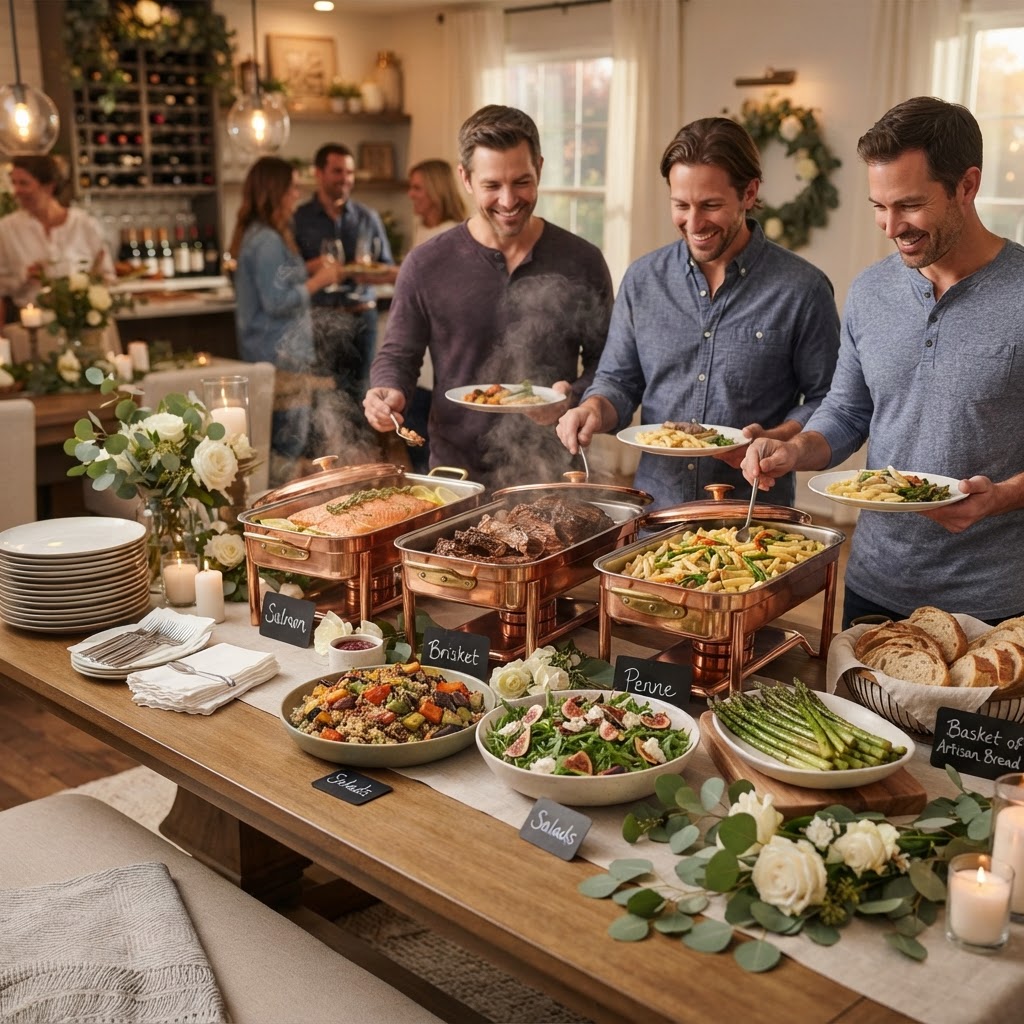
The Art of the "Buffet Flow": Mastering Strategic Layout and Temperature Control for Smooth, Large-Group Hosting
Hosting a large gathering often feels like orchestrating a symphony where the instruments are hot pans, hungry guests, and a limited amount of table space. For many home cooks, the mere mention of a "buffet" conjures images of chaotic lines, lukewarm casseroles, and the frantic refilling of dishes while guests stand by awkwardly. However, mastering the art of the buffet is less about culinary wizardry and more about the precision of logistical choreography. When you treat your dining room like a professional galley, you transform the stress of service into a seamless flow that allows you to actually enjoy the party you worked so hard to curate.
The secret to a successful buffet lies in the strategic layout of your service station, which dictates the pace at which your guests interact with the food. By categorizing your menu into logical stations—think appetizers, mains, starches, and desserts—you can prevent the dreaded "plate bottleneck" that stops movement dead in its tracks. Beyond the visual appeal of a well-arranged table, there is the vital component of food safety and temperature control, which ensures that your slow-roasted proteins and creamy sides remain as palatable at the end of the evening as they were at the beginning. Understanding how to maintain the "danger zone" at bay—keeping hot food above 140°F and cold food below 40°F—is the hallmark of a responsible and confident host.
In this guide, we will pull back the curtain on professional hosting techniques that turn home dining into an efficient, elegant experience. We will explore everything from the theatre of presentation to the precise thermal management required to serve large crowds without compromising flavor or texture. Whether you are hosting an intimate brunch for twenty or a boisterous holiday dinner for fifty, these principles of buffet flow will ensure that your guests leave satisfied, your kitchen remains under control, and you, the host, are remembered for your effortless grace rather than your frantic exhaustion.
The Science of Strategic Traffic Patterns
The biggest mistake amateur hosts make is placing their buffet against a wall, which inadvertently forces guests into a unidirectional line that creates a massive queue. Instead, think about the linear flow of your space and attempt to move the buffet away from the wall to create a "double-sided" island. When guests can access food from both sides of the table, you effectively double your throughput and eliminate the bottleneck that keeps hungry people waiting in the cold. Position the heaviest, most popular items in the center and work your way outward, ensuring that the plates are at the very beginning and the cutlery—along with napkins—is at the very end of the line.
Preventing the Plate Bottleneck
The placement of plates is the most critical decision in your buffet architecture. Never place plates at the start of a table if there is not enough room for them to be picked up comfortably; instead, stack them on a separate, dedicated pedestal or side table located three to five feet away from the main buffet line. This decoupling of the service ensures that guests have already secured their primary vessel before they ever confront the food, meaning they are less likely to hover and hesitate. A hovering guest is the enemy of a smooth flow, so give them a clear objective—plate in hand—before they hit the main course line.
Directional Signage and Intuitive Design
Even in a home setting, subtle directional cues can drastically alter guest behavior. Place your salad and cold appetizers at the start of the line, followed by the entrees and heavy sides, and finally the sauces or gravies at the end. This structure guides the guest's hunger, moving them from lighter, high-moisture items to the dense, calorie-rich proteins and starches. If you are serving a crowd of more than twenty, consider labeling your dishes with small, elegant cards that list the name of the dish and key allergens like gluten, dairy, or nuts. This transparency prevents the "what is in this?" conversation that causes every line to grind to a halt.
"The most successful buffets are those where the guest doesn't realize they are being managed. By controlling the movement of the crowd through deliberate placement, you allow the food to speak for itself while maintaining a rhythmic, stress-free environment."
Mastering Temperature Control for Bulk Service
Maintaining food safety while ensuring the highest culinary quality is a balancing act of physics and timing. The danger zone—the temperature range between 40°F and 140°F—is where bacteria flourish, so your equipment must be up to the task of holding items at the appropriate heat levels. For large-group hosting, I highly recommend investing in a few chafing dishes with gel fuel, but if you don't have those, you can easily replicate the effect with deep hotel pans nested inside larger pans filled with hot water. This water bath (bain-marie) technique provides a gentle, consistent heat that prevents delicate proteins from scorching on the bottom while keeping the internal temperature safe.
Holding Proteins Without Overcooking
The biggest danger with large-format proteins is the "residual heat" effect. If you pull a roast out of the oven at exactly 145°F, it will continue to climb to 155°F or 160°F while sitting on the buffet, resulting in a dry, unappealing meal. To combat this, pull your proteins when they reach a target internal temperature of 125°F for medium-rare beef or 155°F for poultry, then allow them to rest in an insulated cooler or a pre-warmed oven set to "low" or "warm" (typically 160°F) for at least 30 minutes. This allows the juices to redistribute and gives you a safety buffer before the meat hits the service line.
The Role of Thermal Retention
For side dishes like mashed potatoes or mac and cheese, look toward the utility of the slow cooker or thermal cooker. A slow cooker set to its "keep warm" setting is the perfect vessel for holding heavy starches, provided you have a small amount of liquid—like cream, broth, or butter—added to prevent the mixture from drying out as the moisture evaporates over time. Always keep these dishes covered with a heavy lid to trap steam; you should only remove the lid when guests are actively plating their food, then replace it immediately to preserve the thermal integrity of the dish.
The Art of Visual Composition and Plating
A buffet should be a feast for the eyes before it is a feast for the palate. The visual hierarchy of your table depends on varying the heights of your serving platters, which prevents the table from looking like a flat, uninspired landscape. Use wooden blocks, sturdy crates, or decorative cake stands to elevate specific bowls or platters. Not only does this make it easier for guests to reach the food, but it also creates a professional "restaurant-style" aesthetic that signals to your guests that this is a curated experience, not just a casual potluck.
Color and Texture Contrast
When planning your menu, avoid a "beige" buffet. If you are serving roast chicken and mashed potatoes, you absolutely must include a vibrant, crisp element—perhaps a bright green kale salad with pomegranate seeds or a platter of roasted carrots with an orange glaze. The color palette of your food directly impacts the appetite; we are naturally drawn to bright, contrasting colors. Aim for at least one "high-moisture" dish (braised greens), one "crunchy" dish (raw vegetables or toasted nuts), and one "creamy" dish (a gratin or puree) to ensure that the mouthfeel of the meal remains varied and interesting.
Serving Utensils and Functional Elegance
Nothing ruins the flow of a buffet faster than a tiny, inadequate serving spoon for a giant bowl of pasta. Match your utensils to the dish: use wide, shallow tongs for greens and salads, a deep-welled ladle for sauces or stews, and a flat, slotted turner for solid proteins. Proper utensil sizing not only makes it easier for guests to serve themselves, but it also prevents the messy spills that happen when a guest tries to scoop a massive portion of potato salad with a teaspoon. Always provide a small saucer or plate for the serving utensils to rest on between uses so that they don't drag across your tablecloth or buffet surface.
"Presentation is the final seasoning of any dish. When you elevate your platters and select your utensils with purpose, you elevate the perception of the entire event, making even simple ingredients feel like a grand celebration."
Menu Strategy: What Works, What Fails
Not every dish is suited for the buffet format. You should prioritize dishes that hold their integrity over extended periods of time, which means staying away from items that are strictly "to-order," like pan-seared scallops or individual omelets. These dishes require immediate plating and will turn rubbery or cold within minutes. Instead, favor slow-cooked braises, roasted vegetables, room-temperature salads, and hearty grain bowls. These dishes are actually enhanced by sitting for a short time, as the flavors have an opportunity to meld together.
The "No-Stress" Protein Selection
If you want to maintain your sanity as a host, choose proteins that can be served sliced or shredded. A whole-roasted side of salmon or a slow-cooked brisket is significantly easier to portion than individual chicken breasts, which look messy once partially eaten. Slicing your proteins ahead of time and arranging them on a platter with a light drizzle of sauce or jus keeps them looking appetizing, even when the buffet is halfway empty. Plus, it controls portion sizes, as guests are more likely to take one or two slices rather than a massive, singular breast.
Accommodating Dietary Constraints
In the modern culinary landscape, you must account for the common dietary restrictions of your guest list. The easiest way to handle this is to adopt a "modular" menu design. By keeping your sauces, dressings, and toppings on the side rather than pre-mixed, you allow guests with allergies or specific diets (like vegan or keto) to customize their own plates. This inclusive service style saves you from having to prepare separate meals for different people, allowing you to focus on the overall quality of the components rather than the complexity of individual dishes.
* Always keep a "back-up" stash of napkins and small plates nearby.
* If a dish runs low, replace the entire platter with a fresh one rather than refilling it, which keeps the presentation pristine.
* Avoid highly pungent ingredients that might linger in the air or overwhelm delicate palates.
Infrastructure and Support: The Invisible Tools
Your buffet is only as good as the infrastructure supporting it. Having the right tools—from high-quality fuel for your warming trays to simple, effective lighting—is what separates a home cook from a true hospitality professional. Ensure that your buffet table is situated in a high-traffic area that doesn't block the path to the bathroom or the kitchen exit. If you have the luxury of space, set up a "Beverage Station" away from the food table. This is crucial: the biggest cause of congestion is guests standing at the buffet line while they fiddle with ice, water, and cocktails. Move the drinks to a separate station to keep the food line moving efficiently.
Managing Waste and Cleanup
The end of the party shouldn't feel like a disaster zone. Strategically place a discrete trash receptacle near the end of the line, but keep it covered or tucked away so it isn't the focal point. During the meal, take a quick "sweep" of the buffet every 20 to 30 minutes. Use a warm, damp cloth to wipe away any spills around the edges of serving platters and replace any used utensils. This small act of maintenance prevents the buffet from looking "picked over" and signals to your guests that the event is still being actively managed and cared for.
The Power of Lighting and Atmosphere
Atmosphere is the "seasoning" of your event. If your buffet table is in a dark corner, your guests won't be able to see what they are eating, which leads to confusion and slow service. Use warm, overhead lighting, or consider adding small, LED-powered accent lights or battery-operated candles around the platters. Lighting directs the eye, and by brightening the table, you make the food look more inviting and the entire experience feel more polished. A well-lit buffet is one that encourages guests to return for seconds without hesitation.
Strategic Beverage Pairing and Logistics
When planning your beverages, think about the volume of service. Providing individual bottles of water or wine is convenient, but it creates a massive amount of trash and clutter on the table. Instead, go for large-format service: big glass dispensers filled with infused waters, large carafes of wine, or a self-serve punch bowl. This reduces the number of items guests have to manipulate with their hands and keeps the service area clean. Always provide glassware that is durable and easy to hold, and remember that for every guest, you should expect to serve at least two to three drinks during a three-hour event.
The Ice Management System
Ice is a logistical challenge that many hosts overlook. If you are serving chilled beverages, do not rely on your kitchen refrigerator to provide enough ice for the entire party. Buy twice as much ice as you think you need and store it in an insulated, heavy-duty cooler located near the beverage station. Have a sturdy, dedicated scoop for the ice and ensure that it is never left inside the bin to melt or become contaminated. Proper ice management ensures that your drinks remain chilled throughout the duration of the event, which is vital for cocktails and wines that lose their luster as they warm up.
Self-Service vs. Assisted Service
For smaller groups, self-service is usually preferred, but if you are hosting a larger crowd (over 30 people), consider setting up an assisted buffet. This doesn't mean you need to hire staff; it simply means you provide a small "how-to" card or simply take the lead in serving the first few guests. Often, once you show people how to navigate the table and demonstrate that there is plenty of food, the "scarcity mindset" vanishes and the flow becomes much more relaxed. Never underestimate the power of the host setting the tone through their own calm, deliberate actions.
Final Thoughts
The art of the buffet is a practice in both culinary craft and human psychology. When you move past the anxiety of cooking and into the strategy of service, you begin to see that hosting is truly about creating an environment where people feel welcomed, nourished, and free to enjoy themselves. By masterfully controlling your traffic patterns, keeping a vigilant eye on temperature and food safety, and thoughtfully arranging your service area, you turn a meal into an experience. It is the small details—the height of a platter, the clarity of a label, the warmth of a plate—that elevate your hospitality from simple service to a memorable event.
Remember that perfect is the enemy of good. Even if a spoon falls or a dish runs low, the success of your party is ultimately measured by the connections made around your table. Don't be afraid to leave the kitchen, grab a drink, and engage with your guests; that is why you put in all this effort in the first place. When you have done the heavy lifting of preparation, you earn the right to be a participant in your own party. Use these techniques as a foundation, keep your culinary standards high, and always, always keep the flow moving. Your guests will notice the ease, the elegance, and the care you put into every detail, making them look forward to the next invitation to your home. "Blame the Chef" is a moniker for when things go wild, but with this guide, you’ll be the one in total control of the kitchen.
Get the Next Recipe
Weekly recipes, techniques, and gear picks — straight to your inbox.
