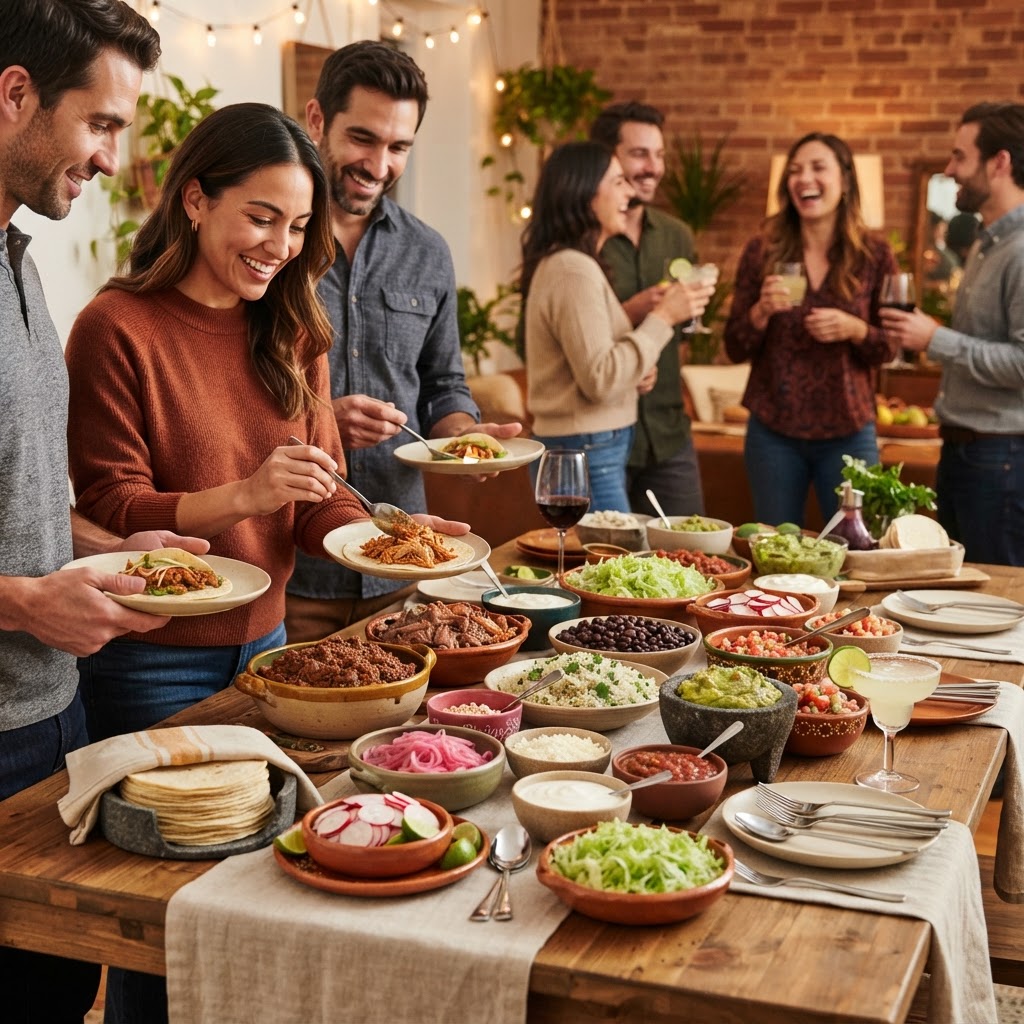
The Art of the "Build-Your-Own" Dinner Party: How to Design Interactive Menus That Keep Guests Mingling and the Kitchen Stress-Free
There is a specific kind of panic that sets in for the home cook when the doorbell rings, the wine is still breathing, and the main course is sitting precariously in the oven. For years, I subscribed to the rigid, formal dinner party philosophy where the host acts as a high-speed conductor, frantically plating intricate dishes while guests awkwardly occupy the living room. This approach is not only exhausting, but it also creates a wall between the kitchen and the dining area, isolating the host just when the conversation should be gaining momentum. We have all been there, hovering over a reduction sauce while feeling guilty about missing the laughter drifting in from the other room. It is time to retire the high-stress, fine-dining-at-home fantasy in favor of something much more dynamic and genuinely enjoyable.
The "Build-Your-Own" (BYO) dinner party is not a cop-out; it is a masterclass in culinary strategy. By shifting the responsibility of assembly from the chef to the guest, you transform your meal into an interactive experience that encourages movement and socialization. This model works because it forces guests to interact with their food, and by extension, with each other, breaking the ice before the first bite is even taken. When you design a menu around components rather than plated courses, you reclaim your time, allowing yourself to actually enjoy the party you spent hours preparing for. The goal is to provide a curated selection of high-quality ingredients that harmonize beautifully, regardless of how they are layered on the plate or in a bowl.
To execute this successfully, you must embrace the concept of mise en place on a grand scale. Every component needs to be prepped, seasoned, and staged well in advance, leaving nothing but the final assembly for the guest. Think of your kitchen island or your dining room sideboard as a theater stage, where the ingredients are the actors and your guests are the directors. This method requires a level of intentionality in your shopping and cooking—you aren't just making dinner; you are curating a flavor profile that allows for endless creative combinations. Once you master the rhythm of a well-designed BYO menu, you will find that you can host groups of ten just as easily as you host four, all without breaking a sweat or needing to hide in the pantry for a sanity break.
The Architecture of the Interactive Table
Designing an interactive menu requires a shift in how you think about flavor balancing. You cannot simply place a pile of random ingredients on a table and call it a party; there must be a foundational logic to the chaos. Every BYO menu needs to be built around a "Base," a "Protein," a "Crunch," and a "Sauce." When these four elements are designed to pair with one another, the guest's creative freedom remains within a delicious guardrail. For instance, if you are hosting a taco night, the base is your tortilla, the protein is your slow-roasted carnitas, the crunch is a pickled radish slaw, and the sauce is a vibrant salsa verde. Every element is tested to ensure that no matter the combination, the result is objectively tasty.
Defining Your Bases
Your base is the canvas of the meal. Whether it is a batch of warm, fluffy basmati rice, charred sourdough bread, or hand-rolled pasta, it must be robust enough to handle the weight of the toppings. If you choose a grain base, ensure it is cooked to the perfect al dente texture—never mushy. If you are opting for bread, keep it warm and slightly toasted so it doesn't get soggy under the weight of dressings or proteins. Pro-tip: keep your starches in a heavy-duty slow cooker or a chafing dish on low heat to maintain that essential warmth throughout the evening.
The Role of Temperature and Texture
The secret to a successful BYO setup is the temperature contrast. If everything is hot, the palate becomes fatigued; if everything is cold, the meal feels like a sad deli tray. Always balance your spread with a mix of room-temperature ingredients, freshly seared proteins, and chilled accompaniments like herbs and pickles. Texture is equally vital. If you are serving a salad bowl bar, include roasted nuts for fat and crunch, crispy fried shallots for a savory pop, and fresh sprouts for a delicate finish. A meal that lacks a variety of textures will be remembered as bland, regardless of how much time you spent on the main protein.
"A great host is like a great editor; they know exactly what to include to make the story compelling, and more importantly, they know what to leave on the cutting room floor. When you limit your components to five or six high-quality stars, you allow the ingredients to shine without overwhelming the guest with indecision."
Mastering the Protein: The Chef’s Secret to Hands-Off Service
The protein is usually the most stressful part of any dinner party, but in a BYO setting, you want to cook it in a way that minimizes active time. Low and slow cooking is your best friend here. Consider braised short ribs, pulled pork shoulders, or even a citrus-marinated whole roasted chicken. By choosing proteins that hold well in their own juices, you eliminate the need to cook à la minute. When you cook a protein that can rest for thirty minutes to an hour without losing quality, you remove the "timing pressure" that often makes hosting so daunting.
Internal Temperature Guidelines
To ensure food safety and optimal texture, always use a digital instant-read thermometer. When dealing with large proteins, aim for these professional standards:
Beef/Lamb:* 130°F for medium-rare, 140°F for medium.
Poultry:* 165°F in the thickest part of the thigh.
Fish:* 145°F, though for delicate fish, pulling it at 135°F and letting the residual heat carry it is often superior.
Pork:* 145°F, allowing for a rest period of at least ten minutes to redistribute the internal juices.
Presentation as Utility
How you present the protein is just as important as how you cook it. Use a shallow, wide vessel for braised meats to allow for easy access with tongs or a serving spoon. If you are serving individual-sized portions, like grilled skewers or mini crab cakes, keep them on a warm slate or a heavy ceramic platter. Never pile them too high, or the ones at the bottom will steam and lose their crust. If you are working with a long table, consider placing the protein in the center of the station, flanked by the toppings, so that guests naturally flow from one end to the other as they build their plate.
The Power of the Condiment Station
If the protein is the heart of the meal, the condiments are the soul. This is where you can truly show off your culinary personality. A well-stocked condiment bar allows guests to customize their meal to their specific dietary preferences—whether they want extra heat, more acidity, or a punch of umami. Do not just serve store-bought hot sauce; take the extra ten minutes to craft a signature house sauce. Whether it’s a chimichurri, a roasted garlic aioli, or a spicy sesame oil, that one "extra" touch is what people will remember about your party.
The Ratio Rule
When setting up your sauces, follow the 3:2:1 Rule: 3 parts fat (yogurt, mayo, oil), 2 parts acid (lemon, lime, vinegar), and 1 part seasoning (herbs, spices, aromatics). This ratio ensures that no matter what ingredients you put together, the result will have a professional balance. Labeling is also key. If you are serving a spread with varying levels of spice, use small, elegant cards to note the ingredients and the intensity. This not only adds a touch of elegance but also saves your gluten-free or nut-allergic guests from having to play detective.
"The magic of an interactive dinner lies in the transition from 'host providing' to 'guest creating.' When a person adds their own cilantro, squeezes their own lime, and chooses their own ratio of sauce, they are no longer just consuming a meal—they are participating in a culinary act of creation."
Elevated Garnishes
Never underestimate the power of fresh herbs and microgreens. A simple plate of roasted root vegetables is transformed into a gourmet dish with the addition of fresh dill, crumbled feta, and a drizzle of honey. Keep your garnishes in individual ramekins with small serving spoons. This prevents cross-contamination and makes the table look like a curated pantry. Encourage your guests to use the garnishes; suggest a "topping combination" if you see someone looking overwhelmed by the choices.
Logistics: Organizing for Maximum Mingling
The logistics of an interactive dinner are what separate the stressed host from the relaxed professional. You want a flow of traffic that avoids bottlenecks. Place your bases at the start of the line, followed by proteins, then toppings, and finally sauces. This logical progression ensures that the plates get built from the bottom up, preventing the heavier items from crushing the more delicate greens or herbs. Also, consider the height of your serving dishes. Using wooden risers or cake stands of varying heights adds visual interest and makes it much easier for guests to reach ingredients without knocking over their neighbors' wine glasses.
The "Staging" Technique
The day before the party, write down your entire assembly line on a piece of paper. Map out exactly where every bowl, tong, and napkin goes. This might seem pedantic, but on the day of the event, you will thank yourself. Mise en place is not just for professional kitchens; it is the secret to not needing a Xanax before your guests arrive. If you have a particularly large group, set up two identical stations at either end of the table to prevent the dreaded "buffet line backup."
Handling Drinks and Cleanup
Integrate your drink station into the flow of the dinner. If guests are building their own bowls, they should be able to grab a drink immediately after without circling back. Place a large beverage tub near the end of the line. For cleanup, designate a "landing zone" for used plates and silverware. When guests feel like they know where to put their things, they are much more likely to help you keep the space tidy. Use high-quality, disposable-but-elegant bamboo plates if the group is large, or stick to smaller appetizer plates if you want to keep the vibe sophisticated and encourage multiple trips to the food station.
Scaling the Experience: From Four to Forty
One of the greatest benefits of the BYO model is its scalability. Whether you are hosting a romantic dinner for two or a backyard bash for forty, the structural principles remain identical. The only thing that changes is the volume of food and the size of your service vessels. For larger groups, focus on "modular" components that can be prepared in batches. For instance, rather than making twenty individual salads, make three large salad bowls with different flavor profiles—one Mediterranean, one Southwestern, and one Asian-inspired. This gives guests variety without requiring you to manage twenty different flavor profiles.
Batch Prep Strategies
When scaling up, leverage your equipment. Your oven can handle sheet pans of roasted vegetables while your stovetop works on a large pot of braising liquid. Use a slow cooker to hold your protein at the perfect serving temperature. Do not try to make every component from scratch on the day of; aim for a mix of "handmade" (like your signature sauce) and "high-quality convenience" (like pre-washed greens or artisan bread). The goal is to maximize flavor, not to exhaust your limited kitchen bandwidth.
Troubleshooting the Crowd
If you are worried about the food running out, the rule of thumb is to calculate 1.5 servings per guest for proteins and 1.25 servings for sides. It is always better to have a few extra leftovers than to be scraping the bottom of a bowl while guests are still hungry. If you notice a particular item is disappearing faster than others, do not hesitate to replenish it from a backup supply kept in the kitchen. Keep a "backstock" of your most popular toppings hidden in the fridge or pantry—this is your secret safety net.
The Psychology of the Shared Meal
At its core, food is a social lubricant. The interactive nature of a BYO party forces people to communicate. "What sauce did you use for that?" or "Is that cilantro or parsley?" are the kinds of low-stakes questions that naturally evolve into deeper conversation. By providing a common experience, you are essentially facilitating the chemistry of your guests. When people aren't sitting through a long, formal, multi-course service, they are free to move around, switch seats, and engage with whoever happens to be near the topping station at that moment.
Crafting the Atmosphere
Lighting and music are just as important as the food. Dim the lights, put on a playlist that matches the energy you want to evoke, and light a few unscented candles—never use scented candles near food, as they interfere with the palate. The goal is to make your home feel like an extension of the kitchen: warm, inviting, and professional. When guests see the care you have put into the preparation, they will naturally reciprocate by being more relaxed and engaged.
"A dinner party is not a test of your ability to perform in the kitchen; it is a test of your ability to make people feel comfortable. When you step out of the way and let the guests be their own chefs, you create a space where conversation can flourish and the meal becomes secondary to the joy of being together."
Engaging the Reluctant Guest
There is always one guest who is intimidated by the process of building their own plate. This is where your role as a host shifts from "chef" to "guide." If you see someone hovering, don't just point to the food. Take a plate and say, "Let me show you my favorite combination—the smokiness of the brisket really plays well with the brightness of this slaw." By providing a recommendation, you give them the confidence to explore, and they will almost always thank you for the intervention.
Final Thoughts
The art of the BYO dinner party is about more than just convenience; it is about creating a philosophy of generosity. By designing a menu that is structured yet flexible, you are saying to your guests that you trust their tastes and that you prioritize their company over your own performance. You are choosing to spend your evening with a glass of wine in your hand, listening to the buzz of conversation in your living room, rather than sweating over a hot stove and worrying about the perfect plating of a sauce reduction.
When the last guest has left and the final plate is cleared, take a moment to look at your kitchen. It shouldn't be a disaster zone. Because you utilized strategic mise en place and kept the assembly efficient, cleaning up should be a breeze. You’ll be left with the lingering sound of laughter and the satisfaction of knowing you hosted a gathering that felt effortless, both for you and for your guests. Remember, the best chefs know that the secret ingredient isn't a spice or a technique; it is the atmosphere you create when you aren't trying too hard.
To get started on your own BYO journey, begin with one small group of friends and a simple concept. Perhaps a taco bar, a grain bowl night, or a gourmet slider station. Do not try to conquer the world on your first try. Master the logistics, tweak your ratios, and most importantly, listen to what your guests enjoy. Over time, you will develop a repertoire of "Go-To" components that you can whip up for any number of people. Whether it is a Tuesday night or a Saturday celebration, remember that the goal is always the same: to enjoy the food, the company, and the art of living well. Blame the chef if you want, but after hosting your first BYO dinner, you'll be too busy having fun to care.
Finally, keep your toolkit simple. Invest in good tongs, sturdy serving spoons, and a collection of mismatched but cohesive ceramic bowls. These items are the backbone of your service. Don't worry about matching sets; a touch of eclecticism adds to the charm and makes the environment feel lived-in and welcoming rather than sterile and formal. Go forth, open your kitchen doors, and trust in the process. Your guests are not there to critique your plating; they are there to be fed, to be entertained, and to leave with a full heart and a satisfied stomach. You have all the tools you need—now go make it happen.
As you look toward your next gathering, remember the importance of the pre-game check. Review your timeline, ensure your mise en place is fully staged at least an hour before the first guest arrives, and take fifteen minutes for yourself. Put on an apron, pour yourself a drink, and breathe. You have done the hard work, the kitchen is ready, and the stage is set. The BYO method is your gift to yourself as much as it is to your guests. By minimizing your workload, you maximize your presence, and that presence is the ultimate ingredient for a successful dinner party.
Stay consistent, stay organized, and keep your culinary curiosity alive. The world of interactive dining is vast, with endless permutations of flavors and ingredients waiting to be explored. From Mediterranean mezze spreads to build-your-own ramen bars with delicate dashi and fresh aromatics, the possibilities are only limited by your imagination. Keep experimenting, keep sharing your successes, and never be afraid to step away from the traditional model of service. The kitchen is yours, the guests are ready, and the art of the interactive dinner party is now officially in your hands. Happy hosting.
In the end, hosting is about the memories created around the table. The BYO style ensures those memories aren't centered on the chef's stress, but on the shared joy of discovery. It’s an approach that values human connection over culinary ego. If you find yourself in a pinch, remember the Three C's: Communicate, Coordinate, and Celebrate. Communicate your plan to your guests, coordinate your prep time, and always make time to celebrate the moment. The "Blame The Chef" way is not about perfection—it's about the delicious, messy, wonderful reality of bringing people together over a good meal. Go set that table.

Get the Next Recipe
Weekly recipes, techniques, and gear picks — straight to your inbox.
