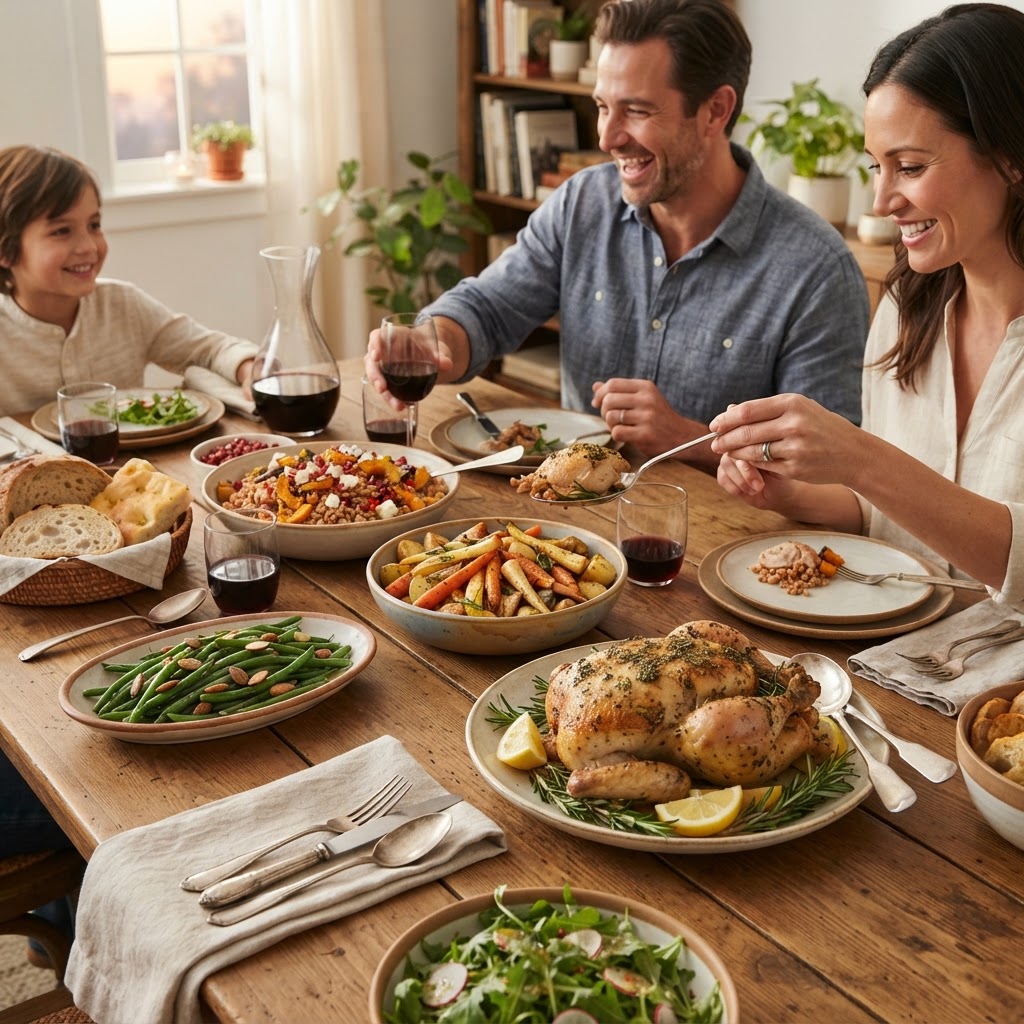
The Art of the "Family-Style" Spread: How to Balance Serving Temperatures and Timing for Stress-Free Hosting
The kitchen is often described as the heart of the home, but when you are hosting a large dinner party, it can quickly turn into a high-pressure war zone. We have all been there: the guest of honor arrives while the roast is still raw in the middle, the side dishes have gone stone-cold, and the host is sweating over a skillet instead of sharing a drink with friends. The secret to a successful gathering isn't necessarily having a bigger kitchen or more expensive appliances; it is mastering the logistics of timing and the physics of heat retention. When we talk about a "family-style" spread, we are talking about a communal experience that encourages warmth, conversation, and heavy helpings, but this style of service demands a strategic approach to food management.
The challenge with family-style dining is that unlike plated restaurant service, where each dish is fired to order, everything needs to hit the table at roughly the same time, or at least in a sequence that keeps everything edible. The reality of domestic entertaining is that we do not have an army of line cooks, but we do have the ability to leverage culinary engineering to keep our sanity. By understanding how to manipulate resting times, thermal carryover, and ambient heat, you can reclaim your role as a host rather than a short-order cook. It is about shifting your perspective from just "cooking a meal" to "managing an event," where every decision made in the prep phase pays dividends once the first glass of wine is poured.
In this guide, we are going to peel back the curtain on how professional kitchens maintain the integrity of a multi-course menu while preparing for the chaos of a full dining room. We will break down the essential techniques for staggering your cooking times, the best tools for keeping food at the perfect temperature, and the art of the holding strategy. This isn’t about striving for perfection, which is a recipe for anxiety, but rather about creating a flow that allows you to be present. Grab a glass of something cool, set aside your fear of the oven timer, and let’s dive into the mechanics of hosting a truly stress-free, family-style masterpiece that leaves your guests wondering how you made it look so effortless.
The Architecture of the Menu: Planning for Thermal Stability
Every great dinner starts with a menu that is designed not just for flavor, but for operational feasibility. When hosting family-style, your biggest enemy is the "one-oven crunch." If every dish you plan requires a temperature of 400 degrees Fahrenheit for varying amounts of time, you are inevitably going to face a bottleneck. Instead, focus on a menu that utilizes different cooking environments: one dish for the oven, one for the stovetop, and two that are served at room temperature or require only minimal heating. This diversification of cooking methods allows you to rotate your pans and ensure that nothing is competing for space at the last second.
Designing for Holding
The golden rule of large-scale entertaining is the concept of food temperature zones. You should aim for a menu where the main event is served hot, but your star side dishes can be served either warm or room temperature. By integrating cold salads, marinated vegetables, or room-temperature grain bowls, you significantly reduce the physical demand on your stovetop. These items can be prepared hours in advance and brought out at the final moment, leaving your burners free for the items that absolutely must be served steaming.
"The true measure of a host isn't how fast they can flip a steak, but how well they can orchestrate the timing so that the kitchen remains a place of joy rather than a place of desperation."
Furthermore, consider the carryover cooking potential of your proteins. A large roast, such as a prime rib or a whole-roasted chicken, is actually your best friend in this scenario because it requires a significant resting period. A twenty-minute rest is not just a suggestion; it is a necessity for juicy meat, and it provides you with a crucial "window of freedom" to finish your sauces or warm through your side dishes without worrying about the meat cooling down too quickly.
Mastery of the Staggered Prep: The Chef’s Timeline
To avoid the pre-dinner panic, you must embrace the philosophy of the mise-en-place. This term, which literally translates to "everything in its place," is the backbone of restaurant efficiency. In a home kitchen, it means having every ingredient chopped, measured, and staged before you ever turn on the heat. When you are cooking for a crowd, don't try to chop onions while your garlic is browning. That is how meals get ruined. Instead, spend the afternoon or the day before prepping your components so that the actual cooking process is just a matter of assembly and heat application.
The 80/20 Prep Rule
A good rule of thumb is to have 80% of your labor completed before your guests arrive, leaving only the final 20%—the actual heating and plating—for the social hour. This involves:
By moving your labor into the "down-time" hours, you ensure that the final hour before serving is reserved for finishing touches, like reducing a pan sauce or garnishing with fresh herbs. This transition from "heavy cooking" to "final assembly" is the secret weapon of the professional chef, and it is the primary differentiator between a stressful evening and a seamless one.
The Science of Thermal Retention: Keeping Food Hot
When food is served family-style, it loses heat faster than it would on a pre-warmed plate. To combat this, you must be intentional about your vessels and environment. Using cold ceramic platters will instantly suck the heat out of your carefully prepared roast or root vegetables. Professional kitchens often use heat lamps or warming drawers, but at home, we have more rustic, equally effective methods to keep our dishes at the proper service temperature.
Warming Your Platters
Before you begin plating, pre-warm your serving dishes. This can be done by:
* Placing ceramic or metal platters in the oven on their lowest setting (around 150-170 degrees Fahrenheit) for twenty minutes.
* Giving platters a quick rinse with boiling water and drying them thoroughly just before transferring the food.
* Using a "double-bowl" setup for salads or dips, where a larger bowl is filled with warm water or ice to maintain the temperature of the serving vessel above.
"A cold platter is the silent killer of a warm meal. By simply warming your serving dishes, you can extend the 'hot window' of your food by several vital minutes, allowing your guests to enjoy their meal at the intended temperature."
Additionally, consider the use of insulated chafing dishes if you are hosting a very large party, or simply use heavy-duty aluminum foil to tent your dishes until the very last second. Tenting creates a micro-climate of heat that prevents the surface of the food from drying out while retaining internal temperatures. This is especially important for proteins that might be sliced beforehand, as the increased surface area makes them highly susceptible to rapid heat loss.
Timing Your Elements: A Strategic Sequence
Timing is the most daunting aspect of cooking for a group. The trick is to work backward from your desired serving time. If you want to eat at 7:00 PM, your roast should come out of the oven at 6:40 PM to rest. Your vegetables, which might need 15 minutes of roasting time, should be put in the oven at 6:25 PM. By utilizing a reverse-chronological schedule, you can identify exactly when each burner or oven shelf needs to be occupied.
Managing the "Oven Lag"
Don't forget the "recovery time" of your oven. When you open the door to put in a heavy tray of food, the temperature will drop significantly. To account for this, heat your oven slightly higher than your target temperature before inserting the food, then immediately turn it back down to the desired setting. This compensates for the heat loss during the door opening and ensures that your cooking time remains consistent with your original plan.
Furthermore, recognize which dishes can "hold" well and which cannot. A hearty braise or a stew actually benefits from sitting, as the flavors integrate, and it can hold its heat for an incredibly long time in a heavy-bottomed Dutch oven. Conversely, delicate sautéed greens or crisp roasted potatoes need to hit the table immediately. Prioritize these "high-maintenance" items for the final stage of your timeline, and save the "low-maintenance" items—like those braises or cold salads—for the bulk of your prep work.
The Art of the "Family-Style" Presentation
Presentation in family-style dining is less about artistic plating and more about accessibility and abundance. You want your platters to look bountiful, inviting, and easy to navigate. Think of your table as a landscape: place the largest items, like the main protein, in the center, and anchor the sides around it. Ensure that you have adequate serving utensils for every single dish; nothing kills the flow of a dinner party faster than guests having to use their own forks to serve themselves from a communal platter.
Managing the Flow
Group by Temperature:* Keep hot items toward the center and room-temperature items on the periphery.
The "Clearance" Factor:* Don't overcrowd the table. If your platters are too large, guests will feel cramped. Use appropriately sized vessels that can be easily passed around.
The Refill Strategy:* If you have a small table, don't put all the food out at once. Bring out the second round of sides after the first has been enjoyed. This keeps the food hot and prevents the table from feeling cluttered.
By focusing on the ergonomics of the table, you create an environment where the act of passing dishes becomes part of the social experience, rather than a logistical hurdle. Keep the environment warm, encourage your guests to pass and share, and don't be afraid to leave the kitchen and join the table once the heavy lifting is done.
Avoiding Common Pitfalls: When Things Go Wrong
Even with the best planning, a dinner party can have its moments of tension. Maybe the potatoes didn't crisp up as expected, or the sauce broke. The most important thing to remember as a host is that your energy dictates the atmosphere. If you are visibly stressed, your guests will feel it. If you laugh off a slightly overcooked vegetable or a sauce that didn't quite emulsify, your guests will be much more relaxed and likely won't even notice the imperfection.
Troubleshooting on the Fly
The "Broken" Sauce:* If your butter sauce breaks, whisk in a tablespoon of cold water or cream and re-emulsify it over low heat. It’s a classic chef trick that works every time.
The Under-Roasted Veggie:* If your vegetables aren't done but the main course is ready, pull the meat out to rest (remember the twenty-minute window) and crank the oven up to 450 degrees for a quick "hard roast."
The "Too Cold" Plate:* If you forgot to warm your plates, keep them in a stack and place a hot damp towel around the stack for a few minutes. It’s an improvised warming cabinet that adds a touch of professional polish.
Remember, the goal is not to execute a Michelin-star performance; it is to create a space where people feel comfortable and cared for. If the food is served family-style, the imperfection is actually part of the charm. It signals that this is a home-cooked meal, prepared with love rather than automated efficiency.
The Psychology of the Host
Finally, let’s discuss the mental game of entertaining. There is a tendency to want to provide everything for everyone, which often leads to an over-complicated menu that serves no one. Simplify your menu to ensure you are not overwhelmed. A three-course meal where you are relaxed is infinitely better than a five-course meal where you are on the verge of tears. When you are calm, you are a better host, a better conversationalist, and a better cook.
Setting the Tone
Music:* Always have a playlist running before the first guest arrives. It fills the silence and sets the mood.
Beverages:* Have a self-serve drink station so you aren't stuck playing bartender for the entire evening.
Accept Help:* If a guest offers to clear the plates or bring out a dish, let them. People genuinely enjoy feeling involved in the process of the meal.
Hosting should be a celebration of community, and the food is just the conduit for that experience. By mastering the timing, temperature, and logistics we have discussed, you take the "work" out of the "hosting," leaving only the joy of the gathering. Be confident in your planning, trust your prep work, and most importantly, be the first person to enjoy the spread you have created.
Final Thoughts
The "family-style" spread is a beautiful, intimate way to dine, but it requires a shift in how we approach the kitchen. By moving away from the "panic-cook" mindset and toward a structured, logistically sound plan, you can host with confidence. Remember: plan your menu for operational balance, use thermal retention to your advantage, and always, always prioritize the guest experience over the perfection of a single sauce or side dish.
At the end of the day, your guests are there for your company, not to critique the temperature of the carrots. When you walk away from the stove and take your seat at the head of the table, remember that you have done the hard work. You have mastered the timing, you have managed the heat, and you have provided a space for connection. That is the true art of the family-style spread. It is not about the chef; it is about the celebration. So, the next time you find yourself staring down a busy oven and a long guest list, take a deep breath, trust your preparation, and blame the chef—because the chef, through careful planning and a little bit of science, has successfully navigated the chaos to bring everyone together for a memorable, warm, and delicious meal. Happy hosting, and may your platters always be full and your kitchen always be calm.
You have all the tools you need to elevate your entertaining game. Start small, experiment with these timing techniques, and watch how your confidence grows. The more you practice these logistical rhythms, the more natural they will become. Soon enough, you won't even need to think about the clock—you’ll be too busy enjoying the laughter and the conversation that fill your home. After all, the best part of any family-style meal is the memories created around the table, and with these strategies in your apron pocket, you are ready to create plenty of them. Keep cooking, keep hosting, and keep that kitchen heart beating strong.

Get the Next Recipe
Weekly recipes, techniques, and gear picks — straight to your inbox.
