The Art of the "Family-Style" Spread: Mastering Proportional Serving and Temperature Retention for Effortless Large-Group Hosting
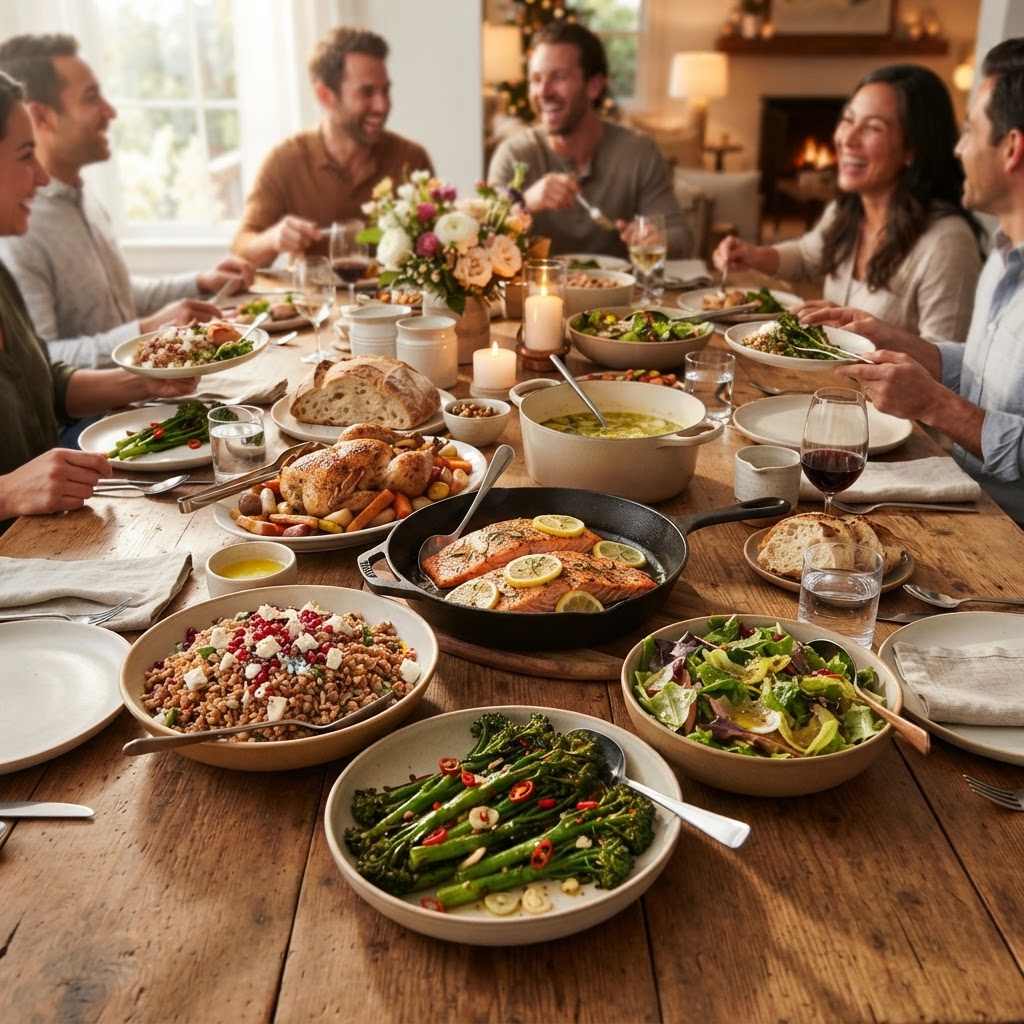
There is a specific kind of magic that occurs when a table is laden with platters, bowls, and boards, all meant to be passed around and shared by friends and family. Hosting a large group can often feel like a Herculean task, fraught with the anxiety of cold entrées and disorganized logistics, yet the "family-style" service model is inherently designed to solve these exact problems. By shifting the focus from individual plated portions to communal abundance, the host is liberated from the constraints of the kitchen and invited to be a participant in the evening’s festivities. The secret lies not in how much food you cook, but in the intentionality of how you structure your service, ensuring that every dish remains at its peak quality from the first serving to the last scrap. When executed with precision, this method transforms a chaotic dinner party into a seamless, elegant flow of conversation and connection.
At the heart of mastering the family-style spread is the delicate balance between proportional serving and thermal management. Many home cooks fail when they attempt to treat a large gathering like an individual meal, merely multiplying the size of the ingredients without accounting for the physics of heat loss. To succeed, you must think like a restaurant kitchen manager, considering the dwell time of your proteins, the heat capacity of your serving vessels, and the ratios of starches to vegetables. Once you understand that a large cast-iron skillet loses heat at a vastly different rate than a thin porcelain platter, you begin to see your dinner service as a puzzle rather than a chore. This guide will walk you through the structural foundations required to command your dining room with the poise of a professional chef.
"Blame The Chef" isn't just about taking the fall when the souffle drops; it’s about taking ownership of the kitchen process so that you never have to make excuses. We want you to feel empowered to host twelve people on a Tuesday night without breaking a sweat or losing your mind. This is about elevating your home-cooking repertoire to a level where service is as much a part of the dish as the seasoning. Let’s dive deep into the logistics of large-group hosting, turning every event into a masterclass of hospitality, temperature retention, and culinary timing that leaves your guests wondering how you made it look so effortless.
The Architectural Logic of the Family-Style Menu
When designing a menu for ten or more guests, the most common mistake is creating "collision" dishes that require oven time simultaneously. If you have a roast that needs a 400-degree oven and a side of roasted root vegetables that requires the same, your logistics will inevitably fail, leading to under-seared meat or mushy vegetables. Instead, aim for a diverse thermal profile: one main protein that is oven-roasted, one cold or room-temperature salad, one braised side dish that can hold its heat for hours, and one fresh element that requires zero cooking at the time of service. This staggering of effort ensures that your kitchen remains a sanctuary of flow rather than a source of stress.
The Power of the Prep List
To manage a large spread, you must embrace the mise en place philosophy. Write out your service timeline backwards, starting from the moment you want the first dish to hit the table. If you want to serve at 7:00 PM, your roast should come out at 6:40 PM to rest, meaning your oven must be clear at that time. Number your steps clearly and identify which tasks are high-risk (requiring precision) and which are low-risk (can be prepped hours in advance).
"The true measure of a host is not found in the complexity of their recipes, but in the tranquility of their service; if the host is relaxed, the guests will follow suit."
Determining Portion Ratios
A standard rule of thumb for large groups is the Rule of Thirds: one-third protein, one-third starch, and one-third vegetable. For a dinner party of twelve, aim for roughly 6-8 ounces of raw protein weight per person, 4 ounces of starch, and 6 ounces of vegetables. When serving family-style, people tend to take slightly more of everything, so building in a 15% safety buffer is wise. Never underestimate the psychological effect of a full platter; when the bowl looks bountiful, guests are more likely to serve themselves smaller, more reasonable portions, preventing the awkward "end-of-the-night" scarcity.
Mastering Temperature Retention: The Physics of Service
The biggest enemy of the family-style spread is the cooling rate of a dinner plate. As soon as food hits a room-temperature platter, it loses heat rapidly. The professional solution is vessel pre-heating. Whether you are using ceramic, stainless steel, or wood, you must ensure your serving dishes are warm. For oven-safe ceramic or metal, place the platters in a low oven (150°F) for twenty minutes before service. If you are using wooden boards, skip the heat, but ensure your proteins are rested sufficiently to avoid pooling juices that create cold, wet spots.
The Importance of the Resting Phase
One of the most critical techniques for any large meat dish is the extended rest. For a whole roast, tenderloin, or large rack of lamb, the meat must rest for at least 20 to 30 minutes. This is not just for moisture retention; it is a tactical window that allows you to finish your side dishes in the oven without the protein losing its optimal serving temperature. During the rest, cover the meat loosely with foil and a clean kitchen towel to insulate it, ensuring the internal temperature drops no more than five degrees.
Utilizing Insulated Carriers
If your kitchen has limited oven space, consider the use of thermos-style insulated carriers or heavy-duty coolers. By lining a cooler with clean towels and placing your covered pots and pans inside, you can hold braised dishes at a safe serving temperature (above 140°F) for up to two hours without any loss in texture. This is a game-changer for large groups, allowing you to finish your "hot" dishes well before guests arrive.
The Strategy of Passive Serving Dishes
Family-style hosting often suffers because the host spends the entire night running back and forth to the kitchen. The key to mitigating this is the passive service station. Set up a side table or a kitchen island as the "staging area." All your serving utensils should be placed here, along with extra napkins and any sauces that can be served at room temperature. By moving the service logistics away from the primary dining table, you keep the flow of conversation uninterrupted.
Selecting the Right Serving Vessels
Choose your vessels based on the dish's needs. A high-sided ceramic bowl is essential for pasta or stews to maintain heat, while flat wooden boards are ideal for charcuterie or roasted vegetables that have been drained of excess liquid. Never mix textures or temperatures on the same platter; a cold salad sitting next to a hot, saucy chicken will ruin the integrity of both. Use deep-well platters for anything with a glaze or sauce, as this provides a reservoir of heat at the base.
Strategic Utensil Placement
Never let your guests search for a serving spoon. Every bowl or platter should be accompanied by a dedicated serving utensil that is appropriate for the task. For instance, tongs are best for roasted vegetables or meats, while a large, heavy spoon is essential for grains or purées. If you have guests who are particularly hungry, make sure your utensils are large enough that they don't have to scoop twice, which helps minimize spills and keeps the table looking professional.
The "Blame The Chef" Workflow for Stress-Free Hosting
The workflow of a dinner party is a series of cascading events. Start by completing all your "cold prep"—chopping herbs, dressing salads, and setting the table—before the first guest arrives. By the time the doorbell rings, you should be in "finishing mode," which involves only simple actions like sliding a tray into the oven or whisking a pan sauce. This allows you to have a glass of wine in your hand and engage with your guests, rather than being trapped in the kitchen in a frantic state.
The Finishing Flourish
The final step before bringing food to the table is the visual garnish. A drizzle of high-quality finishing oil, a scattering of fresh, vibrant herbs, or a pinch of flaky sea salt can instantly elevate a dish from "home-cooked" to "culinary masterpiece." These final touches should be done right at the service station before the platter is carried to the table. This is the moment to wipe the edges of your serving dishes clean; nothing ruins a beautiful spread like a smudged rim on a fancy bowl.
"A well-executed garnish isn't just decoration; it is the final flavor note that ties the ingredients together, providing that essential burst of brightness."
Handling Second Helpings
Always plan for the "second wave." When serving family-style, there is almost always a second round of eating once people have finished their first plate. Instead of bringing the platters back into the kitchen, keep a small, attractive backup bowl of each item in the kitchen that you can quickly bring out to replenish the main platters. This avoids the awkwardness of taking a half-empty platter away from a table of hungry guests, ensuring the feeling of abundance is maintained throughout the entire meal.
Managing Dietary Needs in a Communal Setting
Hosting large groups often means juggling a variety of dietary restrictions. The most inclusive way to handle this is to treat your sides as the star of the show. By ensuring that your roasted vegetables, grains, and salads are naturally gluten-free and vegetarian, you eliminate the need to label dishes or make separate meals for different guests. Labeling with small, elegant cards is perfectly acceptable and adds a sophisticated touch, allowing guests to identify potential allergens without having to ask the host repeatedly throughout the night.
The Universal Sauce Strategy
To keep the menu cohesive, use a unifying sauce or vinaigrette. If you are roasting vegetables, a simple lemon-herb chimichurri can be used to dress the vegetables before serving, and a little can be reserved to drizzle over the protein. This creates a cohesive flavor profile that ties the different elements of the meal together. It also reduces the number of bottles and jars cluttering your service table.
Navigating the Buffet-Style Pivot
If your table is too small to accommodate ten people plus a dozen platters, do not hesitate to use the sideboard buffet method. Place all the serving platters on a side table away from the dining area. This creates a natural "flow" where guests stand up and serve themselves before returning to their seats. It is an efficient, organized way to host that keeps the dining table clean for glassware and conversation.
Final Thoughts
Mastering the family-style spread is about shifting your perspective from "cooking a meal" to "curating an experience." By focusing on the structural components—the pre-heated platters, the timed oven cycles, and the thoughtful placement of utensils—you transform the act of serving into an art form. The goal of "Blame The Chef" is to ensure that you feel as much like a guest at your own table as the people you have invited. When you master these logistics, you no longer feel the need to apologize for the state of your kitchen or the temperature of your roast.
Remember that perfection is not the goal; connection is. If a dish is slightly less than piping hot, or if the roast rests for an extra five minutes, your guests will likely not notice, provided that you are present and enjoying the evening. Take these techniques, refine them to fit your specific kitchen setup, and use them to host more frequently. The more you practice, the more intuitive these rhythms will become, and soon, you will be the host that others look to for inspiration on how to host a large-group dinner with grace and ease.
Finally, do not be afraid to lean into the imperfections. The charm of a family-style meal is in the passed bread, the shared bowls, and the lingering conversations that happen over the last few bites. When you remove the stress from the service, you create the space for those genuine moments to flourish. So, the next time you are faced with a large guest list, take a deep breath, follow your prep list, and trust the process. You are the conductor of this culinary symphony, and when you move with purpose and preparation, the evening will inevitably be a resounding success. Keep the pans hot, the drinks full, and above all, keep hosting.

Get the Next Recipe
Weekly recipes, techniques, and gear picks — straight to your inbox.
