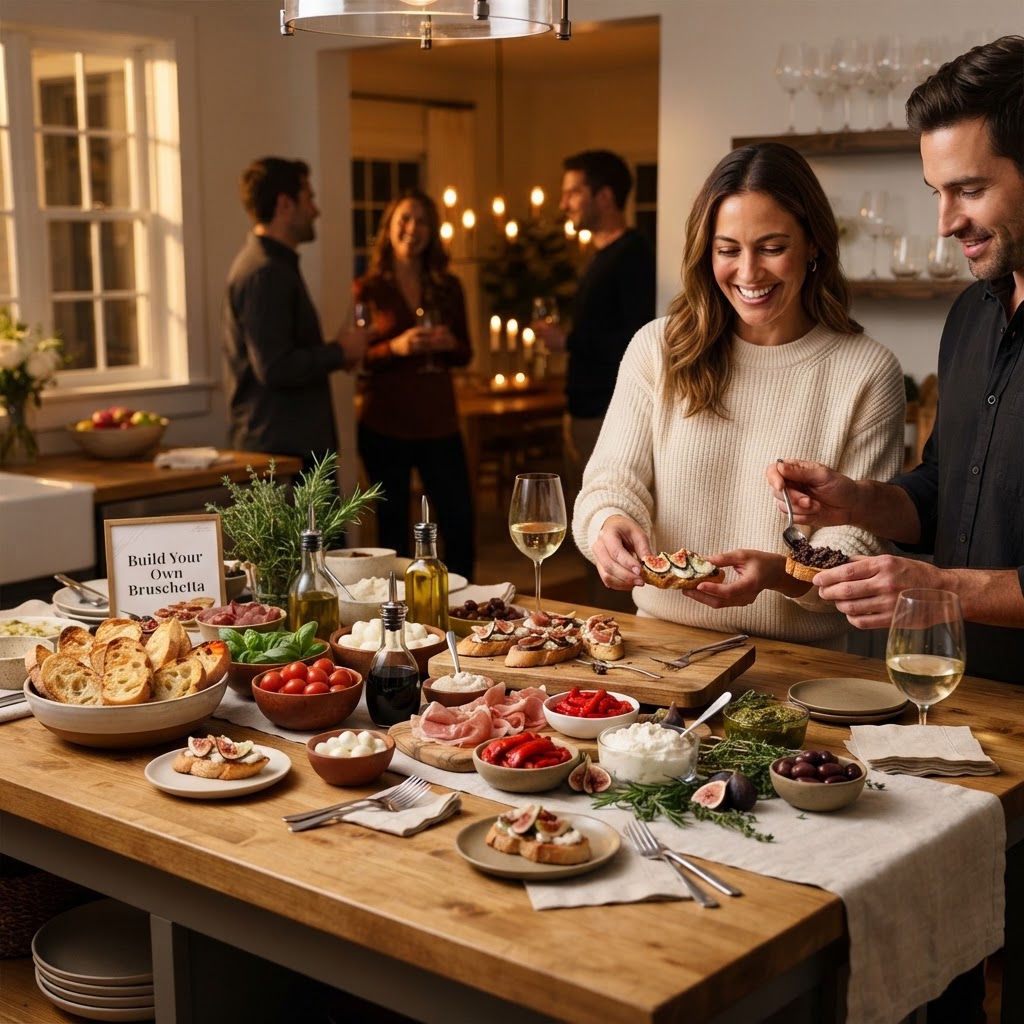
The Art of the "Interactive Appetizer" Station: Mastering Guest-Driven Small Bites for Seamless Hosting
There is a distinct, rhythmic anxiety that permeates the kitchen when a host tries to orchestrate the "classic" cocktail party. You are oscillating between the oven, which is threatening to burn the hors d'oeuvres, and the front door, where guests are arriving with expectations of sophisticated sustenance. The traditional model of pre-plating every single bite results in a flurry of frantic assembly, leaving the host isolated in the kitchen while the guests remain un-tended in the living room. By shifting your philosophy toward the Interactive Appetizer Station, you effectively offload the labor onto the guests while simultaneously providing them with an activity that acts as the perfect social lubricant. It is a transition from being a solitary servant to an elegant conductor of a culinary experience.
When we discuss the interactive station, we are talking about the democratization of the kitchen experience. This is not merely putting out a bowl of chips and salsa; it is a calculated arrangement of high-quality components designed to be assembled into a composed bite. The beauty of this method lies in its inherent modularity. By preparing mise-en-place with precision, you allow for a continuous flow of engagement where guests feel empowered to curate their own flavor profiles. It transforms the appetizer hour from a static consumption event into a dynamic, sensory-forward highlight of the evening that keeps the energy high and the kitchen chaos remarkably low.
Mastering this style of hosting requires a shift in how we view the kitchen workspace and the timing of food service. You are no longer timing dishes to finish simultaneously; instead, you are orchestrating a strategic spread of textures, temperatures, and flavor profiles that remain palatable over the course of several hours. This approach demands a professional focus on the temperature control of individual components and the structural integrity of your assembly vessels. When executed with intention, the interactive station is the ultimate secret weapon for the home chef who desires to produce a five-star experience without forfeiting their own enjoyment of the night. It is time to stop apologizing for the state of your kitchen and start inviting your guests to become part of the performance.
The Architecture of the Interactive Table
To build a successful station, one must treat the table as a blank canvas governed by the principles of culinary architecture. You need to consider the flow of traffic around the station, ensuring that the assembly process is linear rather than circular. A circular flow creates bottlenecks that impede the movement of the party, while a linear progression from vessels to toppings to finishing touches keeps the energy moving. Your foundation—the base of the dish—should be easily accessible and sturdy enough to handle the various accoutrements without collapsing under the weight of excessive moisture or gravity.
Establishing the Base and the Build
The base is the anchor of the interactive experience, whether it is a crostini, a lettuce cup, or a blini. You must ensure the base remains crisp for the duration of the event, which often requires a quick oven-to-table pivot. If using crostini, rub them with a raw clove of garlic while they are still warm to infuse the flavor, then keep them in a low-humidity environment to prevent sogginess. If the station is cold-focused, such as a build-your-own ceviche cup, choose a vessel that is heat-resistant and insulating, like small chilled glass bowls set atop a marble slab.
Layering Textures and Temperatures
A truly memorable interactive bite must offer a progression of textures. You are looking for a base that provides crunch, a center that offers creaminess, and a topping that delivers a sharp or acidic brightness. When you arrange these items, group them by category: starches, proteins, fats, and acids. Using varied heights and depths, such as wooden risers or elevated platters, adds visual interest and makes the ingredients easier to reach. Professional plating is not just for the kitchen; it is the visual invitation that tells your guests exactly how to interact with the ingredients provided.
The secret to a successful interactive station is not the number of ingredients you provide, but the harmony of the components you curate. If the guest can pick any three items and create a balanced bite, you have mastered the art of the assembly.
Mastering the Mise-en-Place for Efficiency
The secret to hosting without stress is rigorous preparation, or mise-en-place, a French term that literally means "everything in its place." For an interactive station, this means every garnish must be pre-prepped, every sauce must be at the proper temperature, and every utensil must be designated for its specific job. You should not have to reach for a knife once the first guest arrives. By the time the doorbell rings, your workspace should look like an exhibition gallery, with every ingredient portioned and labeled if necessary to guide the guests' choices.
Temperature Management
Temperature is the most common pitfall in home hosting. Hot items should be held at exactly 140°F (60°C) using chafing dishes or induction warmers, while cold items must be kept below 40°F (4°C) using nests of ice or chilled plates. For a taco or slider bar, the proteins are your primary concern. If you are serving a slow-braised meat, maintain the moisture by keeping it in a heavy cast-iron Dutch oven, which retains heat exceptionally well. Always keep a splash of warm stock or braising liquid on the side to refresh the protein if it begins to look dry after an hour.
Tool Selection and Ergonomics
The tools you provide are your guests' primary interface with your food. Do not force them to use awkward or oversized serving utensils. Provide small, ergonomic tongs for delicate items like microgreens or cured meats, and elegant spoons for sauces, salsas, or condiments. Every component should have its own dedicated utensil to prevent flavor migration and cross-contamination. This is the difference between a high-end experience and a messy buffet. Precision service is defined by the ease with which your guests can manipulate the ingredients without feeling like they are making a mess.
* Ensure all tongs are clean and have a spring tension that is easy to squeeze.
* Use squeeze bottles for viscous sauces to avoid drips and spills.
* Label ingredients with elegant, clear cards, especially if you have guests with dietary restrictions.
* Provide a dedicated waste vessel, such as a small decorative bowl, for toothpicks or napkins.
The Art of the Curated Flavor Profile
When designing the content of your station, aim for a cohesive flavor story rather than a disorganized smorgasbord. You want to offer a menu that feels intentional, such as a Mediterranean Mezze Station or an Asian Fusion Bao Bun Bar. Within that theme, you need to hit the five basic tastes: salt, sweet, sour, bitter, and umami. If you serve a savory component like salted prosciutto, ensure you have a sweet element like a balsamic reduction or a fig jam nearby to provide the necessary counterpoint.
The Role of Acid and Brightness
The most overlooked element in amateur entertaining is the "brightener." Whether it is a squeeze of lime juice, a dash of pickled red onion, or a dollop of fresh lemon zest, acid is what cleanses the palate and makes the next bite taste as fresh as the first. When constructing your station, always include at least two types of acid-forward garnishes. These act as the palate cleansers that prevent the meal from feeling heavy or one-dimensional as the night progresses.
Balancing Richness and Lightness
If your featured protein is rich—like a roasted pork belly or a high-fat whipped feta—you must provide lighter, crunchy components to balance the experience. Radishes, cucumber ribbons, or toasted nuts are excellent ways to provide that necessary crunch. The goal is to ensure the guest never feels "fatigued" by the richness of the food. A balanced culinary experience is one where the guest finishes the interactive session feeling satisfied, not over-saturated with fat or salt.
When the guest builds their own bite, they become emotionally invested in the result. They aren't just eating food; they are consuming the product of their own creative choice, which tastes fundamentally better to them than something pre-plated.
Mastering the "Signature Bite" Technique
A "Signature Bite" is a specific combination of ingredients you have tested and identified as a perfect pairing. While the station is interactive, you should provide a "cheat sheet" or a small display card that suggests one or two combinations. This alleviates the pressure for guests who may be intimidated by the options. For example, on a Gourmet Toast Bar, include a card that reads: "Try the Fig, Prosciutto, and Honey reduction combination for a perfect sweet-and-savory balance."
The Importance of Structural Integrity
Never offer a combination that is doomed to fail. If you are providing lettuce wraps, ensure the lettuce is sturdy enough to hold the weight of the filling—use Romaine hearts or butter lettuce rather than thin, limp varieties. If you are using crostini, ensure the bread is toasted to a point of slight resistance so it doesn't disintegrate the moment a guest picks it up. Structural integrity is a mark of a professional chef; it shows you have thought about the experience of eating, not just the experience of serving.
Training the Guest Through Placement
The physical layout of your ingredients acts as a subtle set of instructions. By placing the base items on the left and the garnishes on the right, you lead the guest through a logical path of construction. Use height to draw the eye to the "star" ingredients, such as a high-end truffle oil or a premium cheese wedge. This guided discovery enhances the interactivity by making the station feel curated rather than arbitrary.
Advanced Hosting: Handling Dietary Nuances
In the modern culinary landscape, the interactive station is the safest and most inclusive way to host. Because the guest is building their own plate, they can navigate their own dietary requirements without the need for the host to label every single ingredient with a daunting list of allergens. However, you should still practice proactive transparency. Keep an ingredient list near the station for those with severe allergies, and be prepared to explain the components of your sauces if asked.
Cross-Contamination Mitigation
While interactivity is the goal, food safety is the mandate. Keep a close eye on the station during the party. If a serving spoon for the gluten-free crackers accidentally lands in the bowl of breadcrumbs, swap it immediately. Use color-coded utensils if you have specific allergens like nuts on the table. It is better to have a slightly less aesthetic setup that is safe than a perfectly styled one that carries a risk of cross-contamination.
The "Refill" Protocol
The biggest risk of an interactive station is the "picked-over" look that happens halfway through the party. Avoid this by having a secondary stash of components in the kitchen ready to rotate in. Never attempt to refill a platter while guests are hovering. Instead, swap the entire platter or bowl for a fresh, pre-arranged one. This ensures that the presentation remains as pristine at the end of the night as it was when the first guest arrived. It also keeps your culinary reputation intact, as nobody wants to eat from a bowl that looks like a war zone.
The Psychology of the Shared Experience
There is a profound social shift that occurs when guests are asked to contribute to the creation of their meal. It moves the conversation away from mundane topics and toward the food itself. "Have you tried this with the fig jam?" or "What do you think of this flavor combination?" are natural conversation starters that bridge the gap between groups of people who might not know each other well. By creating this communal culinary space, you are providing more than just dinner; you are providing a medium for connection.
Encouraging Creative Expression
While providing suggestions is helpful, allow for the "maverick" guest to experiment. When a guest combines ingredients in a way you hadn't considered—perhaps pairing a spicy salsa with a sweet honeycomb—embrace it. This is the beauty of the interactive station. It invites a level of culinary playfulness that traditional sit-down dinners never can. As a host, your job is to facilitate the platform, not to police the flavors.
The Closing Ceremony
As the evening winds down, the interactive station should be dismantled with the same care it was built. Clear the remaining items and transition the space to a coffee or dessert station. This "shift" signals to your guests that the evening is naturally moving toward a new phase, which helps in managing the flow of the party as it nears its conclusion. A well-managed transition is the hallmark of a seasoned host who understands the subtle cues of social pacing.
Final Thoughts
The art of the interactive appetizer station is ultimately about reclaiming your role as a host. It is about moving away from the burden of individual service and toward a model that celebrates community, choice, and culinary curiosity. By applying professional techniques—meticulous mise-en-place, strategic temperature control, and a focus on textural harmony—you can create an experience that feels effortless for you but incredibly intentional for your guests. You are not just putting out food; you are building an ecosystem of flavor that encourages interaction and elevates the standard of your home gatherings.
Remember that the success of these stations lies in your ability to prepare everything in advance so that you are free to enjoy the company of your guests. Do not fear the process; embrace it as a way to simplify your hosting duties while simultaneously improving the experience of your guests. When you stop worrying about plating perfectly-aligned canapés in the solitude of your kitchen, you open the door to a more relaxed, more engaging, and ultimately more successful way of entertaining. So, the next time you open your home, ditch the stress of pre-plating and embrace the interactive revolution. Your kitchen is the heart of your home, and with these techniques, it will soon become the heart of the party.
When you master the balance of these components, you will find that you have more time for conversation, more energy for your guests, and a much cleaner kitchen at the end of the night. Whether it is a simple charcuterie board with a modern twist or a fully-loaded bao bun station, the interactive approach is the future of seamless, high-impact hosting. Treat your station as a living, breathing component of your event, and watch how it transforms the way your guests interact with your home. From the first bite to the final toast, you are the conductor of this performance, and with these tools in your repertoire, you are destined to host a night that your guests will be talking about for months to come.
As you reflect on the structure of your next interactive station, remember the core principles that define this method: preparedness, variety, temperature management, and the spirit of curiosity. The culinary world is far too vast to be constrained by simple crackers and cheese. Use this method to explore new ingredients, challenge your guests' palates, and most importantly, to enjoy your own event. Because at the end of the day, the best ingredient you can bring to any party is a host who is present, relaxed, and ready to share the joy of good food with those they love. Happy hosting, and may your appetizers always be the highlight of the night.
If you ever feel the urge to retreat back to the comfort of the traditional passed-appetizer model, remember the fatigue and the isolation it causes. Remind yourself that you have the skills to execute a more engaging vision. The interactive station is not just a trend; it is a smarter, more social, and more rewarding way to serve food. It is the evolution of the home-cooked experience. Take the time to refine your setup, invest in high-quality serving vessels, and most importantly, trust in the process. Your guests are more than capable of assembling their own plates, and in doing so, they will appreciate your hospitality far more than they would have appreciated a pre-plated dish handed to them by a stressed-out host.
Finally, keep a small notebook dedicated to your station layouts. Track what works, what textures were popular, and what combinations seemed to intrigue your guests the most. This iterative approach to hosting will turn every single gathering into a masterclass in the art of the interactive appetizer. You are building a portfolio of successful events, each one smoother and more inspired than the last. Do not be afraid to experiment with new ingredients or to change your station theme to match the season. The world of small bites is endless, and with these tools, you are equipped to explore every inch of it with confidence, authority, and a touch of professional flair. Go forth and host with the assurance that you have mastered the art of the interactive bite.
The journey toward seamless hosting is a continuous process of learning and refinement. By moving away from the rigid structures of the past, you are paving the way for a more genuine and communal experience. The interactive station is the perfect embodiment of this new philosophy. It is an invitation to engage, a license to explore, and a testament to the fact that great food and great company go hand in hand. With these tips, techniques, and the right mindset, you have everything you need to become the host you’ve always wanted to be. The kitchen is yours, the stage is set, and the guests are waiting—let the interactive hosting begin.

Get the Next Recipe
Weekly recipes, techniques, and gear picks — straight to your inbox.
