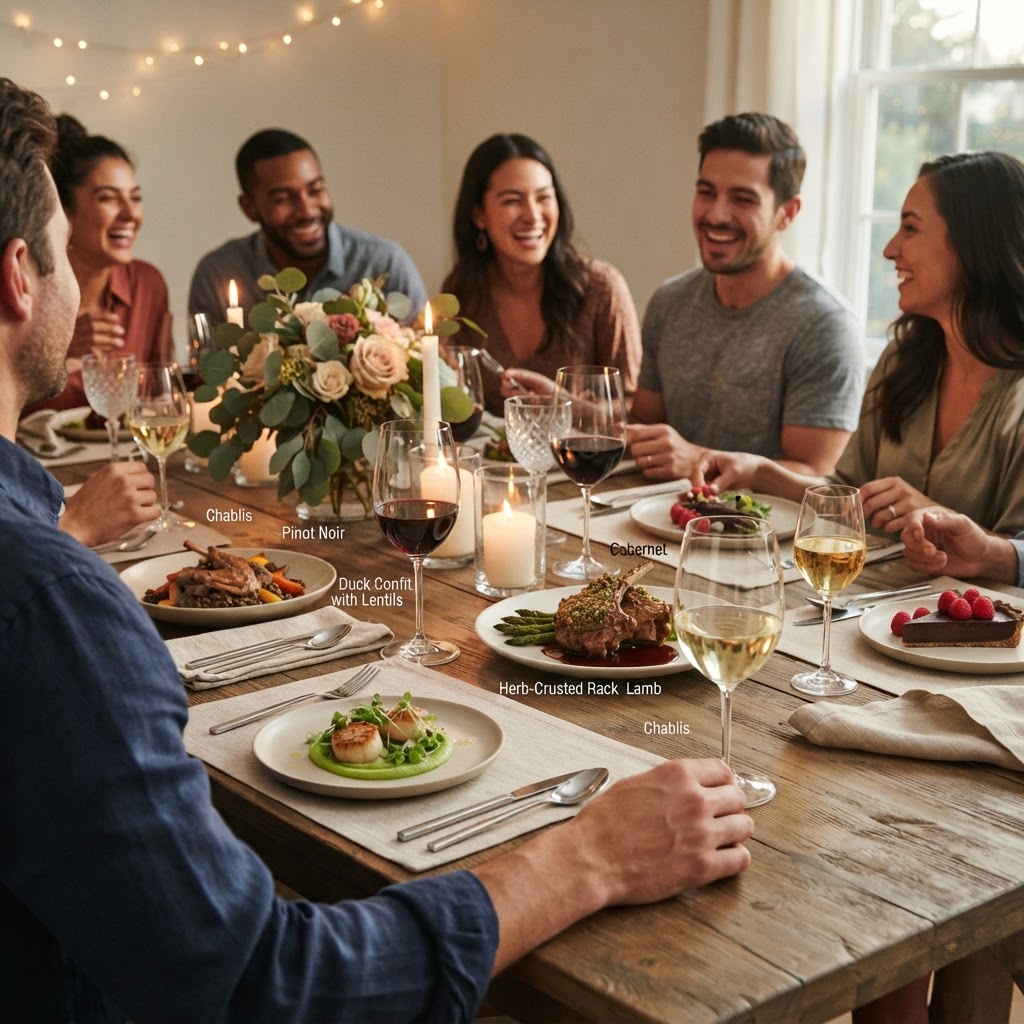
The Art of the "Menu-Matching" Wine Flight: How to Pair Bottles with Every Course for an Unforgettable Dinner Party
Hosting a dinner party is often viewed as a high-stakes performance, a delicate choreography of timing, heat, and plating that can leave even the most seasoned home cook sweating through their apron. The truth is, the magic rarely lies in the sheer complexity of the recipes, but rather in the intentionality behind the meal as a whole. When you shift your focus from merely cooking individual dishes to curating a cohesive experience, you transition from someone who feeds people to someone who hosts an event. The backbone of this transformation is the wine flight, a sophisticated yet accessible way to guide your guests through a journey of flavor, texture, and evolution.
Many hosts fall into the trap of pouring a single, safe bottle of wine for the duration of the evening, hoping that a reliable Chardonnay or a crowd-pleasing Merlot will satisfy everyone. While this is certainly easier, it misses the opportunity to create a narrative at the table where the wine acts as an invisible narrator, bridging the gap between your culinary intentions and your guests' sensory reactions. By breaking your menu down into distinct courses—amuse-bouche, appetizer, main, and dessert—you gain the freedom to introduce varietal diversity that keeps the palate engaged and the conversation flowing. It is not about being a sommelier, but about being a storyteller who understands the rhythm of a dining experience.
At Blame The Chef, we believe that the best kitchen secrets are those that empower the host to enjoy their own party rather than being tethered to the stove. The "menu-matching" approach is actually a time-management strategy in disguise; when you plan your wine pairings early, you solidify your menu, preventing the last-minute panic of realizing your sides don't match your protein. This guide will walk you through the essential mechanics of pairing, the science of balance, and the logistical maneuvers required to pull off a multi-course dinner that feels effortless. Prepare to elevate your hosting game, because once you master the art of the wine flight, you will never look at a standard dinner party the same way again.
The Foundations of Sensory Architecture
To master the art of wine pairing, you must first understand the fundamental sensory architecture of your menu. Every ingredient you choose has a weight, an acidity level, a tannin profile, and a dominant aromatic component. When these elements align with the wine, the result is a phenomenon known as synergy, where the combined effect of the food and the drink is greater than the sum of its parts. If your dish is heavy and rich, like a slow-braised short rib, a light, ethereal wine will be swallowed whole, leaving the palate feeling overwhelmed. Conversely, pairing a massive, oak-forward Cabernet Sauvignon with a delicate seared scallop is a cardinal sin that masks the sweetness of the seafood with aggressive tannins.
Understanding Weight and Intensity
The most important rule in pairing is to match the intensity of the dish with the intensity of the wine. Think of this as a balancing scale. Light, delicate dishes require high-acid, low-tannin, and lower-alcohol wines. Conversely, robust, fatty, or salty dishes demand wines with enough structural backbone to stand up to the food. You want the wine to cut through the fat, cleanse the palate, and prepare it for the next bite.
The Role of Acidity and Tannins
Acidity is the secret weapon of the dinner party. High-acid wines, like a crisp Sauvignon Blanc or a lively Barbera, act as a palate cleanser, cutting through rich sauces or oily components. Tannins, found primarily in red wines, react with the proteins in meat to soften the texture of both. If you are serving a steak, look for a wine with sufficient tannins to soften as it interacts with the fat of the beef. This scientific interaction is precisely why classic pairings, such as Cabernet Sauvignon and a ribeye, endure through the centuries.
The goal of a wine flight is to create a dialogue between the glass and the plate, where neither dominates the conversation but both elevate the experience to something truly memorable.
Curating the Opening Act: Amuse-Bouche and Appetizers
The start of your dinner party is your chance to set the tone for the entire evening. An amuse-bouche should be small, bold, and designed to wake up the palate without filling the guest before the main event begins. Because these bites are often served while guests are still standing or transitioning to the table, you need a wine that is approachable, refreshing, and crisp. This is the moment for sparkling wines, such as a Brut Champagne or a traditional method Cava.
Sparkling Wine Techniques
Sparkling wines are the ultimate social lubricant. Their effervescence cleanses the palate, and their bright acidity makes them the perfect partner for saltier snacks like gougères, prosciutto-wrapped melon, or even a simple goat cheese crostini. When serving sparkling, ensure the bottle is chilled to precisely 45°F to 50°F (7°C to 10°C). Any colder, and you mute the nuanced aromas of the yeast and fruit; any warmer, and you lose the crisp tension that makes the wine so enjoyable.
Appetizer Pairings
For a more substantial appetizer, such as a shrimp cocktail or a bright summer salad, you want a white wine that mirrors those flavors. An unoaked Chardonnay or a Vermentino works beautifully here. If your appetizer involves more complex, herbal flavors like a pesto-based starter, look toward a Sauvignon Blanc from the Loire Valley or New Zealand. These wines offer notes of citrus, grass, and mineral qualities that harmonize with fresh, green herbs.
The Main Event: Harmonizing Texture and Temperature
The main course is the climax of your menu, and it is here that you should invest the most time in your selection. When selecting a wine for your main protein, consider the preparation method as much as the ingredient itself. A chicken breast roasted with lemon and herbs requires a completely different wine than a chicken breast braised in a heavy cream and mushroom sauce. The latter needs the weight and body of a buttery, oak-aged Chardonnay or even a lighter red, while the former demands bright acidity.
Red Wine Nuances
For red meat, the search for the perfect wine is about managing the tannin structure. If you are preparing a lean cut like a filet mignon, a heavy, high-tannin Bordeaux might overwhelm the delicate meat. Instead, opt for a medium-bodied Pinot Noir or a Merlot. These grapes provide the fruit-forward profile and sufficient acidity to pair with the meat without stripping away its natural flavor. For fattier cuts like ribeye, lean into the big, bold reds such as Syrah or a classic Cabernet Sauvignon.
Temperature Control for Reds
One of the most common mistakes in home entertaining is serving red wines too warm. We often hear that red wine should be served at "room temperature," but that adage dates back to drafty European castles, not modern homes kept at 72°F (22°C). Red wine should ideally be served between 60°F and 65°F (15°C to 18°C). Keep your reds in a cool spot or place them in the refrigerator for 15 minutes before serving to bring them down to this optimal temperature. This brings out the fruit notes and keeps the alcohol from feeling "hot" on the palate.
Always remember that the wine should reflect the geography of the meal. If you are serving an Italian-inspired main, an Italian wine—even a humble one—will almost always pair better than a wine from a completely different region.
The Art of the Palate Bridge
Sometimes, a dinner party requires a transitional course—a cheese plate or a light vegetable course—to bridge the gap between the main and dessert. This is an excellent opportunity to introduce a wine that breaks the rules or showcases a unique varietal. Many hosts are intimidated by pairing wine with cheese, but the strategy is quite simple: mirror the intensity. A soft, creamy brie requires a sparkling wine or a light white; a sharp, aged cheddar or blue cheese needs a bolder, slightly sweeter, or more tannic wine to stand up to the salt and funk.
Selecting the Bridge Wine
If you are doing a cheese course, avoid wines that are too bitter or too high in alcohol, as they will clash with the fats in the cheese. A Gewürztraminer or a Riesling (off-dry) can be a revelation when paired with aged cheeses. The slight residual sugar in these wines balances the salinity of the cheese, creating a harmonious finish that prepares your guests for the final course.
Professional Chef Tip: Serving Strategy
When pouring your flight, use smaller "tasting" pours (around 3 ounces per glass). This prevents your guests from becoming overwhelmed and allows them to pace their drinking alongside the food. Use high-quality glassware—universal wine glasses are perfectly acceptable—and ensure they are polished and free of lint. The visual presentation of your flight is just as important as the taste; seeing three distinct glasses lined up at a setting creates an immediate sense of anticipation.
The Finale: Sweetness and Acidity in Dessert Pairings
Dessert is where many hosts simply give up, serving coffee and calling it a night. However, dessert is the perfect place to leave a lasting impression. The golden rule for dessert wine is simple: the wine must be as sweet as, or sweeter than, the dessert. If the wine is less sweet than the cake or fruit tart, the wine will taste thin, acidic, and unpleasant.
Dessert Wine Varieties
For fruit-based desserts, look for a late-harvest Riesling or a Moscato d'Asti. These wines have enough sweetness to complement the fruit without being cloying. If you are serving chocolate, turn your attention to fortified wines like a Ruby Port or a Banyuls. These pairings are legendary because the richness of the chocolate requires a wine with enough body and residual sugar to stand up to the cocoa butter.
The Contrast Method
Alternatively, you can play with contrast. A salty dessert, like a salted caramel tart, pairs exceptionally well with a slightly oxidized wine or a nutty Amontillado Sherry. The combination of salt and the nutty, savory notes of the sherry creates a sophisticated finale that is far more interesting than a standard glass of port.
Logistical Masterclass: Planning for Success
Hosting is as much about logistics as it is about culinary skill. To ensure your wine flight is a success, you need to create a timeline that allows you to handle the kitchen work while managing the service of the wine. Use a dedicated space on a sideboard or kitchen island for your wine service. Organize your bottles in the order they will be served, and place a small card or label in front of each bottle so you don't have to scramble to remember which is which when your guests are watching.
Mise-en-place for Wine
Chill early:* Start chilling your whites and sparkling wines at least four hours before guests arrive.
Decanting:* If you are serving an older or bolder red, decant it at least 45 minutes before service to allow it to "breathe" and shed any sediment.
Water stations:* Always keep carafes of water on the table. Proper hydration is the secret to a dinner party that lasts late into the night without guests feeling the negative effects of the wine.
The "No-Stress" Method
Do not feel pressured to open four or five bottles for only four people. You can easily do a "half-bottle" flight, or purchase wines that are available in smaller formats. The point is the variety, not the volume of alcohol consumed. If you have guests who are not big drinkers, offer a non-alcoholic alternative that mirrors the acidity and profile of the flight—a high-end sparkling apple cider or an infused grape shrub can provide the same "pairing" experience for those who prefer not to drink.
Final Thoughts
The art of the wine flight is ultimately about the confidence to experiment and the willingness to curate an experience that honors your effort in the kitchen. When you pair with purpose, you elevate the meal from a simple act of nourishment to a communal event that lingers in the memories of your guests long after the final crumbs have been cleared away. Don't worry about getting it "perfect"—the beauty of hosting lies in the experimentation and the shared enjoyment of discovery.
Start with a theme, whether it is a tour of a specific region, a focus on a single grape variety, or a journey through different styles of sparkling wine. The more you practice, the more you will learn to trust your palate. You will find that you are no longer just cooking a dish, but you are building a bridge between your kitchen and your guests. Remember, the best chefs are those who know that the food is only half the story; the drink, the atmosphere, and the intention you bring to the table comprise the rest.
Go forth and pour with confidence. Remember to keep your temperatures in check, respect the balance of weight, and always have fun with your selections. If a pairing doesn't work out as expected, it is simply a conversation starter—a chance to laugh, learn, and try something different next time. The "Blame The Chef" philosophy is all about embracing the process and realizing that a truly great dinner party is one where everyone is relaxed, the glass is always full, and the food perfectly complements the company. Cheers to your next unforgettable evening.
Get the Next Recipe
Weekly recipes, techniques, and gear picks — straight to your inbox.
