The Art of the Plated Dessert: How to Construct Restaurant-Quality Final Courses at Home
There is a pervasive myth in the culinary world that the art of the plated dessert is reserved exclusively for those working behind the pass of a Michelin-starred kitchen, armed with tweezers and a staff of five pastry commis. In reality, the magic of a restaurant-quality finale is less about formal training and more about understanding the architecture of flavor and the balance of texture. When you approach a dessert not merely as a sweet ending, but as a deliberate composition, you elevate your home cooking from a simple bake to a full sensory experience. This guide is designed to strip away the intimidation factor and arm you with the fundamental techniques required to execute professional-grade plates in your own kitchen, using tools you likely already own.
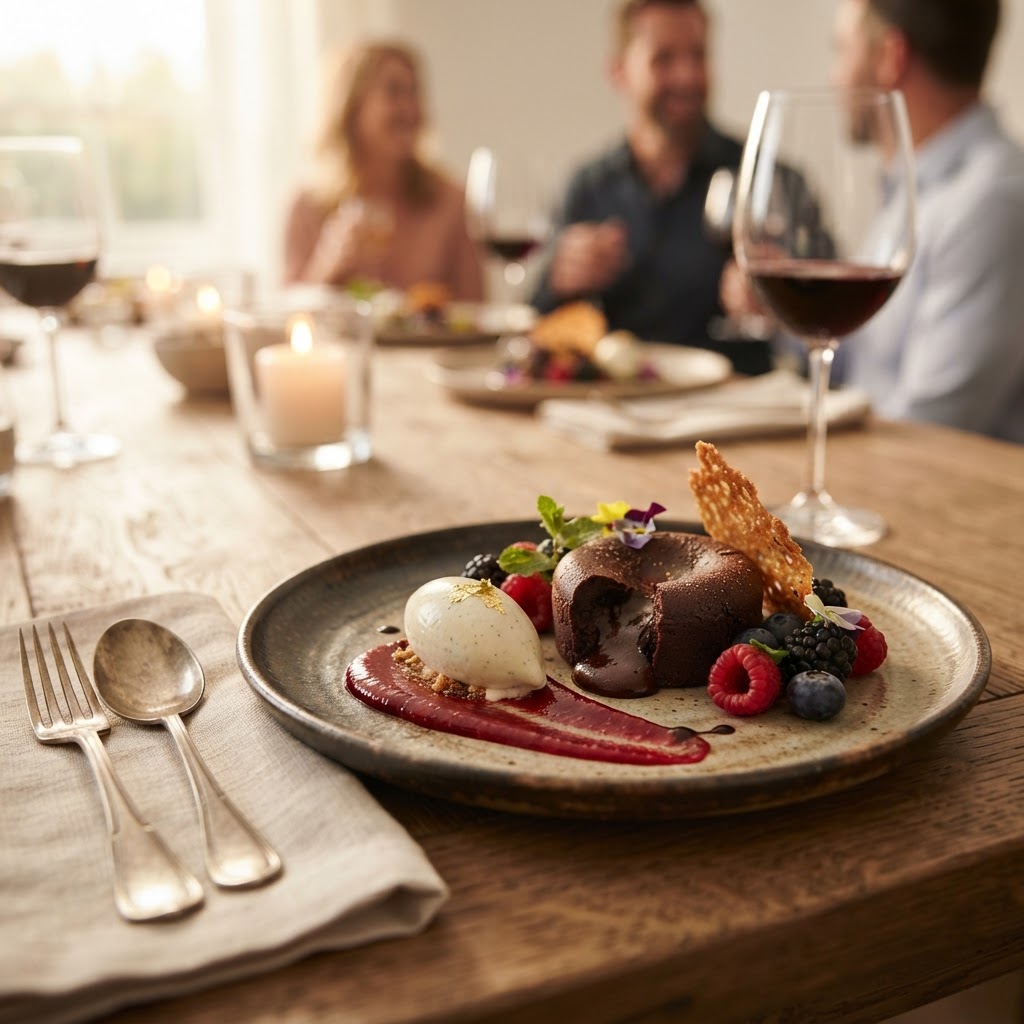
The key to unlocking restaurant-level finesse lies in the interplay between temperature, texture, and visual negative space. In a professional setting, we often refer to the "five pillars": sweetness, acidity, bitterness, salinity, and texture. A dish that hits only one or two of these notes will eventually bore the palate, whereas a carefully constructed plate that balances a hot molten cake against a cold quenelle of crème fraîche creates a dynamic tension that keeps the diner engaged until the very last bite. By applying a more intentional approach to how you assemble these components, you can transform a humble brownie or a standard fruit tart into something that feels truly momentous.
Welcome to the world of "Blame The Chef," where we believe that every home cook is capable of producing work that rivals the best pâtisseries. We are going to explore the nuances of plate geometry, the science of gelling agents, the precision of temperature control, and the artistic flair required to turn a plate into a canvas. Do not fear the technicality of these processes; treat them as creative constraints that ultimately liberate your cooking. Whether you are hosting a formal dinner party or simply seeking to master the craft for your own satisfaction, the transition from "baker" to "pastry artist" begins with the very next plate you construct.
The Architecture of the Plate
Before a single ingredient touches the china, you must consider the layout of the dish. Professional chefs utilize the plate as an architectural space, balancing height, color, and negative space to guide the diner’s eye. A plate that is too crowded feels chaotic, while one that is too sparse can feel unfinished. The goal is to create a flow that leads the diner from the first point of contact to the final component, ensuring that every bite is intentional and balanced.
Understanding Negative Space
The concept of negative space is often overlooked by home cooks, who tend to fill every available inch of the plate with food. In fine dining, the blank space on a plate is just as important as the food itself. It provides the eye with a place to rest and emphasizes the elegance of the primary component. Think of your plate as a gallery wall; you wouldn't jam five paintings into one frame, so don't crowd your dessert. Leave a significant portion of the rim empty, and focus the action toward the center or slightly off-center to create a sense of movement.
The Power of Asymmetry
While symmetry can be comforting, asymmetry is far more visually interesting and "alive." When placing components, follow the rule of thirds or the golden ratio. A large, centralized focal point, such as a poached pear or a mousse dome, should be complemented by smaller, accenting elements like tuile shards or fruit coulis dots. This creates a hierarchy on the plate, telling the diner exactly where to start and where to explore next.
The plate is a canvas of edible intention. If you have nothing to say with your placement, the flavor will lose its voice before the fork even touches the plate.
The Essential Components of Texture
A world-class dessert must have a narrative arc, and texture is the most important element of that story. If every component on the plate has the same consistency—say, a soft mousse served with a soft cake and soft fruit—the diner becomes fatigued. You must incorporate a variety of textures to keep the palate alert and interested. Think in terms of soft, crisp, crunchy, and creamy.
Balancing the Elements
The Foundation:* Usually a cake, tart shell, or sponge that provides a structural base.
The Creamy/Cold:* Ice creams, sorbets, or mousses that provide a cooling, luxurious mouthfeel.
The Crunch/Crisp:* Tuiles, crumbles, meringues, or candied nuts that provide a necessary tactile contrast.
The Bright/Acidic:* Fresh berries, citrus gels, or fruit reductions to cut through the richness of fats and sugars.
The Role of the Tuile
A tuile is arguably the most versatile tool in a pastry chef’s arsenal. It is essentially a thin, crisp wafer that can be molded while hot and then set to a snap-hard consistency. Mastering a basic almond or cocoa tuile batter—consisting of equal parts butter, sugar, flour, and egg white—is a non-negotiable skill. You can bake them into curved shapes over a rolling pin or leave them flat for a jagged, architectural aesthetic. The key is to keep them paper-thin so they shatter delicately rather than feeling heavy or doughy.
Temperature Control and Timing
One of the greatest mistakes home cooks make is serving a dessert that is entirely room temperature or completely cold. Temperature contrast is a hallmark of professional plating. A warm chocolate fondant paired with a chilled cardamom ice cream is a classic for a reason—the clash of temperatures is a physical sensation as much as a flavor profile. Managing these temperatures requires precise timing and a "mis-en-place" approach that ensures everything is ready to hit the plate at the exact moment of service.
The Art of the Quenelle
The quenelle is the professional standard for serving ice cream, sorbet, or whipped creams. It is an oval shape created using two warm spoons. To achieve the perfect quenelle, you must have a high-quality, high-fat ice cream at the correct temperature—ideally between 8 and 12 degrees Fahrenheit. If it is too soft, it will melt; if it is too hard, it will chip. The technique involves dragging a warm spoon through the ice cream in a fluid, continuous motion, then using a second warm spoon to shape it into a smooth, elegant egg shape.
Managing Hot-Cold Synergy
To pull this off, you must plate your cold elements last. If you are serving a hot sauce or a warm cake, ensure the plates themselves have been lightly warmed—but not hot enough to melt your frozen components instantly. A trick is to set the warm item, then quickly place your frozen quenelle or mousse, and immediately bring the plate to the table. Never let a cold dessert sit on a counter for more than a minute after plating; the structural integrity will degrade, and the visual appeal will vanish.
Temperature is the silent variable that separates a good dessert from a great one. The contrast is not just a preference; it is a necessity for heightening the perception of flavor.
Saucing and Gels: The Painter’s Tools
Sauces are the connective tissue of a plated dessert. They bring together the different elements and provide a platform for your creativity. A simple pool of chocolate sauce is fine, but a streak, a dot, or an emulsion is professional. Learning to control the viscosity of your sauces is the difference between a amateurish splash and a chef-executed design.
Emulsions and Reductions
A fruit coulis is a standard component, but it should be strained through a chinois (fine-mesh sieve) to ensure a perfectly smooth, silky texture that won't separate on the plate. To add complexity, consider thickening your sauces with a small amount of xanthan gum or agar-agar. This allows you to create "gels" that hold their shape perfectly, such as perfect little dots that won't run into other components.
The "Swirl" Technique
When using a squeeze bottle or a spoon to apply sauce, don't just dump it on the plate. Use the back of a spoon to drag the sauce into a teardrop shape, or squeeze it in a precise, deliberate line. These techniques should look effortless, yet they require practice. When applying dots, use a consistent pressure on your squeeze bottle to ensure that every dot is identical in size, which demonstrates a high level of technical control to your guests.
The Science of Structural Ingredients
Professional pastry is, at its heart, food science. To move beyond the standard chocolate chip cookie, you need to understand how ingredients like pectin, gelatin, and cocoa butter behave under different conditions. These ingredients are what allow chefs to create foams, jellies, and stable structures that defy gravity on the plate.
Working with Gelatin
Gelatin is the workhorse of the modern pastry kitchen. Whether you are using traditional sheet gelatin or powdered gelatin, the key is the "blooming" process. Always hydrate your gelatin in cold water for at least five to ten minutes before melting it into your mixture. Never boil gelatin, as it will lose its setting power. If you are aiming for a vegetarian option, agar-agar is your best friend, though be aware that it sets much firmer and more brittle than traditional gelatin.
Stability and Fats
When creating mousses or ganaches, the fat content is crucial for mouthfeel. A ganache made with a 1:1 ratio of chocolate to heavy cream will yield a soft, truffly consistency, whereas increasing the cream will result in a sauce-like texture. Understand your ingredients: high-cocoa-butter chocolates will set much harder than those with lower butter content. Always weigh your ingredients using a digital scale; volumetric measurements like "cups" are simply too imprecise for the high-level pastry work required for restaurant-quality plating.
Mastering Finishing Touches
The final step in the plating process is the "garnish." This is where you add the final touch of acidity, freshness, or color that completes the plate. Many home cooks view garnishes as an afterthought, but in a restaurant, a garnish is a calculated flavor addition. It is the sprig of micro-mint that cuts through the fat of a dark chocolate cake, or the dusting of gold leaf that adds a hint of metallic mineralogy to a lemon curd.
Micro-herbs and Flowers
Don't just use mint because it's available. Think about the flavor profile of your dessert. Does it need a herbaceous note? Use micro-basil or lemon verbena. Does it need a floral lift? Try violas or borage blossoms. The garnish must be edible and it must enhance the dish. If it doesn't add to the flavor, it doesn't belong on the plate.
The Texture of Dusts and Crumbs
Crumbs are not just for filling space; they are a textural playground. A cocoa soil or a nut-based crumble adds a sophisticated base for a mousse to sit on, preventing it from sliding around the plate. You can also use flavored powders—dehydrated raspberries, for instance, turned into a fine dust—to add a vibrant splash of color and a concentrated burst of acidity that completely changes the profile of a heavy dessert.
A garnish should never be a "decoration." If you cannot eat it and enjoy the flavor, it is clutter, not cooking. Every element must earn its place on the plate.
Final Thoughts
Achieving restaurant-quality results at home is a process of refinement, not a leap of faith. By focusing on the structural integrity of your components, embracing the necessity of temperature contrast, and mastering the precise application of sauces and garnishes, you can produce desserts that look and taste like they came from a professional kitchen. The most important tool in your kit is not the professional-grade squeeze bottle or the expensive food processor; it is your patience.
Do not be afraid to fail. Even in the most prestigious kitchens, the first plate of the night often requires a tweak, and the "perfect" composition is usually the result of a dozen failed iterations. Blame the chef if you must—blame the ingredients, the humidity, or the oven—but keep practicing. When you finally serve a plate that balances all five pillars of flavor and presents them with intentional, thoughtful design, you will understand exactly why this craft is worth the effort.
Continue to experiment with your ratios, push your technical boundaries, and never stop questioning why a dish works the way it does. The art of the plated dessert is a lifelong study, one that rewards the curious and the persistent. Now, go into your kitchen, pull out your finest china, and start building your own edible legacy. Your guests—and your own refined palate—will thank you for the extra effort you put into the final course of the evening.


Get the Next Recipe
Weekly recipes, techniques, and gear picks — straight to your inbox.
