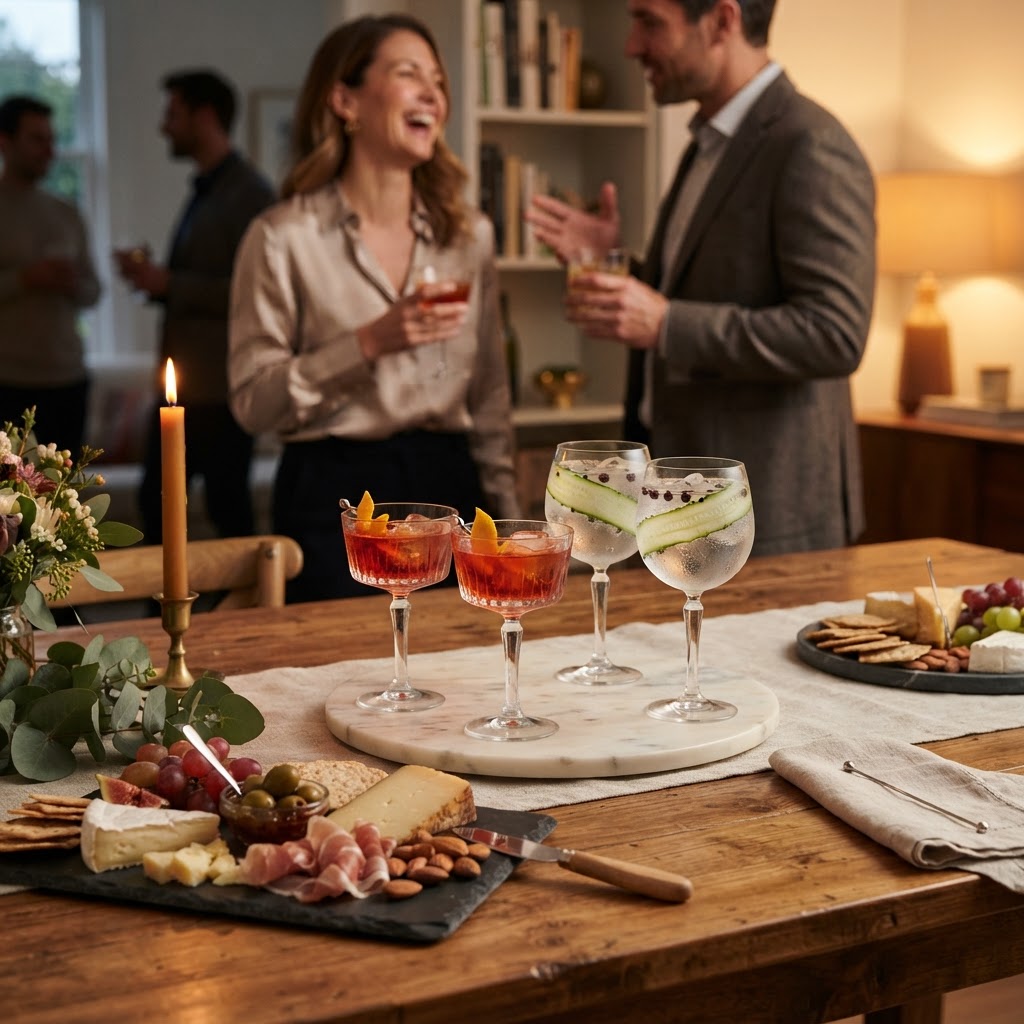
The Art of the Pre-Dinner Drink: Curating a Sophisticated Beverage Program for Home Entertaining
The pre-dinner drink, or the apéritif, is far more than a mere thirst quencher before the main event; it is the culinary curtain-raiser that sets the tone for your entire evening. When you invite guests into your home, the transition from the frantic energy of their commute to the relaxed cadence of your dining room requires a physical and sensory bridge. By curating a thoughtful beverage program, you are signaling to your guests that they have arrived somewhere intentional, where every detail—from the temperature of the glass to the complexity of the bitters—has been considered. This is where hospitality moves from functional to transformative, allowing the palate to wake up and the conversation to loosen.
A successful beverage program for home entertaining does not necessitate a professional-grade back bar filled with obscure spirits that you will only use once. Instead, it relies on the art of curation, focusing on a few high-quality components that can be manipulated into a variety of sophisticated experiences. You want to offer options that are bright, aromatic, and appetite-stimulating, avoiding heavy, syrupy ingredients that might dull the tongue before the first course is even served. Mastery lies in understanding the interplay of acidity, bitterness, and dilution, ensuring that your drinks serve as a delicate preamble rather than a heavy-handed distraction.
As the host, your role is akin to a conductor, managing the tempo of the evening through the libations you provide. Think of the pre-dinner drink as the palate's primer, meant to stimulate the digestive juices and sharpen the senses in anticipation of the meal to follow. Whether you are hosting a casual Friday night dinner or a formal multi-course celebration, the commitment to a structured drink program elevates your kitchen from a space of preparation to a stage of performance. Embrace this ritual, and you will find that your guests remain engaged, curious, and perfectly primed for the culinary journey that awaits them at the table.
The Philosophy of the Aperitif
The term apéritif derives from the Latin aperire, which means "to open." In the context of dining, this translates literally to opening the appetite. A well-constructed pre-dinner drink is designed to trigger the gastronomic response, often utilizing bitterness to signal to the body that food is imminent. Botanicals, citrus peels, and dry vermouths are your best tools here, as they provide that essential crispness that cleanses the palate after a long day.
Understanding the Flavor Profiles
To create a sophisticated program, you must categorize your spirits by their impact. You are looking for ingredients that provide structure. Dry vermouth, for instance, is an essential backbone; it provides depth and complexity without the cloying sweetness found in many modern liqueurs. You should also stock a range of bitters, which act as the salt and pepper of the bar world. A dash of orange or aromatic bitters can completely pivot the profile of a simple sparkling wine or a light gin cocktail.
"A drink served before dinner should be a whisper of what is to come, not a shout that drowns out the nuance of the chef's hard work."
When selecting your primary spirits, prioritize versatility. A high-quality London Dry Gin or a crisp, mineral-forward vodka provides a clean canvas. If you prefer working with fortified wines, look toward a dry Fino or Manzanilla sherry, which offer incredible salinity that pairs beautifully with savory appetizers like olives, almonds, or fresh oysters. Remember, the goal is to keep things light, bright, and refreshing.
The Equipment Essentials
You do not need an entire dedicated room to act as a professional mixologist. However, precision is the difference between a amateurish stir and a professional-grade drink. The most important tool in your arsenal is the jigger, which allows for accurate measuring. In professional kitchens, consistency is king, and by measuring your ratios—typically a 2:1 or 3:1 spirit-to-modifier ratio—you ensure that every guest receives the exact same balanced experience.
Must-Have Tools
Weighted Boston Shaker:* Essential for temperature control and dilution.
Mixing Glass:* A heavy-bottomed glass vessel is non-negotiable for stirred drinks, providing the necessary thermal mass to chill without over-diluting.
Fine Mesh Strainer:* This is the chef’s secret for achieving a crystal-clear pour, catching those tiny ice shards that can water down the final result.
Bar Spoon:* Look for one with a long, twisted handle to allow for smooth, effortless stirring.
Temperature is the invisible ingredient in every great drink. Always ensure your glassware is pre-chilled. You can do this by placing your coupes or rocks glasses in the freezer for at least thirty minutes prior to the first guest arrival. A drink served in a warm glass begins to lose its integrity the moment it is poured. By keeping the vessel icy cold, you maintain the ideal service temperature of roughly 34 to 38 degrees Fahrenheit, which preserves the texture and aromatics of the drink.
Mastering the Ratio: The Science of Balance
At the heart of every great cocktail is a mathematical balance between sweet, sour, bitter, and strong. For the pre-dinner hour, you want to lean heavily into the sour and bitter spectrums. A classic Negroni or a Dry Martini works so well because they do not rely on excessive sugars to impress the palate. If you are experimenting with your own recipes, follow the "Golden Ratio" of 2 parts spirit, 1 part modifier, and 1 part acidity or bitters as a starting point, adjusting according to the intensity of your ingredients.
Technique: The Stir vs. The Shake
One of the most common mistakes in home entertaining is shaking drinks that should be stirred. As a rule of thumb: if the drink contains only spirits, bitters, or fortified wines (like a Martini or Manhattan), it should be stirred. Stirring creates a silky, viscous texture that is essential for spirit-forward cocktails. If the drink contains citrus juice, dairy, or egg white, it should be shaken to introduce aeration and proper emulsification.
"Precision in technique is the respect you pay to the ingredients; if you treat the process with focus, the drink will invariably reward your guests."
Never underestimate the power of dilution. Many home cooks fear adding water to their cocktails, but dilution is what opens up the botanicals in gin and rounds out the harsh edges of high-proof spirits. When stirring, you are looking to add roughly 20% water volume to the drink. This is the difference between a "hot" drink that burns the throat and a rounded, elegant cocktail that glides over the palate.
Low-ABV and Non-Alcoholic Options
In the modern culinary landscape, a sophisticated beverage program must be inclusive. Many guests today prefer drinks with lower alcohol content or none at all, and providing these options shows a high level of thoughtfulness. The challenge is to maintain the complexity of a cocktail without the proof. This is where high-quality vermouths, amari, and shrubs come into play.
Crafting the Sophisticated Mocktail
The secret to a great non-alcoholic drink is the use of botanical maceration. Don't just serve juice; create a base using tea, fresh herbs, and spices. A shrub—a mixture of fruit, sugar, and vinegar—provides the sharp acidity that mimics the kick of alcohol. Combine a berry-based shrub with chilled sparkling mineral water and a sprig of fresh rosemary, and you have a drink that feels every bit as "grown-up" as a classic Gin and Tonic.
Focus on Aromatics:* Use fresh citrus oils expressed over the surface of the drink.
Texture Matters:* Even without alcohol, consider the mouthfeel. A splash of tonic water or a touch of saline solution (1 part salt to 10 parts water) can dramatically improve the structure.
Garnish Ritual:* Treat the garnish with as much care as the drink itself. A slapped piece of basil or a carefully carved grapefruit twist adds a visual and olfactory component that is indispensable.
Curating the Garnish Program
The garnish is not a decorative afterthought; it is a vital part of the sensory experience. When a guest lifts a glass, the first thing they encounter is the aroma of the garnish. This is why you must avoid pre-packaged, waxy citrus wheels from the supermarket. Always use fresh fruit, and always express the oils over the surface of the drink just before serving.
The Art of the Citrus Twist
To properly express an orange or lemon twist, use a sharp Y-peeler to remove a wide strip of zest, avoiding the bitter white pith. Hold the zest over the glass, skin-side down, and give it a firm, quick squeeze. You will see the essential oils mist the surface of the liquid. Rub the zest along the rim of the glass before dropping it in. This technique ensures that the very first sip is accompanied by the bright, clean scent of fresh citrus.
Beyond citrus, consider the savory side of garnishing. A cocktail glass with a high-quality green olive, a skewered cocktail onion, or even a sprig of fresh thyme can transform a simple drink into a complex appetizer. The goal is to align the garnish with the flavor profile of the drink. If you are serving a Martini with a dry, herbaceous gin, a rosemary sprig provides a forest-like depth that reinforces those specific botanical notes.
Hosting Tips for a Smooth Flow
Hosting is fundamentally about flow. You do not want to be stuck behind your makeshift bar while your guests are in the living room. To manage this, prep is everything. Mise-en-place is a term used by professional chefs to mean "everything in its place," and it applies perfectly to the home bar. Before guests arrive, have your glassware chilled, your citrus pre-cut into wheels and twists, and your spirits measured and ready to pour.
The Batching Technique
If you are expecting a crowd, don't be afraid to batch your cocktails in advance. You can prepare a large quantity of a standard recipe (like a Martini or Negroni base) and keep it in the refrigerator. When it’s time to serve, simply pour the pre-mixed batch over fresh ice in a mixing glass, stir for the standard 30 seconds to incorporate the proper dilution, and serve. This allows you to spend your time engaging with your guests rather than fumbling with jiggers and bottles.
The "Welcome" Cocktail:* Have one signature drink ready to go the moment people walk through the door. It breaks the ice and gets everyone settled immediately.
Self-Serve Stations:* If your guest list is large, set up a simple station with a few pre-chilled bottles of white wine, high-quality sparkling water, and bowls of garnishes. This encourages guests to help themselves, keeping your workload manageable.
Signage and Menus:* A small, handwritten menu on the bar adds a touch of elegance and helps guests understand the flavor profile of the drinks without needing you to explain them repeatedly.
The Intersection of Drink and Food
A beverage program is only as good as its relationship to the meal. You should view the pre-dinner drink as the foundation for the dining experience. If your first course is heavy—perhaps a rich mushroom risotto or a buttery lobster bisque—your pre-dinner drink should be exceedingly dry and acidic to cut through the anticipation of that richness. If your menu is light, such as a crisp salad or grilled fish, you can afford a slightly more aromatic or herbal drink.
Pairing Principles
Think of the aperitif as a palate cleanser. Avoid pairing sweet cocktails with appetizers, as this will lead to "palate fatigue" by the time the main course arrives. Instead, focus on bitter, salty, and acidic profiles. A dry Sherry with salted marcona almonds is a classic, timeless pairing that awakens the appetite without overloading it with sugar or heavy alcohol.
"The harmony between what you drink and what you eat is found in the middle ground—a space where neither dominates, but both enhance the presence of the other."
If you are planning a multi-course dinner, take a moment to look at your appetizer menu and decide which flavor profiles are missing. Is the menu lacking brightness? Use a citrus-forward drink to fill that gap. Is the menu leaning too heavily on savory? Introduce a drink with a hint of floral sweetness to provide contrast. By thinking about your beverage program as a continuation of your kitchen’s culinary logic, you demonstrate a level of sophistication that guests will undoubtedly notice and appreciate.
Final Thoughts
Curating a sophisticated beverage program for home entertaining is an exercise in intentionality. It is about acknowledging that the moment guests walk through your door, the experience of your hospitality has already begun. By investing in a few quality tools, mastering the basics of temperature and dilution, and maintaining a focus on fresh, aromatic ingredients, you can transform the pre-dinner hour from a frantic period of hosting into an elegant ritual.
Remember that the ultimate goal is not perfection, but rather the creation of a welcoming atmosphere. Your guests are there for your company, and a well-made drink is simply a vehicle for fostering connection, comfort, and conversation. Don't be afraid to experiment, to tweak your ratios, and to find the specific profiles that represent your personal culinary voice. As you refine your skills, you will find that these habits become second nature, allowing you to host with confidence and grace.
Ultimately, "Blame The Chef" is a philosophy rooted in the idea that cooking and hosting are creative acts. Your bar program is just another extension of that creativity. When you serve a drink that has been carefully considered—from the temperature of the glass to the precise expression of citrus oils—you are showing your guests a level of respect that permeates the entire evening. So, take your time, curate your selection with care, and enjoy the process of crafting an evening that your friends and family will remember long after the last glass has been cleared from the table. Happy entertaining, and may your glasses always be perfectly chilled.
Get the Next Recipe
Weekly recipes, techniques, and gear picks — straight to your inbox.
