The Art of the Progressive Dinner: How to Coordinate Multi-Home Hosting for a Memorable Evening
There is an undeniable magic to the act of gathering friends around a table, but there is an even greater alchemy found in moving that gathering from room to room, and eventually, from home to home. A progressive dinner is the ultimate culinary choreography, transforming a standard evening meal into a cinematic experience that stretches across neighborhoods and expectations. By breaking the dinner into discrete segments—typically appetizers, soup or salad, the main course, and dessert—you remove the crushing pressure on a single host while creating a sense of momentum that keeps the conversation buzzing. It is, quite simply, the most sophisticated way to host, provided you have a blueprint that avoids the logistical pitfalls of coordinating different kitchens and varied cooking styles.
When you embark on planning a multi-home event, the primary goal is to ensure that the transition between locations feels seamless rather than disjointed. This requires a level of logistical precision that mirrors a professional restaurant kitchen during a busy Saturday service. You are essentially acting as the executive chef of an evening, managing timing, pacing, and dietary restrictions across multiple venues. The joy of the progressive dinner lies in the element of surprise, as each guest arrives at a new environment with a fresh palate and a renewed sense of curiosity, making it the perfect vehicle for food-forward storytelling.
To execute this effectively, you must balance your ambition with the reality of transport and timing. It is not enough to simply suggest that everyone moves to the next house; you must account for the reality of urban or suburban travel, the inevitable stragglers, and the temperature control of your dishes. When done correctly, the evening feels effortless, flowing like a perfectly curated tasting menu that spans the geography of your friend group. In the following guide, we will break down the essential strategies to ensure your next progressive dinner is not only memorable but a true culinary triumph that leaves everyone asking when the next tour will begin.
The Strategy of Culinary Pacing
The success of any multi-stop dinner hinges entirely on your pacing. In a restaurant, the front-of-house staff manages the flow, but in a progressive dinner, you are your own maître d'. You must establish a timeline that accounts for travel time, the inevitable pre-dinner chatter, and the final plating of the dish. A common mistake is to treat each stop like a stand-alone event, but this leads to fatigue and bloating. Instead, view the entire evening as a singular, cohesive meal that requires strategic portion control.
Defining the Timeline
To keep the energy high, aim for 45 to 60 minutes at each house. This provides enough time to enjoy the dish and engage in conversation without allowing the momentum to stall. If you linger too long, guests become comfortable and sedentary, making the prospect of putting on coats and moving to the next location feel like a burden. Use a group chat or a shared digital invite to establish firm arrival windows, keeping in mind that there will always be a "buffer" period.
Managing Appetite
Each course should be designed with the long game in mind. The appetizer stop is not a buffet, but a teaser. Focus on high-impact, low-volume bites that prime the palate. If the soup or salad course is too heavy, the main course will be left unfinished, which is a tragedy for the chef who spent all day prepping that beef wellington or herb-crusted rack of lamb. Professional chefs often use the rule of thirds: ensure the total volume of food across the evening is roughly equal to two hearty full meals.
"A progressive dinner is not a test of endurance; it is a relay race where the baton is flavor, and the finish line is a dessert that satisfies without overwhelming the senses."
Curating the Menu Architecture
When selecting the dishes for a progressive dinner, you must consider the temperature logistics of each house. If you are serving a hot soup, ensure the host at that location has the burner space and the serving vessels ready. If you are serving a main course that requires a long rest—such as a prime rib or a whole roasted chicken—the timing must be calculated backward from the arrival of the first guest to ensure the meat hits its peak internal temperature just as people walk through the door.
The Appetizer Phase: The First Impression
The first house sets the tone. Choose items that are easily prepared in advance and require minimal final assembly. Think gougères filled with a savory mousse, or high-quality artisanal crackers topped with a vibrant tapenade. These bites should be finger-friendly, as you want to encourage movement and interaction. Avoid anything that requires a knife and fork at this stage, as it hampers the fluidity of the conversation.
The Mid-Course: Texture and Acidity
The second stop is the perfect time to introduce a bright, acidic component to cut through the richness of the appetizer. A chilled cucumber gazpacho or a citrus-forward arugula salad with shaved fennel provides a necessary palate cleanse. By utilizing seasonal ingredients, you keep the menu grounded. Use a vinaigrette with a 3:1 oil-to-acid ratio, balancing the sharpness of high-quality sherry vinegar with the rounding influence of a neutral grapeseed oil.
The Main Event: Executing the Showstopper
The main course is the anchor of the evening, and it requires the most rigorous preparation. Whether you are hosting this at your own home or someone else’s, the mise-en-place must be completed before the guests arrive for the previous courses. There is nothing worse than arriving at the main-course house to find the host frantically chopping herbs or searching for a serving platter.
Temperature Control and Timing
If you are roasting a protein, remember that the internal temperature is only half the battle. Carry-over cooking is a scientific reality; for a medium-rare steak, pull the meat when it reaches 125°F (52°C) and let it rest for at least 15 to 20 minutes. During this rest, the temperature will rise to the perfect 130°F (54°C) mark. For the main course host, this rest period is the perfect time to pour wine and finalize the plating.
Ingredient Ratios for Success
For a group of eight to ten, calculate your protein portions carefully. A standard serving is 6 to 8 ounces of cooked weight per person. If you are serving a slow-braised short rib, you can afford to be slightly more generous with the sauce, as the richness of the reduction—prepared with a high-quality demi-glace and a splash of dry red wine—will be the highlight of the plate. Always have extra sauce ready; it is the professional secret to elevating a simple dish into a restaurant-quality experience.
Navigating Logistics and Transportation
Even the best-laid plans can fall apart if the movement between homes is chaotic. The "transit time" is the moment where most progressive dinners lose their steam. As the organizer, you must establish a protocol for movement. Encourage carpooling if the distance between homes is significant, or provide clear directions if the walk is local. The transition should be treated as part of the event’s entertainment, not a chore.
Managing the "Stragglers"
It is inevitable that someone will get caught in a conversation or have trouble finding parking. Build a 10-minute "cushion" into your timeline. If the group is small enough, have the host of the next location text the group when they are officially ready to receive guests. This prevents the awkward "everyone standing on the porch while the host is still lighting candles" scenario.
The Host’s Burden
A common professional chef tip for multi-home hosting: provide each host with a checklist. It sounds rigid, but it ensures that nothing is forgotten.
The Check-List Essentials:*
1. Table setting and glassware availability.
2. Beverage pairings (pre-chilled and ready to pour).
3. Lighting levels (dim to create atmosphere).
4. Music playlist (low-volume jazz or bossa nova).
5. Cleanliness of the powder room (often overlooked).
"Hosting is about creating a feeling of belonging. When you remove the stress from the host by planning ahead, you allow them to become a participant in their own dinner party."
The Finale: Dessert and Beyond
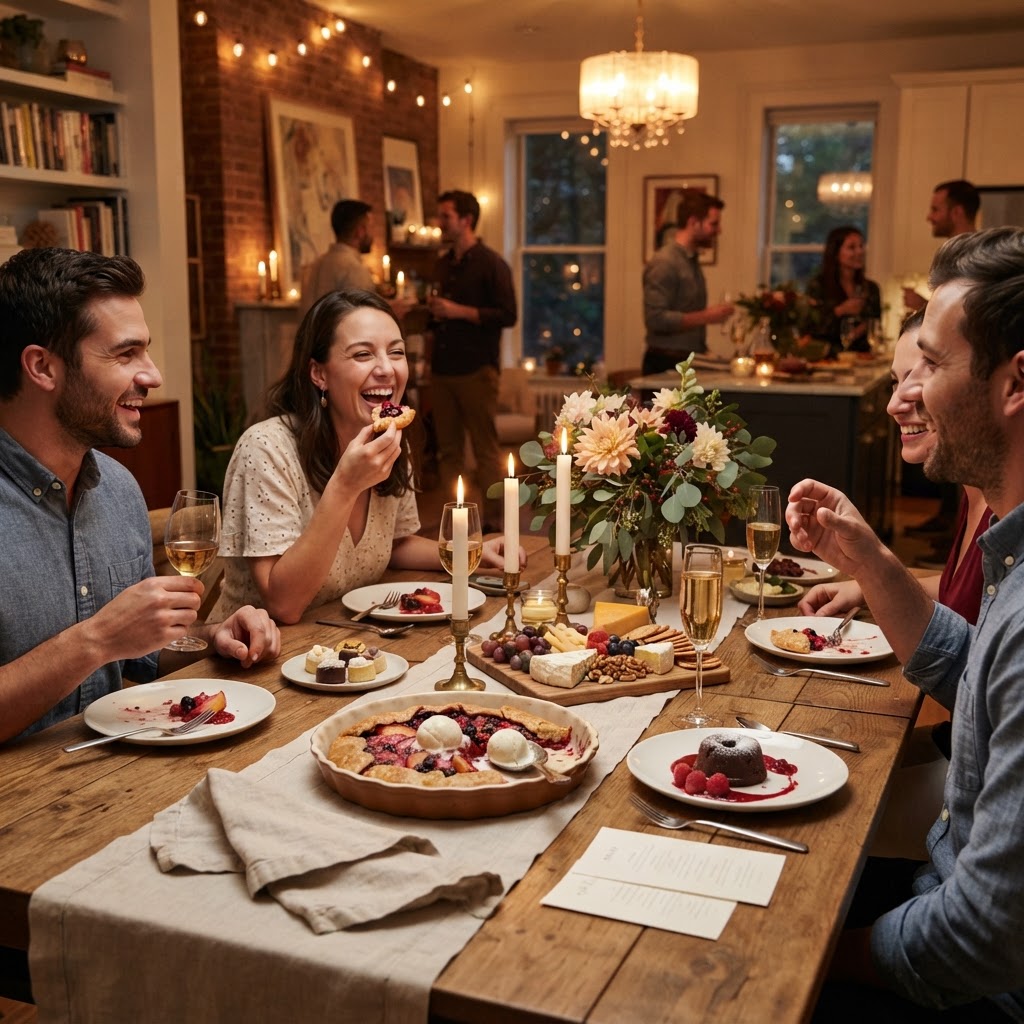
The final stop is the place for indulgence. Dessert should be the most relaxed part of the evening, as the pressure of the main event has passed. Because guests are likely full, focus on flavor intensity over large portion sizes. A dark chocolate ganache tart, a delicate lemon posset, or an affogato with high-end espresso and homemade vanilla bean gelato works perfectly.
Coffee Service
Never underestimate the power of a good coffee service. By the time dessert arrives, the energy might be waning, and a hot, aromatic coffee or a selection of herbal teas can act as a bridge to the late-evening conversation. If you want to impress, offer a digestif—a small glass of amaro, limoncello, or a late-harvest dessert wine can be the perfect punctuation mark to the meal.
The Closing Atmosphere
As the night winds down, pull back the lighting and adjust the music volume. The dessert house should feel like a sanctuary. It is here that the bonds forged over the previous three courses truly solidify. Make sure there is comfortable seating that encourages lounging. This is the moment where the "work" of the dinner ends and the genuine connection begins.
Professional Chef Tips for Efficiency
If you want to achieve that polished, professional feel, adopt the habits of a professional chef. One of the most important habits is "cleaning as you go." Even if you are a guest, offer to help clear plates or load the dishwasher at the end of each stop. It demonstrates respect for the host and keeps the home environment tidy for the next round of guests who might drop by unexpectedly.
Mastering the Mise-en-Place
Before the first guest even arrives at the first house, every ingredient should be prepped. Vegetables should be chopped, proteins seasoned, and sauces reduced. When you are moving between homes, you cannot afford to be searching for a whisk or a pair of tongs. Place everything you need on a tray or in a dedicated "staging area" in the kitchen.
The Art of the Beverage
Drink pairings should be curated to match the progression of the meal. Start with something light and sparkling—perhaps a dry Prosecco or a crisp Sauvignon Blanc. Move into a medium-bodied red like a Pinot Noir for the main course, and finish with a fortified wine for dessert. Keep the glassware simple; you don’t need a different glass for every wine. A high-quality universal wine glass is perfectly acceptable and saves time on washing up.
Final Thoughts
The progressive dinner is more than just a sequence of plates; it is an exploration of hospitality. It challenges us to be better planners, more thoughtful guests, and more creative cooks. By distributing the effort, you ensure that no single person is trapped in the kitchen while the laughter erupts in the living room. Instead, you create a shared journey where the focus remains on the joy of eating together.
Remember that the goal is not perfection, but connection. If a sauce breaks or the wine is a few degrees too warm, lean into it. The most memorable evenings are often those where a minor hiccup becomes a shared joke. The art of the progressive dinner lies in your ability to maintain a calm, authoritative grace as you navigate the evening, keeping the plates moving and the conversation flowing.
Start small. Perhaps begin with a three-stop dinner—appetizers, a main course, and dessert—before adding the complexities of a salad or soup course. As you gain confidence, you will find that the rhythm of the evening becomes second nature. You are the conductor of this culinary symphony, and with every course, you are building a memory that will linger long after the final dish has been cleared. Embrace the process, trust your preparation, and most importantly, blame the chef for all the delicious calories—it’s part of the charm.
As you conclude your first successful progressive dinner, take a moment to survey the room. You will notice that the guests are more relaxed, the conversation is deeper, and the energy is markedly different from a standard dinner party. There is a psychological transition that occurs when we move from space to space, a refreshing of the senses that mirrors the progression of the food itself. You have not just served a meal; you have hosted an experience that invites people to see your homes, your tastes, and your camaraderie in a new light.
Keep a digital notebook or a simple folder where you track what worked and what didn't. Did the walk to the third house take too long? Was the main course a bit too salty? Use these notes to refine your next outing. Hosting is a practice, a culinary craft that deepens with every gathering you organize. You are, in essence, building a community one dish at a time, and that is a endeavor well worth the effort of planning, coordinating, and executing.
Finally, consider the legacy of your dinners. Maybe you choose a theme for the next one—regional Italian, a celebration of heritage grains, or perhaps a strictly seasonal vegetable-forward menu. The boundaries are yours to set. Whatever path you choose, keep the core tenets of the progressive dinner at the forefront: logistical precision, thoughtful menu curation, and an unwavering focus on the guest experience. With these three pillars, your reputation as a host will be cemented, and "Blame The Chef" will become a badge of honor for the incredible memories you’ve helped create.
As you look forward to your next event, remember that the ingredients are merely the medium. The true artistry lies in the people you gather and the atmosphere you cultivate. Whether you are a novice home cook or a seasoned veteran of the kitchen, the progressive dinner offers a canvas that is as vast as your imagination. Go forth, plan your route, gather your ingredients, and may your next progressive dinner be the talk of your social circle for years to come. The culinary world is wide, but the best moments happen right here, in the homes of the people we love.
When you prepare for the next round, don't forget the importance of the pre-service briefing. If you are coordinating with other hosts, ensure everyone is on the same page regarding dietary restrictions. There is nothing more stressful than arriving at the main course house to find a guest who cannot eat the centerpiece of the meal. A simple, shared document or group chat is your best tool for ensuring that every guest is accommodated and every host feels prepared.
Ultimately, hosting is an act of generosity. When you host a progressive dinner, you are inviting your friends to participate in the act of creation. You are saying, "I value your presence enough to coordinate this entire evening just for us." That sentiment is the secret ingredient that cannot be measured in teaspoons or tablespoons. It is the intangible quality that makes a dinner truly memorable, a testament to the fact that while we may eat for sustenance, we gather for the soul.
Take this knowledge, apply these techniques, and do not be afraid to adapt them to your own specific needs. If your friend group prefers a more casual, DIY approach, let that be your guide. If you want to lean into the formality of a classic, multi-course banquet, the structures provided here will serve you well. The beauty of the progressive dinner is its inherent flexibility. It can be whatever you need it to be, provided you keep the focus on the flow, the timing, and the simple, undeniable joy of a meal shared with friends.
As you step away from this post, feel empowered to start your planning today. Reach out to your potential co-hosts, propose a theme, and set the date. The planning process is half the fun, and the payoff is an evening that will define your social calendar for the entire season. You have the tools, the techniques, and the vision. Now, all that remains is to put it into action. May your wine be perfectly chilled, your proteins perfectly rested, and your friends always eager for the next course to arrive.
And if something goes wrong? If a dish is delayed or a guest is late? Do not stress. As the master of ceremonies for the evening, your calm demeanor will set the tone for everyone else. If the soup is a bit late, offer a drink and a story. If the main course is slightly overcooked, laugh about it and serve it with a smile. The culinary journey is rarely perfectly linear, and that is exactly how it should be. After all, the best stories come from the moments where the script was abandoned in favor of the reality of a great time.
Enjoy the journey, enjoy the food, and celebrate the collective effort of everyone involved in the evening. There is a profound satisfaction in pulling off a complex logistical feat like a progressive dinner, and you will feel that glow long after the final guest has headed home. Your guests will leave with full stomachs and lighter hearts, and you will have the pride of knowing you orchestrated a culinary event that was truly special. Now, go forth and start your planning; the kitchen is waiting for you to make your mark.
To close, remember the golden rule of hosting: the host should have as much fun as the guests. If your plan for the progressive dinner is so complex that it prevents you from enjoying the company, then simplify it. Scale back the number of courses, choose more forgiving dishes, or limit the travel time. The goal is to celebrate the friendships that keep us going, and the food is simply the vessel for that celebration. Keep it simple, keep it high quality, and most importantly, keep the energy high. Your next dinner party is going to be your best one yet.

Get the Next Recipe
Weekly recipes, techniques, and gear picks — straight to your inbox.
