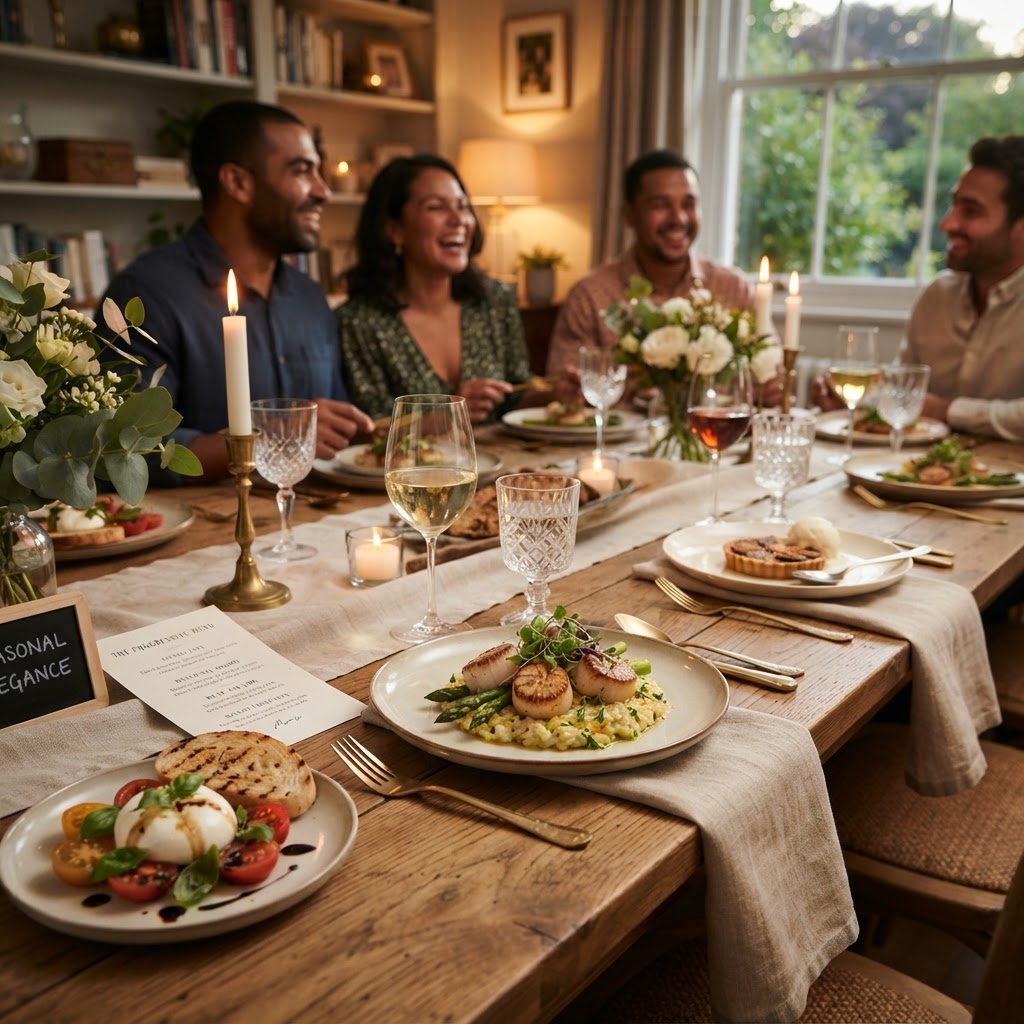
The Art of the "Progressive Menu": Mastering Ingredient Seasonality and Preparation Timelines for Seamless Dinner Party Hosting
The secret to hosting a dinner party that feels like a choreographed ballet rather than a kitchen disaster lies in the concept of the "progressive menu." Many home cooks fall into the trap of trying to execute every component of a meal at the exact moment guests arrive, leading to a frazzled host who is glued to the stove instead of the conversation. By curating a menu that flows logically through textures, temperatures, and preparation requirements, you can effectively distribute your labor over several days. This isn’t just about cooking; it’s about strategic project management, where the goal is to present a cohesive narrative on the plate while keeping your own stress levels at a baseline hum. When you master the rhythm of the kitchen, you move from being a panicked line cook to a gracious, composed conductor of a culinary orchestra.
To achieve this, one must view each ingredient not as an isolated entity, but as a time-sensitive component that requires a specific life cycle from prep to service. The progressive menu approach utilizes the mise en place philosophy—that French culinary bedrock which dictates that everything has its place and its time. We want to identify those elements that actually improve with age, such as braises or marinated proteins, and contrast them with the delicate, high-speed items that demand immediate attention, like flash-seared proteins or emulsions. When you align these two worlds, you create a schedule where the heavy lifting is done in the silence of the morning, leaving the final flourishes to be handled with ease as the corks pop on the first bottle of wine. It is the definitive way to host without the residual burnout that so often accompanies the "dinner party hangover."
Ultimately, the art of hosting is an exercise in managing expectations—both yours and those of your guests. A progressive menu allows you to build anticipation, leading your diners through a thoughtful progression of flavors that start bright and light, moving toward richer, more complex profiles before settling into a finish that lingers. By understanding the science of seasonality and the logistics of prep, you gain the confidence to experiment with bold techniques without the fear of failure. This guide is designed to dismantle the intimidation factor of professional-grade entertaining, replacing it with a roadmap that ensures you are present, engaged, and perhaps even enjoying the glass of wine you intended to drink an hour ago. Let’s dive into the architecture of the perfect evening, structured for success, consistency, and culinary flair.
The Architecture of a Progressive Menu
A well-constructed progressive menu is built on a foundation of culinary tempo. You must balance the physical demands of your dishes so that no two courses require intensive, last-minute sautéing. Think of your menu like a musical composition: you have the overture, which sets the mood; the core movements, which provide the substance; and the finale, which leaves a lasting impression. If your appetizer requires a delicate, temperamental soufflé, your main course should ideally be something that thrives in the oven, such as a slow-roasted protein or a layered vegetable gratin.
Balancing Heat and Chill
The primary mistake home cooks make is failing to account for the physical space in their kitchen and the thermal capacity of their appliances. If your main course requires a high-temperature sear of 450°F, you cannot simultaneously be baking a cake that requires a steady 325°F without risking thermal shock or uneven results. Always design your menu with a "cooling" element to follow a "heated" element, or utilize ingredients that can be served at room temperature. Room temperature service is the secret weapon of the professional chef; it bridges the gap between cold starters and piping-hot mains, allowing you to plate well in advance.
The Role of Seasonality
Seasonality is not just a buzzword; it is a shortcut to quality. When you source ingredients at their peak, they require less manipulation. A perfectly ripe heirloom tomato needs only a whisper of high-quality sea salt and a drop of cold-pressed oil, whereas a winter tomato requires a lengthy, involved preparation to mimic flavor. By adhering to the seasons, you reduce your labor requirements significantly. Focus on peak-season produce as the star of your plate, allowing the ingredients to carry the weight of the dish, which in turn simplifies your technique.
"The progressive menu is not a list of recipes; it is a tactical schedule that turns the kitchen from a place of pressure into a sanctuary of creation."
Mastering the Mise en Place Timeline
The timeline is the invisible backbone of every great meal. We suggest working in a three-day cycle for a serious dinner party. Day one is for research and sourcing; day two is for intensive "sub-prep," such as stocks, purees, and marinations; day three is for the assembly and the final cooking stages. By breaking the tasks into these segments, you ensure that you are never doing more than one major task at a time, keeping your workspace clean and your focus sharp.
The 48-Hour Prep Window
Many professional kitchens utilize a "holding" strategy for components. Purees, for example, can be made 24 hours in advance and stored in a bain-marie or sealed container. When ready to serve, simply re-heat them in a saucepan with a splash of cream or butter to bring back their luxurious emulsion. Proteins like lamb shoulder or beef short ribs are actually superior when cooked a day early, as the proteins have time to relax and the flavors to meld within the connective tissues during the cooling and re-heating phase.
Professional Tips for Efficiency
Color-code your prep bowls*: Keep raw proteins, vegetables, and finished components in distinct, labeled containers.
The "Cleaning as you go" mandate*: Never allow trash to accumulate on your cutting board. A cluttered station leads to a cluttered mind.
The 30-minute buffer*: Always assume the final plating will take twice as long as you think. Schedule your arrival time for your "service" 30 minutes before your guests are actually due.
High-Heat Techniques vs. Slow-Cook Methods
The secret to a seamless dinner is knowing which techniques require your eyes on the pan and which techniques reward the "set it and forget it" approach. High-heat techniques, such as searing, deglazing, and rapid sautéing, provide the Maillard reaction that adds that deep, savory crust to your proteins. These must be performed seconds before the plate leaves the kitchen. Conversely, braising, roasting, and stewing are your best friends because they develop flavor over a long duration without requiring constant supervision.
Leveraging the Maillard Reaction
To get a perfect sear, the surface of your protein must be bone-dry. Moisture is the enemy of heat; if you place a damp steak or scallop into a pan, you are effectively steaming it rather than searing it. Pat your proteins down with paper towels 20 minutes before cooking. Use a heavy-bottomed cast iron or stainless steel pan—never non-stick for high-heat searing—and ensure your oil is shimmering before the protein makes contact.
Mastering the Braise
When utilizing a slow-cook method, the secret is the liquid ratio. You do not need to submerge the protein completely; covering it one-third to one-half of the way up the side of the meat is sufficient, provided you cover the vessel tightly. This keeps the top of the protein moist while the bottom develops a rich, intense flavor. Always finish your braising liquid by reducing it separately; strain the solids and whisk in a knob of cold butter (a technique called monter au beurre) to create a glossy, professional sauce that coats the back of a spoon.
"True hospitality is felt in the details that you had the time to perfect because you weren't frantically chopping herbs while your guests were already at the table."
The Science of Plating and Temperature Control
Plating is the final performance of the chef, and it is here that many home cooks fall apart. The key is to standardize your plating process. If you are serving six people, line up six plates on your workstation in the same orientation. Treat the assembly line like a factory—add the base puree to every plate, then the protein, then the garnish, and finally the sauce. This repetition creates a muscle memory that prevents errors and ensures that every guest receives an identical experience.
Pre-heating Plates
One of the most overlooked details in home dining is the temperature of the plate itself. If you spend 45 minutes preparing a hot meal and place it on a cold ceramic plate, you have effectively dropped the temperature of the food by 20 degrees in seconds. Place your dinner plates in a low oven (150°F to 175°F) for 15 minutes before serving. A warm plate keeps your sauce fluid and your protein tender for the duration of the meal.
Strategic Garnishing
Garnishes should serve a purpose beyond aesthetics. They should provide a contrasting texture or a necessary acidity to cut through the richness of the dish. A heavy, fatty piece of braised short rib needs the bright acidity of a quick-pickled radish or a fresh herb salad tossed in a lemon vinaigrette. Never garnish with anything that hasn't been tasted or that doesn't contribute to the overall flavor profile of the plate.
Ingredient Seasonality: A Seasonal Roadmap
To build a truly progressive menu, you must respect the calendar. Cooking out of season leads to forced flavors and high costs. In the spring, focus on tender greens, asparagus, and early-harvest legumes. In the summer, embrace the bounty of tomatoes, stone fruits, and peppers. Autumn calls for root vegetables, squashes, and game meats, while winter is the time for hearty braises, citrus, and aged cheeses.
Creating a Seasonal Calendar
Managing Quality Inputs
When you know a certain ingredient is in peak season, buy it in its raw, unprocessed state. The more you interfere with a seasonal ingredient, the more you diminish its value. Learn to appreciate the natural sweetness of peas or the sharp bite of wild arugula. Your job as the host is simply to showcase these ingredients in the best possible light.
Logistics of the Cocktail Hour
The cocktail hour is the "buffer zone" of the evening. It is your opportunity to welcome your guests, get them settled, and finish your final plating without feeling rushed. A successful cocktail hour requires a "help-yourself" component so that you are not acting as a full-time bartender. Prepare a batch cocktail—a punch or a Negroni variation—that can be poured from a pitcher. This ensures that you aren't shaking individual martinis for twenty minutes while your appetizers go cold.
Appetizer Selection
Choose appetizers that are hand-held and require no utensils. A great option is a crostini with a high-quality spread or a skewered protein that can be cooked in minutes. The key is to provide a snack that whets the appetite without satiating it. Avoid anything that is too greasy or requires the guests to constantly wipe their hands, as this disrupts the flow of conversation.
The Soundscape
A dinner party is a multi-sensory experience. Do not neglect the audio component of your evening. Create a playlist that starts with upbeat, lower-volume jazz during the cocktail hour and shifts toward something more melodic and ambient as the meal progresses. The volume should always be low enough that guests don't have to raise their voices to be heard, but high enough to fill the gaps in the conversation.
Final Thoughts
The progressive menu is more than just a technique; it is a mindset that prioritizes the host’s experience as much as the guests'. When you remove the chaos of the last-minute kitchen dash, you open the door to genuine connection. Hosting should never be about perfection; it should be about creating an environment where people feel welcomed and cared for. By applying the principles of mise en place, seasonality, and strategic scheduling, you take the "blame" out of the chef’s role and turn it into a position of creative leadership.
Remember, every professional chef started exactly where you are, likely with a burnt pan and a guest list that felt slightly too ambitious. The difference between a home cook and a chef is simply the repetition of these systems. Master the timeline, respect the produce, and keep your kitchen as disciplined as your menu is creative. Once you adopt these habits, you will find that dinner parties are no longer a source of anxiety, but a natural, rewarding extension of your hospitality. Now, set the table, pour the wine, and go enjoy the evening you’ve worked so hard to curate. You’ve earned it, and your guests will appreciate the effort in every balanced, well-timed bite.
When things go wrong—and they occasionally will—remember that your guests are there for the company, not a review in a major publication. If a sauce breaks, whisk in a tablespoon of cold water or a touch more fat. If a protein overcooks, slice it thinly and cover it in a vibrant chimichurri. The goal is to move forward with grace, keeping the rhythm of the meal intact. Master the basics, plan for the variables, and always keep your favorite knife sharp. You are the architect of this meal, and with these tools in your arsenal, you are prepared to host an unforgettable evening that leaves everyone asking how you made it look so effortless. Stay bold, stay organized, and keep cooking with intent. The next course is always the most important one.
As you look forward to your next hosting opportunity, challenge yourself to incorporate one new technique or one seasonal ingredient you’ve never used before. Perhaps it’s a dry-age technique for your next roast, or a fermented element to add complexity to your sauces. The kitchen is a place of infinite growth, and the dinner party is the most rewarding stage for that evolution. Thank you for joining us in this deep dive into the art of the progressive menu. May your pans always be hot, your mise en place always be tight, and your dining table always be filled with laughter. Onwards, to your next culinary success.

Get the Next Recipe
Weekly recipes, techniques, and gear picks — straight to your inbox.
