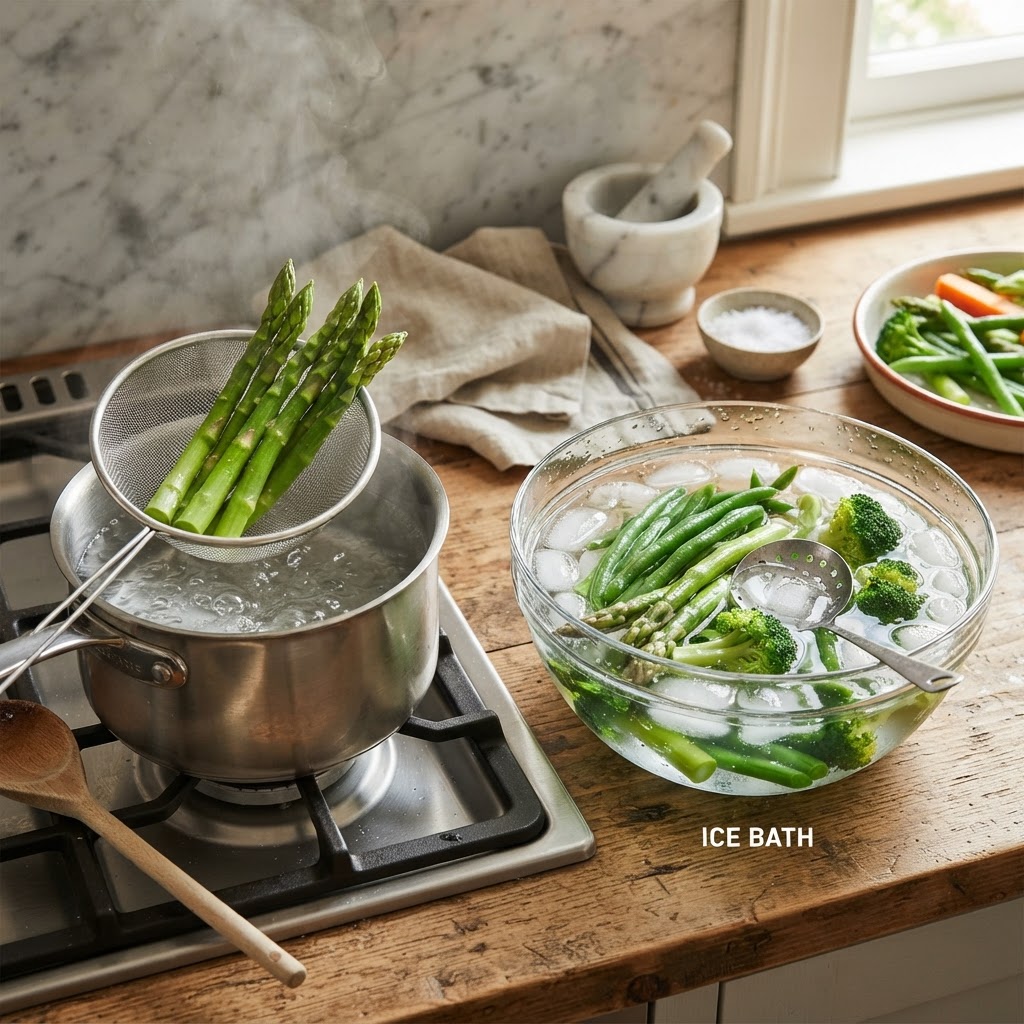
The Art of the Shock: Mastering Blanching and Ice Bathing for Perfectly Vibrant Vegetables
If you have ever stared at a beautiful bundle of vibrant green asparagus or a heap of snap peas in the grocery store, only to watch them turn into a dull, olive-drab pile of mush once they hit your dinner plate, you are not alone. It is one of the most frustrating rites of passage for the home cook: the realization that restaurant-quality vegetables—those that snap with freshness and glow with an almost neon intensity—seem to require some kind of culinary sorcery. The truth, however, is far less mystical and much more scientific. It is a fundamental technique known as blanching and shocking, a two-part process that acts as the backbone for professional vegetable preparation. By mastering this simple sequence of boiling and cooling, you gain control over texture, color, and flavor in a way that will permanently elevate your home cooking.
At its core, blanching is the act of briefly submerging a food item into boiling water, followed by an immediate plunge into an ice bath to halt the cooking process. This is not just about making things pretty; it is a vital step in maintaining the integrity of cell walls, preserving essential vitamins, and neutralizing the enzymes that cause produce to degrade or lose its pigment. When you drop a vegetable into boiling water, you are essentially "setting" the color by removing air bubbles trapped between the cells, which allows the green chlorophyll to shine through with brilliant clarity. If you leave the vegetable in the water too long, or if you fail to chill it immediately, the heat continues to break down the structure, leading to that dreaded mushy consistency that ruins a salad or a crudité platter. Understanding the "why" behind the timing is the difference between a mediocre home meal and a plate that looks like it came straight out of a fine-dining kitchen.
In this guide, we are going to peel back the curtain on the art of the shock. We will explore the precise ratios of salt to water, the critical timing for various vegetables, and the nuances of the ice bath that most home cooks overlook. Whether you are prepping vegetables for a high-end dinner party, storing produce for long-term freezer use, or simply trying to get your family to eat more greens, this technique is your most reliable tool. We will move beyond the basics, discussing how to handle hearty roots versus delicate greens, and how to troubleshoot the common mistakes that lead to lackluster results. Grab your stockpot, ready your ice trays, and prepare to change the way you interact with your vegetable crisper drawer forever.
The Science of the Boil: Why Water Temperature Matters
The primary goal of the initial boil is to achieve a rapid, consistent heat transfer. Many home cooks make the mistake of adding their vegetables to a pot of water that is barely simmering, which is a recipe for disaster. When you add cold produce to a lukewarm pot, the temperature of the water drops, and it takes too long to return to a rolling boil. During this lag time, the vegetables essentially stew in their own juices, releasing acids that discolor the exterior and turning the texture soft before the cooking process has even truly begun. To avoid this, you must ensure your water is at a violent, rolling boil before adding your vegetables.
The Salt Factor
Salt is not merely for seasoning; it is an essential chemical agent in the blanching process. You should aim for water that tastes like the sea—a heavy pinch of kosher salt serves to brighten the natural flavors of the vegetables and actually helps in keeping the vegetable tissues firm. Scientifically, salt raises the boiling point of water, which allows for faster heat penetration, and it helps displace magnesium in the chlorophyll molecule, which is the primary reason why properly salted blanched vegetables appear more vibrant than those blanched in plain, flat water.
Managing the Volume
A common oversight is overcrowding the pot. If you throw two pounds of broccoli into a small saucepan with a quart of water, the water temperature will plummet, and you will have to wait for it to recover. This leads to uneven cooking where the edges of the vegetables become mushy while the centers remain raw. Always use a large stockpot—the larger, the better. You want a high water-to-vegetable ratio, usually around four or five parts water to one part vegetable, to ensure the temperature stays consistent from the moment the produce hits the bottom of the pot.
"Blanching is the silent professional of the kitchen. It is the secret foundation beneath every great vegetable dish, ensuring that the vibrancy you see in the market remains on the plate."
Mastering the Ice Bath: The Critical Stop Button
If the boiling water is the "start" command for your vegetables, the ice bath is the non-negotiable "stop" command. The moment you remove your vegetables from the pot, the residual heat inside the plant matter continues to cook it. If you simply drain them into a colander and leave them on the counter, you are still actively cooking your broccoli or carrots, and the heat will carry over until they are over-processed and dull. A properly prepared ice bath consists of a large bowl filled halfway with cold water and topped with at least two or three trays' worth of ice cubes.
The Thermal Shock Technique
The transition from boiling to freezing is a thermal shock that locks in the chlorophyll and firms up the vegetable's pectin. When the vegetable hits the icy water, the cooling is instantaneous. This not only preserves the bright green color but also locks in the crisp, snappy texture that we crave. If your ice bath is too small or lacks enough ice, the water will quickly reach room temperature, and you will lose the benefit of the shock. You want the water to remain frigid for the duration of the cooling period.
Timing the Dip
How long should you leave them in the ice? The rule of thumb is to keep them submerged for the exact same amount of time they were in the boiling water. If you blanched your green beans for three minutes, they should spend three minutes in the ice bath. Once they are cold to the touch and completely chilled through, you can drain them. Leaving them in the bath for too long can result in waterlogged, flavorless vegetables, so be diligent about pulling them out once they reach the target temperature.
Categorizing the Vegetables: Timing and Preparation
Not all vegetables are created equal, and attempting to blanch a potato the same way you blanch a delicate pea will lead to failure. We categorize vegetables by their density and surface area to determine how long they should spend in the boiling water. Delicate greens like spinach might only need thirty seconds, while dense stalks of broccoli or chunks of cauliflower might require two to three minutes. Understanding these differences is crucial for a professional finish.
The Hierarchy of Blanching
Pre-Blanching Prep
Preparation is just as important as the blanching itself. Always ensure your vegetables are cut into uniform sizes. If you are blanching carrots, try to cut them into similar batons or slices. If you have some pieces that are massive and others that are slivers, the small ones will turn to mush before the large ones are even tender-crisp. Furthermore, ensure your vegetables are washed and trimmed before the water starts boiling; once the process begins, it moves very quickly, and you will not have time to trim your asparagus while the water is waiting.
"A bowl of ice water is the most important piece of equipment in your kitchen. It is the gatekeeper of texture, the defender of color, and the ultimate tool for achieving consistency."
Troubleshooting the Common Pitfalls
Even with the best intentions, things can go wrong. If your vegetables emerge from the water looking limp or turning a brownish-gray, you have likely over-blanched them. This usually happens when the pot is too crowded or the water wasn't boiling hard enough at the start. If you notice your vegetables have a strange, soapy taste, you likely didn't use enough salt in your water. The salt is meant to permeate the surface of the vegetable and counteract the release of organic acids that occur when the cell walls burst under heat.
The "Soggy" Dilemma
If your vegetables come out feeling soggy even when they are fully chilled, it means they sat in the water for too long or were over-cooked before they even hit the ice. Remember that blanching is intended to "par-cook" or "flash-cook" the produce. You should rarely aim for total tenderness during the blanching stage. If you are going to sauté the vegetables later with garlic and butter, your goal in the blanching stage should be "al dente," or firm to the tooth, as they will receive additional heat later.
The Color Loss
If your green vegetables are losing their color, look at your water. If the water is turning deep green, you have definitely gone too far. This means the chlorophyll has leaked into the cooking liquid. This is often caused by boiling the vegetables with the lid on the pot. Always keep the lid off during the blanching process. The cover traps the acids released by the vegetables, which then fall back into the water and accelerate the breakdown of the chlorophyll. Keeping the lid off allows those volatile acids to evaporate.
Advanced Techniques: Beyond Simple Blanching
Once you have mastered the basics of boiling and shocking, you can begin to experiment with different liquids and flavor infusions. Many professional chefs add aromatics to their blanching water to impart subtle flavors into the produce before a final sear. Consider adding a few cloves of smashed garlic, a sprig of fresh thyme, or a strip of lemon peel to your boiling water. These aromatics will infuse the vegetables with flavor, giving them a dimension that simple salted water cannot provide.
The Butter Blanch (Monter au Beurre)
If you are looking for a luxurious finish for a dinner party, consider the butter blanch. After you have blanched and shocked your vegetables, toss them in a warm skillet with a knob of butter and a splash of stock. Because the vegetables are already properly "set" from the blanching, they will absorb the butter and stock beautifully without losing their vibrant color or their snappy, crisp texture. This is a common technique used in high-end French restaurants to ensure that vegetables arrive at the table with a glistening, restaurant-quality sheen.
Utilizing the Freezer
Blanching is the only way to successfully store seasonal vegetables for long-term freezing. If you put raw broccoli into the freezer, the enzymes will continue to work, eventually causing the vegetable to taste bitter and look unappetizing. By blanching and shocking, you deactivate those enzymes. After your ice bath, pat the vegetables extremely dry using a clean kitchen towel—this prevents ice crystals from forming, which ruins the texture upon thawing. Once dry, lay them out on a sheet pan to freeze individually before transferring them into freezer-safe bags.
The Art of Presentation: From Prep to Plate
The ultimate payoff for mastering this technique is the visual impact it has on your finished dish. A plate of vivid, bright green snap peas contrasted against a rich, earthy protein is aesthetically stunning. Blanching allows you to prep your vegetables hours, or even a full day, in advance. For a dinner party, you can perform your blanching and shocking early, keep the vegetables in the refrigerator, and then just perform a quick sauté or a steam-finish right before serving.
Maintaining the Snap
Always test your vegetables before they leave the ice bath. Take a single piece—a green bean, a floret of broccoli—and taste it. It should be tender enough to eat, but it should still provide a noticeable "snap" when you bite into it. If it feels soft or mushy, it is past its prime. If you find your vegetables are not quite done to your liking, you have two choices: either adjust your future timing or finish them in a pan with a little bit of fat. It is always better to slightly under-blanch than to over-blanch.
Plating Strategies
When plating blanched vegetables, treat them as a focal point rather than an afterthought. Group them intentionally rather than scattering them randomly. Because you have taken the time to preserve their color, place them against contrasting elements. A bright green asparagus against a dark, charred steak, or a vibrant carrot next to a white piece of pan-seared fish, creates a sense of balance and intentionality that elevates the entire dining experience.
Final Thoughts
Mastering the art of blanching and shocking is one of the most transformative skills a home cook can acquire. It shifts your perspective on vegetables from something that is just "there" to a component that demands and rewards careful handling. You are moving from a place of guessing—hoping that your broccoli doesn't turn into a grey heap—to a place of calculated execution. You are learning to command the chemistry of the kitchen, using salt, water, temperature, and time to unlock the full potential of your produce.
Remember that culinary technique is not about following a recipe blindly; it is about building a toolkit of reliable, repeatable actions. Blanching is simple, yet it requires your full attention. It demands that you stand by the stove, that you watch the water, and that you respect the timing. As you practice this, you will find that your confidence in the kitchen grows. You will stop fearing the vibrant green of fresh herbs and vegetables and start seeking them out, knowing exactly how to treat them to make them look as fresh on the plate as they did in the garden.
Next time you are at the market, pick up something new. Try blanching baby kale, or perhaps some sugar snap peas or baby carrots. Go through the steps with intention: the rolling boil, the generous salt, the precise timing, and the bracing chill of the ice bath. Once you see that color lock into place—that almost impossibly bright, glowing green—you will understand exactly why this is a non-negotiable step for every chef. It is the bridge between the grocery store and the professional kitchen, and now, it is a tool that belongs entirely to you. Keep your pots clean, your ice trays full, and your enthusiasm for the process high, because the secret to vibrant vegetables is no longer a secret at all. Happy cooking, and remember: when the food is this good, you’ll never have to blame the chef again.

Get the Next Recipe
Weekly recipes, techniques, and gear picks — straight to your inbox.
