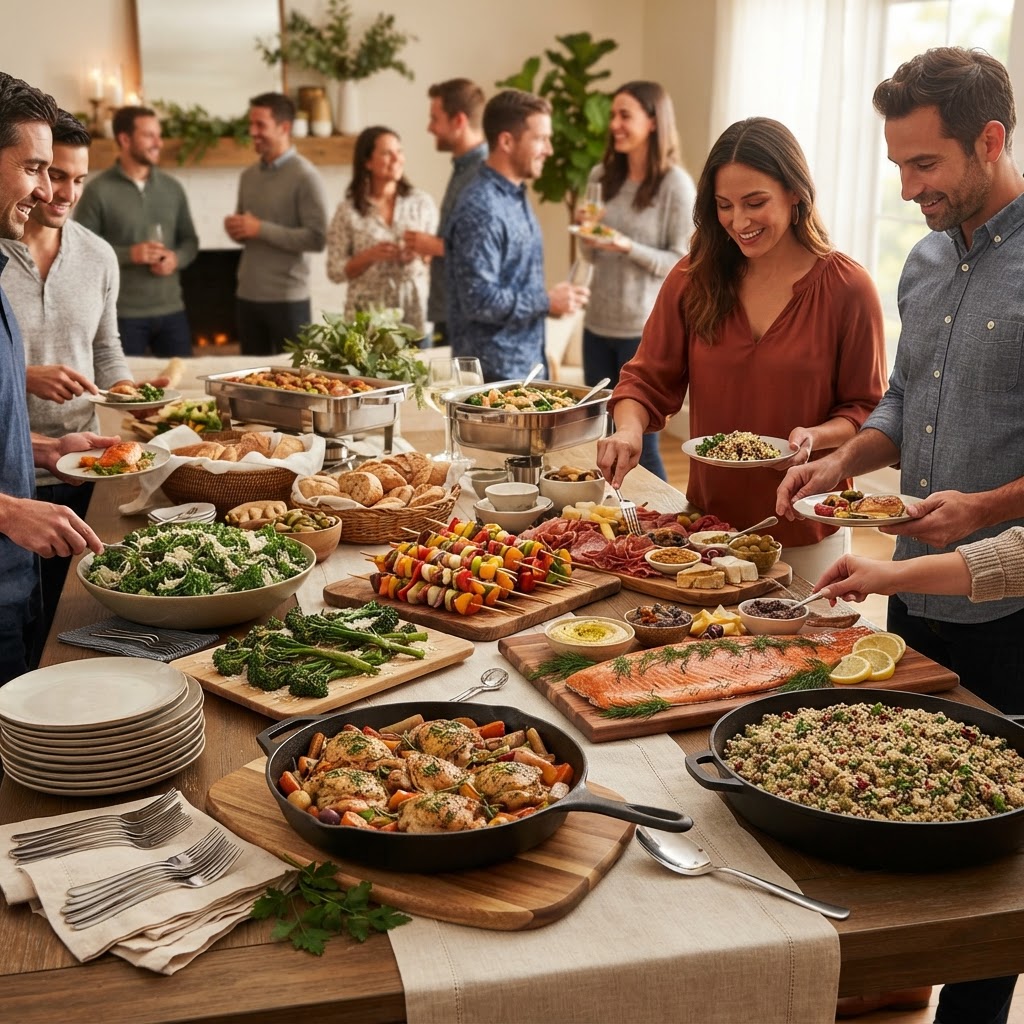
The Art of the "Stationary Buffet": Mastering Flow, Ergonomics, and Plate-to-Palate Temperature for Stress-Free Large-Group Hosting
The sheer joy of gathering friends and family around a table is a feeling that resonates deeply with any home cook. There's an undeniable magic in sharing delicious food, laughter, and conversation, creating memories that linger long after the last plate is cleared. However, for those of us who love to entertain, especially on a grand scale, the logistical hurdles can sometimes feel as daunting as a Michelin-star tasting menu. The traditional approach of a plated meal for a crowd often leads to a frantic dash between the kitchen and dining room, with the host perpetually on the verge of a culinary meltdown. But what if there was a way to offer a bountiful feast that minimizes stress, maximizes interaction, and ensures every bite is as perfect as the first?
Enter the stationary buffet, a seemingly simple concept that, when executed with intention and a touch of culinary strategy, transforms from a mere food-serving station into a sophisticated dining experience. It’s about more than just arranging platters; it’s about orchestrating a flow that guides your guests seamlessly through the offerings, encouraging exploration and conversation. This style of entertaining allows for a more relaxed atmosphere, where guests can serve themselves at their own pace, mingle, and return for seconds without disrupting the host’s ability to enjoy the company. The key lies in understanding the principles that elevate a self-serve meal from utilitarian to exceptional.
This post is dedicated to unlocking the secrets of the perfect stationary buffet. We'll delve into the nuances of flow and ergonomics, ensuring your setup is intuitive and efficient for both guests and yourself. We’ll explore the critical, yet often overlooked, aspect of plate-to-palate temperature, a game-changer that separates a good buffet from a truly memorable one. We'll also arm you with practical tips, from strategic menu planning to clever plating techniques, all designed to empower you to host with confidence and grace, no matter the size of your gathering. So, take a deep breath, banish the buffet-induced anxiety, and let's embark on the journey to mastering the art of the stationary buffet.
The Blueprint: Designing for Flow and Ergonomics
A well-designed stationary buffet is a symphony of strategically placed elements, each serving a purpose in creating an effortless experience for your guests. Think of it as a culinary obstacle course where the obstacles are removed, and the path is clear. The fundamental principle is to establish a single, intuitive pathway for guests to follow. This prevents congestion, avoids awkward backtracking, and ensures everyone can access the food without feeling rushed or overwhelmed. Consider the natural progression of a meal: starting with appetizers, moving to mains, then sides, and finally, dessert. Your buffet layout should mirror this, guiding guests in a logical sequence.
The placement of plates is paramount. They should be the very first item guests encounter, signaling the beginning of their culinary journey. This allows them to gather their vessel before approaching the food, preventing them from juggling a plate while trying to decide on their first dish. Utensils should follow closely, ideally placed with their respective dishes or grouped together just before the main courses. This avoids the dreaded situation of guests holding a fork and knife, only to realize they’ve already passed the pasta or the roast. The overall arrangement should encourage a gentle, forward momentum, minimizing the need for guests to turn around or reach across others.
"The success of a stationary buffet hinges on anticipating your guests' movements. Every placement, every item, should be considered from their perspective, ensuring a smooth and enjoyable path from entry to exit."
Consider the physical space you have available. A long, narrow table is ideal for a linear flow, while a larger, more open area might allow for a serpentine path. Avoid placing dishes too close together, which can lead to overcrowding and spills. Leave ample space between serving platters for guests to maneuver and serve themselves comfortably. Think about where drinks will be situated – ideally, separate from the main food line to prevent bottlenecks. This might mean a dedicated drink station or placing beverages at the end of the buffet, after dessert, or even on separate side tables. The goal is to create a system that is as self-explanatory as it is aesthetically pleasing.
Creating the Path
When setting up your buffet, envision your guests entering the space and beginning their meal. The very first thing they should see is a stack of clean plates. This is non-negotiable. Position these at the beginning of the serving line. Next, introduce the serving utensils. These can be placed directly on each platter or grouped just before the first food item. Some chefs prefer to place them on the platter to ensure the correct utensil is used for each dish, a simple yet effective detail. Then, the food begins.
Strategic Placement of Dishes
The order of food items is crucial for both flow and flavor pairing. Typically, you'll start with appetizers, followed by salads or lighter fare, then the main protein courses, and finally, the side dishes. This allows guests to build their plate logically. Consider the temperature of your dishes from the outset. Hot items should be grouped together, and cold items should be kept separate, with a plan for maintaining their intended temperatures. For example, place creamy salads or delicate seafood salads after heartier, warmer dishes to prevent them from being inadvertently heated by proximity.
Utensil and Napkin Considerations
Napkins and cutlery should be strategically placed to minimize fumbling. If you're serving fork-and-knife entrees, place the cutlery just before those dishes. For meals that are primarily fork or spoon-based, simplify by placing these utensils together. Some hosts opt to roll cutlery with napkins for a tidy presentation and to ensure guests have both readily available. However, consider if this adds an extra step for your guests at a point where they might already be balancing a plate and serving themselves. Alternatively, place folded napkins at the beginning of the buffet line, followed by plates, and then all cutlery together before the main dishes.
The Science of Temperature: Keeping Hot Foods Hot and Cold Foods Cold
This is arguably the most critical element in transforming a good buffet into a great one. The plate-to-palate temperature is the ideal temperature at which food is consumed. For hot dishes, this means serving them hot enough to be enjoyable and safe, and for cold dishes, it means keeping them refreshingly chilled. A lukewarm pasta salad or a tepid roast beef is a culinary disappointment, and a warm shrimp cocktail is a safety hazard. Mastering temperature control is not just about aesthetics; it’s about ensuring food safety and delivering the intended flavor and texture of each dish.
For hot foods, there are several reliable methods. Chafing dishes with sterno cans are a classic for a reason, providing sustained heat. However, be mindful of the heat level – you don’t want to scorch the bottoms of your dishes. Some chafing dishes come with adjustable vents to control the flame. Another excellent option for smaller gatherings or specific dishes is a slow cooker set to the "warm" setting. Many stews, chilis, or pulled meats can be kept perfectly heated this way. For dishes that can withstand it, a low oven temperature (around 200-250°F or 93-121°C) can also be employed, but this requires careful timing to avoid overcooking.
"Don't let your meticulously prepared dishes fall victim to temperature neglect. Food safety and optimal flavor are intrinsically linked to serving temperatures."
Cold foods require a different approach. The goal is to keep them chilled without them becoming icy or diluted by melting ice. Ice baths are your best friend here. Place serving bowls or platters inside larger containers filled with ice. For dressings or sauces, individual small bowls nestled in ice work wonderfully. For larger items like potato salad or coleslaw, larger trays filled with ice are effective. If you're serving chilled desserts like mousse or cheesecake, keeping them in the refrigerator until just before serving and then presenting them on a chilled platter can work, but for extended buffets, a gentle ice bath is more reliable.
Maintaining Hot Food Temperatures
For dishes like roasted meats, casseroles, pasta bakes, or stews, consistent heat is key. Chafing dishes are the workhorses of buffet service. Ensure the water pan (if using a water bath chafer) is filled with hot water to begin with. The sterno cans should provide a steady, gentle heat. Avoid over-packing the chafer, as this can lead to uneven heating. For items like mashed potatoes or gratins, an oven set to 200-250°F (93-121°C) is ideal. You can transfer them from their baking dish to a serving dish and keep them warm in the oven. Remember to preheat your serving dishes for hot foods, as this helps maintain their temperature for longer once they are out of the oven or chafing dish.
Keeping Cold Foods Chilled
Delicate salads, creamy dips, chilled seafood, and fruit platters need to stay cool. The most effective method is using an ice bath. Find a large, sturdy container that your serving bowl or platter can sit inside. Fill the larger container with ice, then place your food-filled serving vessel into the ice. You can add a little water to the ice bath to help with chilling, but not too much, as you don't want it to dilute your food. For smaller items like individual servings of mousse or panna cotta, they can be kept in the refrigerator and brought out in batches. Chilled serving platters, especially those made of marble or ceramic, can also offer a slight cooling effect.
The Danger Zone and Food Safety
It's crucial to understand the "danger zone" for food, which is the temperature range between 40°F (4°C) and 140°F (60°C). Bacteria multiply rapidly within this zone. Hot foods should be kept at or above 140°F (60°C), and cold foods at or below 40°F (4°C). This means your setup must be able to maintain these temperatures for the duration of the buffet. If you're serving for an extended period, consider using a food thermometer to periodically check the internal temperature of your dishes, especially for high-risk items like poultry or seafood. Never let food sit at room temperature for more than two hours (or one hour if the ambient temperature is above 90°F/32°C).
Menu Planning: Strategic Selections for Self-Service Success
The success of your stationary buffet isn't solely about presentation and temperature; it begins with a thoughtful menu. When planning, consider dishes that hold well, are easy to serve and eat without extensive fuss, and offer variety. The best buffet dishes are often those that are robust enough to withstand some time out and don't require intricate carving or plating at the moment of service. Think about textures, flavors, and dietary needs. A well-rounded menu caters to a range of palates and preferences, ensuring every guest finds something delightful.
Prioritize dishes that can be prepared ahead of time. This is the cornerstone of stress-free entertaining. Casseroles, stews, braised meats, roasted vegetables, and grain salads are excellent candidates. Items that are best served piping hot and immediately, like delicate pan-seared scallops or crispy fried chicken, are generally not ideal for a stationary buffet unless you have a dedicated plan for keeping them perfectly crisp and hot. Similarly, very delicate salads with fragile greens that wilt quickly might be better suited for a plated meal or served in very small batches just before guests arrive.
"A buffet menu is an exercise in foresight. Choose dishes that embrace the self-serve format, allowing you to mingle rather than manage."
When considering portion sizes, it's generally better to err on the side of slightly more rather than less. Guests often appreciate the ability to go back for seconds, and running out of a popular dish can be disappointing. However, over-preparing can lead to excessive waste. A good rule of thumb is to estimate about 1.5 to 2 servings per person for main dishes and sides, and about 1 serving for salads or appetizers that are part of a larger spread. For desserts, aim for 1.5 servings per person as well, as they are often a popular second helping.
Dishes That Hold Well
When selecting dishes, look for those that are forgiving. Braised meats, such as pulled pork, beef bourguignon, or lamb shanks, are perfect because their flavors deepen as they sit, and they can be easily reheated or kept warm in a slow cooker or chafing dish. Casseroles and gratins, like lasagna, shepherd's pie, or potato gratin, are also excellent choices. Grain salads, such as quinoa or farro salads, or pasta salads, can be made ahead and served at room temperature or slightly chilled. Roasted vegetables, like root vegetables or Brussels sprouts, also hold their texture and flavor well.
Avoiding High-Maintenance Foods
Steer clear of dishes that require last-minute attention or suffer from sitting out. Fried foods, unless specifically designed to be served at room temperature (like some fried chicken recipes), tend to lose their crispness quickly. Delicate fish, especially those that are easily overcooked, are also best avoided unless you are serving them in small, controlled batches. Sauces that are meant to be emulsified and delicate, like hollandaise or certain vinaigrettes, can break or separate if left sitting for too long. Opt for more stable dressings or sauces that can be served alongside.
Catering to Dietary Needs
A truly inclusive buffet considers guests with common dietary restrictions. Offering at least one vegetarian or vegan option is a thoughtful gesture. This could be a hearty lentil stew, a vegetable-packed curry, or a substantial grain salad. Similarly, having a gluten-free choice is becoming increasingly important. Many roasted meats and vegetables are naturally gluten-free, but be mindful of sauces and marinades. Clearly label dishes that are vegetarian, vegan, gluten-free, or contain common allergens like nuts or dairy. This allows guests to serve themselves with confidence and ease.
Portioning for Generosity
It's always better to have a little too much food than too little. For main courses, plan for approximately 6-8 ounces (170-225g) of protein per person. For side dishes, aim for about 4-6 ounces (115-170g) per person. Salads can be a bit lighter, around 3-4 ounces (85-115g) per person. For appetizers, if they are part of the main meal, plan for 2-3 pieces per person. If they are the sole focus of a cocktail party, aim for 5-7 pieces per person. Desserts are a bit more flexible; plan for 1.5 servings per person as it's common for guests to enjoy a second sweet treat.
The Art of Plating: Presentation that Invites and Informs
The visual appeal of your buffet is as important as the taste. Thoughtful plating can elevate even the simplest dishes, making them more enticing and easier for guests to serve themselves. It's about creating a cohesive and attractive spread that hints at the deliciousness to come. Think about color, texture, and height. A visually appealing buffet draws guests in and encourages them to explore.
Use a variety of serving dishes to add visual interest. Mixing and matching different shapes, sizes, and materials can create a dynamic display. Consider using risers or cake stands to add verticality, preventing the buffet from looking like a flat, uninspired line of food. This also helps guests see what's behind the first layer of dishes. Garnishes play a significant role in enhancing both the appearance and flavor of your dishes. Fresh herbs, a sprinkle of toasted nuts, a drizzle of contrasting sauce, or a scattering of edible flowers can transform a dish from ordinary to extraordinary.
"Never underestimate the power of a beautiful presentation. It's the first taste your guests will have, setting the stage for the culinary experience."
Labeling dishes is an often-overlooked but crucial aspect of buffet plating, especially when catering to dietary needs or when dishes might not be immediately obvious. Simple, elegant labels indicating the dish name and any key allergens or dietary information (e.g., "Vegetarian," "Contains Nuts," "Gluten-Free") can prevent confusion and allow guests to make informed choices. These labels can be simple tent cards or more elaborate decorative elements.
Incorporating Variety in Serving Vessels
Don't feel obligated to use matching dishes. A curated collection of different serving platters, bowls, and crocks can add immense visual appeal. Think about using a large wooden board for charcuterie, ceramic bowls for salads, cast iron skillets for gratins, and deep chafing dishes for stews. The key is to ensure the vessels are appropriate for the dish and its temperature. Preheating your serving dishes for hot food and chilling them for cold food (as mentioned earlier) will also contribute to the overall success of the presentation and temperature.
Adding Height and Dimension
A buffet spread can quickly become monotonous if everything is at the same level. Introduce visual interest and accessibility by using various heights. Cake stands, tiered platters, or even inverted bowls placed under platters can create elevation. This allows guests to see all the offerings more easily and prevents the first few dishes from obscuring what lies behind. Strategically placed taller items at the back of the buffet can draw the eye and create a more dynamic landscape of food.
The Power of Garnishes
Garnishes are the finishing touches that elevate your dishes from prepared to presented. Fresh, vibrant garnishes like chopped parsley, chives, cilantro, or mint can add a pop of color and freshness. A sprinkle of toasted seeds or nuts can add texture and visual appeal to salads or grain dishes. A swirl of crème fraîche or a drizzle of balsamic glaze can enhance the look and flavor of many savory and sweet items. For roasted meats, a sprig of rosemary or thyme can be both decorative and aromatic. Consider garnishes that complement the flavors of the dish.
Informative Labeling
Clear and concise labeling is a vital component of a successful buffet. Simple, elegant tent cards can provide the name of each dish. This is especially important for less common ingredients or dishes that might not be immediately recognizable. For guests with dietary restrictions, labels indicating "Vegetarian," "Vegan," "Gluten-Free," "Dairy-Free," or warnings like "Contains Nuts" are invaluable. This shows consideration and allows everyone to navigate the buffet with confidence and ease.
Drink Station Strategy: Preventing Hydration Bottlenecks
Just as crucial as the food flow is the strategy for your drink station. A poorly placed or over-congested drink area can create just as much of a bottleneck as a crowded food line, leading to guest frustration and potential spills. The golden rule for drinks is to separate them from the main food buffet. This might seem obvious, but it’s a detail that’s often overlooked. By having a dedicated space for beverages, you eliminate a major point of congestion and allow guests to access drinks independently of their meal selection.
Consider the type of beverages you're serving. If it's a mix of alcoholic and non-alcoholic options, you might want to create two distinct zones within your drink station or even two separate stations. For example, a bar cart or a designated counter space for wine, beer, and cocktails, and a separate area with water dispensers, sodas, and juices. This allows guests who are not consuming alcohol to easily access their preferred drinks without navigating past the bar.
"Don't let a traffic jam at the beverage station derail your party's flow. Strategic placement and organization are key to a smooth-flowing drink experience."
Ice is your best friend at the drink station. Ensure you have ample ice buckets or coolers readily available for guests to use for their drinks. If you're serving bottled or canned beverages, make sure they are well-chilled and easily accessible. Providing appropriate glassware and bottle openers/corkscrews is also essential. Think about the guest experience: they should be able to grab a drink, find ice, and have the necessary tools without having to search or ask for assistance.
The "No-Fly Zone" for Drinks
As mentioned, the most effective strategy is to physically separate your drink station from your food buffet. This could mean placing it on a different counter, in another part of the room, or even on a separate table. This creates two distinct points of access, allowing guests to move between food and drink without crossing paths in a confined space. If space is limited, aim for the drink station to be at the very end of the food line, after dessert, so guests have already completed their main meal selection before reaching the beverages.
Organizing the Beverage Options
If you have a variety of drinks, consider grouping them logically. All non-alcoholic beverages can be together, and alcoholic beverages can be in their own area. For example, water dispensers and pitchers of iced tea or lemonade can be on one side, while wine bottles and beer coolers are on another. This makes it easier for guests to find what they’re looking for. Ensure that ice buckets and coolers are easily accessible for chilling drinks on demand.
Essential Accessories
Don't forget the practicalities! Ensure you have a sufficient supply of ice buckets, tongs for ice, bottle openers, and corkscrews. If you're serving wine, have wine glasses readily available, perhaps on a separate shelf or nearby. For water, provide pitchers or dispensers and ensure there are tumblers or glasses. Consider a small trash or recycling bin nearby for empty bottles and cans to keep the area tidy. Providing a space for guests to set down their plates while they pour a drink can also be a thoughtful addition.
The "Just-in-Time" Assembly: Bringing It All Together
While many buffet dishes benefit from being prepared ahead, the final assembly and staging are where the magic happens. This is the "just-in-time" phase, where you bring together all your pre-prepared components and arrange them on the buffet table. This phase requires efficiency and a clear understanding of your layout and the needs of each dish. It's about transitioning from individual components to a cohesive, inviting spread.
Begin by clearing and cleaning your buffet surface. Lay out your serving platters and bowls according to your planned layout. This is where your blueprint comes into play. Place any risers or decorative elements. Then, start placing the dishes, keeping in mind their temperature requirements. Hot dishes should go into their preheated chafing dishes or slow cookers, and cold dishes should be placed in their ice baths or chilled platters.
"The final flourish is in the execution. A well-organized 'just-in-time' assembly transforms your kitchen's hard work into a stunning display."
Utensils and serving spoons should be placed with their respective dishes. This is also the time to add any final garnishes that haven't been applied yet. Think of it as dressing the salad or adding a final sprinkle of herbs to the stew. If you have any dishes that need a quick reheat or final touch just before serving, schedule those in. The goal is to have everything looking its best and at the optimal temperature just as your first guests arrive.
Prepping the Surface and Platters
Before you even think about food, ensure your buffet surface is clean, stable, and adequately sized. If you're using a tablecloth, make sure it's ironed and free of wrinkles. Then, begin placing your serving dishes. This is the time to finalize your layout, ensuring there's enough space between each item for guests to serve themselves easily. If you're using risers or decorative elements, position them now. Having your serving utensils ready to go is also crucial.
Temperature-Controlled Placement
This is the critical juncture where pre-planning meets execution. For hot dishes, carefully transfer them into their chafing dishes filled with hot water and lit sterno cans, or into their slow cookers set to "warm." For dishes kept warm in the oven, remove them and place them on their serving platters. For cold dishes, nestle them into their ice baths or onto chilled platters. Ensure that any sauces or accompaniments are placed directly with their main dish.
Final Garnishes and Touches
The last step before guests arrive is adding the final decorative and flavorful touches. This could be a sprinkle of fresh herbs, a scattering of toasted nuts or seeds, a drizzle of a contrasting sauce, or a swirl of crème fraîche. These are the elements that make the buffet look professionally prepared and appealing. Ensure these garnishes are fresh and applied just before serving to maintain their vibrancy.
Post-Buffet Cleanup: The Tidy Takeaway
While the focus is on the event itself, a little forethought about cleanup can make a significant difference. The beauty of the stationary buffet is that much of the serving is self-contained. However, you'll still have used dishes, serving utensils, and potentially some leftover food to manage. Planning for cleanup begins even before the event.
Consider using disposable serving spoons and forks for certain dishes if you want to minimize the amount of washing up. However, for a more elegant affair, reusable is always preferred. Have a designated "dirty dish" area in your kitchen or a separate cart where guests can place their used plates and cutlery. This keeps your main cooking area clear and organized.
"Don't let the thought of cleanup deter you from hosting. A little organization beforehand can turn a daunting task into a manageable end to a successful event."
Leftovers are a common occurrence with buffets, and this is often a good thing! Have food storage containers readily available. For hot dishes, allow them to cool slightly before refrigerating, but don't leave them at room temperature for too long (refer back to the danger zone guidelines). For cold dishes, ensure they are covered and refrigerated promptly. Labeling leftovers can be helpful for future meals.
Designated "Dirty Dish" Zone
To keep your kitchen or buffet area tidy throughout the event, establish a clear space for used dishes and cutlery. This could be a dedicated counter space, a sturdy rolling cart, or even a large bin designated for dirty dishes. Politely encourage guests to place their used items in this area. This prevents clutter from accumulating on the buffet table itself or in your primary workspace.
Managing Leftovers
Leftovers are the silver lining of a generous buffet! Have a good supply of reusable food storage containers and plastic wrap or foil ready. For hot dishes, allow them to cool to a safe temperature (around 135°F or 57°C) before refrigerating, but do not leave them out for more than two hours. For cold dishes, ensure they are covered and refrigerated promptly. If possible, pre-portioning leftovers into individual servings can be a great convenience for future meals.
Tidy Serving Utensils
Serving utensils will also need to be cleaned. If you have a designated sink or dishwasher space for them, that's ideal. Alternatively, have a large container or bin where they can be soaked or stored until you're ready for a thorough wash. Consider if any of your serving items require special care (e.g., wooden spoons that shouldn't be put in the dishwasher).
Final Thoughts
Hosting a large group can feel like a monumental task, but with the strategic approach of the stationary buffet, you can transform the experience from chaotic to celebratory. It's about more than just serving food; it's about creating an environment where guests feel welcomed, comfortable, and engaged. By focusing on the flow and ergonomics of your setup, ensuring your dishes are at the perfect plate-to-palate temperature, planning a menu that embraces self-service, presenting your food with artful plating, and thoughtfully managing your drink station, you are well on your way to mastering the stationary buffet.
Remember, the goal is to allow yourself, the host, to enjoy the company as much as your guests do. When the logistical worries are minimized, you are free to engage in conversations, share laughter, and truly be present in the moment. The stationary buffet, when executed with intention and care, allows for a relaxed yet elegant dining experience that fosters connection and creates lasting memories. So, embrace the art of the buffet, experiment with your favorite dishes, and most importantly, have fun hosting!
The Stationary Buffet: A Summary of Key Principles
Here’s a quick recap of the essential elements for a successful stationary buffet:
Flow and Ergonomics:*
* Design a single, intuitive path for guests.
* Start with plates, followed by cutlery, then food in a logical order.
* Ensure ample space between dishes to prevent congestion.
* Strategically place drinks away from the main food line.
Temperature Control:*
* Keep hot foods at or above 140°F (60°C) using chafing dishes or slow cookers.
* Keep cold foods at or below 40°F (4°C) using ice baths or chilled platters.
* Be aware of the food "danger zone" (40°F-140°F / 4°C-60°C).
* Use a food thermometer to check temperatures periodically.
Menu Planning:*
* Choose dishes that hold well and are easy to serve (e.g., braises, casseroles, grain salads).
* Avoid high-maintenance foods that suffer from sitting out (e.g., delicate fried items, fragile fish).
* Offer vegetarian, vegan, and gluten-free options, and label them clearly.
* Estimate portion sizes generously (1.5-2 servings per person for mains and sides).
Plating and Presentation:*
* Use a variety of serving vessels for visual interest.
* Incorporate height and dimension with risers or tiered platters.
* Use garnishes to enhance appeal and flavor.
* Label dishes clearly, especially noting allergens or dietary information.
Drink Station Strategy:*
* Separate drinks from the food buffet to avoid bottlenecks.
* Organize beverages logically (alcoholic vs. non-alcoholic).
* Provide ample ice, openers, and glassware.
* Include a nearby trash or recycling bin.
Cleanup Considerations:*
* Designate a "dirty dish" zone.
* Have food storage containers ready for leftovers.
* Clean serving utensils promptly.
Get the Next Recipe
Weekly recipes, techniques, and gear picks — straight to your inbox.
