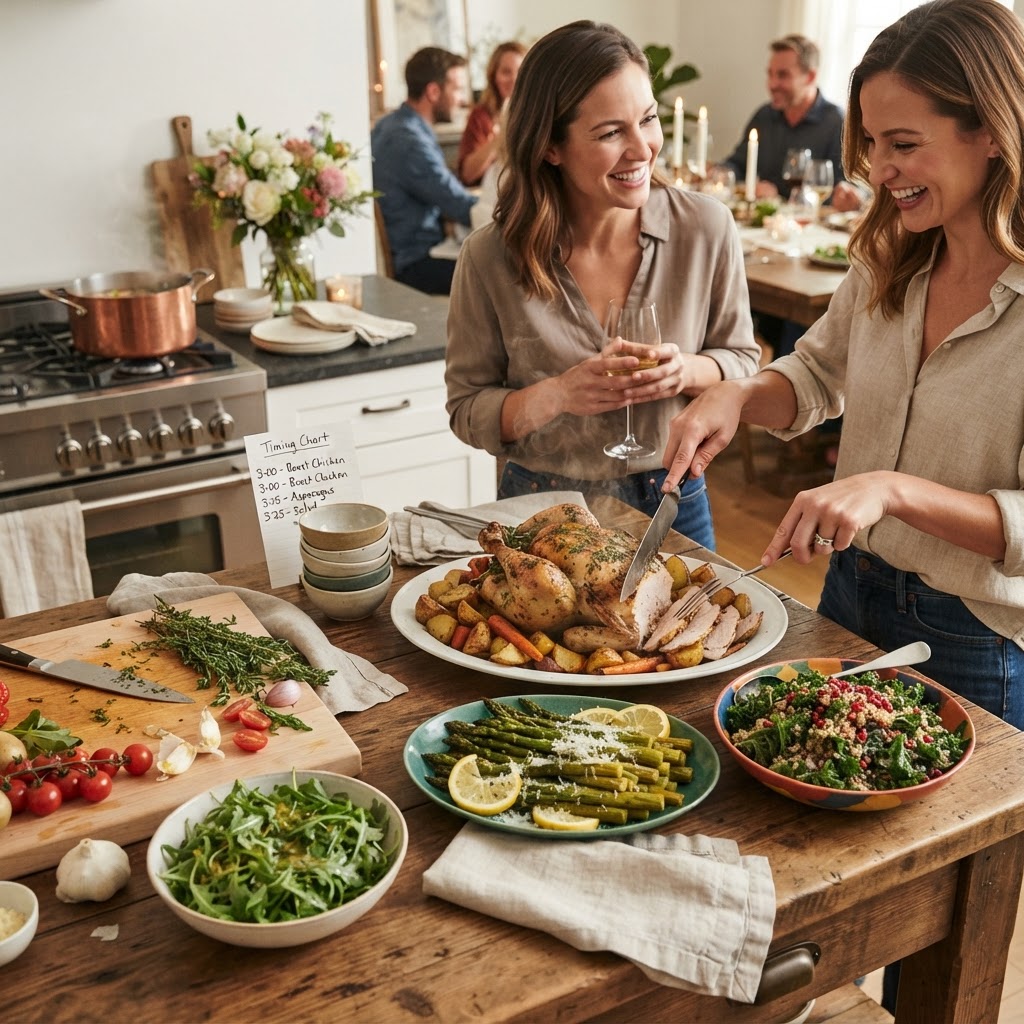
The Art of the "Timing Chart": Mastering Prep Overlaps for Stress-Free, Multi-Dish Hosting
There is a specific, frantic energy that defines the hour before guests arrive for a dinner party. It is a symphony of slamming oven doors, frantically chopping aromatics, and the rising realization that you have five burners going while your hors d'oeuvres are still chilling in the freezer. Many home cooks approach hosting as a high-stakes improvisation, hoping that their intuition will guide them through the chaos. Yet, the truth is that even the most seasoned professional chefs do not rely on sheer luck or lightning-fast reflexes. They rely on something far more clinical, cold, and calculated: the prep schedule.
When you peel back the layers of a successful banquet, you rarely find a chef hovering over a single pan. Instead, you find a meticulously engineered timing chart, a document that breaks down every dish into granular, time-stamped tasks. This is not about restricting your creativity; it is about liberating your mind from the anxiety of the ticking clock. By understanding how to overlap tasks—for instance, letting a vegetable velouté simmer while you construct a tart shell—you transition from a panicked home cook to a commander of your own kitchen. It is the secret to appearing effortlessly graceful while your kitchen is working at maximum efficiency.
This blog post is designed to move you away from the "all-at-once" disaster and into the realm of strategic culinary orchestration. We are going to explore the mechanics of backwards-planning, the importance of "mise en place," and the psychological shift required to host without losing your composure. You will learn how to identify which tasks can be done days in advance and which must be executed in the final, golden minutes before service. By the end of this guide, you will view your kitchen not as a theater of war, but as a precision instrument meant to serve you and your guests.
The Architecture of the Prep Schedule
The first step in mastering multi-dish hosting is accepting that your menu is a series of dependencies. Every ingredient has a shelf life of peak freshness, and every cooking method requires a specific window of attention. To manage this, you must build your master timeline by working backward. Start with the moment you intend to serve the main course and subtract the necessary time for each component. If your roast lamb needs forty-five minutes to rest, you must account for that gap. If your soufflé requires an immediate trip to the table, that becomes the anchor point of your entire service.
Breaking Down the Components
Do not look at your menu as a list of dishes, but as a collection of tasks. A roast chicken is not just a bird in the oven; it is a three-part operation: preparation, searing/roasting, and resting. By stripping away the label of the "dish" and focusing on the active minutes versus passive minutes, you uncover massive amounts of hidden time. Active time is when you are physically engaged in chopping, stirring, or plating. Passive time is when the oven or the stove is doing the work for you. Your goal is to maximize the overlap between these two states.
The Power of Mise en Place
Mise en place—a French term meaning "everything in its place"—is the most vital tool in your arsenal. It refers to more than just having your ingredients chopped and measured; it is a mental state. When you prepare your mise en place, you are essentially setting up a physical map of your recipe. If you are preparing a complex risotto, your onions, garlic, stock, rice, and cheese should all be measured and placed within arm's reach of your range. This eliminates the frantic search for a missing spice jar while your onions are reaching the brink of over-browning.
"A cook who masters their prep does not just feed their guests; they create a rhythm that turns the chaos of the kitchen into the calm of a professional dining room."
Strategic Overlap: The Multi-Tasking Matrix
The core of an efficient timing chart is identifying where tasks can share a thermal or mechanical footprint. If you have an oven that is heating up to 400°F (204°C) for a roasted side dish, look for an appetizer or a protein that can inhabit the same heat zone. Professional kitchens operate on the principle of batching. We don't roast one tray of carrots; we roast enough for the base of a soup, a salad garnish, and a puree, all at once. By aligning your temperatures and techniques, you reduce the mechanical burden on your appliances and the mental burden on yourself.
Temperature Zoning
When hosting, your oven is your most precious asset. You must manage its thermal efficiency. If you are preparing a multi-course meal, try to choose dishes that occupy a similar temperature band—usually between 350°F (175°C) and 400°F (175°C). Avoid "yo-yoing" your oven temperature. If you need to sear a protein on the stovetop, do it before the oven reaches its peak, or utilize the residual heat for dishes that require a slower, gentler finish. Being mindful of these transitions is what separates an amateur from a master.
The "Holding" Strategy
Many home cooks fear the cooling of their food, leading them to cook everything at the last possible second. However, professional chefs utilize holding techniques to stay ahead. A heavy-bottomed pot, a warmed plate, or even a low-temperature warming drawer can hold food safely for extended periods. Meat, for example, is far better when rested for twenty to thirty minutes; the juices redistribute, and the fibers relax, resulting in a more tender bite. By planning for a "holding period," you effectively buy yourself an extra half-hour of breathing room before the guests arrive.
Managing the "Critical Path" of Ingredients
Every menu has a critical path—the sequence of tasks that, if delayed, will ruin the entire meal. For example, if you are making a delicate emulsion like a Hollandaise or a Beurre Blanc, that task must be the final action before plating. Conversely, a braise or a cold-set dessert can be prepared hours, or even days, in advance. Identifying the shelf-stability of your components is essential. Never plan for two high-stress, high-attention tasks to occur simultaneously. If the risotto needs constant stirring, your fish should be in a state where it is either already cooked or safely prepped for a quick sear.
The Role of Cold Prep
Do not underestimate the power of chilled components. Salads, cold soups, and macerated fruits can all be prepped early in the day. In fact, many of these dishes improve in flavor after resting in the refrigerator, as the seasonings have time to penetrate the cells of the produce. By shifting as much work as possible to the cold station, you keep your stovetop clear for the heavy lifting required during the final service. A clean workstation is the hallmark of a confident cook.
Handling High-Maintenance Ingredients
Ingredients like delicate herbs, leafy greens, or acidic dressings are "high maintenance" because they degrade quickly. Save the washing, spinning, and final dressing of these items for the very last minute. Keep your herbs in a damp paper towel and your vinaigrette in a separate jar. By treating these components as separate entities until the moment of service, you ensure that your salads remain crisp and your sauces stay vibrant rather than wilting under the heat of the kitchen.
The Art of the "Clean as You Go" Philosophy
A cluttered kitchen leads to a cluttered mind. In a professional kitchen, the "clean as you go" rule is not just about hygiene; it is about space management. Every bowl you empty should be rinsed and put in the dishwasher immediately. Every cutting board should be wiped down. When you prepare for a multi-dish dinner, your physical space is limited. Every inch of counter space is a premium resource. If you allow your prep waste to accumulate, you are effectively shrinking your workspace, which leads to slow, clumsy movements and increased stress.
The Dedicated Waste Zone
Create a "trash bowl" or a dedicated spot on your counter for compost and scraps. This simple habit keeps your primary cutting board clear of debris. Many home cooks make the mistake of using their cutting board as a resting place for spoons, packaging, and scraps, which forces them to constantly wipe and reorganize. By cordoning off your waste, you maintain a pristine environment throughout the entire cooking process. You will find that when your station is clean, your brain feels significantly less taxed by the complex tasks ahead.
The Workflow Loop
Consider your movement in the kitchen as a loop. Retrieve, Process, Clean, Reset. If you finish chopping an onion, the knife should be rinsed, the cutting board cleared, and the onions moved to their holding container before you reach for the next ingredient. This is a rhythmic, almost meditative practice. When you treat cleaning as a part of the cooking process rather than a chore to be done afterward, you eliminate the overwhelming "post-service" pile-up that often leaves hosts exhausted and resentful at the end of the night.
"Efficiency is not about doing things faster; it is about doing them in the right order so that you never have to repeat a step or panic over an oversight."
Developing Your Personal Timing Chart
To build your own chart, start with a simple spreadsheet or notebook. Divide the page into three columns: Task, Time Required, and Deadline. Start from your service time and work backward. Be honest with yourself about your speed—if it usually takes you twenty minutes to dice vegetables, do not write down five minutes because you saw a chef on television do it. Your timing chart should be a reflection of your reality, not your aspirations. This documentation creates a tangible sense of control that is indispensable when the doorbell rings.
Identifying "The Buffer"
Always, and I mean always, build in a thirty-minute buffer zone. Murphy’s Law is the unofficial patron saint of the professional kitchen. Something will inevitably go wrong: the oven will take longer to preheat, the sear will be tougher than expected, or a guest will arrive early. If your timeline is packed to the second, you have no room for error. A buffer allows you to absorb these hiccups without the guests noticing a drop in the quality of the meal or your composure.
The "Service" Checklist
On the day of the event, simplify your massive chart into a small, handwritten "service checklist" that you keep on your counter. This should contain only the final, urgent tasks. Things like:
Keep this list visible. The simple act of crossing off a task provides a dopamine hit that keeps you motivated and focused, even when the pressure begins to mount.
Equipment and Appliance Optimization
Your kitchen is a collection of tools, and you must know their limitations and strengths. Understanding your appliance recovery time—the time it takes for an oven to return to temperature after the door is opened—is crucial. Never crowd your oven; overcrowding causes the temperature to plummet and leads to steaming rather than roasting. If you are roasting, ensure your pans have enough space for airflow. These technical details are often overlooked by home cooks, yet they are the variables that determine whether a dish is a success or a failure.
Utilizing Secondary Appliances
Do not force your primary range to do all the work. If you have an air fryer, a slow cooker, a sous-vide immersion circulator, or a simple toaster oven, utilize them. They are excellent for secondary tasks like keeping sauces warm, crisping garnish, or holding a protein at a precise temperature. By distributing the load across multiple heating sources, you prevent the bottleneck that happens when everything is fighting for space on the stovetop.
The Importance of Sharp Tools
A dull knife is a safety hazard and a time-sink. When you are doing significant prep work, a sharp knife is your most efficient labor-saving device. Before you begin your session, take five minutes to hone your blades. You will find that your vegetable prep speed doubles, and your fatigue is reduced. Investing in a quality sharpening steel or a whetstone is one of the highest-yield investments a home cook can make. A sharp knife turns the task of chopping a pile of mirepoix from a grueling chore into a smooth, mechanical rhythm.
Psychological Preparation for Hosting
The final, and perhaps most important, aspect of the "timing chart" is your mental state. A host who is stressed is contagious; guests feel the anxiety, and the atmosphere of the room shifts from relaxed to tense. By using your chart to master the logistics, you buy yourself the mental bandwidth to be present. You stop worrying about the chicken and start worrying about the conversation. This shift is the ultimate goal of hosting. Remember, the food is the vehicle, but the environment is the destination.
The Grace of the "Near-Miss"
Even with the best chart, things will occasionally veer off course. A sauce might break, or a crust might get too dark. The difference between a home cook and a chef is not the absence of mistakes; it is the ability to pivot. If a dish doesn't look perfect, find a way to plate it that hides the flaw. If a course is running late, offer an extra round of drinks or a simple, pre-prepped appetizer to fill the gap. Your guests are there to enjoy your company, not to perform a restaurant critique. Keep your cool, smile, and move forward.
Ending the Night Well
Your planning should extend even into the clean-up phase. If you have followed the "clean as you go" rule, the end of the night should be manageable. Do not leave the kitchen a total disaster zone; a few minutes of effort once the guests depart will save you the misery of waking up to a mountain of crusty dishes. Celebrate the successful service, recognize where your timing chart worked and where it could be improved, and take note of the lessons learned for your next dinner party.
Final Thoughts
Mastering the art of the timing chart is about far more than just getting food on the table; it is about reclaiming the joy of cooking. When you remove the element of surprise and replace it with a structured plan, you turn your kitchen into a sanctuary. You learn to trust your process, recognize your capacities, and appreciate the rhythm of the work. The goal is not perfection, but rather the ability to host without feeling like you are perpetually behind the curve.
As you begin to implement these strategies, start small. You do not need to create a complex chart for a simple family dinner, but practicing the techniques of mise en place and active/passive task management during everyday cooking will build the muscle memory required for larger events. By focusing on the flow of your kitchen and the logic of your prep, you will find that you have more energy, more creativity, and more time for the people who really matter.
Remember that every professional chef started exactly where you are—feeling the heat and trying to find a way to stay in control. By documenting your workflow and honoring the science of heat and timing, you are moving toward a higher level of culinary craftsmanship. The dinner party you host next month will be different from the one you hosted last year; it will be sharper, smoother, and infinitely more enjoyable. So, grab your notebook, start drafting your chart, and prepare to host with the poise of a seasoned professional. The kitchen is waiting, and for the first time, you are truly in charge.
To reiterate the primary lessons of this guide:
By adhering to these simple, time-tested principles, you will discover that the role of the host is not to be a frantic servant, but the calm center of a shared experience. Your friends will leave with full bellies and the memory of a lovely evening, and you will finish the night not with a sense of exhaustion, but with the quiet satisfaction of a job expertly managed. Enjoy the process, respect the ingredients, and—most importantly—remember that in your kitchen, you are the architect of your own success. Every dish is a victory, and every timing chart is a stepping stone to your next culinary triumph. Happy cooking, and may your next dinner party be your best one yet.
Now that you have the framework, the rest is up to you. Don't be afraid to experiment, tweak your timings, and find the rhythm that suits your unique cooking style. Whether you are hosting a two-person dinner or a six-course banquet, the principles of the timing chart remain constant. Stay disciplined with your prep, keep your eyes on the clock, and let your passion for food guide you through the process. You are the master of your kitchen, and with a bit of planning, every meal becomes a masterclass in efficiency and joy. Keep your tools sharp, your counters clean, and your spirits high. The best is yet to come.
Final word of advice: Never undervalue the impact of a calm host. Even if the risotto isn't quite as creamy as you hoped, or the soufflé had a slight tilt, your ability to remain unruffled will be what your guests remember most. Cooking is a performance, and the prep is your rehearsal. When you know your material, the performance becomes natural, confident, and utterly delightful. Go forth, plan, and enjoy the artistry of hosting. It is, after all, the most generous thing a cook can offer to the world.
As you continue your journey, keep refining your charts. Keep a record of what worked, what took longer than expected, and what techniques provided the most value. Over time, this document will become a precious resource, a "cheat sheet" that makes every subsequent event easier than the last. You are building a skill set that will last a lifetime, turning every meal into a testament to your hard work and your commitment to the craft. There is nothing quite like the feeling of watching your guests laugh and talk, knowing that everything is perfectly under control in the kitchen. That is the true art of hosting.
Enjoy the silence that comes before the first guest arrives, the hum of the oven, and the beautiful, orderly progression of a meal well-planned. You have earned this moment of peace through your careful preparation. Trust in your chart, trust in your skills, and let the evening unfold exactly as you intended. From the first bite to the last glass of wine, you have orchestrated an experience that transcends the food itself. That is the power of the timing chart, and that is the secret of the chef who never blames the chaos, but instead commands it. Congratulations on mastering your kitchen.
Remember, the goal is always to create an experience that feels effortless, even though you know precisely how much effort went into the preparation. That is the mark of true hospitality. You are providing not just sustenance, but an atmosphere, a feeling of being cared for, and a sense of shared community. This is the noble pursuit of the cook. Through your organization, you are honoring your guests and your ingredients alike. Continue to push your boundaries, continue to learn, and continue to find joy in the process. The kitchen is your canvas, and the timing chart is your brush. Create something beautiful.
The complexity of a meal should never dictate your level of stress. If you have the right systems in place, you can cook anything from a simple roast chicken to a complex, multi-course French banquet with the same level of calm. It is all about the overlap, the rhythm, and the intent. You are now equipped with the tools to do just that. Carry these lessons with you, refine them to match your own style, and make every dinner you host a reflection of your evolving expertise. The path to stress-free hosting is open; all you have to do is take the first step.
Looking back at the sections we have covered, it becomes clear that there is no single "secret" to professional hosting. It is the sum of many small, deliberate actions—the sharp knife, the clean counter, the measured list, the constant awareness of time. These are the components of excellence. When you bring them together, you create a system that is robust enough to handle any challenge. So, go back to your kitchen, look at your next menu with fresh eyes, and start building your own, personalized timing chart. Your guests are waiting, and you are ready.
Everything is in its place. The prep is done. The oven is at temperature. The table is set. All that remains is for you to step into the role of the host, confident in the work you have done behind the scenes. This is the moment you have been working toward. Take a deep breath, pour yourself a glass of something you love, and welcome your guests. You have created the space, the time, and the nourishment they need. That is the art of the chef, and now, it is your art as well. May every meal be a success, and may every dinner party be a celebration.
One final note on the importance of community. Share these tips with your friends who also enjoy hosting. Culinary excellence is a shared pursuit, and discussing the nuances of prep and timing can be just as rewarding as sharing a meal. We all learn from each other's mistakes and triumphs. By fostering a community of home cooks who prioritize organization and strategy, we elevate the quality of our gatherings across the board. Stay curious, stay organized, and keep the fire burning. The kitchen is where the heart of the home beats, and you are its steady, skillful pulse.
We have explored the "why" and the "how" of stress-free hosting. We have looked at the logistics, the mindset, and the execution. We have addressed the practicalities of equipment and the philosophy of the kitchen station. But the most important element remains: your passion. As long as you approach your cooking with a sense of wonder and a desire to serve, your timing charts will always lead you to a place of success. Keep the passion alive, keep the systems tight, and never lose sight of why you started cooking in the first place. You are doing something wonderful.
As the final words of this guide are written, let them serve as a reminder that you are not alone in this effort. Thousands of home cooks are learning these same skills, refining their own processes, and finding their own way to the table. You are part of a tradition that spans centuries—the tradition of welcoming others with the gift of food. Carry that tradition forward with pride, with organization, and with the joy that only a perfectly timed dinner can bring. The kitchen is yours to conquer. Go out and make it happen.
The art of the timing chart is a journey, not a destination. You will find that as your skills grow, your charts become more intuitive, your prep becomes more efficient, and your hosting becomes increasingly effortless. You will find yourself playing with new flavors and techniques, confident that you have the infrastructure to support your creative risks. That is the freedom that true preparation provides. You have the tools, you have the knowledge, and now you have the plan. The next chapter of your culinary life starts with the next time you step up to the range. Make it count.
There is a profound satisfaction in finishing a project well. This blog post is a project; your dinner party is a project. Both require vision, planning, and execution. By focusing on the details of the "timing chart," you ensure that the project is a success. You move from the realm of the uncertain to the realm of the certain. You replace doubt with action. You replace chaos with order. This is the way of the chef. This is your way, too. Be proud of the effort you are putting in. It will show on the plates of your guests and in the atmosphere of your home.
So, let us conclude this journey into the art of the timing chart with a sense of excitement for the future. Every dinner party is an opportunity to practice, every meal is a chance to learn, and every guest is a reason to strive for excellence. You have everything you need to transform your hosting experience. The path is clear, the tools are ready, and the goal is within your reach. All that is left to do is to start the clock, trust the plan, and enjoy the beautiful, delicious results. Your kitchen is calling. Are you ready to answer?
Get the Next Recipe
Weekly recipes, techniques, and gear picks — straight to your inbox.
