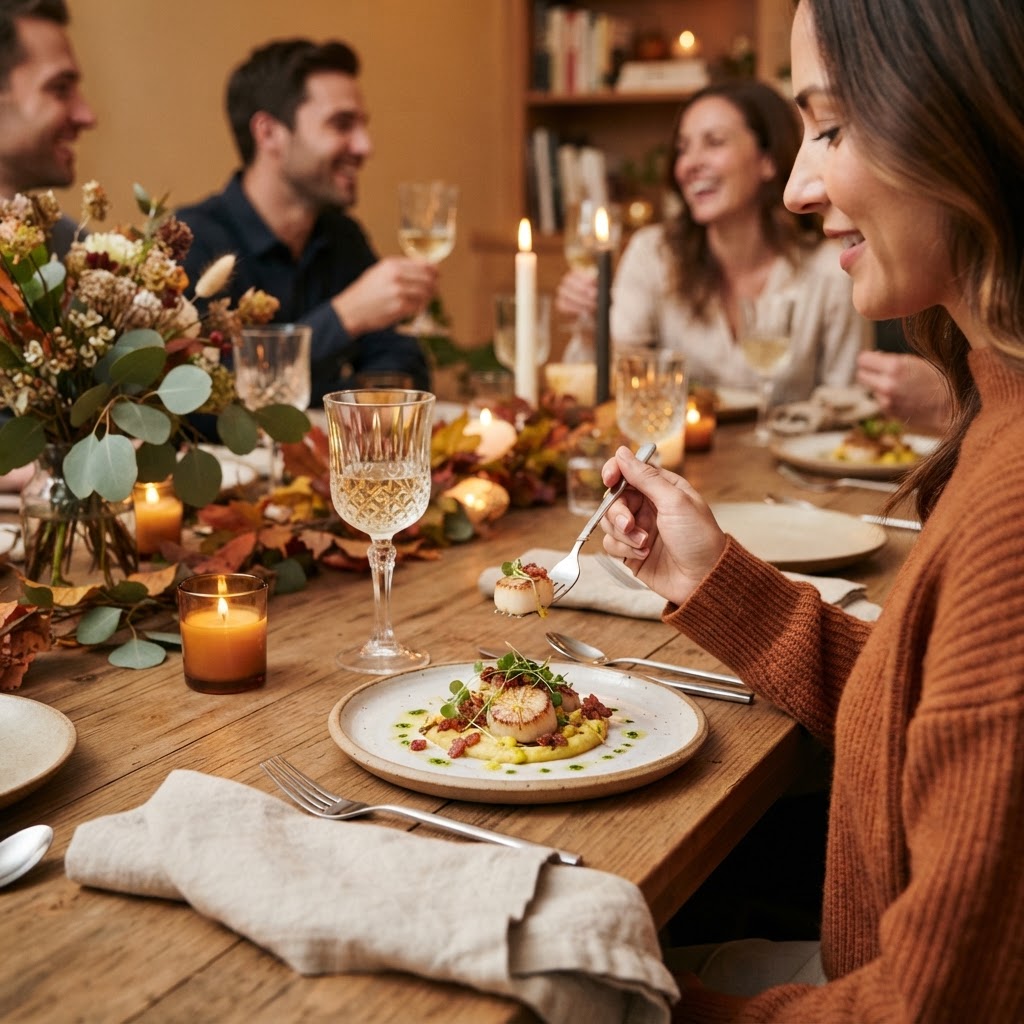
The Art of the "Transition-Course" Appetizer: Mastering Small-Plate Pacing for Seamless Dinner Party Flow
There is a common misconception among home cooks that the success of a dinner party relies entirely on the gravity of the main course. We spend hours obsessing over the perfect sear on a ribeye or the precise internal temperature of a roasted bird, forgetting that a dinner party is a narrative arc, not just a singular event. If you rush your guests from the foyer to the dining table and immediately drop a heavy protein in front of them, you disrupt the psychological rhythm of the evening. The transition-course appetizer—or what we in the industry often call the "bridge course"—serves as the critical connective tissue that allows your guests to shift gears from the frantic pace of daily life into the relaxed, luxurious tempo of an intentional meal.
Mastering this technique is not about serving more food; it is about serving the right amount of food at the right moment. The goal is to stimulate the palate without satiating it, creating an anticipatory flow that elevates a simple gathering into a choreographed experience. When a host understands how to pace the progression of acidity, texture, and temperature, they are no longer just cooking dinner—they are directing a sensory performance. This transition course acts as a palate cleanser, a conversation starter, and a signal to your guests that the evening has officially transitioned from the "arrival" phase to the "dining" phase.
In this guide, we will break down the mechanics of the bridge course, focusing on the science of flavor profiles, the artistry of plate composition, and the logistical choreography required to execute this without losing your mind in the kitchen. We will look at how to balance acidity, fat, and salt to ensure that your guests are hungry for more rather than feeling bogged down by a heavy starter. By the time you finish reading, you will understand how to orchestrate a dinner party that feels effortless, professional, and undeniably cohesive. Welcome to the art of the transition-course appetizer—let's make your kitchen the stage for your next masterpiece.
The Philosophy of the Bridge Course
The primary purpose of a bridge course is to act as a flavor reset. After the initial chatter of cocktail hour—often filled with salty nuts, charcuterie, or rich cheeses—the palate can become dulled by excess sodium and saturated fats. A transition course should provide a crisp, clean break. Think of it as the cold rinse between layers of oil paint; it clears the canvas so that the flavors of your main course can be appreciated in their full complexity.
"A meal should feel like a symphony, not a chaotic playlist of your favorite songs; the transition course is the movement that prepares the ear for the grand finale."
When we talk about the pacing of a menu, we are talking about light-to-heavy progression. Your transition course should sit squarely between the amuse-bouche and the main event. It should be elegant, manageable, and purposefully small. If you find your guests are already asking for second helpings of the appetizer, you have failed the pacing test. The goal is to provide a "tasting" experience that leaves them wanting exactly one more bite, effectively priming the gastric juices for what is to follow.
The Science of Palate Cleansing
To successfully transition a palate, you must lean into ingredients that cut through the richness of previous appetizers. Ingredients high in citric acid, vinegar, or tannins are your best friends here. A small shot of a bright chilled soup, a shaved fennel salad with a high-acid vinaigrette, or a singular scallop with a vibrant herb oil are perfect examples. You are looking for a sharp, clean strike of flavor that "brightens" the tongue and prepares the mouth for the savory depth of the main protein.
Technical Execution: Balancing Textures
A common mistake in home cooking is uniformity of texture. If your dinner begins with a soft dip, follows with a soft soup, and leads into a soft risotto, your guests will experience sensory fatigue. Even if the food is delicious, the lack of crunch or resistance makes the meal feel one-dimensional. The bridge course is your perfect opportunity to introduce a secondary texture that was missing in the appetizers but isn't required in the main course.
Consider the "Contrast Rule" when planning this course. If your main course is a braised short rib—a dish that is entirely soft and unctuous—your transition course should be crisp, raw, or fibrous. Shaved radishes, toasted nuts, or a thin, dehydrated tuile can add that necessary structural contrast. By consciously varying the "mouthfeel" of your progression, you keep your guests engaged on an unconscious, biological level.
Mastering Temperature Control
Temperature is a structural element of its own. A bridge course served at room temperature or chilled acts as a cooling mechanism for the digestive system. If you are serving a hot appetizer followed by a hot main, the sheer heat of the meal can become overwhelming. Incorporating a cold component, such as a chilled granita of cucumber and lime or a raw crudo of hamachi, acts as a thermal reset.
Chilled Course:* Best served between 40°F and 45°F to ensure the flavor profiles remain vibrant.
Room Temperature:* Aim for 68°F to 72°F, which is ideal for allowing delicate oils and fats (like high-end olive oil or truffle essence) to release their aromatics.
Ingredient Sourcing and Seasonality
Great cooking, at its core, is the art of knowing when to let an ingredient speak for itself. In a bridge course, you have very little room to hide behind complex sauces or heavy reductions. Because the course is small, the quality of your ingredients is amplified. If you are serving a simple heirloom tomato salad as your transition, every tomato must be at its peak, and your sea salt must be of a grade that provides a pleasant crunch.
Working with Seasonal Windows
Spring:* Focus on tender asparagus, fava beans, and fresh peas. A chilled pea soup finished with mint oil is a classic that signals the arrival of the season.
Summer:* Utilize the abundance of stone fruits, cucumbers, and delicate herbs. A single slice of burrata with peach and basil provides a sweet-savory balance.
Autumn:* Lean into the earthiness of mushrooms and the crispness of apples. A mushroom carpaccio with a lemon-thyme drizzle is sophisticated and autumnal.
Winter:* Rely on citrus and root vegetables. Shaved fennel and orange segments with a light vinaigrette provide a much-needed acidic punch during the heavier winter months.
"When the ingredients are of the highest order, the cook’s job is merely to facilitate their introduction to one another, not to interfere with their chemistry."
By adhering to the season, you provide a sensory narrative that reflects the world outside the dining room. This creates a psychological connection to the environment, making the dinner feel grounded and intentional.
The Choreography of the Plating
Presentation is the final bridge between the kitchen and the dining room. For a transition course, less is almost always more. You are not trying to fill a plate; you are trying to frame a bite. A large dinner plate will make a small portion look lonely, whereas a demitasse cup, a slate board, or a small artisanal ceramic bowl will elevate the presentation, making the portion feel precious and deliberate.
Professional Plating Techniques
Professional chefs utilize a technique called "saucing the base" for transition courses. By laying down a thin smear of a herb-infused emulsion or a bright vinaigrette before placing the solid ingredients, you ensure that every bite is perfectly seasoned while keeping the presentation clean. Remember, in a bridge course, a messy plate is a distracting plate.
Managing the Kitchen Workflow
The biggest barrier for home cooks attempting a multi-course dinner is the fear of being stuck in the kitchen while guests are having fun. The secret is mise-en-place and cold preparation. The bridge course should be almost entirely prepared before the first guest arrives. This is not the time to be searing scallops to order or reducing a balsamic glaze on the stove.
The Prep-Ahead Strategy
The Vinaigrette:* Whisk your emulsions hours before. Use a high-quality stabilizer like a teaspoon of Dijon mustard to keep the oil and acid from separating.
The Aromatics:* If you are using herbs, wash, dry, and pick them before the party. Keep them in a damp paper towel in the fridge to maintain their structure.
Temperature Management:* If serving cold plates, keep your plates in the freezer for 20 minutes before serving. This ensures that the temperature of your bridge course doesn't rise while it sits on the table.
By shifting the work to the "prep" phase, you ensure that the "service" phase is nothing more than assembly. This allows you to step out of the kitchen, pour yourself a drink, and engage with your guests. When the host is relaxed, the room feels relaxed, and the transition between courses happens organically rather than through a forced interruption.
The Art of Pacing: When to Serve
How do you know when to serve the bridge course? The answer lies in the natural lull of the conversation. Never interrupt a story or a moment of deep engagement to place food on the table. Instead, look for the "pause"—that moment when the conversation has reached a natural conclusion and guests are shifting in their seats, looking around, or taking a sip of wine.
Signals for Service
Wine Flow:* If the bottles are nearing the halfway mark, it is the perfect time to clear the appetizer remnants and introduce the transition course.
Glassware:* If guests are reaching for more water or glancing at the kitchen, the hunger threshold is likely approaching.
The 20-Minute Window:* Aim for a 20 to 30-minute interval between your initial hors d'oeuvres and the bridge course. This is long enough for digestion but short enough to maintain the energy of the party.
If you find yourself waiting too long, the energy in the room will dip, and you will have to "restart" the conversation. If you serve too quickly, you risk overwhelming the guests. Practice the "observation loop": step into the room, observe the energy, and only then return to the kitchen to begin your final assembly of the plates.
Creating a Sensory Narrative
Finally, remember that the bridge course is part of a larger story you are telling. If your main course is a bold, spicy, rustic Italian stew, your transition course should be a quiet, elegant prelude. If your main course is a delicate, modernist seafood preparation, your transition course can be slightly more vibrant and texturally complex to wake up the taste buds.
The transition course allows you to control the intensity arc of your meal. You can start with something subtle, move to something bright and punchy in the bridge course, and then settle into the rich, savory depth of the main event. This structure ensures that your guests are not just fed, but that they are taken on a journey. They leave the table feeling satisfied, not just full, because they have experienced a deliberate flow of flavors.
"A dinner party is an act of generosity; by curating the pace and the progression of the meal, you are giving your guests your time, your focus, and your intention."
As you look toward your next dinner party, do not be afraid to experiment with the bridge course. It is the most flexible and creative part of the menu. It is where you can showcase a single, perfect ingredient or a new technique you have been practicing. It is where you demonstrate to your guests that you have put thought into every single moment they spend at your table.
Final Thoughts
The bridge course is the mark of a thoughtful, sophisticated host. It separates the "dinner party" from the "dinner gathering." By mastering the art of the transition-course appetizer, you are reclaiming the rhythm of the evening, ensuring that each guest is properly primed for the meal, and adding a layer of professional polish to your home entertaining repertoire.
Remember that perfection is not the goal; fluidity is. There will be moments when the kitchen feels chaotic, or the conversation doesn't follow the perfect arc you envisioned. That is perfectly normal. What matters is that you have created a structure—a scaffolding—upon which the evening can safely lean. Use your bridge course to reset the room, to sharpen the focus of the palate, and to signal that you are not just checking items off a list, but creating a memory.
Focus on the balance of acid, fat, and salt. Respect the seasonal availability of your produce. Embrace the silence and the pace of the evening. And above all, enjoy the process of cooking. When the chef is calm and collected, the guests will follow suit. You have the tools, the technique, and the philosophy to elevate your kitchen and your home into a space of truly professional hospitality. Go forth and cook with intention, knowing that your next dinner party will not just be a meal, but a perfectly paced event that your guests will be talking about long after the coffee is served. The kitchen is yours, the menu is set, and the bridge is built; now, let the evening flow.
As you continue to refine your skills, always ask yourself: "How does this dish advance the story of the meal?" If a dish doesn't serve a purpose—whether it’s to cleanse the palate, build anticipation, or provide a necessary textural contrast—then it doesn't belong on the menu. Simplify your intent, sharpen your execution, and watch as your dinner parties transform into seamless, memorable, and expertly paced experiences. You are no longer just a home cook; you are a culinary conductor, and the dinner party is your finest composition. The "Blame The Chef" philosophy is built on the idea that even the smallest details have the greatest impact. Keep your knives sharp, your ingredients fresh, and your transitions smooth. Your guests will notice, and more importantly, they will feel the difference in every single bite. Happy cooking, and may your next dinner party be your most successful one yet. Every detail is a choice, and every choice is an opportunity to elevate the ordinary into the extraordinary. By mastering this bridge course, you have unlocked a new level of culinary confidence that will serve you for years to come. Now, take that knowledge, step back into your kitchen, and create something truly remarkable. The stage is set, the guests are waiting, and you have exactly the right tools to make it happen. Stay hungry, stay creative, and never underestimate the power of a perfectly timed, well-composed bridge course to change the entire atmosphere of your home. Your culinary journey is an ongoing process, and each meal is a chance to refine your signature style. Keep pushing, keep tasting, and above all, keep enjoying the beautiful, messy, rewarding craft of the kitchen. There is no greater feeling than watching your guests settle into the rhythm you have created for them, knowing that you have facilitated a night of true connection and genuine joy through the power of food. Go forth and create, for the kitchen is where the heart of your home truly lives. And remember, whenever things get overwhelming, just breathe, look at your mise-en-place, and return to the basics—because the basics, executed with love and precision, are what make the best food of all.


Get the Next Recipe
Weekly recipes, techniques, and gear picks — straight to your inbox.
