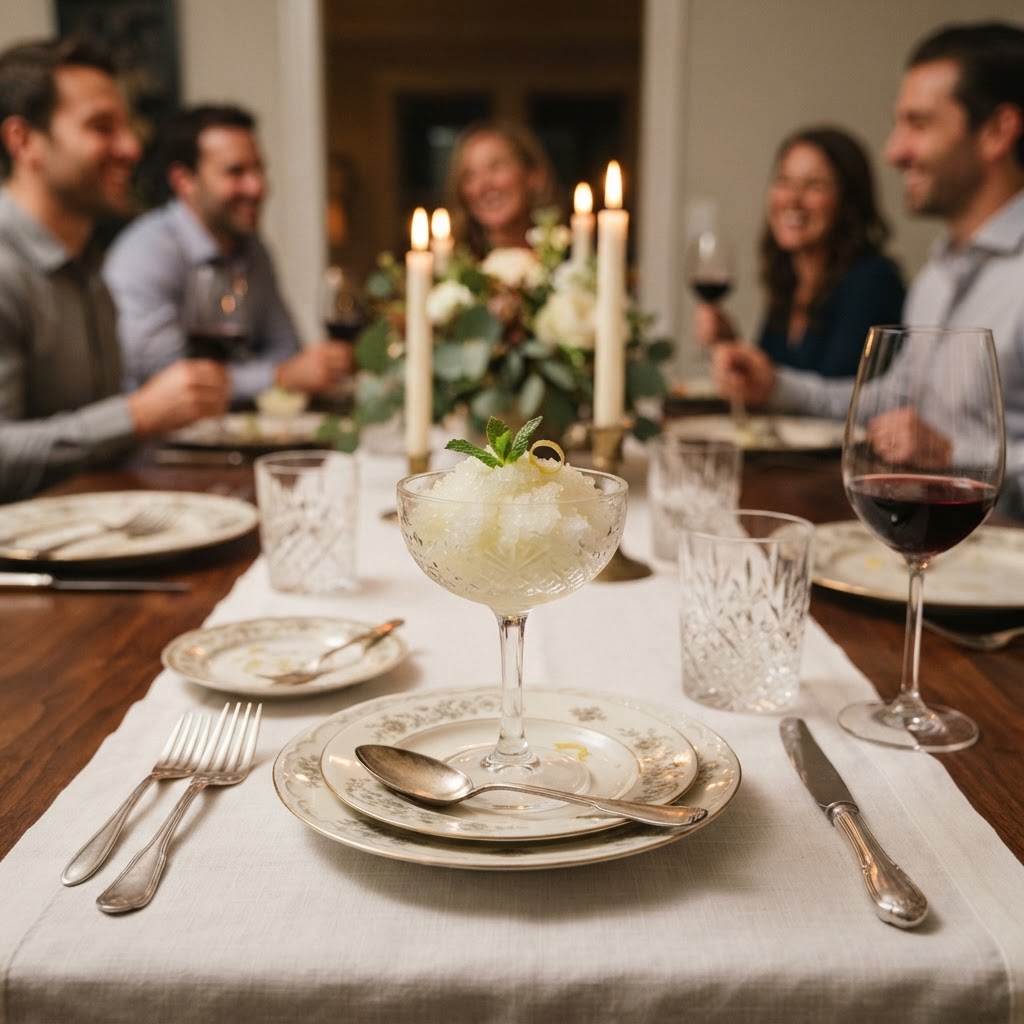
The Art of the "Transition Course": How to Use Palate Cleansers to Pace Your Dinner Party and Elevate the Dining Experience
There is a distinct, rhythmic flow to a truly memorable dinner party that often goes unnoticed by the guests but is meticulously orchestrated by the host. We have all experienced that heavy, sluggish feeling that sets in midway through a multi-course meal, where the richness of the hors d’oeuvres and the complexity of the main dish begin to blur into a singular, overwhelming sensory experience. This is precisely where the transition course—commonly known as the palate cleanser—becomes your most vital tool for pacing. By introducing a moment of intentional brevity and acidity, you effectively hit the "reset button" on your guests' palates, ensuring they remain engaged and eager for what comes next. Mastering this technique is not about adding more work to your evening, but rather about refining the arc of your hospitality to create a seamless journey of flavor.
When we talk about the architecture of a meal, we often focus exclusively on the big-ticket items like the protein or the dessert, neglecting the empty spaces between them. A thoughtfully executed transition course functions as the white space on a page, providing the necessary contrast that makes the surrounding elements stand out. Without it, the palate suffers from "sensory fatigue," where the residual fats, salts, and spices of the earlier courses coat the tongue and dampen the subtle nuances of the following plates. Think of it as the culinary equivalent of an intermission in a theater performance; it allows the audience to gather their thoughts, refresh their focus, and prepare for the final act. If you want your dinner parties to move from "good home cooking" to "professional-grade dining experience," this is the missing piece of the puzzle.
Incorporating these interludes requires a departure from the "more is more" mentality that plagues many home kitchens. The most effective transition courses are not miniature meals; they are fleeting, sharp, and purposeful bites designed to wash away the memory of the preceding dish. Whether you choose a classic granita, a vibrant acid-forward shooter, or a crisp, chilled vegetable crudité, the goal is to cleanse the mouth of lingering oils and spices. Throughout this guide, we will explore the science behind these palate-resetting techniques, the importance of temperature, and the specific flavor profiles that make for the most effective transitions. By the end, you will have the confidence to pace your dinners with the grace of a seasoned executive chef, proving that the most memorable moments of a party are often the ones found in the quiet, cleansing pauses.
The Science of Sensory Fatigue and Why You Need a Reset
The human palate is a remarkably adaptable instrument, but it has a finite window of performance before it begins to lose its sensitivity. When we consume high-fat or high-protein meals, our taste buds become saturated with residual lipids that coat the tongue and create a physical barrier to new flavors. This phenomenon is known as sensory adaptation, or more colloquially, palate fatigue. By the time you serve your main course, your guests may be struggling to discern the delicate aromatics of a wine or the fine details of a sauce because their receptors are still busy processing the remnants of the appetizer. The transition course acts as a chemical and mechanical solvent, stripping away these residues to allow for a fresh start.
Understanding the interaction between temperature and flavor is critical when designing your transition. We know that cold temperatures can dampen the perception of sweetness and salt, but they also act as a physical "shock" that prompts the salivary glands to work harder. Increased saliva production is essentially nature’s way of cleaning the mouth, flushing away debris and balancing the oral environment. This is why a frozen or chilled transition course is far more effective than a room-temperature one. You are physically and chemically recalibrating the internal landscape of the mouth, preparing it for a completely different set of flavor notes, perhaps moving from the earthiness of a mushroom risotto to the acidity of a citrus-based cleanser.
Identifying the Right Moment
The placement of your transition course is just as important as the recipe itself. It should typically occur after the heavy, savory appetizer or the first starch-based course and before the main protein. If you are serving a formal multi-course menu, try to place it at the precise midpoint. If you serve it too early, you risk ruining the appetite of your guests before they have truly begun to dine. If you serve it too late, the palate fatigue has already set in, and the cleanser will provide little benefit. Aim for a moment where the palate is at its "peak" of heaviness, usually after a dish that involves cream, butter, or heavy reduction sauces.
"The true measure of a dinner party is not found in the weight of the main course, but in the elegance of the pauses between. A well-placed palate cleanser is the host’s secret weapon for keeping guests energized until the final bite."
Classic Granitas: The Gold Standard of Cleansers
The granita is perhaps the most iconic transition course in Western culinary history, and for good reason. It is incredibly easy to prepare in advance, requiring only a simple syrup base and a flavoring agent, yet it looks visually stunning when served in chilled glass coupes. The key to a superior granita is the texture; you are looking for a light, crystalline crunch that melts instantly upon contact with the tongue. Unlike a heavy sorbet, which can be too sweet and rich, a properly made granita should be slightly tart, highly acidic, and remarkably refreshing.
To achieve that professional texture, you must pay attention to the sugar-to-liquid ratio. A standard ratio is one part sugar to four parts liquid (water plus juice). If your mixture is too sweet, it will not freeze into delicate crystals; it will turn into a sticky, dense slush. If it is too acidic, it will be jarring. Use a brix hydrometer if you want to be precise, aiming for a sugar concentration of about 15-18%. Once you have your mixture, pour it into a shallow metal pan and place it in the freezer. Every 30 minutes for about three hours, take a fork and scrape the edges, breaking up the ice crystals and pushing them toward the center. This mechanical work is what creates the signature "flaky" consistency.
Flavor Combinations to Try
While lemon or lime are the traditional staples, do not be afraid to experiment with more sophisticated pairings. The goal is to provide enough acidity to cut through fat but enough depth to remain interesting. Consider these winning combinations for your next dinner party:
Green Apple and Mint:* The malic acid in the apple is crisp and sharp, while the mint provides a cooling sensation that lingers pleasantly.
Cucumber and Gin (or Tonic):* This is exceptionally refreshing, as the bitterness of the cucumber or the tonic water helps to counteract the richness of heavy fatty meats like duck or lamb.
Grapefruit and Rosemary:* The slight bitterness of the grapefruit pith, combined with the resinous, earthy quality of fresh rosemary, provides a complex bridge between a savory course and a sweet dessert.
The Power of the Acid-Forward Shooter
If frozen courses aren’t your preference, or if your menu is already heavy on cold items, consider a liquid-based transition course. A shooter is a small, concentrated beverage served in a shot glass or a petite flute that provides an immediate, punchy dose of acidity. The beauty of a shooter is its speed; it takes mere seconds to consume, and the liquid nature ensures that it coats the entire surface area of the tongue, effectively "rinsing" the palate of any lingering savory notes.
When designing a shooter, you are essentially looking for an infusion of high-acid ingredients like verjus, citrus juice, or even a very mild, high-quality drinking vinegar (shrub). Verjus is a particularly sophisticated choice; made from the juice of unripened grapes, it offers a soft, rounded acidity that is far more gentle than lemon juice but just as effective at cutting through butter. Because it lacks the aggressive fruitiness of wine or citrus, it pairs perfectly with almost any menu, acting as a neutral cleaner.
Tips for Perfect Liquid Cleansers
"A palate cleanser should never be a destination; it is the bridge between two points. Keep the portion small, the temperature low, and the flavor bright. Anything more, and you have stopped the flow of the meal rather than facilitating it."
Utilizing Chilled Vegetables and Herbs
Sometimes, the best way to reset the palate is not to add something new, but to use the natural properties of raw vegetables and fresh herbs. A crudité transition might sound overly simple, but when done with intent, it is a masterclass in clean eating. Focus on vegetables with high water content and natural bitterness, such as fennel, radishes, or endive. These vegetables are crunchy, hydrating, and possess a clean, crisp flavor profile that effectively wipes the slate clean.
To elevate this to a "course," focus on the presentation and the aromatics. Thinly shave your fennel on a mandoline and soak it in an ice bath with a splash of lemon juice for 20 minutes before serving. This process firms up the fibers, ensuring a satisfying crunch, and imbues the vegetable with a light, acidic zing. Arrange these slices on a chilled plate with a tiny dusting of sea salt and perhaps a single leaf of fresh tarragon or chervil. It is minimalist, modern, and incredibly effective at refreshing the mouth.
The Role of Bitterness
Bitterness is often avoided in modern home cooking, but it is a critical component of a palate cleanser. Our taste buds are evolutionarily designed to react to bitter flavors, which often signal toxins in nature. Because of this, bitter flavors—such as those found in radicchio or arugula—demand our attention and force our tongues to reset. By incorporating a bitter element into your transition course, you wake up the palate and clear away the "numbing" effects of salty, savory proteins.
Managing the Workflow for the Host
One of the biggest concerns for a home host is the added stress of prepping an extra course. The secret is mise-en-place. You should never be scrambling to scrape a granita or mix a shooter when your guests are waiting for the next course. All transition courses must be fully prepared at least two hours before the party begins. Your fridge should be stocked, your glasses chilled, and your garnishes pre-portioned. When the time comes to serve, it should take you no more than sixty seconds to plate the entire table.
Consider the equipment you are using to facilitate the service. If you are serving a frozen course, use chilled metal spoons if possible; the thermal mass of the metal helps keep the granita frozen longer while it is being transported from the kitchen to the dining room. If you are serving a liquid shooter, use a small tray that allows you to carry multiple glasses at once, minimizing the number of trips you have to make. This efficiency preserves your own energy, allowing you to remain present and engaged with your guests.
Timing the Intervals
How long should the transition last? Generally, you want to allow your guests three to five minutes of conversation after the cleanser before bringing out the next dish. This window is crucial; it gives the flavor of the cleanser time to finish its work, and it allows the guests to shift gears conversationally. Never rush this transition. If the conversation is flowing well, let the interval stretch to seven or eight minutes. Remember, the goal of the transition course is to pace the evening, and there is no better way to pace a dinner than by allowing for comfortable, natural breaks in the conversation.
Advanced Techniques: The "Flavor Bridge"
As you become more comfortable with the standard transition course, you can begin to experiment with the flavor bridge. This is a technique where the palate cleanser actually introduces a subtle hint of the primary flavor profile of the next course. For example, if you are planning to serve a main course featuring roasted venison with a blackberry reduction, your palate cleanser could be a blackberry and balsamic granita. This prepares the palate for the upcoming flavor while still performing its role as a cleanser.
This technique creates a sense of cohesion in the meal that guests will intuitively feel, even if they cannot identify exactly why the menu feels so "correct." You are creating a narrative arc for the dining experience. When the main course arrives, the blackberry notes will feel familiar rather than jarring, and the balsamic acidity will have already been primed by the cleanser. This level of intentionality is what separates a standard dinner party from a truly cohesive, high-end culinary event.
The Importance of Salt and Sugar Balance
Even in a cleanser, balance is everything. We often make the mistake of assuming a cleanser must be purely acidic. However, a purely acidic cleanser can actually make a following course—especially a wine pairing—taste overly metallic or thin. Always taste your cleanser against the wine you intend to serve. If your cleanser makes your wine taste worse, you have too much acid and not enough body or sugar. A small addition of a neutral syrup or even a tiny splash of cream can sometimes be the key to making a cleanser work harmoniously with a high-tannin red wine.
Elevating the Experience with Temperature and Texture
The sensory experience of a transition course is as much about physical sensation as it is about taste. Cold temperatures stimulate the trigeminal nerve, which is responsible for the sensation of coolness or heat in the mouth. When you serve a frozen or very cold cleanser, you are triggering a tactile response that is distinct from the sensation of eating a warm, savory meal. This physical "jolt" is what makes the cleanser feel so effective. Never serve a room-temperature transition course; it will lack the impact necessary to reset the palate.
Texture, too, plays a vital role in the transition. A contrast in texture is a powerful way to signal a change in the meal's structure. If your meal has been dominated by soft, braised, or creamy textures, a crunchy or effervescent transition course will be remarkably satisfying. Think about incorporating carbonation into your liquid shooters—perhaps a splash of sparkling mineral water or a dry sparkling wine—to add a "prickle" to the tongue. This tactile change is often just as important as the flavor shift in waking up the guest’s palate.
Refining the Garnish
The garnish on a palate cleanser should never be purely aesthetic. It must contribute to the flavor profile. If you are serving a lemon granita, use a tiny amount of lemon verbena; if you are serving a pear-based cleanser, use a micro-shave of ginger. Everything on the plate must have a purpose. By forcing yourself to justify every ingredient, you keep the cleanser focused and light, which is exactly what a transition course should be.
"A dinner party is a piece of theater, and every scene requires a transition. Do not be afraid to guide your guests through the evening with intent. When you manage the pace of the palate, you gain total control over the success of your evening."
Final Thoughts
The transition course is arguably the most misunderstood element of the modern home-cooked meal. It is often relegated to the realm of "fancy restaurants" or forgotten entirely, yet it is perhaps the most practical tool in a host’s repertoire. By incorporating a dedicated interlude for your guests to reset, you are doing more than just serving food; you are curating an experience. You are showing them that you care about the flow of their evening, the nuance of their tasting, and the preservation of their senses.
Do not let the perceived complexity of "professional" dining deter you. A simple, perfectly executed cucumber granita, served in a cold glass on a hot summer evening, is just as "professional" as a complex, multi-layered concoction. Start small. Perhaps try a simple sorbet transition at your next dinner party, or even a chilled soup shot. Watch how your guests respond—the way they sit back, the way they sip their wine with newfound clarity, and the way they seem genuinely excited for the next course.
Remember, the goal of this entire process is to make your job as a host easier, not harder. A well-paced meal is a comfortable meal, and a comfortable meal is a successful party. When you use the palate cleanser to bridge your courses, you are effectively setting the rhythm for the entire evening. You are taking the "Blame The Chef" approach to heart: taking full responsibility for the sensory experience of your guests, from the first bite to the last. Keep your flavors bright, your temperatures sharp, and your service intentional, and you will find that your dinner parties take on a professional polish that your guests will be talking about for years to come. Ultimately, the best transition course is one that makes the next course taste better, and with these techniques in your arsenal, you are well on your way to mastering the art of the perfect dinner party.
Finally, consider the emotional impact of these transitions. There is a psychological comfort in having a break, a moment of "emptiness" in a meal that is otherwise full of rich, heavy flavors. It provides a sanctuary for the palate and a moment for the mind to wander. As a host, you are providing a gift of relief. In our busy, chaotic lives, a quiet moment of focus on a simple, refreshing flavor is something that your guests will deeply appreciate. Take the time to master these resets, and you will discover that the true art of the transition course is not just in the cooking, but in the atmosphere of grace and ease that it brings to your table. Enjoy the process of experimentation, stay patient with your timings, and most importantly, remember to enjoy the pause alongside your guests. The table is set, the transition is planned, and your dinner party is now officially a work of art. Happy hosting, and remember: it is always better to transition with style than to rush to the finish line.


Get the Next Recipe
Weekly recipes, techniques, and gear picks — straight to your inbox.
