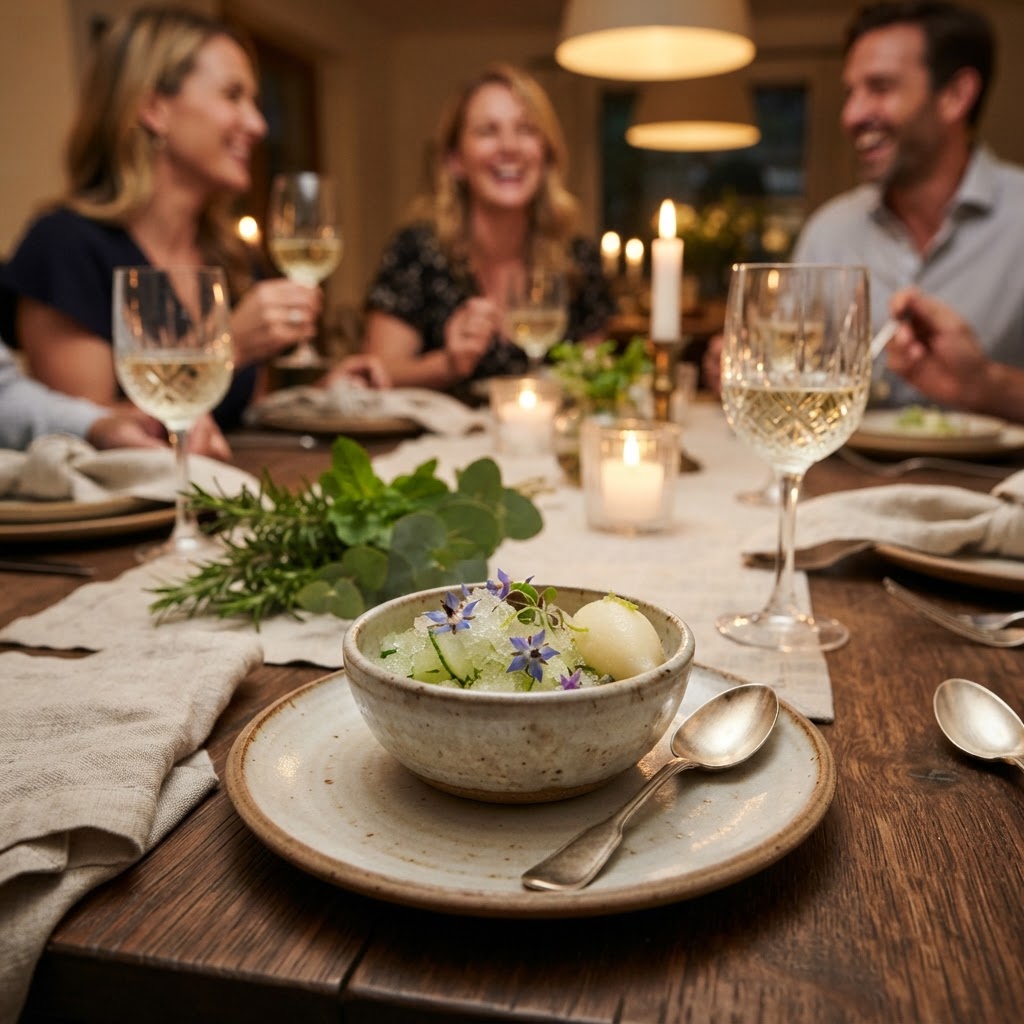
The Art of the "Transition Course": Mastering Palate-Cleansing Appetizers to Sustain Dinner Party Momentum
The rhythm of a successful dinner party is not unlike a well-composed symphony; it requires crescendo, harmony, and, most importantly, strategic pauses. We often obsess over the centerpiece roast or the intricate dessert, but the secret weapon of the professional kitchen is the oft-neglected transition course. This is the bridge between the heavy, savory opening acts and the crescendo of the main event, designed specifically to reset the senses. When guests are faced with a multi-course menu, the palate can quickly become fatigued by salt, fat, and umami, leading to a diminished appreciation of your hard work. By incorporating a thoughtfully curated palate-cleanser, you aren’t just serving food; you are curating an experience that keeps the momentum of the evening alive and vibrant.
Mastering this middle-ground requires a delicate balance of acidity, temperature, and texture. The goal is never to fill the guest up—a common mistake for novice hosts—but rather to provide a fleeting, refreshing moment of clarity. A proper transition course acts as a culinary reset button, washing away the lingering oils from a rich soup or a charcuterie spread. Think of it as a brief intermission in a theater performance, one that allows the audience to catch their breath before the next act begins. When you get the balance right, your guests will find themselves energized rather than bogged down, ready to fully engage with the flavors you have meticulously planned for the second half of the meal.
In this guide, we will dive deep into the science of palate cleansing and the artistic application of these transition courses. We will explore everything from classic granitas to modern, avant-garde emulsions that dance across the tongue. You will learn how to calculate the perfect acid-to-sugar ratio for frozen refreshments and how to integrate botanical elements that elevate the experience from a mere snack to a sophisticated gastronomic interlude. As we explore these techniques, remember that the most successful host is one who understands the nuance of pacing. It is time to elevate your hosting repertoire and ensure that every bite you serve is experienced with the same intensity as the first.
The Science Behind the Reset
At its core, palate cleansing is about physiological sensory restoration. When we consume rich, fatty foods, our taste receptors—specifically those sensitive to lipids and salt—become saturated. This is why the third bite of a decadent dish often lacks the immediate impact of the first. To counteract this, we look for ingredients that stimulate the trigeminal nerve, which provides the sensation of temperature and chemical irritation, or those that possess high levels of acidity, which effectively "scrub" the tongue of fat molecules.
Why Acid is Essential
Acidity is the primary tool in your arsenal. The tartness of citrus, vinegar, or even specific fruits triggers the salivary glands, producing a flood of fresh saliva that rinses the taste buds. However, you must be careful not to introduce an acid so harsh that it creates an unpleasant sting. The secret is in the dilution and balance. Using high-quality ingredients like yuzu juice, verjus, or a light champagne vinegar allows you to achieve the necessary cleansing effect without overwhelming the palate.
"A palate cleanser should never be a destination; it is a doorway. It is the moment where the chaos of the previous course is swept away, leaving the canvas of the tongue blank and ready for the next stroke of genius."
When designing your course, aim for a pH level that registers as "bright" rather than "sour." If you are using lemon, consider pairing it with a hint of honey or sugar to soften the sharp edges. The objective is to achieve a crispness that feels like a cold mountain breeze, not a face-puckering bite of a sour lemon slice.
The Classic Granita: Precision and Texture
The granita is perhaps the most iconic transition course, yet it is frequently misunderstood and poorly executed. A professional-grade granita should not be a solid block of ice, nor should it be a slushy liquid. It must have a crystalline, snow-like texture that melts the moment it hits the tongue. The secret lies in the sugar content, which must be calibrated to prevent the mixture from freezing into a rock-hard slab.
Mastering the Ratio
For a perfect granita, adhere to the Brix measurement—a measure of sugar content. You are aiming for a ratio of approximately 15% to 20% sugar by weight. If you go below this, the mixture will be too icy; go above it, and it will never properly freeze. Here is the professional formula:
Temperature and Serving
Temperature is the ultimate factor in success. Serve your granita in a chilled, double-walled glass to prevent it from melting too quickly. If you are serving it as part of a formal dinner, ensure it is pulled from the freezer no more than two minutes before it is brought to the table. The goal is for the granita to maintain a sub-zero structure while the surface begins to glisten with a light, refreshing melt.
Savory Intermezzos: Beyond the Sweet
While many think of palate cleansers as sweet, the most memorable transition courses are often savory. A savory intermezzo can be significantly more sophisticated, bridging the gap between a meat-heavy appetizer and an equally intense entree. Think of a tiny, chilled cucumber gazpacho shot or a delicate consommé served at room temperature. These items work because they are light in protein but high in mineral content, which resets the savory receptors.
The Role of Temperature
You might be surprised to learn that a warm transition course can work just as effectively as a cold one, provided the profile is clean. A very light, clarified vegetable consommé, perhaps infused with a single note of ginger or lemongrass, acts as a gentle rinse for the palate. The key is in the clarity of the liquid. If there is any fat or sediment, it will coat the tongue rather than cleanse it.
Always use a cheesecloth-lined chinois* to strain your stocks for maximum clarity.
* Keep the flavor profile singular; now is not the time for complex, layered sauces.
* Serve in small portions, no larger than two ounces, to ensure the guest does not feel sated.
"True hospitality is found in the restraint of the host. Knowing when to stop and when to offer a moment of silence in a meal is just as important as knowing how to sear a perfect scallop."
Botanical Infusions and Herbal Profiles
Incorporating herbs into your palate cleansers provides a sophisticated, aromatherapeutic dimension that deepens the overall dining experience. Think of ingredients like shiso, Thai basil, cucumber mint, or even a hint of green tea. These botanicals contain volatile oils that stimulate the olfactory system, effectively "resetting" the sense of smell, which accounts for the vast majority of how we perceive taste.
Infusion Techniques
To get the most out of your herbs, use a cold-infusion method or a quick blanch-and-shock technique. Boiling herbs in a syrup can often turn the flavor "grassy" or metallic. Instead, place your herbs in a fine-mesh strainer, dip them in boiling water for exactly 10 seconds, then immediately plunge them into an ice bath. This preserves the bright green color and the essential, vibrant oils that define the herb.
Shiso-Lime Emulsion:* Blend 10 fresh shiso leaves with 1/4 cup lime juice and a touch of agave.
Cucumber-Mint Essence:* Juice 2 large cucumbers, strain through a coffee filter, and stir in 1 teaspoon of freshly minced mint.
Green Tea Granita:* Use a high-quality Sencha, cool completely, and add a drop of lemon extract before freezing.
The Architecture of Pacing
A transition course is fundamentally a tool for managing guest energy. If your main course is a heavy, slow-braised short rib or a rich lamb shank, your transition course must be exceptionally light and perhaps slightly acidic to cut through the impending heaviness. If the meal is fish-forward and delicate, the transition course should lean into floral or herbal notes to maintain that lightness without introducing aggressive acidity that might ruin the nuance of the main dish.
Timing the Service
When should you serve the transition course? The ideal window is about 15 minutes after the first course has been cleared and before the main course is plated. This timing allows the kitchen to do a final check on the entree while the guests are allowed to engage in conversation without the distraction of eating. It serves as a natural social lubricant, breaking the tension of a long, multi-course meal.
Professional Chef Tips for Execution
In a commercial kitchen, we are trained to prioritize efficiency, but in the home kitchen, the priority is consistency. The most common error in executing a transition course is the lack of mise en place. You cannot be frantically juicing lemons or shaving ice while your guests are sitting at the table. Your transition course must be fully prepped hours in advance.
Equipment Essentials
Immersion Blender:* Essential for achieving a smooth, aerated consistency in emulsions.
Microplane:* Use this for zesting citrus; the finer the zest, the more evenly the oils distribute through the liquid.
Chilled Spoons:* Keep your tasting spoons in a bowl of ice water if you are plating a liquid intermezzo. It makes the experience far more luxurious.
One final, critical tip: never salt a palate cleanser unless it is an essential part of the savory profile. Salt is a flavor enhancer, but in a cleansing course, it is a liability. You want the palate to be "neutral," and salt will linger on the tongue, counteracting the very work you are trying to do.
Final Thoughts
Mastering the transition course is the mark of a host who truly cares about the journey of their guests. It is an investment in the flow of the evening, a subtle gesture that says you value not just the sustenance you provide, but the comfort and enjoyment of the people at your table. Whether you choose a classic, crystalline granita or a refined, herbaceous broth, the goal remains the same: to strip away the clutter of the previous experience and invite the guest to start anew.
Do not be intimidated by the idea of adding another course to your menu. In reality, a well-executed transition course makes the rest of your meal easier to manage. It gives you a moment to step away from the heat of the stove, pour yourself a glass of wine, and observe the joy in the room. Hosting is about control, but it is also about the art of the pause. By mastering these small, deliberate moments, you ensure that your "Blame The Chef" dinner parties are remembered not just for the food, but for the perfect, effortless rhythm of the evening. Keep your flavors bright, your temperatures sharp, and your timing intentional, and you will find that your guests remain energized and captivated until the very last bite of dessert.
The art of the intermezzo is, at its heart, an act of grace. It is the culinary equivalent of a clean sheet of paper, inviting your guests to taste your main course with fresh eyes and a clean palate. As you experiment with these recipes, remember to trust your instincts. If a dish feels too heavy, brighten it. If it feels too sharp, mellow it. You are the conductor of this dinner party, and with the transition course as your baton, you can ensure that the symphony you create is nothing short of extraordinary. Enjoy the process, respect the ingredients, and most importantly, remember that the smallest details often leave the most lasting impressions on your guests. Happy cooking, and may your next dinner party be your most harmonious one yet.


Get the Next Recipe
Weekly recipes, techniques, and gear picks — straight to your inbox.
