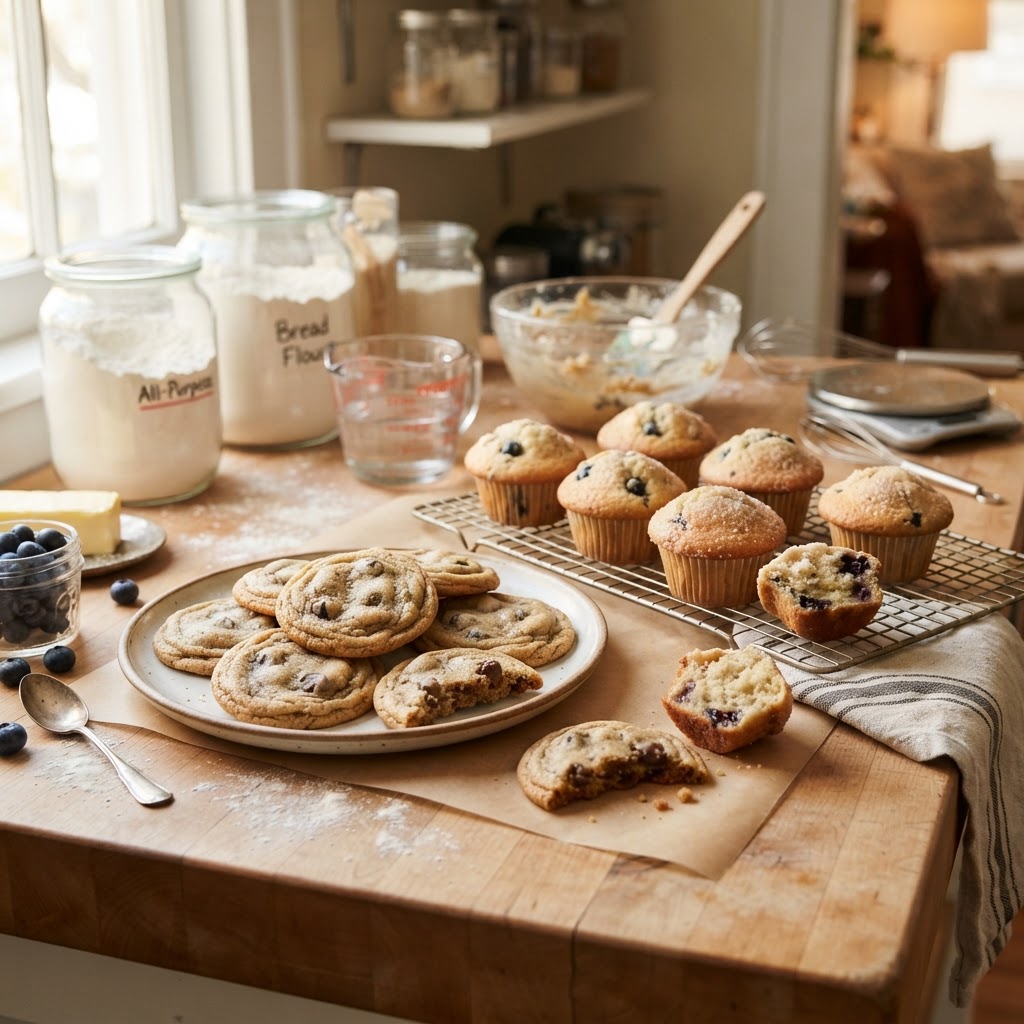
The Baker’s Guide to Hydration Adjustments: Mastering Flour Protein Content and Room Temperature for Consistent Cookie and Muffin Crumb
Baking is often described as a science, yet it feels like magic when a simple tray of cookies emerges from the oven with that perfect, chewy-crisp edge. Many home bakers find themselves frustrated when a recipe that worked flawlessly in the winter fails miserably during a heatwave. The secret to consistent success lies not in the luck of the draw, but in understanding how flour protein content and ambient room temperature dictate the structure of your baked goods. When you learn to adjust your hydration levels based on these variables, you stop blaming your oven and start mastering the chemistry of your dough.
At the heart of every muffin and cookie is the interaction between flour, moisture, and fat. Whether you are using a high-protein bread flour or a delicate cake flour, the gluten network behaves differently depending on how much water is available to hydrate the proteins. If the room is too hot, the butter softens faster than the flour can absorb moisture, leading to spreading disasters. Conversely, in a cold, dry kitchen, flour can become thirsty, absorbing so much liquid that your cookies turn out tough and bready rather than tender and rich.
This guide is designed to take the guesswork out of your baking routine. We will explore the nuances of baker’s percentages, the impact of thermal energy on butter, and how to calibrate your ratios for a perfect crumb every single time. By the end of this deep dive, you will have the confidence to walk into any kitchen—regardless of the season—and produce bakery-quality treats that defy the environmental odds. It is time to stop fearing the process and start controlling it with precision.
The Chemistry of Protein: Understanding Your Flour
Not all flour is created equal, and the primary differentiator is the protein content. Proteins like glutenin and gliadin are the building blocks of the gluten matrix that provides structure to your muffins and cookies. In a muffin, you want enough structure to hold the rise, but too much protein will create a rubbery, tough crumb that is the opposite of the light, tender texture we crave. Conversely, cookies require a balance where the protein holds the structure just long enough for the sugars to caramelize.
High-Protein vs. Low-Protein Flours
When you reach for an all-purpose flour, you are usually dealing with a protein content between 10% and 12%. If you use a bread flour with 13% or 14% protein, you are effectively introducing more structural potential into your mix. In a muffin batter, this high-protein content attracts more water, which can lead to a dry, bready result if your hydration levels aren't increased. Always check the label on your flour bag; even a 1% difference in protein can change the required liquid ratio by a tablespoon or more per cup of flour.
Adjusting for Soft Wheat Varieties
If you are using cake flour, which usually sits around 7% to 9% protein, you must decrease your liquid intake slightly. Because cake flour is processed to have less structural integrity, it cannot hold as much moisture as bread flour. Failing to adjust your liquids when switching flour types is the most common cause of "flat" muffins that collapse after baking. To achieve the perfect crumb, you need to match your liquid-to-flour ratio to the specific capacity of the flour you have chosen for that batch.
The secret to a perfect bake is not just in the ingredients you choose, but in the respect you pay to the specific protein profile of those ingredients. When you master the flour, you master the foundation of the architecture of your treat.
The Invisible Variable: Room Temperature Dynamics
The temperature of your kitchen is a silent ingredient that can either work for you or against you. Most professional recipes are developed in a "standard" kitchen environment of about 70°F to 72°F. When your kitchen rises to 80°F or higher, the physical state of your fats changes. Butter that is meant to stay as distinct chunks in a cookie dough will quickly melt into the flour, causing the cookies to lose their shape and spread thin across the baking sheet.
Why Temperature Dictates Hydration
Room temperature affects the evaporation rate of moisture during the mixing process. In a hot, humid kitchen, your flour is already slightly hydrated from the moisture in the air. If you add the full amount of liquid called for in a recipe, you may end up with a sticky, unmanageable mess. In a cold kitchen, your ingredients feel "tighter" and less pliable, which often tricks bakers into adding extra liquid when what they really need is just a slightly longer mixing time or a warmer environment.
Managing Thermal Energy
To keep your cookies consistent, keep your wet ingredients, specifically eggs and butter, at the appropriate temperature before you begin. If you are baking in a hot climate, keep your butter in the refrigerator until the very last second before creaming. If you are baking in a cold climate, consider warming your mixing bowl with warm water and drying it thoroughly before use to ensure that the butter incorporates smoothly without seizing.
Mastering Muffin Hydration: Crumb and Density
Muffins are notoriously temperamental because they rely on the muffin method—combining wet and dry ingredients separately before folding them together. The biggest mistake home bakers make is over-mixing. When you over-mix, you develop the gluten too aggressively. If you have a high-protein flour, this happens instantly, resulting in a tunnel-ridden, tough muffin that lacks the delicate crumb we associate with a professional bakery.
The Role of Liquid Fats
Whether you use melted butter, oil, or a combination, the fat needs to coat the flour proteins before the liquid ingredients (like milk or yogurt) activate the gluten. By whisking your fat with the sugar and eggs first, you create a barrier that prevents the flour from hydrating too quickly. If your kitchen is very warm, the fat will soak into the flour too rapidly. Use cold milk to counteract the warmth of a hot kitchen, as this will help keep the fats stable during the initial mixing stage.
Achieving the Perfect Rise
The rise in a muffin comes from the steam generated by the moisture in the batter hitting the high heat of the oven. If your hydration is too high, the muffin will start to rise and then collapse because the structure isn't strong enough to hold the steam. If your hydration is too low, the muffin will be dry and crumbly. Always look for a batter that is thick and slightly lumpy; if the batter is perfectly smooth, you have likely over-mixed it, and no amount of hydration adjustment will save the texture.
A muffin should be a delicate balance of moisture and air. If you treat the batter as a structure you are building rather than a substance you are stirring, you will achieve the bakery-style lift every single time.
Cookie Structure: Controlling the Spread
Cookie chemistry is all about the "set." You want the edges to set quickly while the center remains soft. The protein in the flour determines how quickly that set happens. In a high-protein environment, the dough sets quickly, leading to a cakier cookie. In a low-protein environment, the dough stays fluid longer, leading to a thinner, crisper cookie. If your cookies are spreading too much, you can combat this by adding a small amount of extra flour—sometimes just a tablespoon—to boost the protein-to-fat ratio.
The Impact of Sugar Hydration
Sugar is a hygroscopic ingredient, meaning it attracts water. If your kitchen is humid, your sugar will pull moisture from the air, which in turn hydrates your flour more than intended. This is why a recipe that creates a thick cookie in the winter might create a thin, spreading cookie in the humid summer. To compensate, increase your flour by 5% when the weather is damp, or reduce your total sugar by a fraction if the dough feels too soft.
Professional Techniques for Consistency
The Scoop and Level:* Never pack your flour. Use a scale whenever possible, but if you must use cups, stir the flour to aerate it, then gently spoon it into the cup.
The Resting Period:* Allowing your dough to rest in the refrigerator isn't just about flavor; it is about hydration. The flour needs time to absorb the liquids fully. A 24-hour rest produces a significantly more consistent crumb than baking immediately after mixing.
The Bake Test:* Always bake one or two "test" cookies. If they spread too much, add a tablespoon of flour to the remaining dough. If they are too dry, add a teaspoon of milk.
Calculating Baker's Percentages
For the home baker, baker's percentages might sound intimidating, but they are the most powerful tool in your arsenal. In this system, flour is always 100%, and every other ingredient is a percentage of that flour's weight. This allows you to scale recipes perfectly and adjust for protein variations. For instance, if you usually use a standard recipe with 500g of flour and you switch to a higher-protein flour, you can easily calculate how much extra liquid you need to maintain the hydration balance.
Scaling and Adjustments
When you view your recipe as a set of ratios rather than a set of hard numbers, you gain freedom. For a standard muffin, your hydration (liquids) should generally hover around 60-70% of the flour weight. If you are using a lower-protein flour, you might drop that to 60%. If you are using a higher-protein flour, you might need to push toward 75%. This is the kind of professional adjustment that distinguishes a casual baker from a master.
Why Measurements Matter
Volume measurements (cups and spoons) are the enemy of consistency. A cup of flour can weigh anywhere from 120 grams to 160 grams depending on how it is scooped. When you are dealing with delicate protein structures, a 40-gram difference is massive. Always use a digital kitchen scale. By weighing your ingredients, you eliminate the biggest variable in the kitchen, allowing you to focus on the more subtle variables like temperature and mixing time.
Troubleshooting Common Baking Failures
We have all been there: opening the oven to find a tray of cookies that have morphed into one giant, flat sheet, or muffins that look like flat, dense pucks. When these failures occur, don't blame the chef—blame the variable. Nine times out of ten, it’s a hydration issue caused by a change in environment or a misunderstanding of your flour's protein content.
When to Add More Flour
If your muffin batter looks like soup, or your cookie dough is sticking to your fingers in a way that suggests it will never hold a shape, you have an over-hydration problem. Adding flour should be done slowly, one tablespoon at a time. Mix the dough, wait a moment for the flour to hydrate, and assess again. Patience is your best friend when correcting a batter that has gone astray.
When to Add More Liquid
If your dough is crumbly and refuses to come together into a cohesive ball, it is likely too dry. This often happens in the winter months when the air is arid. Before adding more liquid, try massaging the dough with your hands for a minute. The heat from your palms will soften the fats and help the existing moisture distribute more effectively. If that doesn't work, add one teaspoon of water or milk at a time.
Baking is not a static process; it is a conversation with your ingredients. Listen to the texture of your dough, feel the consistency of your batter, and don't be afraid to make minor adjustments based on the reality of your kitchen environment.
Advanced Tips for Consistency
To truly master the craft, you must start treating your kitchen like a lab. Keep a baking journal. Write down the flour brand you used, the room temperature, the total weight of the ingredients, and the outcome. Over time, you will notice patterns. You might find that your favorite cookie recipe is always perfect at 70°F but falls apart at 75°F. That kind of data is priceless.
The Power of Ingredient Selection
The type of fat you use also impacts hydration. Butter contains about 18% water, while oil is 100% fat. If you substitute oil for butter in a recipe, you are effectively removing water from the system. This can lead to a drier, more brittle crumb. When making these substitutions, you must increase the liquid component of your recipe to compensate for the lost water content in the butter.
Precision Tools for the Modern Kitchen
Digital Scale:* Essential for accuracy.
Instant-Read Thermometer:* Used for both the oven temperature and the dough temperature.
Oven Thermometer: Most home ovens are off by 10-25 degrees. You need to know the actual* temperature inside, not just what the dial says.
Silicone Mats:* These provide consistent heat distribution for cookies, preventing the hot spots that lead to uneven browning.
Final Thoughts
Mastering the balance of hydration, flour protein, and room temperature is the hallmark of a skilled baker. It is a transition from following a set of instructions to understanding the underlying mechanism of the craft. When you stop fearing the "why" behind a failed recipe and start adjusting the "how," you unlock the potential to bake anything with consistent, professional results. Remember that your kitchen is a living, breathing space; the temperature changes, the humidity fluctuates, and the ingredients themselves vary from bag to bag.
Your goal isn't to fight these variables but to embrace them. By weighing your ingredients, monitoring your protein levels, and keeping a close eye on your ambient temperature, you create a framework for success. Next time your cookies spread too much or your muffins don't rise, don't be discouraged. Instead, view it as an opportunity to diagnose the issue and refine your technique for the next batch. After all, the best part of the learning process is that you get to eat the results—even the "experimental" ones.
Continue to practice, keep your journal updated, and above all, keep the joy in your baking. Baking should never feel like a chore, but rather a rewarding creative outlet. With these tools in your pocket, you are well on your way to becoming the master of your own culinary domain. Happy baking, and may your crumbs always be perfect, your cookies always chewy, and your kitchen always a place of discovery and delight. Consistency is merely the sum of a thousand small, informed adjustments, and you now have the knowledge to make them with absolute confidence.

Get the Next Recipe
Weekly recipes, techniques, and gear picks — straight to your inbox.
