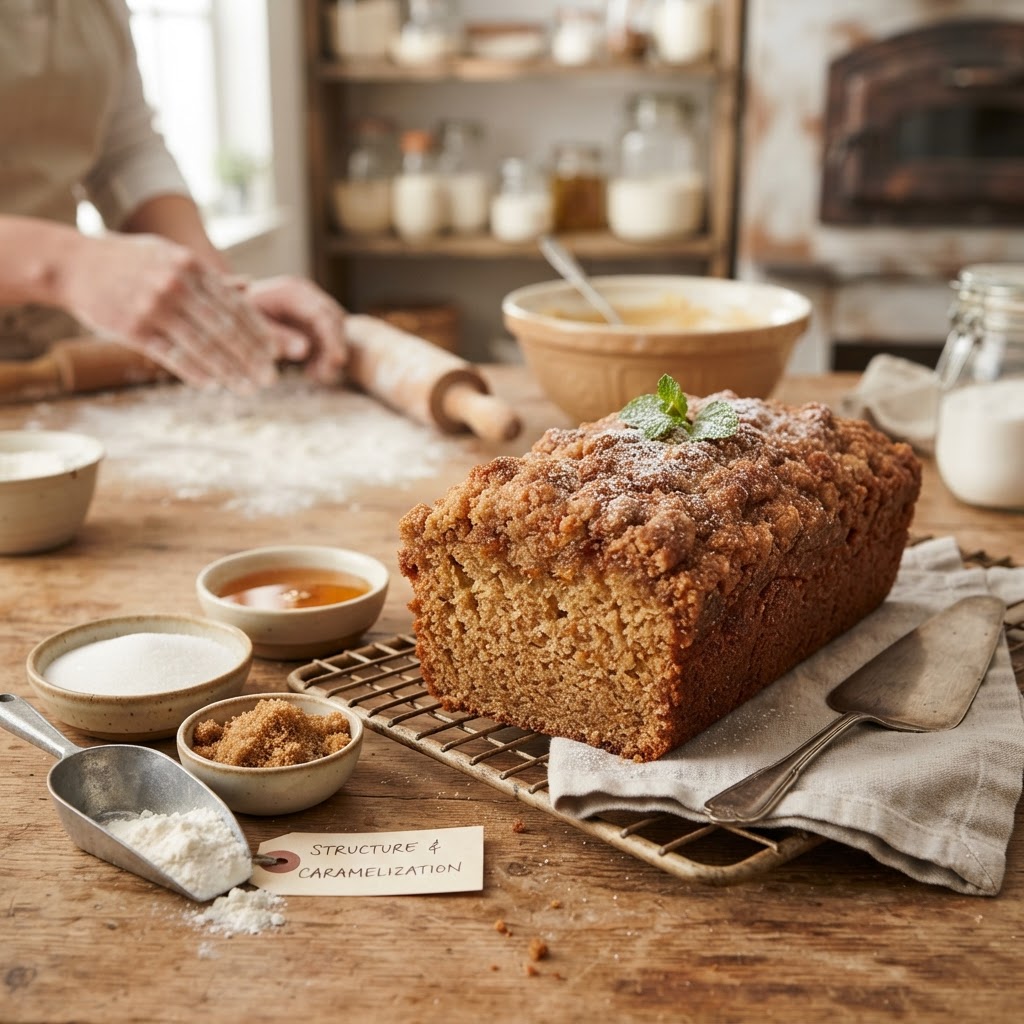
The Baker’s Guide to Sugar Chemistry: How Different Sweeteners Affect Moisture, Caramelization, and Structure in Your Bakes
Welcome to the heart of the kitchen, where the hum of the oven is the only soundtrack that matters and a dusting of flour is considered a badge of honor. As home bakers, we often treat sugar as a singular, monolithic ingredient, reaching for the white bag in the pantry without a second thought. However, sugar is arguably the most dynamic chemical agent in your baking repertoire, acting as a structural architect, a moisture magnet, and a flavor catalyst all at once. When you understand the science of sweetness, you cease to be a follower of recipes and start becoming a master of your own culinary destiny.
The chemistry of sugar is far more nuanced than simple sweetness; it dictates the Maillard reaction, the caramelization process, and the final crumb structure of everything from sponge cakes to shortbread. When you swap granulated sugar for brown sugar or honey for corn syrup, you are fundamentally altering the way proteins bond with water and how fats emulsify with leavening agents. This guide is designed to peel back the curtain on these sweet science interactions, providing you with the technical vocabulary and practical techniques to troubleshoot your bakes. By the end of this journey, you will look at a humble cupcake and see a complex matrix of crystalline structures and molecular bonds.
At "Blame The Chef," we believe that baking should be both an intuitive art and a precise science. There is a profound beauty in knowing exactly why a cookie spreads, why a cake collapses, or why a caramel sauce breaks. Whether you are aiming for the perfect crisp edge on a brownie or the pillowy softness of a brioche bun, the secret lies in your choice of sweetener. Let’s dive deep into the pantry and examine the molecular mechanisms that make our favorite treats so irresistible, ensuring that your future bakes are as technically sound as they are delicious.
The Crystalline Foundation: Sucrose and Its Derivatives
At its core, standard granulated sugar is sucrose, a disaccharide composed of one glucose molecule and one fructose molecule linked together. In the world of baking, sucrose provides the backbone of structure through a process known as creaming. When you beat granulated sugar with butter, the sharp, jagged edges of the sugar crystals cut into the solid fat, creating millions of tiny air pockets. During the baking process, these pockets expand as they fill with steam and carbon dioxide from your leavening agents, resulting in the light, airy crumb that defines a high-quality cake.
If you opt for a finer grind, such as superfine or caster sugar, you increase the surface area available for aeration. This is why professional pastry chefs often prefer caster sugar for delicate sponges; it dissolves more readily into the batter, ensuring that you don't end up with those unsightly dark sugar spots on the surface of your bake. Conversely, using a coarser sugar like turbinado or sanding sugar will lead to a more robust, crunchy texture, which is perfect for cookies or muffin tops where you want a textural contrast to the soft interior.
The secret to a perfect crumb isn't just the flour you choose; it is the physical abrasion provided by sugar crystals during the initial aeration stage of mixing.
The Impact of Solubility
Solubility is a critical factor when working with meringues or mousses. Sucrose is highly soluble in water, but its rate of dissolution is temperature-dependent. When making a Swiss Meringue, you must heat the egg whites and sugar together until the crystals have completely dissolved to ensure a stable protein matrix. If the sugar isn't fully incorporated into the protein structure, your meringue will weep, lose volume, and eventually collapse. Always check the texture between your fingers—if you feel a single grain of grit, keep whisking over the double boiler.
Hygroscopy: How Sugar Controls Moisture
One of the most fascinating aspects of sugar chemistry is its hygroscopic nature. Hygroscopy is the ability of a substance to attract and hold onto water molecules from the surrounding environment. This is precisely why brown sugar turns into a rock if left uncovered in a humid kitchen; it is literally pulling moisture out of the air. In your bakes, this property is what keeps a cake moist for days rather than hours. By effectively binding to water, sugar prevents the flour’s proteins (gluten) from forming too many tough bonds, resulting in a more tender crumb.
When you utilize ingredients like honey, molasses, or agave nectar, you are introducing inverted sugars. These sweeteners have a higher hygroscopic capacity than standard white sugar because they contain higher percentages of free glucose and fructose. If you are baking in a very dry climate, using a higher ratio of honey or brown sugar can actually help your goods stay fresh longer. However, be warned: if you use too much, your bakes might become gummy or sticky, particularly if they are not stored in an airtight container.
The Ratio of Moisture Retention
Granulated Sugar:* 1:0 (low moisture retention)
Light Brown Sugar:* 1:1 (contains molasses, higher retention)
Honey/Inverted Sugar:* 1:2 (extremely high retention)
Professional chefs often use a blend of sugars to manipulate the moisture profile of a recipe. For instance, a brownie recipe might call for 75% granulated sugar for structure and 25% brown sugar for the "chew" and moisture. This 3:1 ratio is a sweet spot for many, as it provides the snap of a crisp top while maintaining a fudgy, dense center that doesn't dry out after 24 hours.
Caramelization vs. The Maillard Reaction
It is a common mistake to confuse caramelization with the Maillard reaction, but in baking, they are distinct, albeit related, phenomena. Caramelization is the pyrolytic decomposition of sugar—essentially, it is the result of heating sugar to a high temperature (typically above 320°F or 160°C) until it breaks down, darkens, and develops a complex, nutty flavor profile. This happens independently of protein. When you make a caramel sauce or a praline, you are witnessing pure caramelization.
The Maillard reaction, on the other hand, requires both reducing sugars (like glucose or fructose) and amino acids (the building blocks of protein found in flour, eggs, and dairy). This reaction is responsible for the deep, savory-sweet complexity found in the crust of a loaf of bread, the exterior of a toasted cookie, or the rich mahogany finish on a golden-brown pastry. If your bakes look pale and unappetizing, you might be lacking the right balance of sugars or the correct surface temperature to trigger this reaction.
The browning of a cookie crust is the intersection of high-heat sugar decomposition and protein transformation; without both, you are left with a flat, one-dimensional flavor.
Controlling Color and Flavor
To enhance browning, many professional bakers utilize a small amount of baking soda in their recipes. Because the Maillard reaction occurs more rapidly in an alkaline environment, a tiny pinch of soda can help your cookies achieve that deep, professional-looking bronze color. However, be careful not to over-alkalize, as this will lead to an unpleasant, soapy aftertaste. It is about finding the delicate balance between pH and thermal energy.
The Role of Inverted Sugars in Texture
Inverted sugars are sugars that have been broken down into their base components: glucose and fructose. You see these in the form of corn syrup, golden syrup, or honey. Because these sugars are already "broken down," they do not crystallize as easily as sucrose. This is vital when making candies, glazes, or chewy cookies. If you have ever made a batch of fudge that turned grainy, it was likely because the sucrose re-crystallized, creating a gritty texture rather than a smooth, silky finish.
By replacing 10% to 20% of your granulated sugar with an inverted sugar, you effectively inhibit the growth of large crystals. This technique is often used in professional ganache and truffle centers to ensure a smooth, melt-in-the-mouth consistency. In the world of cookie baking, this is the secret to that "chewy" edge that everyone loves. If you want a soft, bendy cookie, swap your corn syrup for a high-fructose syrup or honey, but keep in mind that the flavor profile will shift from neutral to floral or intense depending on the sweetener used.
Why Crystallization Matters
Crystallization is the enemy of smooth textures. When you are boiling sugar for a syrup, you must ensure that your pot is clean. Even a single stray crystal of undissolved sugar can trigger a "chain reaction," causing the entire mixture to turn back into solid, gritty crystals. To prevent this, always brush down the sides of your saucepan with a wet pastry brush during the boiling process to ensure all crystals are submerged and dissolved.
Structural Integrity: Sugar as a Stabilizer
Sugar isn't just for flavor; it is a structural component of the protein network. In cakes, sugar helps to delay the coagulation of egg proteins. By slowing down the time it takes for the eggs to set, sugar gives the leavening gases more time to expand, which leads to a higher rise and a finer, more uniform crumb. Without enough sugar, the proteins in your batter would set too quickly, resulting in a cake that is dense, rubbery, or collapsed in the center.
When working with meringues and soufflés, sugar is a stabilizer. It absorbs water from the egg whites, forming a syrup that coats the protein strands and keeps them from drying out and snapping. A meringue without sugar is simply a brittle, unstable foam that will collapse the moment it leaves the oven. This is why you must add sugar to egg whites slowly—one tablespoon at a time—while whisking. This allows the sugar to gradually hydrate the proteins, creating a robust, glossy matrix that can hold its shape in the oven.
The Danger of Reducing Sugar
If you decide to reduce the sugar content in a recipe by more than 20%, you must understand that you are also reducing the structural integrity of your bake. A low-sugar cake will inevitably be more bread-like and less tender. If you must reduce sugar for dietary reasons, consider these professional workarounds:
Advanced Techniques: Mastering Temperature and Texture
Temperature is the invisible hand of the baker. Whether you are tempering chocolate, spinning sugar, or creating a perfectly caramelized custard, the chemical state of your sugar depends entirely on the degree of heat applied. Professional pastry chefs use digital candy thermometers for a reason; guessing the temperature of a sugar syrup is a recipe for disaster. At 235°F (113°C), you are at the "soft ball" stage, perfect for Italian meringue. At 300°F (149°C), you are at the "hard crack" stage, ideal for lollipops or decorative sugar work.
When baking, even the temperature of your oven affects how sugar behaves. A higher initial temperature (like 400°F for the first 5 minutes of a cake bake) can help initiate a quick, sharp rise by pushing the steam through the aeration pockets created by the sugar. Dropping the temperature to 350°F (175°C) thereafter allows the proteins to set without burning the exterior. This is the "gradient temperature" technique, a professional secret used to create cakes that have both a high rise and a moist, evenly cooked interior.
A professional baker treats their thermometer like a compass—without it, you are simply drifting in a sea of inconsistent results and burnt sugar.
Troubleshooting Common Sugar Issues
Grainy Textures:* Usually caused by poor incorporation or lack of high-heat dissolving.
Excessive Spreading:* Often a result of too much sugar relative to flour; the sugar melts too quickly and turns into a liquid that cannot support the structure.
Pale Crusts:* Often indicates an oven that is too cool or a lack of protein/sugar interaction (add a touch of milk or egg wash to the top of the bake).
Bitter Caramel:* You have pushed the caramelization process too far. Once it smells like burnt rubber, it cannot be saved.
Final Thoughts
Mastering sugar chemistry is the hallmark of an advanced home baker. By moving beyond the recipe card and into the realm of molecular understanding, you gain the freedom to create, adapt, and troubleshoot your way to perfection. Remember that sugar is not just a sweetener; it is the lubricant for your fats, the stabilizer for your proteins, and the fuel for your browning reactions. When you "blame the chef" for a failed bake, you are really just acknowledging that the chemistry wasn't quite in balance, and that is a problem you now have the tools to fix.
As you move forward, keep a baking journal. Note the type of sugar you used, the ambient temperature of your kitchen, and how the texture of your finished product felt on day one compared to day three. This data-driven approach to baking will turn your kitchen into a laboratory of delicious experiments. Don't be afraid to try high-quality muscovado for deep molasses notes or to experiment with light corn syrup for that perfect, glossy finish. Baking is a lifelong journey of discovery, and the sweet science of sugar is the best place to start.
Keep your whisk handy, your oven calibrated, and your curiosity peaked. Every time you preheat your oven, you are participating in a timeless scientific ritual that transforms simple ingredients into culinary art. Stay precise, stay patient, and most importantly, enjoy the process. There is no joy quite like pulling a perfectly risen, golden-brown creation from the oven and knowing exactly how the chemistry worked to get it there. Happy baking, and may your crusts always be crisp and your crumbs always be tender.
Get the Next Recipe
Weekly recipes, techniques, and gear picks — straight to your inbox.
